
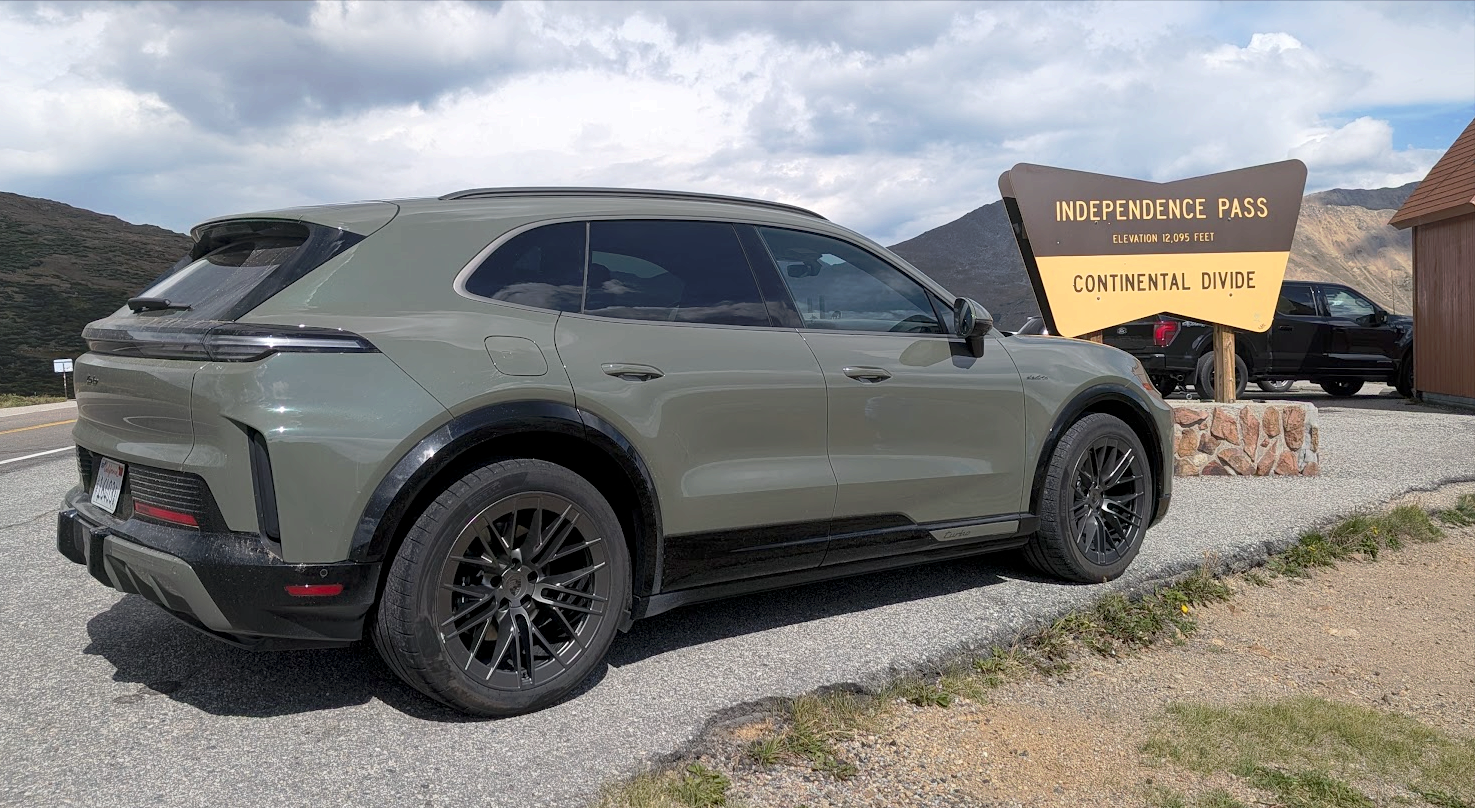
After chomping on the bit for literally years, we finally got to drive – and I mean really drive – the Porsche Cayenne Electric, and it was everything we’d hoped for, and more. Porsche flew us out to Aspen, Colorado, and gave us a 250-ish-mile mountain road (and off-road) course to devour with their flagship SUV. The $163K monster did not disappoint in acceleration, air-supported suspension comfort, and even fast charging. But, there, as always, are some caveats beyond the huge price tag…
The numbers, unfiltered:
Porsche is leaning hard on the “most powerful Porsche ever” line, and technically it’s true — but read the fine print: In everyday driving, the dual-motor Turbo makes 844 hp. Hit Launch Control and you get a jarring, almost CTE-inducing 1,139 hp and 1,106 lb-ft for a matter of seconds, plus a 176-hp Push-to-Pass overboost you can trigger from the steering wheel for ten-second bursts. That’s the number in every headline. It’s also not the number you’re driving around with on a Tuesday.
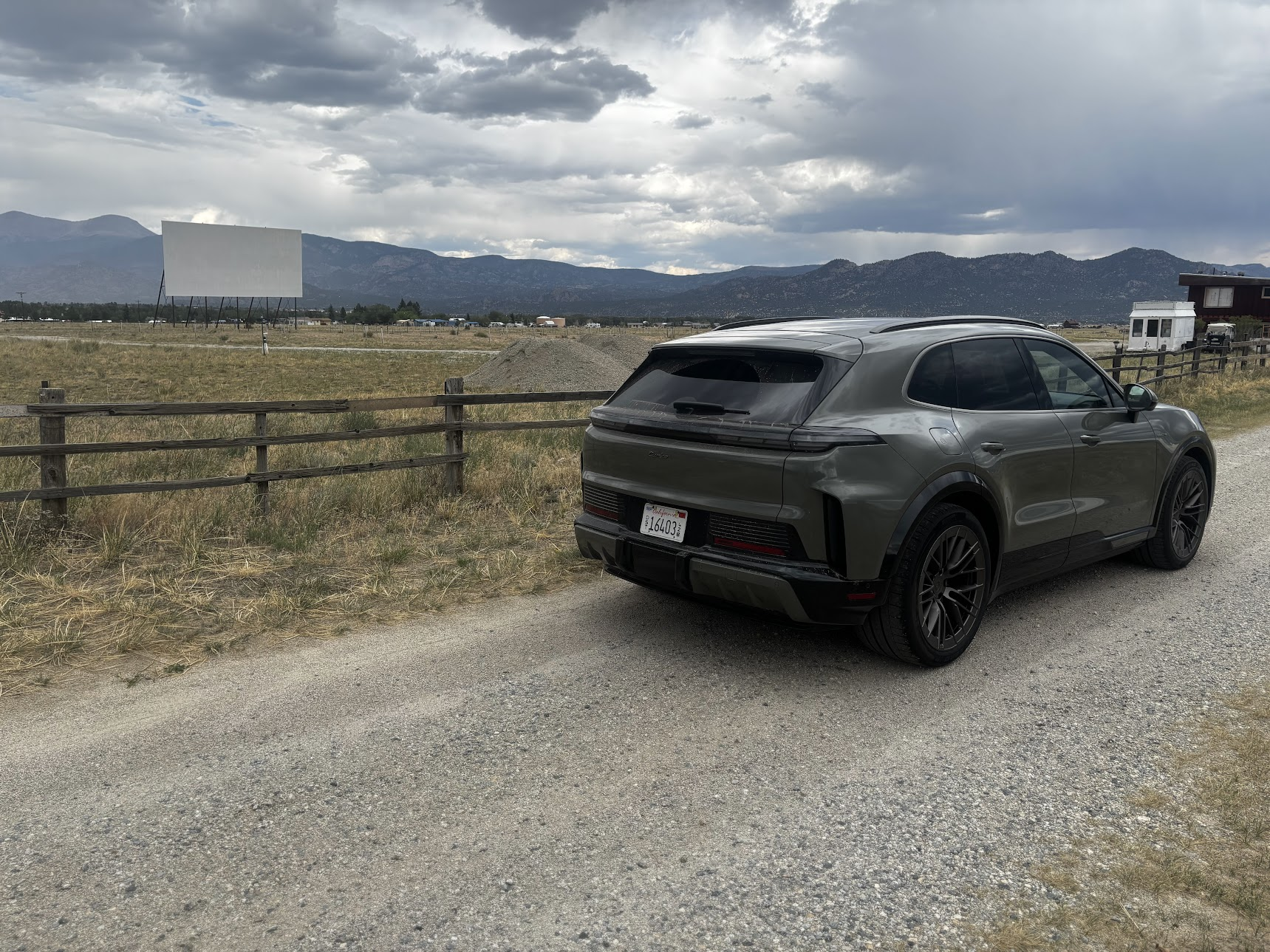
Still, 844 is a lot of HPs for passing that semi at 80mph. Car and Driver clocked the 0-60 time in 2.1 seconds, showing that Porsche, unlike other EV makers, sandbags their own numbers, and this is across the board.
60 mph in just 2.1 seconds and completing the quarter-mile in 9.5 seconds. The braking performance is also the best among SUVs, matching the result of a Corvette ZR1 by stopping from 70 mph in just 140 feet. The Cayenne Turbo Electric also posted the best roadholding figure for an SUV in Car and Driver history at 1.05 g on the skidpad.
Imagine going back to 1990 and telling a Lamborghini Countach owner that an SUV would go 0-60 in half the time in 35 years. Heck, you don’t even have to go back in time: The Cayenne Turbo clocks ahead of current supercars such as the Lamborghini Revuelto and the 1064-hp Chevy Corvette ZR1.
IRL, this car is a beast. Passing that oversized load semi at 80mph is easy-peasy. Accelerating up a steep hill doesn’t even tax the motor. Even on miles of dirt road, the combination of what felt like limitless power and agile air suspension made us feel like Dukes of Hazzard men amongst boys. And somehow with all of this 108kWh of battery, large motors and huge tires, you are still hitting 300 miles of range.
Top-shelf specs also include a 162-mph top speed – something you’d theoretically only need on the track.
Porsche continues to be a leader in charging
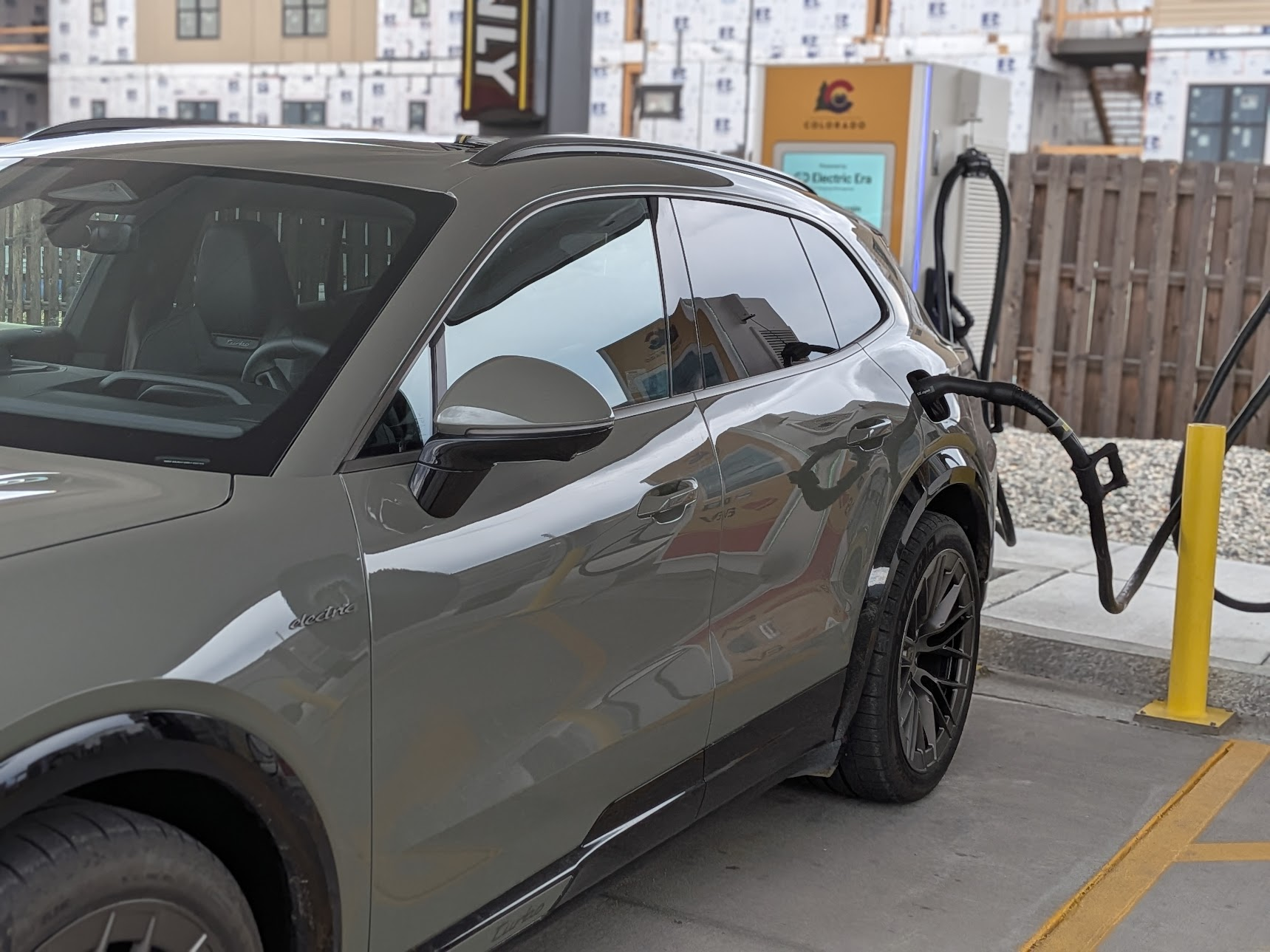
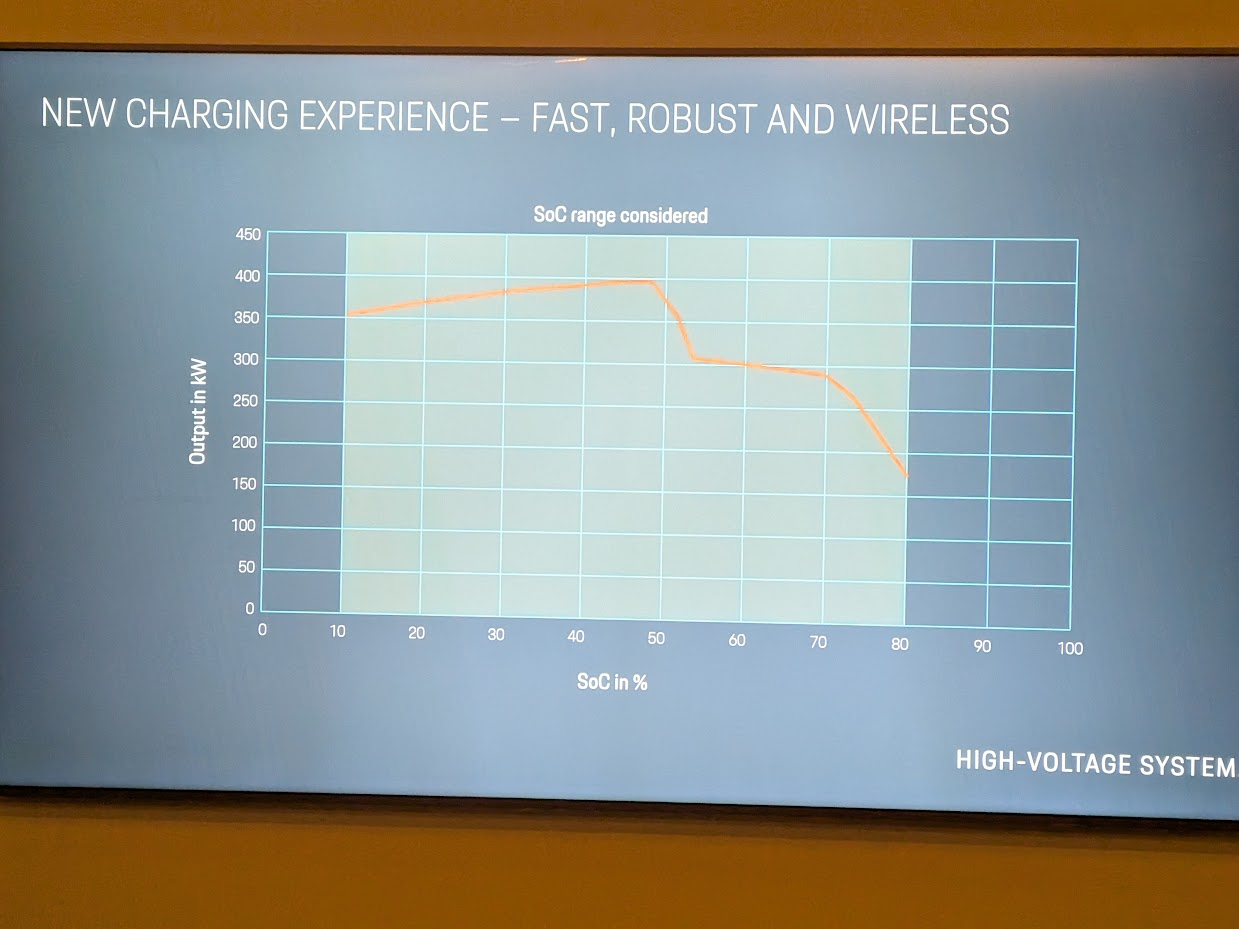
The Cayenne Turbo EV 800V system charges incredibly fast at over 400kW on available chargers. With its interesting charging curve, Porsche says it can go from 10-80% SoC in under 16 minutes (!!). That’s 210 miles in 16 minutes or over 13 miles/minute. Hope there isn’t a line at the bathroom.

This is China-level fast and, per kW, some of the fastest charging out there. Unfortunately, we were only able to find 400V 200kW chargers out there, but Porsche shared a best-case-scenario slide of the charging curve in its deck:
Importantly, Porsche has been a leader in Plug and Charge, meaning plugging in at Tesla Superchargers and EA stations, and a growing number of other fast chargers, starts charging immediately. While the Cayenne has a NACS port (with CCS adapter) on one side and a J-1772 port on the other, it still also splits Level 3 DC to the NACS side and Level 1/2 AC charging to the J-1772 adapter. Speaking of AC, the Cayenne has a 19.2 kW on-board AC-to-DC inverter, meaning you can charge at almost 20kW at home.
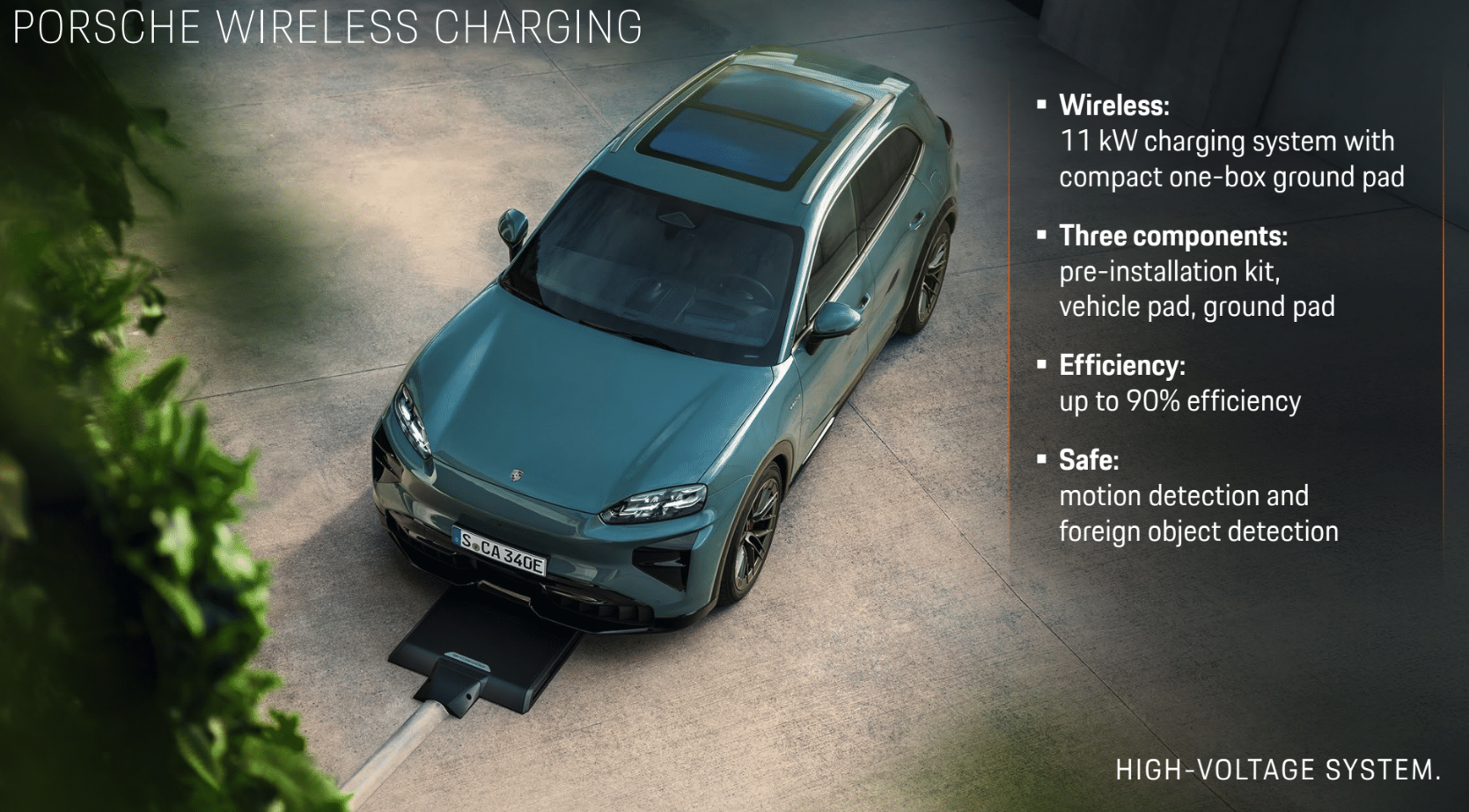
Porsche also includes an up to 11kW inductive charging option, which offers up to 90% efficiency.
Not only is this the quickest SUV out there, it is also the fastest and most versatile in charging as well.
It isn’t all gravy
Besides the steep $163K starting price and incredibly expensive options list, I had a few quibbles with the otherwise otherworldly nice vehicle. I found the instrument cluster a little overwhelming – something that I think would ease with time. But still, there was some hunting and pecking for a lot of things that could have been more intuitive or better designed. I think going with Google’s Android for Automotive, but still having a CarPlay option, is the right move, but it does invite some confusion with the built-in stack vs. the projection stack.
Also, I think the design is a bit…meh… for $163K. I mean, if I’m dropping a Rust Belt median home price for an SUV, I want people to know it. The Cayenne Turbo is subdued in a way that is too Clark Kent and not enough Superman. Sure, there are colored brake calipers and fancy winglets, but where are the air thrusters?
And finally, when can we stop making cars quicker off the line. God forbid you are a passenger in the car when the driver decides to overtake while you are looking at your phone. My neck still hurts. My co-driver and I needed to start a system to alert each other when we were about to accelerate and overtake, lest we get whiplash.
That said, why do we need to put the vehicle in launch or passing mode to have access to all of that power? When I put my foot on the floor, I want all of the electrons to come out of the battery as fast as possible without having to mess around with controls on the steering wheel.
Top comment by James
Great fun article, and experience I’m sure, but how does a quarter $million SUV move the needle on EV adoption?
Electrek’s Take
The engineering here is real — the chassis work, the thermal management for repeated launches, the charging curve shape rather than just the peak number. That’s what separates a legacy automaker doing an EV seriously from one doing it for a press release. But “most powerful Porsche ever” is doing a lot of marketing lifting for a number you’ll access maybe a handful of times a year in a 10-second overboost window, in a vehicle whose everyday 844-hp mode is still absurd overkill for an SUV.
At $163,000 to start — and comfortably past $250,000 loaded with Active Ride, ceramic brakes, and the rest of the options sheet — the Cayenne Turbo Electric is a car for people who want a hypercar and happen to also want a family SUV, not a car that wins on EV-specific merits like range-per-dollar or efficiency. The Lucid Gravity beats it on range for less money. The Rivian R1S beats it on value by a wide margin.
What the Cayenne wins on is the thing Porsche buyers are actually paying for: it drives like a Porsche. Whether that’s worth the premium depends entirely on how much you were already going to spend at this dealership.



FTC: We use income earning auto affiliate links. More.



Comments