
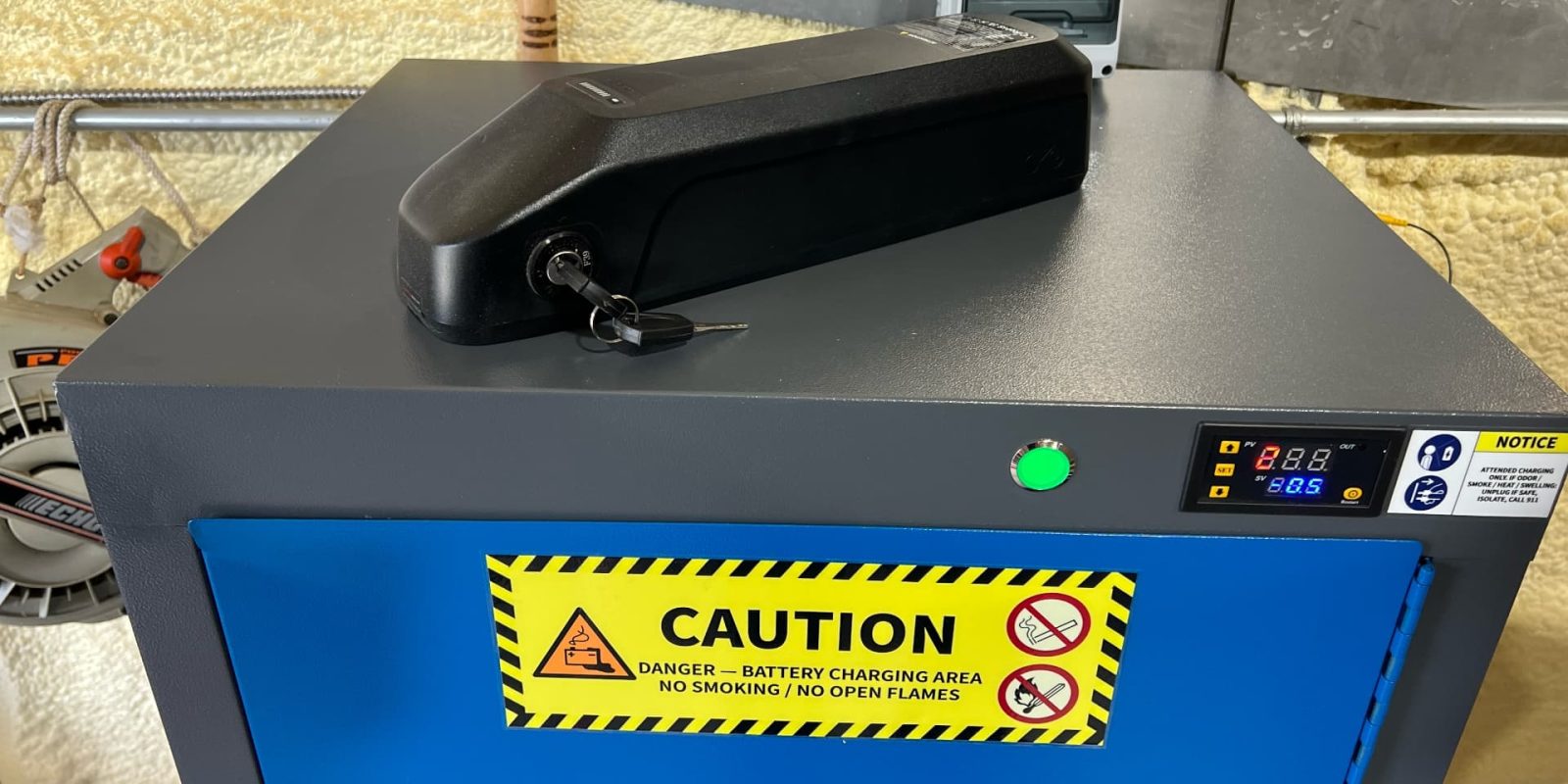
One of the most common questions I get from readers isn’t just about speed or range anymore. Increasingly, I’m hearing more questions about battery safety.
People see the occasional viral video of an e-bike battery fire and wonder if they should be worried about charging their battery in the garage, apartment, or workshop. The reality is that quality lithium-ion batteries from reputable manufacturers are remarkably safe, but when failures do occur, they can be dramatic enough that many riders want an extra layer of protection.
That’s where products like Yolin’s lithium-ion battery charging cabinet come in. I recently spent some time testing the cabinet, and while I admittedly wasn’t sure what to expect going in, I came away more impressed than I anticipated.
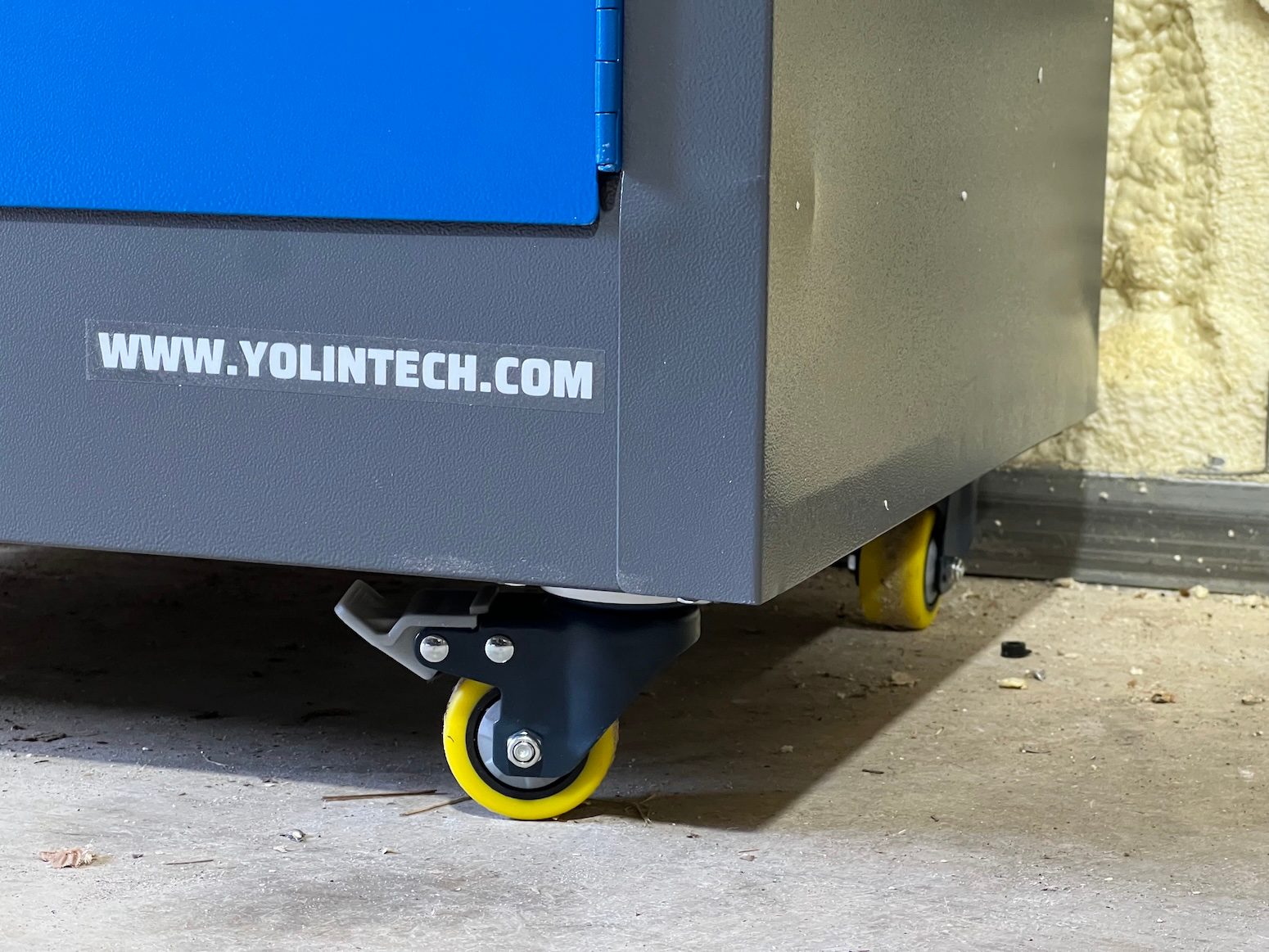
At first glance, it looks like a fairly ordinary steel workshop cabinet on locking casters. But open the door and you quickly realize it’s been purpose-built for charging lithium-ion batteries.
The Workshop model I tested is the bigger of the two variants and includes a pair of three integrated AC outlets inside the cabinet, making it easy to keep up to six chargers neatly organized instead of having extension cords running everywhere.
Since I was testing mine in my dad’s workshop, I ended up using it for much more than just e-bike batteries. Cordless drill batteries, impact driver packs, power tool batteries – they all found a home inside next to my e-bike batteries. After a while, it basically became our dedicated lithium battery charging station.
There’s also a smaller version that is around half the height and has just three AC outlets inside, which is still probably enough for the casual rider or weekend warrior.
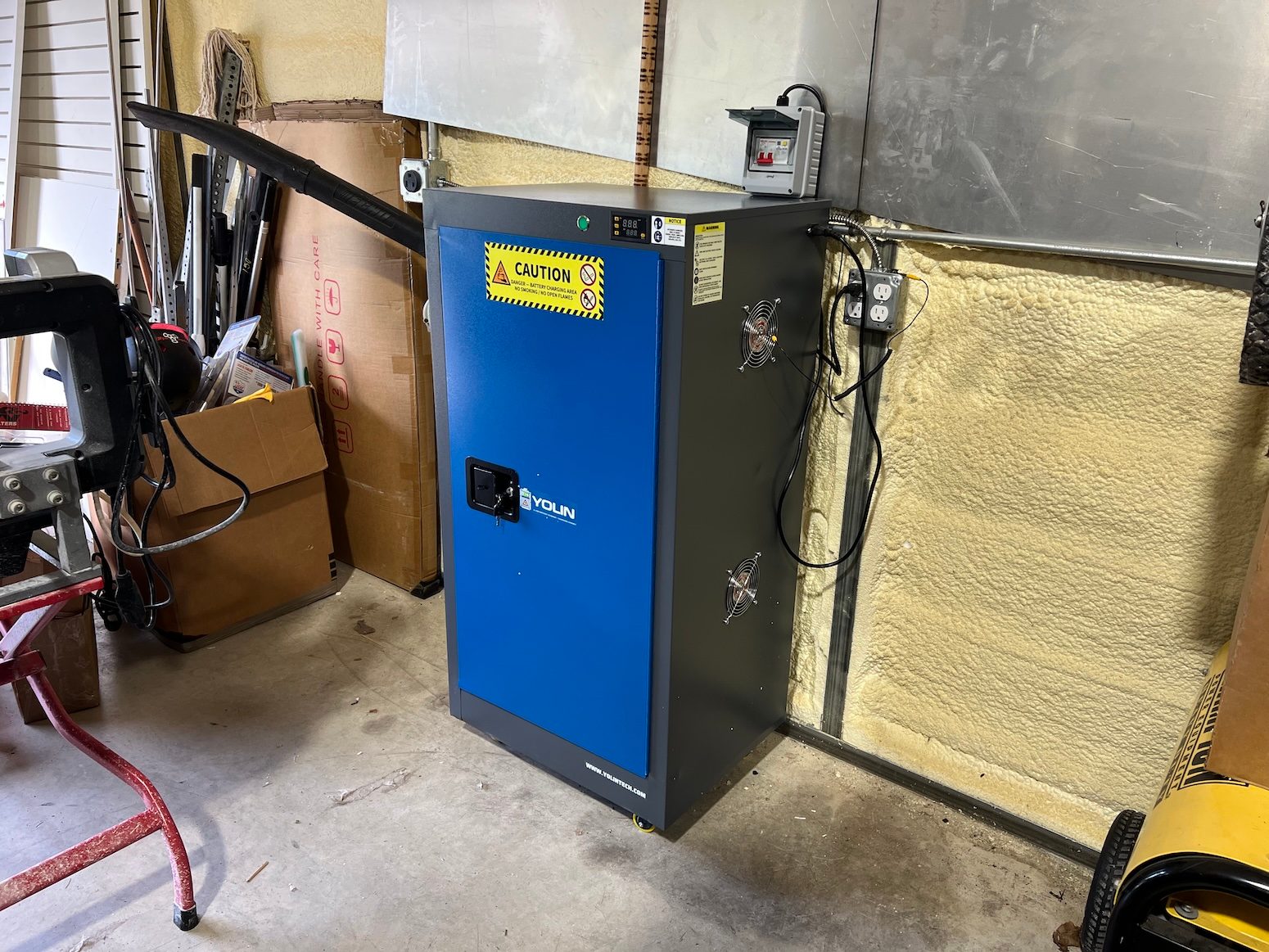
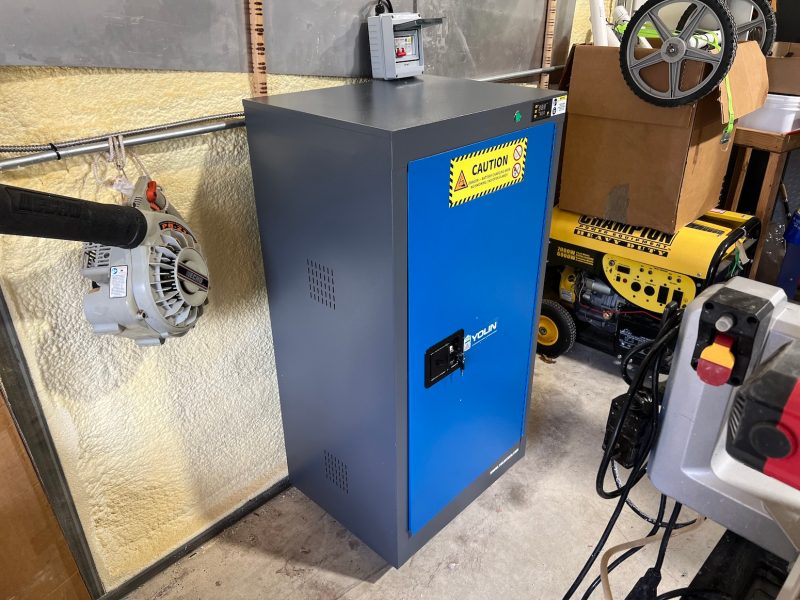
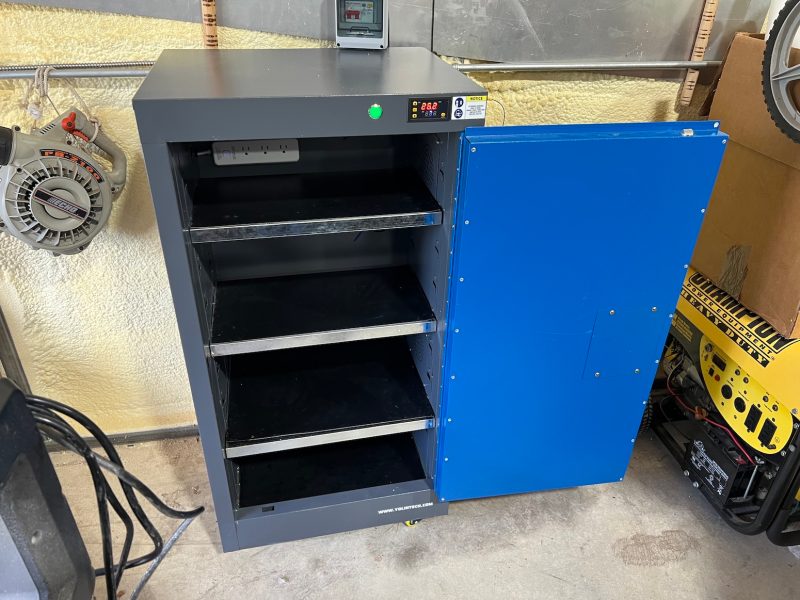
One thing I particularly appreciated was that the cabinet is designed around actual charging workflows instead of simply being a metal box.
Several e-bike batteries fit comfortably on each shelf alongside their chargers, making it practical for anyone managing multiple bikes or tools. I could also see this being a great solution for bike shops, construction companies, landscaping businesses, or delivery fleets that have batteries cycling through chargers all day long.
The feature that gives me the most peace of mind, though, is something you hopefully never need.
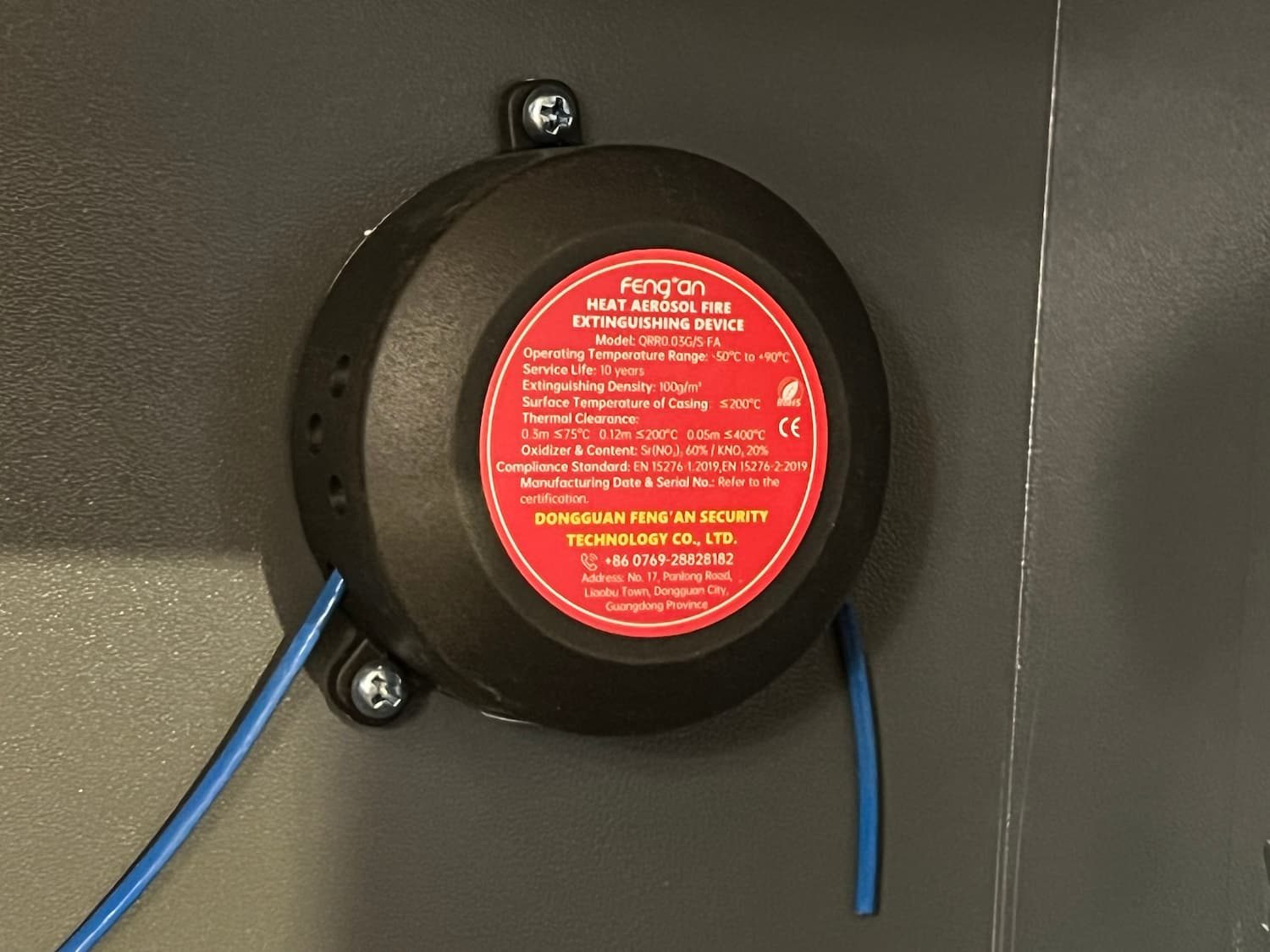
Inside the cabinet are automatic fire suppression canisters – small puck-shaped units mounted near the ceiling that are designed to discharge if exposed to the extreme temperatures associated with a battery fire. Combined with the cabinet’s double-wall steel construction, the idea is to help contain a thermal runaway event rather than allowing it to spread immediately throughout a room. Yolin says the cabinet’s design references several European fire-resistance standards and incorporates a containment-focused structure intended to provide up to 90 minutes of fire resistance.
Since the cabinet isn’t exactly cheap at $899, part of what you’re paying for is the active fire suppression, temperature control, and other smart features that take it beyond just being a sturdy steel box.
Just as useful during everyday operation is the cabinet’s aforementioned thermal management.
A temperature-controlled ventilation fan automatically switches on when additional cooling is needed, helping prevent unnecessary heat buildup while several batteries are charging simultaneously. You can program the maximum temperature you want the cabinet to reach, and the fan will click on as the temperature is reached, and then click off again when the extra air flow sufficiently cools things down. Unlike a fan that’s constantly running, this one only operates when required, keeping noise and dust to a minimum.
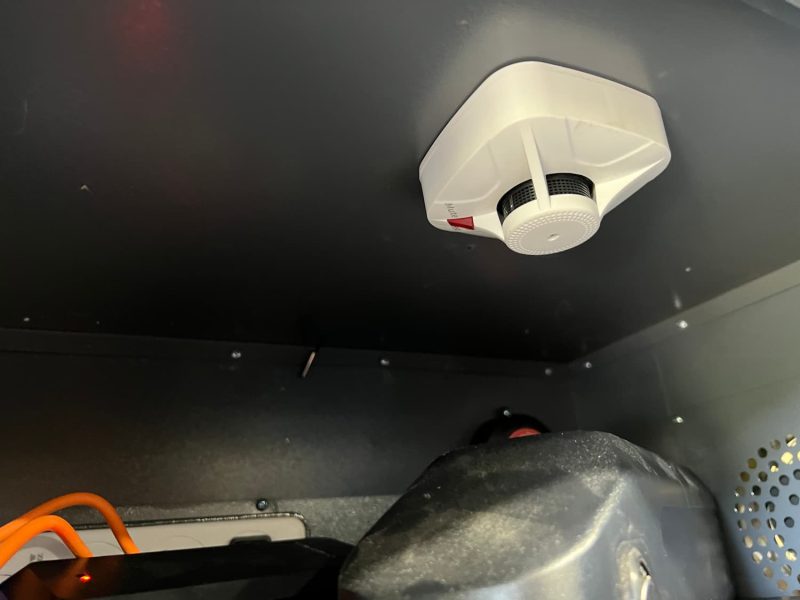
There’s also an independent smoke alarm mounted inside the cabinet. While that might seem obvious, it’s a smart inclusion since if something does begin going wrong during charging, you’ll know about it quickly instead of discovering it much later. I know very few of us actually respect the “never leave your e-bike battery charging unattended” warning, unless you pop open a folding chair each time you plug in and watch it like a hawk for 3-6 hours. So having a built-in smoke alarm would be useful in the event that something did kick off while you’re in the other room.
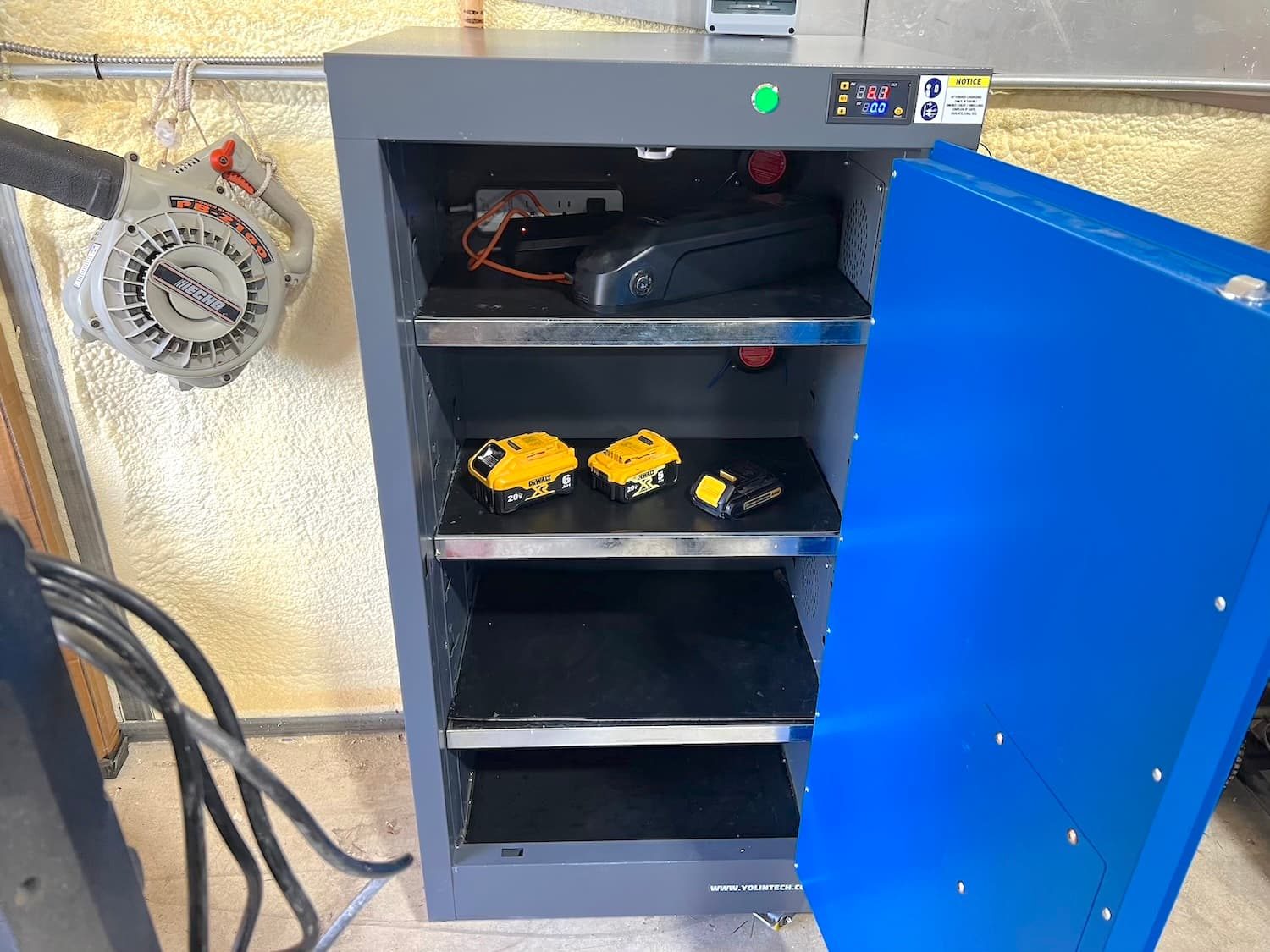
The build quality also exceeded my expectations.
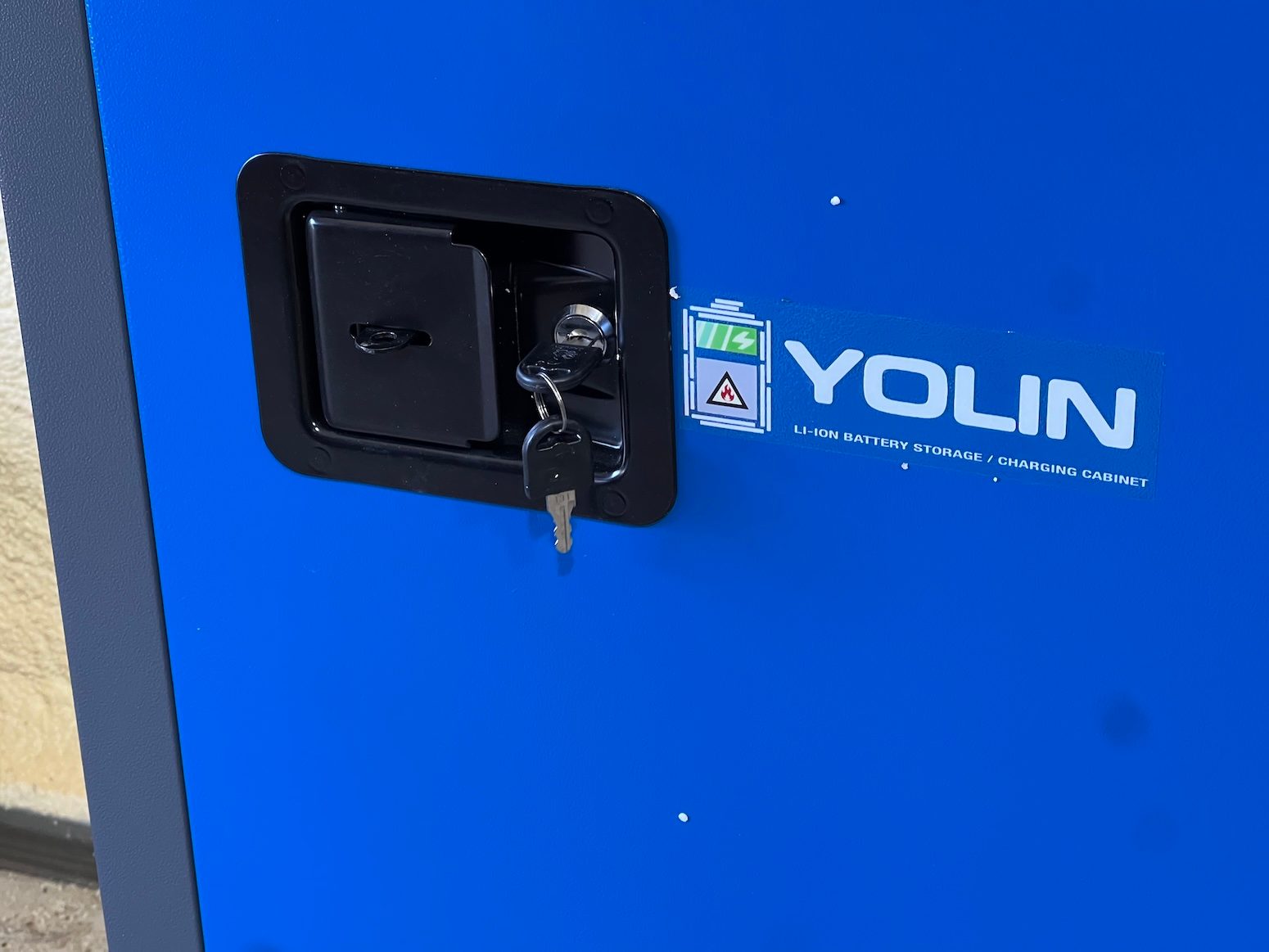
The steel construction feels solid, the shelves inspire confidence even when loaded with several heavy e-bike batteries, and the locking door hardware feels better than consumer-grade. The large model weighs over 90 pounds (41 kg) before batteries are added, giving it a reassuringly substantial feel while the locking casters still make it easy to reposition around a workshop.
Yolin also offers a smaller “Urban” version at a lower cost of $599. Interestingly, both cabinets share essentially the same floor footprint, with the Workshop simply adding more height and additional shelving. That means choosing between them is really a question of vertical storage and charging capacity rather than how much floor space you have available. If you’re charging one or two batteries in an apartment or garage, the smaller cabinet probably makes sense. If you’re like me and tend to accumulate far more e-bikes and battery-powered tools than you ever planned, or if you’re managing multiple e-bikes, the larger Workshop model offers considerably more flexibility.
Final thoughts
Top comment by BlueCoffee
I can see a market for it, though I doubt people would buy this for their own use. It should come with some kind of handle to wheel it out in case a fire were to occur inside though. If you have 5 or 6 batteries charging in there and a thermal runaway event does occur, you don't want to be touching the iron casing.
Hopefully, you never actually find out whether the fire suppression system works. But I’m glad to know it’s there. I guess that’s the funny thing about products like this. Success means you own it for years and never have an exciting story to tell.
For many riders, this cabinet is probably overkill. If you own one high-quality e-bike and charge it occasionally, following normal charging best practices is likely sufficient, unless you just want that extra peace of mind of a safer battery charging location.
But if you’ve got several e-bike batteries, a workshop full of cordless power tools, an e-bike fleet, or simply want another layer of protection between your lithium-ion batteries and the rest of your garage or home, I can definitely see the appeal.
After spending time testing the larger Workshop model, I was pleasantly surprised by just how thoughtfully designed it is. It doesn’t feel like someone simply repurposed a filing cabinet and called it a battery charger. Instead, it feels purpose-built around the way people actually live and work with lithium-powered equipment every day – and that’s exactly what I want to see in a product that’s designed to make charging batteries a little safer.


FTC: We use income earning auto affiliate links. More.



Comments