
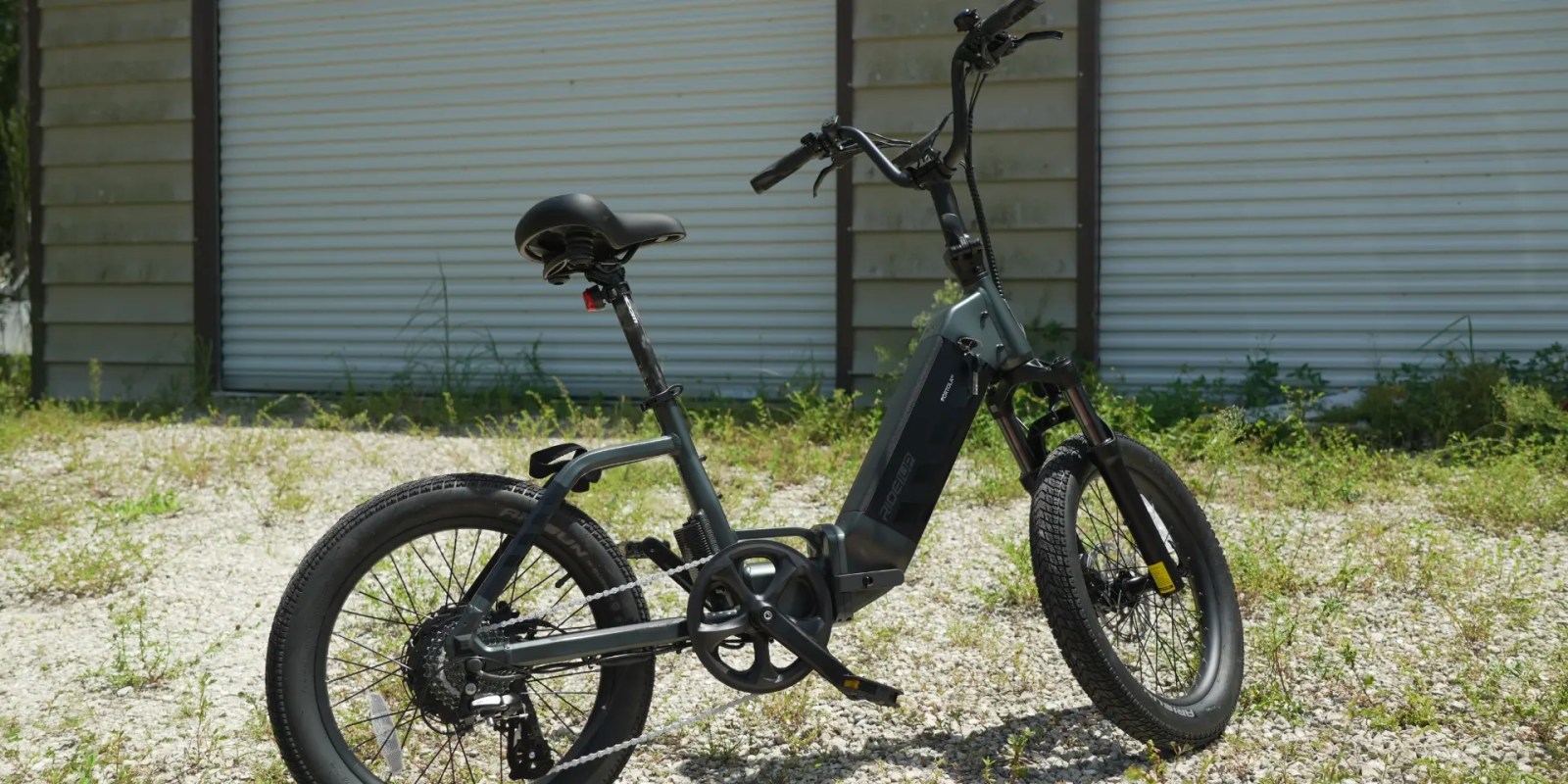
Ride1Up’s Portola has been one of those e-bikes that make a lot of sense on paper: a compact folding design, useful cargo capability, and the kind of pricing that helped Ride1Up build its reputation for high-value e-bikes in the first place.
Upon its initial release nearly three years ago, the Portola was obviously a shot across the bow of the massively popular 20″ wheel folding e-bike market. And now with a major update to the winning model, Ride1Up has shown that they’re here to compete in the booming category.
That’s right, the company is back with the second-generation Portola 02, and I’ve spent the last couple of days riding an early production example ahead of today’s launch.
That isn’t enough saddle time for me to call this a full review, but it is enough to get a pretty good feel for what has changed compared to the original. And while the new Portola still follows the same basic formula (750W motor, 20×3″ wheels, up to 28 mph/45 km/h for Class 3 operation), several of the upgrades make a surprisingly noticeable difference out on the road.
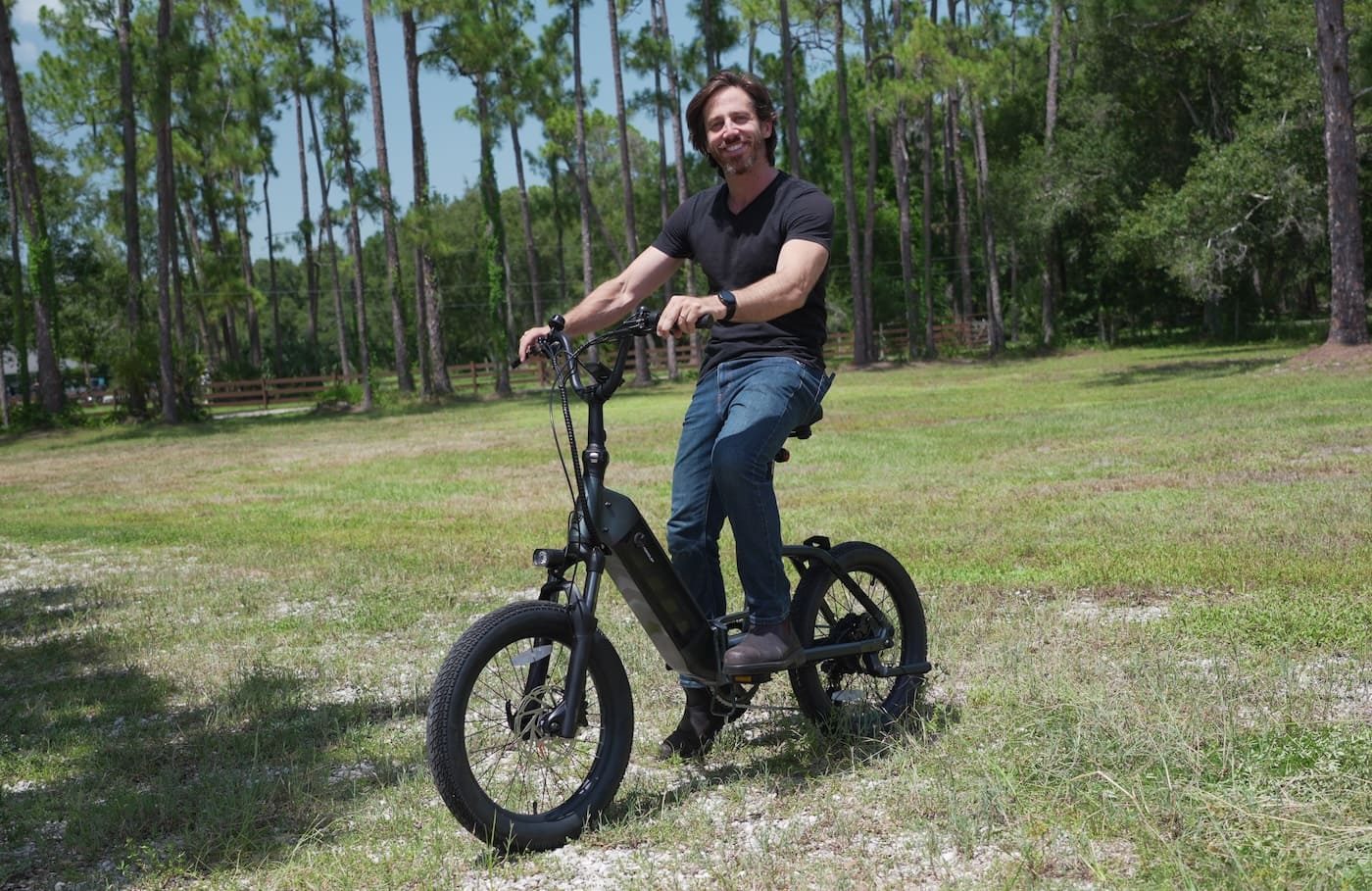
The biggest change, at least from the saddle, is the new pedal-assist system.
Ride1Up has equipped the Portola 02 with its Intui-Drive system, which combines torque and cadence sensing. The original Portola was already a fun little utility bike, but this new setup gives the bike a more refined and natural feeling when pedaling. Instead of assistance simply kicking in based on whether the pedals are turning, the bike can also respond to how hard you’re actually pedaling.
Over my first few rides, the Portola 02 simply felt more responsive and intuitive, especially when starting from a stop or modulating my effort at lower speeds. It still has the easygoing, accessible feel you’d expect from this style of e-bike, but now the power delivery feels a bit more sophisticated.
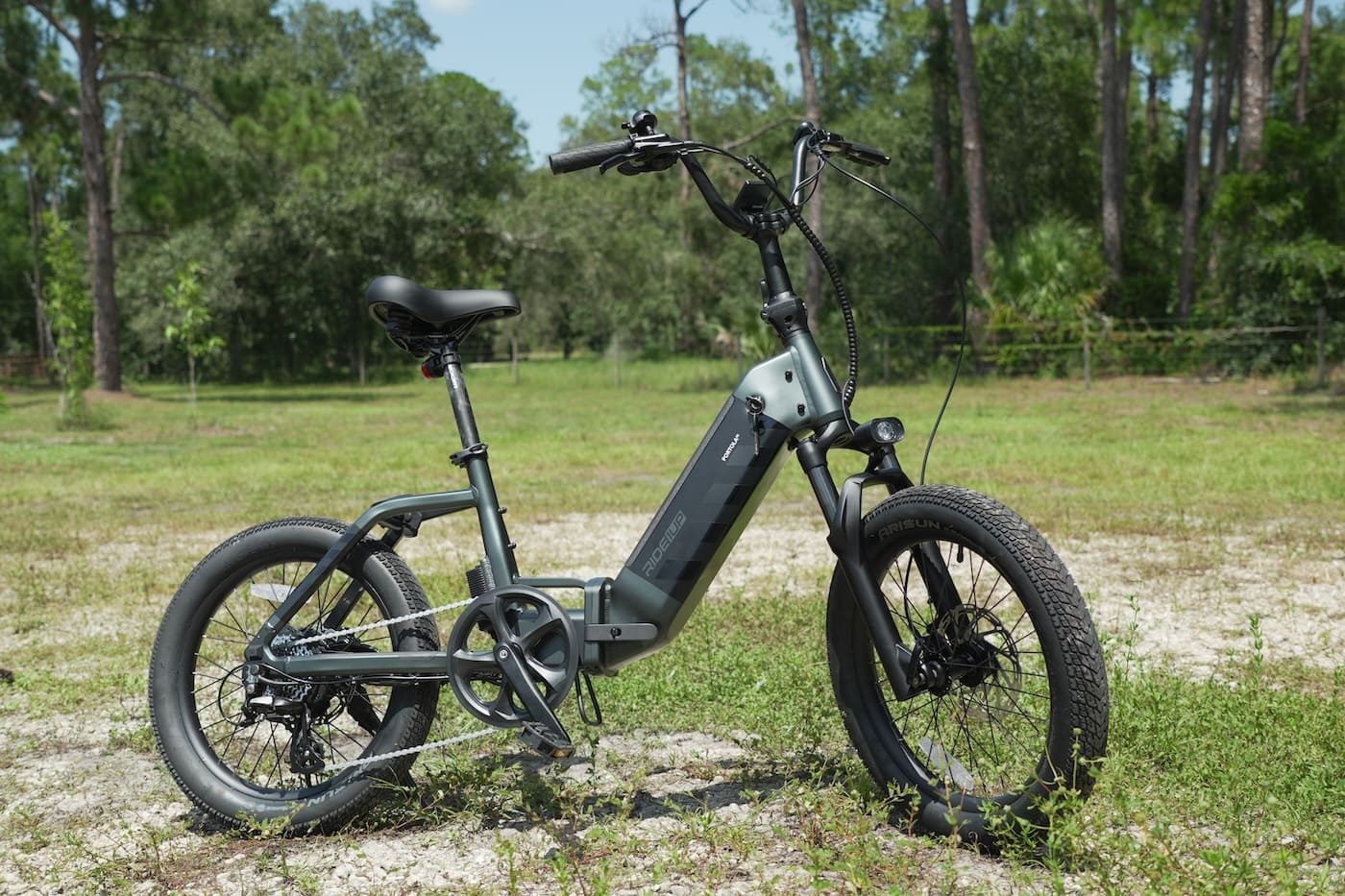
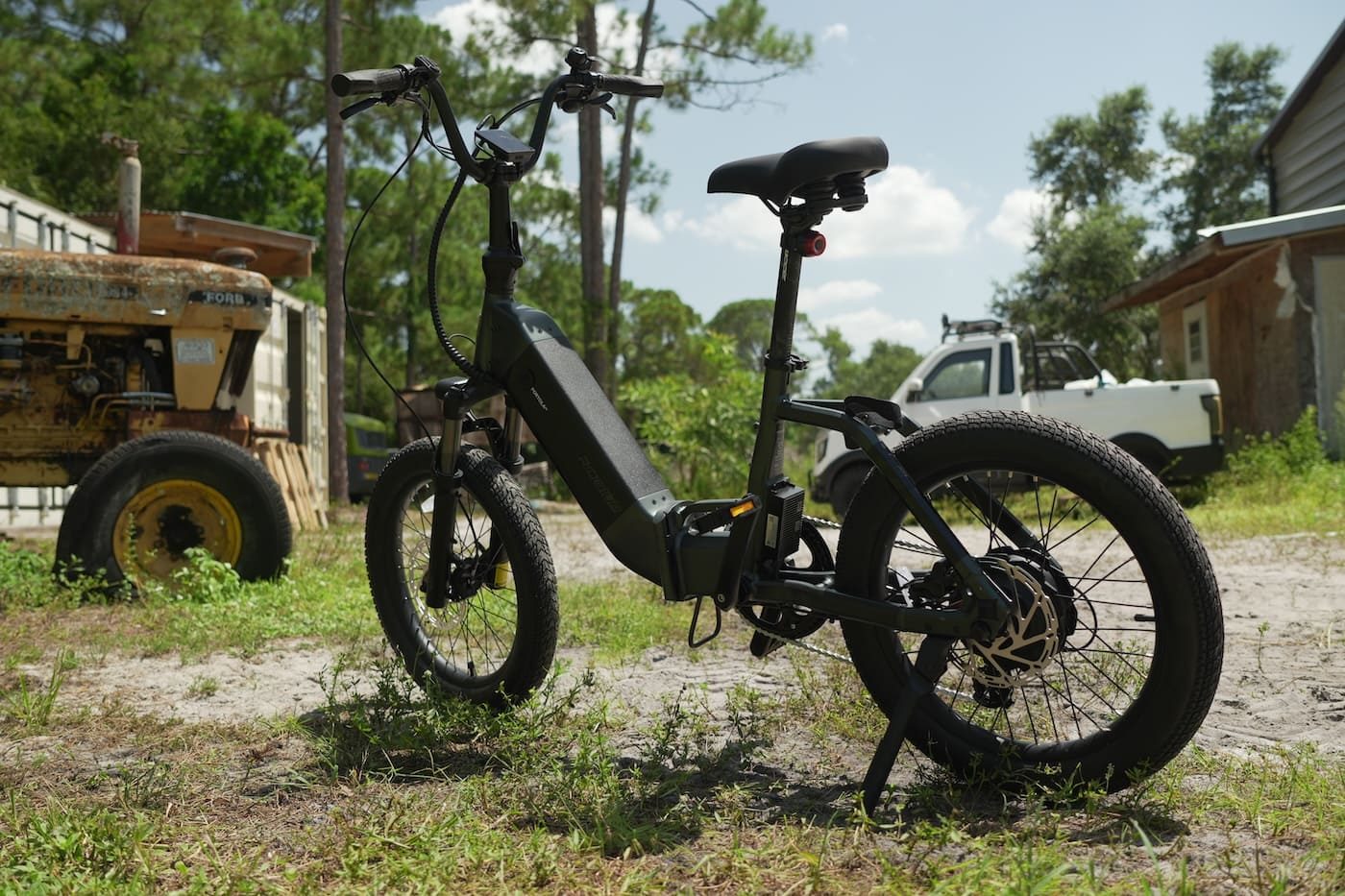
Ride1Up also redesigned the frame and rear cargo setup. The Portola 02 can be had with a heavy-duty removable rear rack, though the two frame configurations now available let you decide whether to go with or without a welded-on rack.
That’s a nice change for a bike like this because the Portola straddles the line between folding e-bike and compact utility e-bike. Some riders are going to want to load it up and use that rear end for serious cargo duty, while others may prefer a cleaner, lighter setup. With one model, Ride1Up now gets to serve both types of riders
Speaking of lighter, that’s a big part of the launch since there are actually two range versions of the bike, thanks to the choice between a smaller 10Ah and larger 15Ah battery. With the bigger battery, the company says the bike can get up to 60 miles (96 km) of range in pedal assist (though if you use the throttle, expect lower figures).
The Portola 02 with a 15Ah LG battery weighs 59 lb (26.7 kg), while the Portola Lite with a smaller 10Ah LG battery drops the weight to 52 lb (23.6 kg).
Seven pounds (3.1 kg) may not sound like a massive difference until you remember that this is a folding e-bike. If you’re buying one specifically because you expect to regularly pick it up, stuff it into a trunk, carry it up a few stairs, or maneuver it around an apartment, seven pounds absolutely matters.
And of course, going lighter on the Lite version is also going to save you a bit from your wallet. The 10Ah Lite starts at an affordable $895, though the larger 15Ah battery with 50% more range only adds $100, bringing the price up to $995. The most maxed out version, which is the Portola 02 with the frame-integrated rack and the larger 15Ah battery, is still only $1,095, meaning even the most tricked out model is still quite affordable!
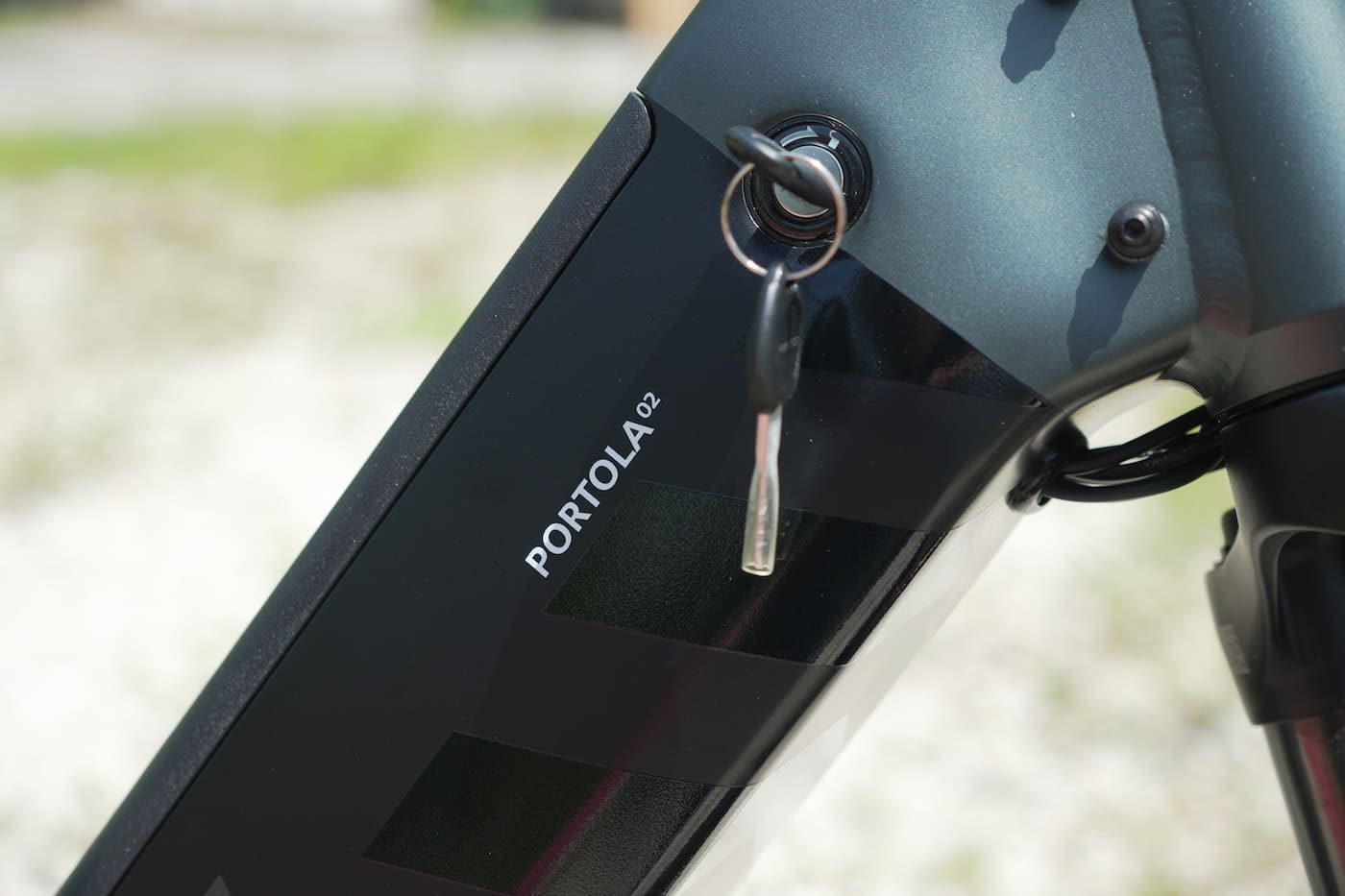
I think a lot of people will generally prefer the bigger battery because they’d rather have extra range in their back pocket, but I can definitely see the appeal of the Lite here. Folding bikes are one of the few categories where shaving several pounds can legitimately be more useful than adding battery capacity.
Not everyone needs to go super far on a charge, and if you’ve got a reasonable commute and prefer the lighter weight of a smaller battery, it makes sense.
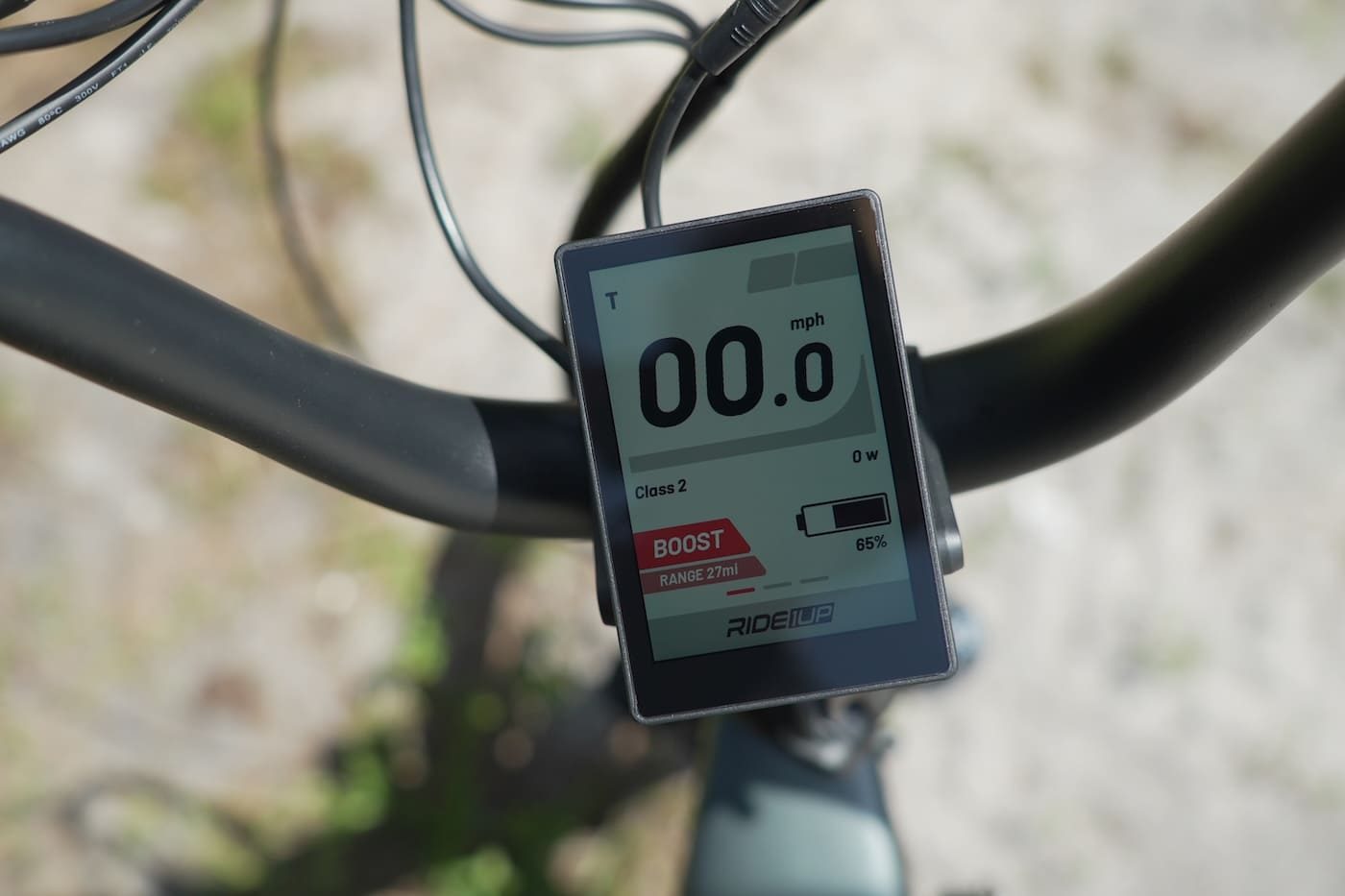
There are some other welcome tech upgrades as well. Ride1Up has fitted a new large color display, an updated battery management system, and built-in Find My tracking. That last one is particularly nice to see becoming more common on e-bikes. A tracker obviously isn’t a substitute for a good lock, but having another tool for locating a missing bike is certainly welcome. Having it built into the bike also means that a thief can’t just remove an AirTag and continue on their way.
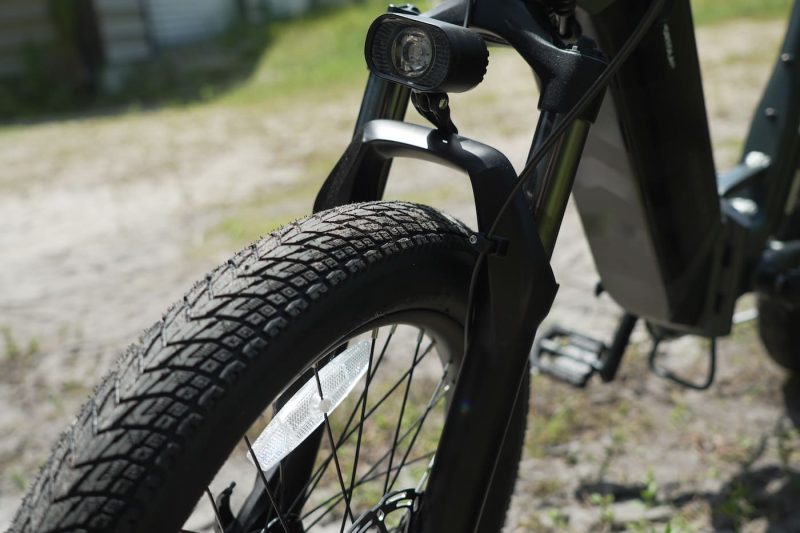
For wheels and tires, Ride1Up stuck with the 20×3″ size, which I’ve always felt was the best compromise. It works great off-road still, as I determined on plenty of gravel paths, thanks to that extra rubber and air volume.
But at the same time, it’s not overly chunky like a true 4″ fat tire, meaning you still remain fairly agile, at least as far as go-anywhere folding e-bikes are concerned.
To me, this is the best of both worlds, as I really feel like I can take the same bike on everything from a city commute to a local nature trail, and still feel like the bike is well within its capabilities.
Visually, the Portola 02 remains very much a Ride1Up product. The company is offering four colors this time around: Bronze, Gray, White, and Blue. Ride1Up calls them “vibrant colorways,” though I might gently push back on the vibrant part.
They look good, particularly the blue, but none quite scratch my personal itch for the obnoxiously bright and fun colors I love seeing on e-bikes. Ride1Up has traditionally kept its color palette fairly understated though, so perhaps I shouldn’t have expected electric lime green or traffic-cone orange this time around.
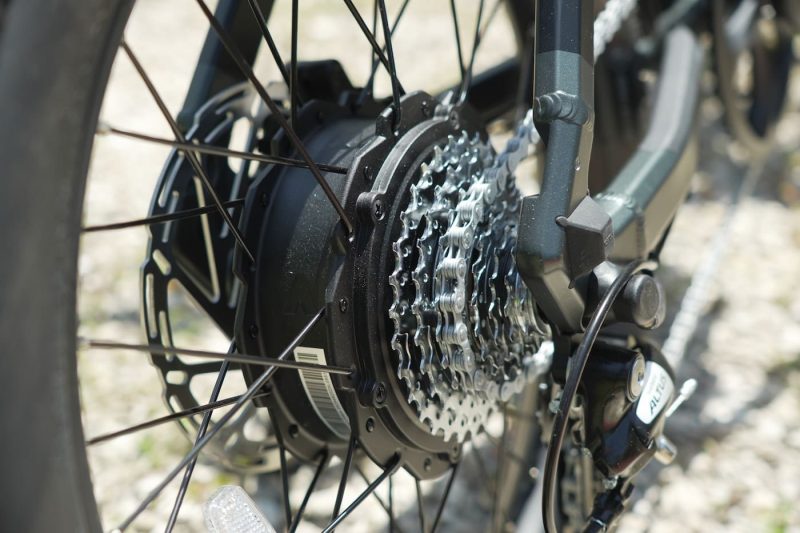
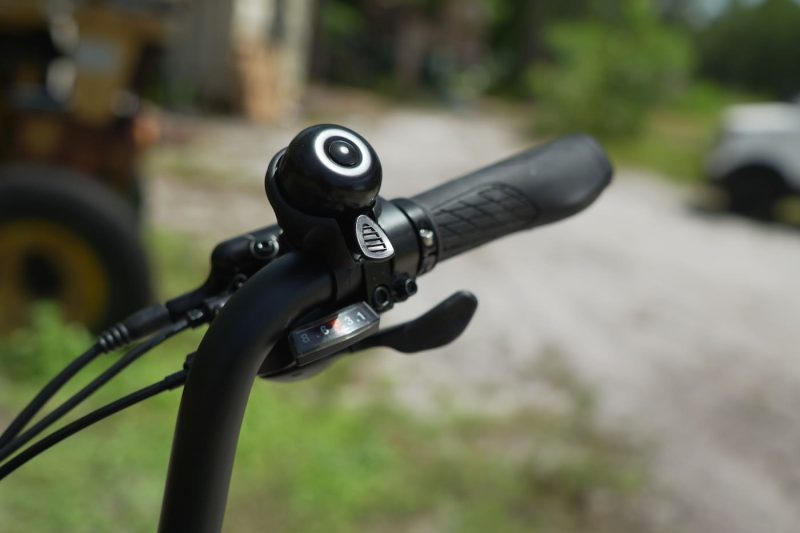
I’m also a bit bummed to see just a simple, basic Shimano Altus derailleur, especially after riding other Ride1Up Models with even nicer components. But I get it: This is an $895 e-bike designed to be accessible. If I want a fancy 9-speed MicroShift, I’ll go hop on my Ride1Up Roadster V3. For a more affordable model like the Portola 02 Lite here, the basic Shimano derailleur is probably fine.
After a few days with the Portola 02, my first impression is that Ride1Up didn’t try to reinvent what was already a successful bike. Instead, it seems to have focused on the areas where meaningful improvements could actually be felt: a better pedal-assist experience, more flexibility in the cargo setup, updated electronics, and a choice between maximum battery capacity and lower weight.
So far, the Portola 02 feels less like a ground-up replacement and more like Ride1Up taking one of its best-selling utility e-bikes and sanding down some of the edges, tightening up some of the features, and basically offering us a more refined, more capable version thanks to all the new bike tech that has become available in the last three years.
And based on my first few rides, that approach seems to have worked pretty well!


FTC: We use income earning auto affiliate links. More.



Comments