
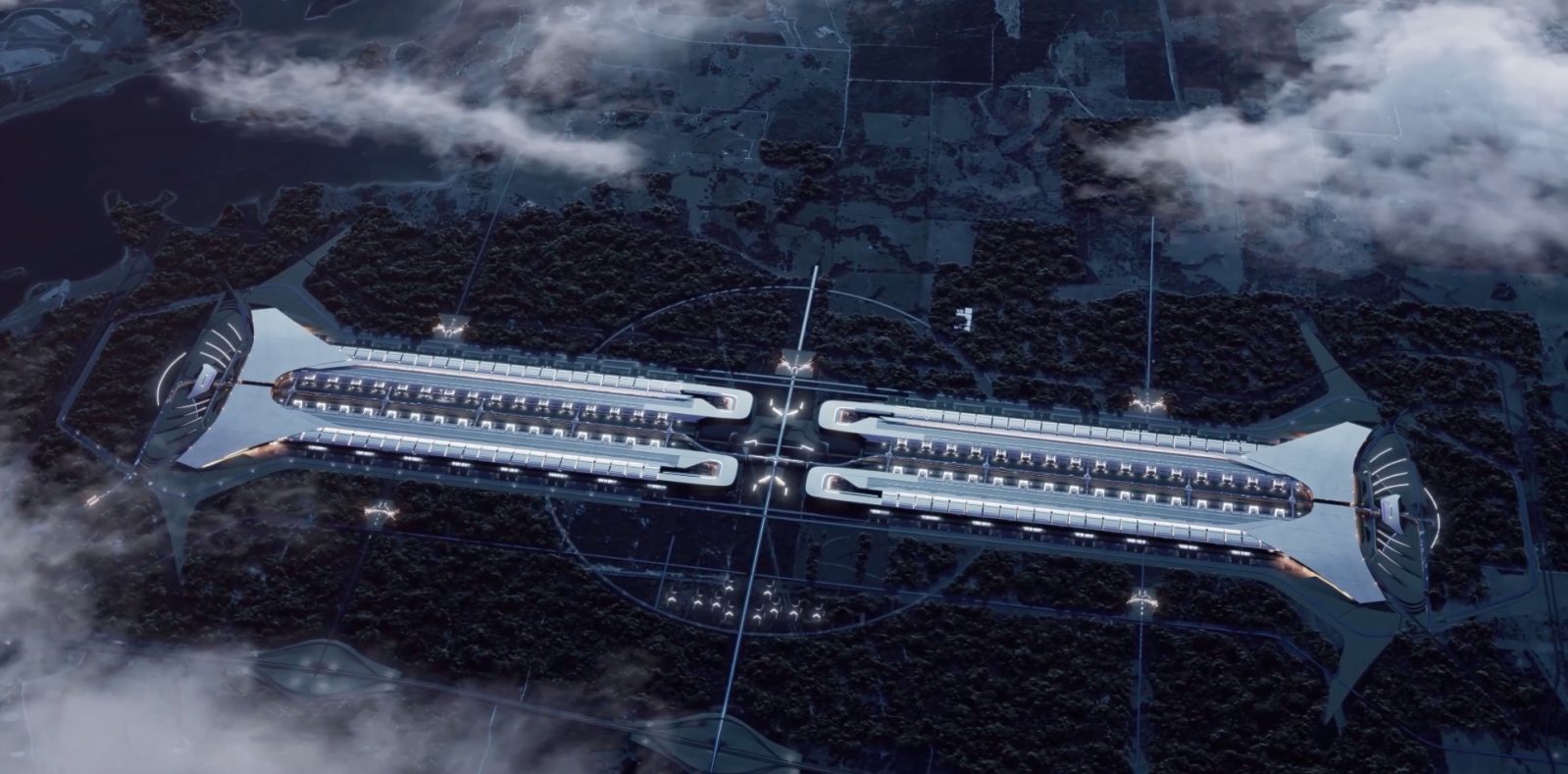
SpaceX confirmed it will power Terafab, its $16.8 billion chip megafactory in Texas, with its own natural gas power plants and “very large battery arrays.” Tesla solar isn’t in the plan.
That’s despite Tesla being a partner on the project, and despite Tesla selling solar panels, Powerwalls, and grid-scale batteries built for exactly this kind of load.
A chip fab on the bones of a coal plant
Tesla and SpaceX confirmed Terafab last week: a semiconductor plant in Grimes County, Texas, about an hour northwest of Houston, that the companies call the largest chip manufacturing facility on the planet. The first phase runs $16.8 billion, down from a $25 billion figure floated in March. It’s meant to churn out over a terawatt of compute per year for SpaceX and xAI data centers, plus future chips for Tesla’s Optimus and Cybercab.
Here’s the detail that got buried. The plant sits on the site of a former coal-fired power plant, and SpaceX plans to power it with newly built natural gas plants and batteries. So the compute future gets built on the same fossil ground as the past. Just swap coal for gas.
There’s no mention of Tesla solar anywhere in the power plan, even though Tesla co-owns the project.
The same gas playbook, only bigger
None of this is a one-off. It’s the pattern.
xAI’s Colossus data center around Memphis has been running on gas turbines since 2024, many of them unpermitted. The NAACP, the Southern Environmental Law Center, and Earthjustice are suing over 27 unpermitted turbines in Southaven, Mississippi, that they say pump out more than 1,700 tons of nitrogen oxides and 19 tons of formaldehyde a year next to homes, schools, and churches. “A data center should not be a potential death sentence for a community’s health,” said the NAACP’s Abre’ Conner. When regulators moved in, Trump’s DOJ intervened to keep the turbines running on national-security grounds.
Then Musk personally bought gas turbine company APR Energy for about $1 billion in July, picking up more than a gigawatt of turbine capacity. SpaceX has separately committed more than $2.8 billion to gas turbines to power its data centers. Terafab’s on-site gas plants are the next brick in that wall.
Tesla sells the alternative — Musk just won’t buy it
The strange part is that the cleaner option lives inside Musk’s own companies.
Tesla sells solar, Powerwall, and Megapack. xAI itself bought $269 million of Tesla Megapacks earlier this year. In June, Tesla and Sunrun launched a 16 GW virtual power plant pitched directly at data centers. Tesla is literally marketing solar-plus-storage as an answer to AI power demand.
And this is the same Musk who spent years selling a “solar electric economy,” who once pitched space-based solar as the long-term fix while burning gas on the ground. The vision is solar. The buildout is gas.
Electrek’s Take
Running gigawatt-scale, 24/7 chip fabs and AI training clusters on solar alone is genuinely difficult today. You need firm power, but Tesla’s and solar plus battery expertise is the solution.
Top comment by dieselox
I'm not worried, this fab will not ever get going, they can't get the equipment. By the time they might reasonably be able to it will already be obsolete.
(Dojo? 4680? Roadster 2? $25k car? Optimus? CyberTruck with crazy range for super cheap? Boring tunnels under LA? all stock pumps, just like this one)
But that’s not the choice Musk is making. He’s not building a solar-and-gas hybrid and squeezing the gas down over time. He’s going gas-first with zero Tesla solar. The driver here isn’t physics, it’s speed and cost.
It’s also incentives. Yes, this would be a great project for Tesla, which Musk owns about 20% of, but it is an even better project for Musk’s newly acquired APR Energy, which he owns 100% of.
Tesla used to exist to accelerate the transition to sustainable energy. Its founder is now behind one of the biggest new gas buildouts in the country.
As data centers pile onto the grid and electricity rates keep climbing, solar and batteries are becoming basic home infrastructure, not a luxury. With rates up almost 10% last year and expected to keep rising, going solar is one of the best ways to protect yourself against rising costs. And with lease and PPA options, you can do it with zero upfront cost and start saving immediately. If you want to find the best deal, check out EnergySage. It’s a free service with hundreds of pre-vetted installers competing for your business, so you save 20 to 30% compared to going it alone. No sales calls until you pick an installer. Get your free quotes here.


FTC: We use income earning auto affiliate links. More.



Comments