
The US public fast-charging network continued to grow in the second quarter of 2026, but a new report suggests the industry is shifting gears. The focus is no longer just on installing as many chargers as possible – it’s increasingly about reliability, customer experience, and building a profitable business.
According to EV charging data platform Paren‘s just-released Q2 2026 State of the EV Charging Industry report, EV drivers are benefiting from a charging network that’s expanding fast enough to keep up with the growing number of EVs on the road. Charging sessions jumped 29% year over year, showing that drivers are putting the new infrastructure to work almost as quickly as it’s being built.
But for charging companies, the picture is more complicated.
Charger deployment is still growing, but more slowly
The US added 4,382 new public DC fast charging ports in Q2 2026, down 10% from the 4,865 installed during the same quarter last year. Through the first half of 2026, 7,903 new ports came online, compared to 8,532 during the first half of 2025 – a 7.4% decline.
Paren says two consecutive quarters of slower year-over-year growth don’t necessarily mean the market is slowing. But alongside recent layoffs and expansion pullbacks by some charge point operators (CPOs), the data suggests the industry is entering a more mature stage where operational efficiency matters as much as growth.
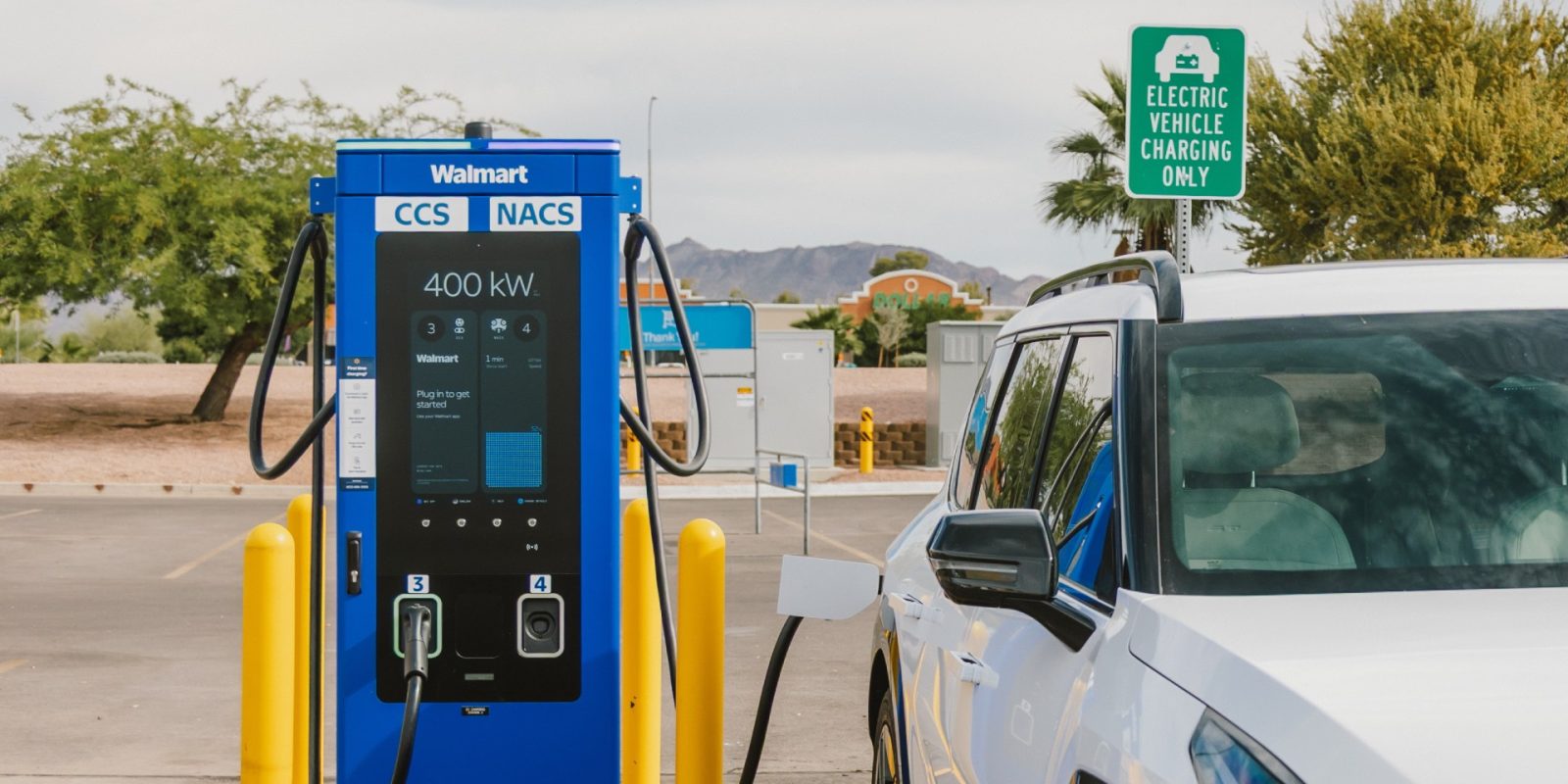
Tesla once again led the quarter, adding 1,185 new ports, or 27% of all new US fast-charging ports installed in Q2. Walmart followed with 368 ports, ChargePoint added 333, and Red E installed 315.
Tesla also continues to build differently from its competitors. The company averaged 12.1 ports per new station, down from 15.0 in Q2 2025. That’s compared with 4.4 ports at non-Tesla sites, up from 3.6 a year earlier. While many networks are moving toward building larger charging hubs, Tesla is increasingly expanding its reach by opening more locations.
The buildout spanned nearly every state, with operators opening 806 new public fast-charging stations during the quarter. Most, however, were in cities and suburbs – about 4 out of every 5 new stations were built in urban areas. California, Texas, Florida, Illinois, and New York accounted for roughly 40% of all new stations, and California alone represented 1 out of every 7.
Faster chargers and more charging sessions
Charging speeds also continue to improve. Including Tesla, 72% of all new ports installed in Q2 deliver at least 250 kW, while only 14% provide less than 150 kW, making ultra-fast charging the new norm.
Drivers are also paying different prices depending on where they charge. The average state-level fast-charging price held steady at $0.538 per kilowatt-hour. Hawaii had the highest average price at $0.856 per kWh, while Nebraska had the lowest at $0.428 per kWh.
Charging demand remained strong, with sessions increasing by 3.5 million year over year. But despite that growth, sessions per port and overall utilization stayed essentially flat, indicating that new charging capacity is keeping pace with the growing EV fleet.
The industry enters its next chapter
Paren says the market is now entering what Loren McDonald, CEO and chief analyst at Chargeonomics, calls the “Charging 2.0” phase. Newer networks like Ionna, Walmart, Red E, Mercedes-Benz High-Power Charging, and Pilot Flying J are rapidly building nationwide footprints. Meanwhile, Tesla, Electrify America, and EVgo are increasingly concentrating new stations within existing markets to capture a larger share of local charging demand.
The shift to NACS is also accelerating. Several newer charging providers are installing roughly equal numbers of CCS and NACS connectors, but much of the industry’s existing infrastructure still leans heavily toward CCS. As nearly every new EV sold today comes with a native NACS port, operators that are slow to add NACS connectors could find themselves at a competitive disadvantage.
Reliability also edged higher. The average US fast charging reliability score rose from 93.6 in the first quarter to 93.8 in Q2, largely because newer charging stations tend to perform better. But Paren argues that reliability is no longer a selling point – it’s simply the baseline. Drivers expect chargers to work every time, and if they don’t, then networks will lose customers.
Electrek’s Take
The takeaway here isn’t that the US is running out of momentum on EV charging. Thousands of new DC fast chargers are still coming online every quarter, and drivers are using them.
Top comment by Chris M
Charging 2.0 to me means I can choose when to stop based on personal needs, amenities, and price. The need to stop because "The charger is there and the next one's a long way away" has disappeared on major highways in most of the US, though there are certainly gaps left to fill. The past two years have seen major improvements in availability and reliability.
What’s changing is the business. Investors and operators are looking beyond expansion and asking which charging networks can actually make money while delivering a reliable experience. As more EVs hit the road and NACS becomes the standard, the companies that combine dependable chargers, convenient locations, and the right connector mix are likely to have the advantage.
Read more: EV fast charging is stabilizing in the US – here’s what changed
If you’ve ever considered going solar, make it easy by finding a trusted, reliable solar installer near you that offers competitive pricing by checking out EnergySage. It has hundreds of pre-vetted solar installers competing for your business, ensuring you get high-quality solutions and save 20-30% compared to going it alone. Plus, it’s free to use, and you won’t get sales calls until you select an installer and share your phone number with them.
Your personalized solar quotes are easy to compare online, and you’ll get access to unbiased Energy Advisors to help you every step of the way. Get started here.


FTC: We use income earning auto affiliate links. More.



Comments