
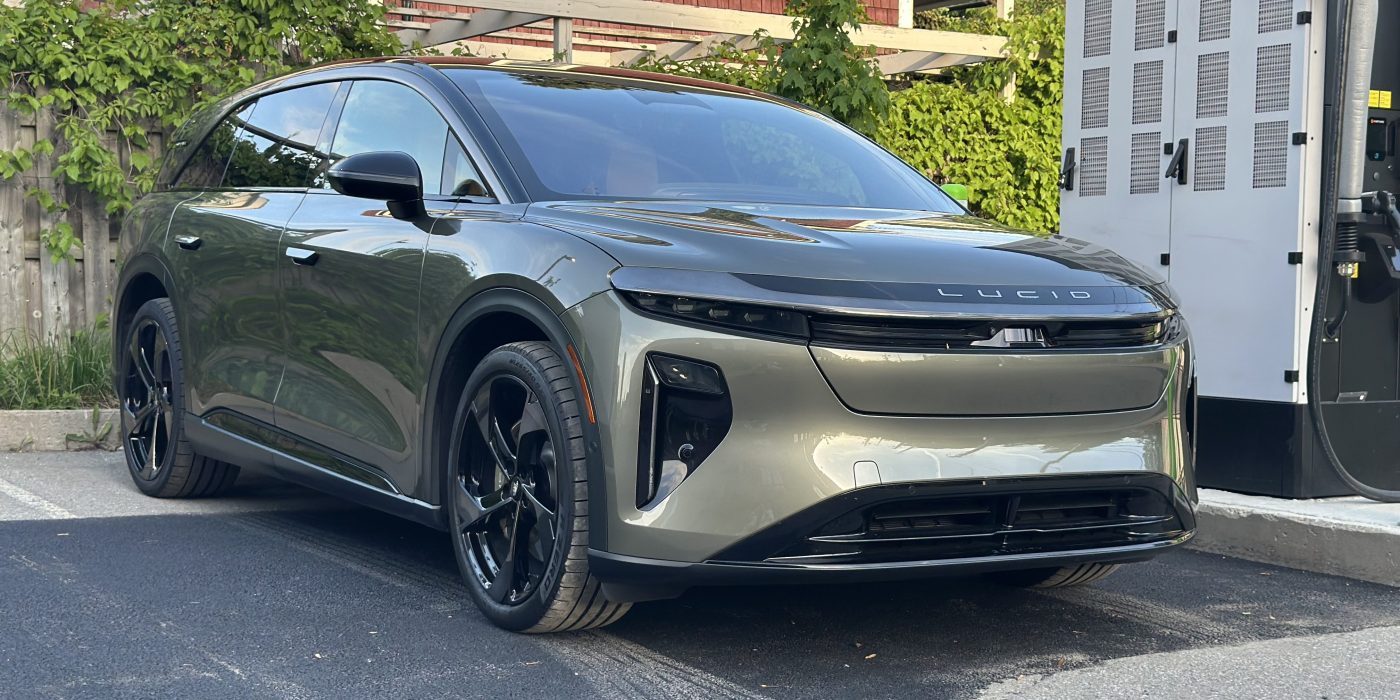
Lucid (LCID) stock was hit with multiple volatility halts and crashed more than 40% on Tuesday after a report claimed the EV maker was weighing Chapter 11 bankruptcy or going private.
Lucid quickly denied the report, calling the speculation “completely false” and pointing to its cash position as evidence it can keep operating well into next year.
What the report claimed
The report came from eletric-vehicles.com, which published an “exclusive” alleging that restructuring firm AlixPartners (something that was already reported) had advised Lucid’s board to consider strategic options including a take-private deal or a Chapter 11 filing.
The story hit at the worst possible time for a stock already in freefall. Shares plunged as much as 40%-plus intraday — one of the worst single-day drops in company history — triggering two volatility trading halts. Rival Rivian’s stock also slipped on the news as investors reassessed the EV startup landscape.
Lucid’s denial
Lucid’s head of communications, Nick Twork, pushed back directly and publicly.
“The rumors are completely false,” Twork wrote, adding that AlixPartners “has not recommended bankruptcy to management or the Board.” According to Twork, the firm is solely helping Lucid improve operational efficiency, and the company has not set up any special board committee to explore a buyout or a restructuring.
Twork said Lucid has “sufficient liquidity to carry its operations well into next year” — a claim backed up by the company’s most recent quarterly filing.
The financial reality
Here’s what the numbers actually show. Lucid reported roughly $714 million in cash, equivalents, and investments at the end of Q1 2026, and about $3.2 billion in total liquidity. In April, it raised another $1.05 billion — including $550 million in convertible preferred stock from Saudi Arabia’s Public Investment Fund (PIF) and $200 million from Uber — and drew $500 million from a PIF term loan while retaining roughly $2 billion in undrawn capacity. On a pro forma basis, that put total liquidity near $4.7 billion, which analysts have said supports a runway into late 2027.
That doesn’t mean Lucid is healthy. The company lost $1.03 billion in Q1 2026, nearly three times its loss a year earlier, and burned about $3.8 billion in free cash flow in 2025 on just 15,800 deliveries. Wall Street analysts don’t expect positive free cash flow until 2030, with projected losses of $6.7 billion through 2028.
Lucid has spent the past few months in cost-cutting mode. It laid off 18% of its staff in June, its second deep cut in four months, then overhauled almost its entire C-suite under new CEO Silvio Napoli and pulled its 2026 production guidance. The stock, which peaked near $58 after its 2021 SPAC debut, is down more than 90% since.
Electrek’s Take
Let’s be clear about two things at once, because they’re both true.
First, the report was shady. It came from eletric-vehicles.com — not a name with sourcing credibility — and it conflated two very different outcomes. An operational restructuring engagement with AlixPartners is routine for a company in Lucid’s position, and it is a world away from a board actively weighing a Chapter 11 filing. Lucid’s denial was fast, specific, and on the record. The market’s 40% reaction was a panic move on a thinly sourced story, not a response to any filing, SEC disclosure, or confirmed board action.
Top comment by GreenSeahorse
After reading the article, it seems a better title would have been:
Coordinated effort to discredit Lucid succeeds in halting the stock trading
The real story here is that someone or some group was willing to go to great lengths and possibly commit crimes to cause problems for the company. I don't own Lucid stock or one of their cars, but I see that the stock has taken a 20% hit on false information. Maybe a quick buy is in order!
The hiring of Alix was already reported by several outlets; the shady outlet only built on it and added the bankruptcy rumor.
Second, Lucid is genuinely not in great shape, and that’s exactly why the rumor moved the stock so violently. When you’re burning billions, cutting staff twice in four months, and swapping out your entire executive suite, investors are primed to believe the worst. That’s the real story here.
But “not in great shape” and “about to file for bankruptcy” are not the same thing. With roughly $4.7 billion in pro forma liquidity, a runway into late 2027, and a majority owner in the PIF that might pull the funding out at some point, but still hasn’t, Lucid can survive for a while — long enough to get the more affordable Cosmos midsize SUV to market and find out whether it can actually scale. Whether it should is a different question, but the bankruptcy call is premature. The bigger risk for Lucid isn’t a court filing next quarter — it’s whether the PIF’s patience outlasts the cash burn.
If you’re shopping for an EV like the Lucid Air or Gravity, powering it with home solar is one of the smartest ways to lock in low running costs for years. With electricity rates climbing nearly 10% last year, home solar protects you against future rate increases. And with lease and PPA options, you can go solar with zero upfront cost and start saving immediately. If you want to find the best deal, check out EnergySage. It’s a free service with hundreds of pre-vetted installers competing for your business, so you save 20 to 30% compared to going it alone. No sales calls until you pick an installer. Get your free quotes here.


FTC: We use income earning auto affiliate links. More.



Comments