
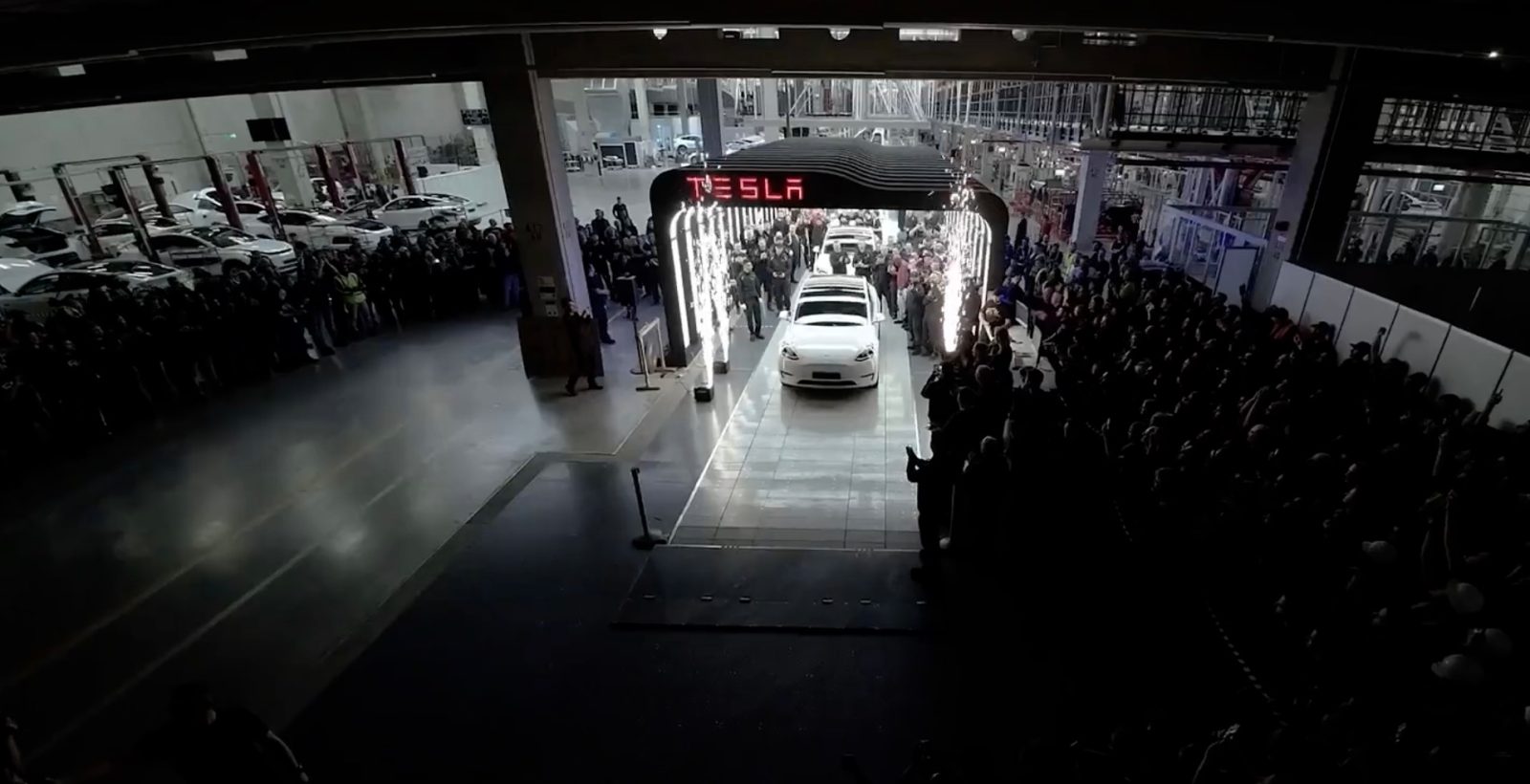
Tesla plans to hire another 1,000 workers at its Gigafactory outside Berlin, the automaker confirmed Thursday, as it moves to ramp production at its only European plant.
The hiring push comes as Tesla targets 7,500 vehicles per week at the Grünheide factory starting in October — a sharp acceleration after more than a year of falling sales in Europe.
A second hiring wave in three months
The new 1,000 hires come on top of 1,000 additional staff Tesla announced in April, which the company said it would bring on by the end of June to lift output by roughly a fifth, to around 6,000 vehicles per week.
If Tesla follows through, the October target of 7,500 cars per week would represent another 25% jump on top of that increase — and put Giga Berlin on a pace of roughly 390,000 vehicles per year.
That’s still below the 500,000 cars a year Tesla aimed for when it opened the plant around four years ago, but it would mark the highest sustained output the factory has ever run.
The company has also been staffing up on the battery side. In May, Tesla announced plans to recruit more than 1,500 employees for battery cell production in Germany, years after Elon Musk vowed in 2020 to turn Grünheide into the world’s largest battery factory.
Why Tesla is ramping now
The expansion tracks a genuine turnaround in Tesla’s European business.
After two straight years of declining sales in Europe — including a roughly 27% drop last year — Tesla’s registrations have now grown for several consecutive months. EU registrations climbed 67% year-over-year in April, and the company reported European registrations more than doubling in June.
Giga Berlin builds only the Model Y for the European market, so any sustained demand recovery flows directly to the plant’s production schedule.
A major factor behind the rebound is something outside Tesla’s control: fuel prices. Gas costs across Europe have climbed since late February, and rising fuel prices have pushed more buyers toward electric vehicles. Battery-electric cars accounted for 19.7% of new EU registrations through April, up from 15.3% a year earlier.
Renewed national incentive programs and a recovering overall car market have added to the tailwind. The gains have been strongest in Northern and Western Europe, with France, Sweden, Denmark, and Ireland all posting triple-digit percentage increases in April.
Electrek’s Take
This is the clearest signal yet that Tesla’s European slump is over — at least for now. You don’t add 2,000 production workers in three months and target a 25% output increase if you’re worried about moving the metal.
Top comment by dashpool
The big long-term factor is that BEV demand in Europe has been quite rapidly increasing for years.
i.e. it requires stuffing up on a quite epic level to arrange for your sales to actually drop in absolute numbers in this backdrop.
Part of the increase in sales is that finally we are seeing Tesla start to discount their cars to less stratospheric levels; these cars should now be very cheap to produce considering how old the design is, with incremental improvements to production, and the relatively small batteries, given good efficiency.
I don't personally want one, but at least dropping prices should force cheaper offerings from local brands like VWAG.
But it’s worth being honest about what’s actually driving this. Tesla didn’t engineer this recovery with a new product; the Model Y refresh didn’t end up helping much, but the bigger lever was higher fuel prices making EVs more attractive across the board. That’s a tailwind Tesla is riding, not one it created, and it could reverse if energy markets calm down.
The more durable story is the floor. Last year’s collapse, fueled in part by Musk’s politics and an aging lineup, set the bar so low that almost any normalization looks like a boom in year-over-year terms. Even at 7,500 cars a week, Giga Berlin would still be running well under the 500,000-unit annual capacity Tesla promised at launch.
The real test comes when Chinese competition — BYD chief among it — keeps scaling in Europe and the fuel-price tailwind fades. Can Tesla hold these gains on product merit alone? Hiring 1,000 workers is a bet that it can. We’ll know more when the full Q3 European registration data lands.
If you’re shopping for an EV to beat rising fuel costs, powering it with home solar is one of the smartest ways to lock in low charging costs for good. With electricity rates climbing nearly 10% last year, home solar protects you against future rate increases. And with lease and PPA options, you can go solar with zero upfront cost and start saving immediately. If you want to find the best deal, check out EnergySage. It’s a free service with hundreds of pre-vetted installers competing for your business, so you save 20 to 30% compared to going it alone. No sales calls until you pick an installer. Get your free quotes here.


FTC: We use income earning auto affiliate links. More.



Comments