
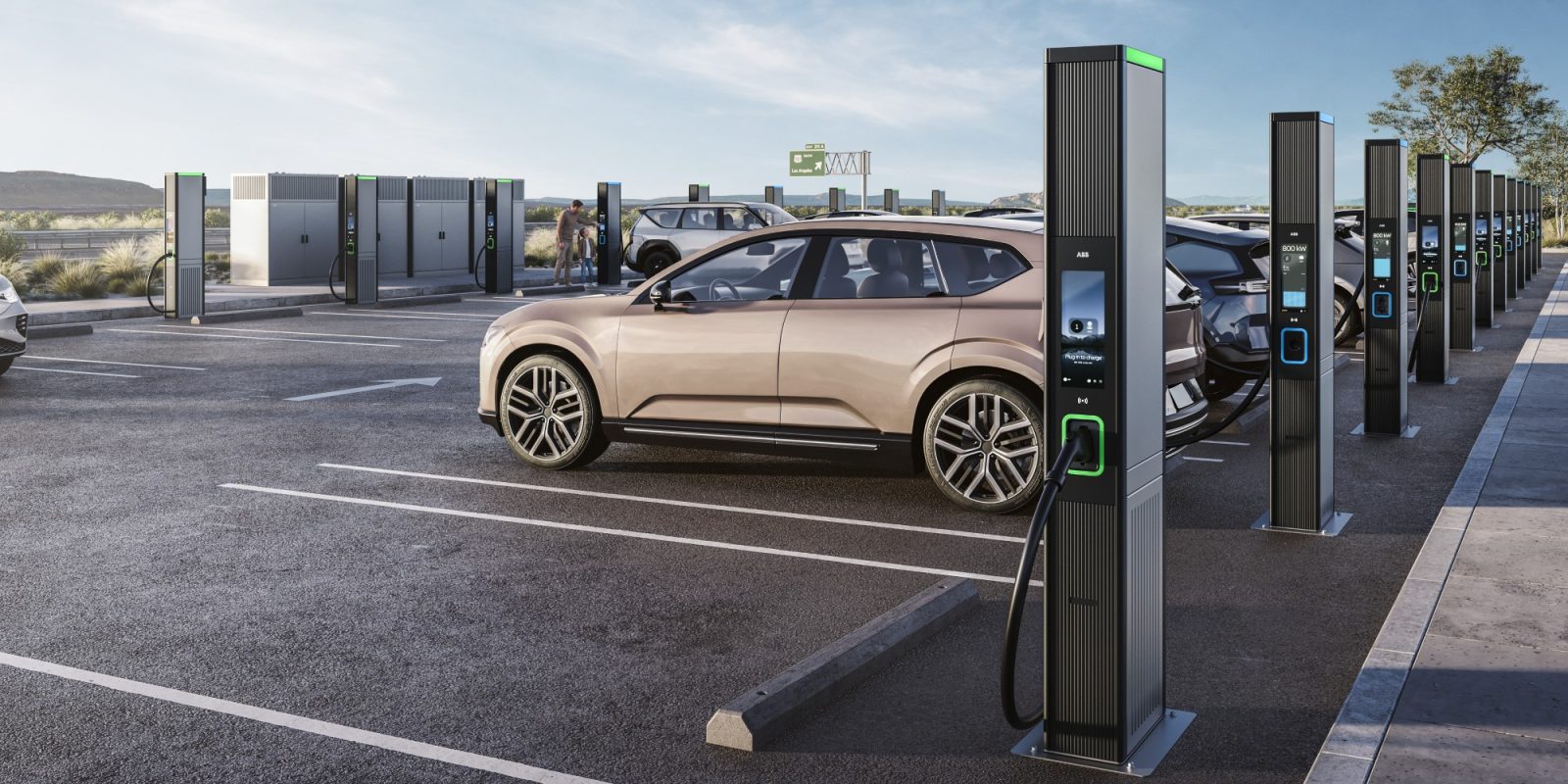
ABB E-mobility is going after the toughest EV charging jobs with a powerful new charger system built to run nonstop at transit depots, logistics hubs, and high-traffic corridors.
A shift away from standalone chargers
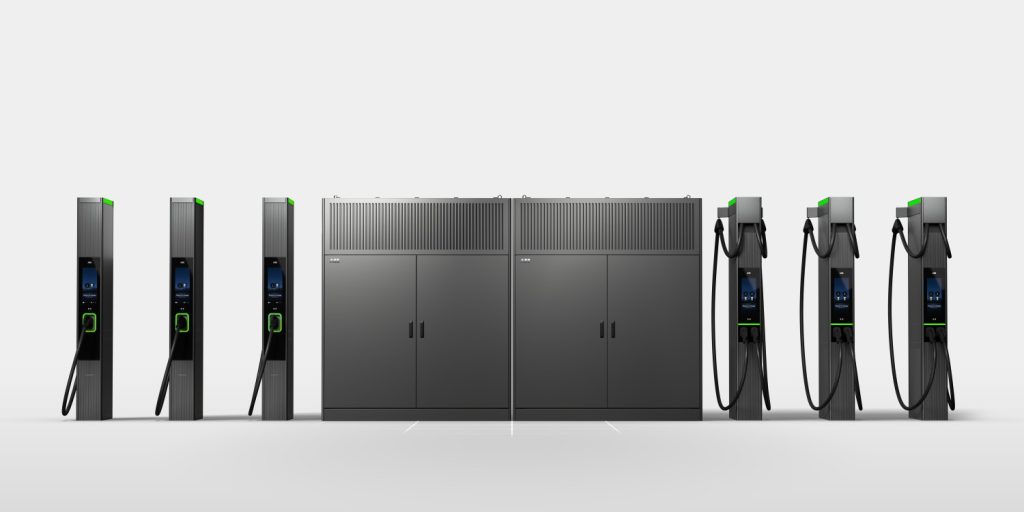
The company’s OM X-Series is designed as a distributed charging system that replaces traditional clusters of chargers with a single, coordinated site architecture. It can scale from 800 kilowatts to 10 megawatts and beyond, supporting more than 100 charging points on a single system.
ABB says the shift is meant to address a growing problem at large charging sites. As demand rises, simply adding more standalone chargers can create inefficiencies and operational headaches instead of solving them.
Building on ABB’s charging stack
The X-Series builds on ABB E-mobility’s earlier platforms. The A-Series, launched in 2024, focused on high-power charging reliability. The OM M-Series, introduced in April 2026, expanded that approach into site-level systems designed to improve charging economics. The new X-Series extends that architecture to megawatt-scale applications with sustained, long-duration use.
Why cooling matters at scale
At those levels, ABB says thermal management becomes critical. The X-Series uses a fully liquid-cooled power path that runs through the entire system, including the cabinet, power modules, and charging cables. According to the company, the system maintains more than 98% conversion efficiency during continuous operation, not just at peak performance, and is designed to outperform air-cooled systems under heavy, long-term loads.
The platform also includes built-in redundancy to keep sites running during both planned and unplanned interruptions, minimizing downtime without requiring scheduled maintenance shutdowns.
Inside the architecture
The architecture includes three main components. A site-level DC bus serves as the backbone, enabling real-time power distribution across the system. Liquid-cooled silicon carbide modules handle power conversion. And battery energy storage can connect directly to the DC bus, which ABB says improves round-trip efficiency by more than 5 percentage points compared to AC-coupled systems while enabling peak shaving and demand management.
The system is also designed to support vehicle-to-grid (V2G) capabilities as regulations evolve.
Built to scale without rebuilds
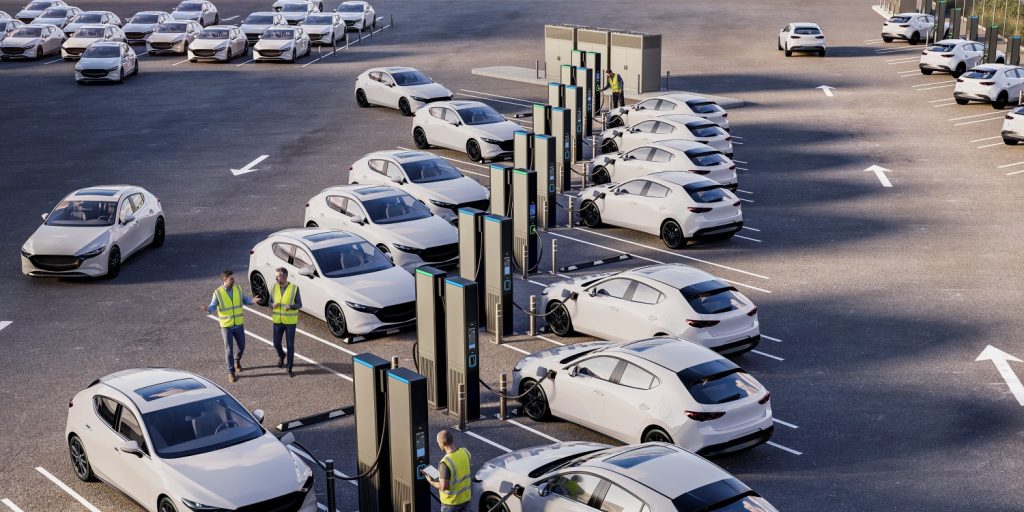
Because the X-Series separates different stages of power conversion, ABB says sites can scale up over time without major construction work. A site that starts with an X1600 configuration can expand toward multi-megawatt capacity using the same underlying infrastructure.
The initial setup includes two 800 kW cabinets connected through a DC bus, supporting up to 24 charging outputs and direct battery storage integration. ABB says it plans to expand the system to larger multi-megawatt deployments using the same architecture.
Designed for evolving demand
The X-Series also shares charging dispensers with the OM M-Series, allowing operators to start with one system and upgrade as demand increases.
“Charging is moving toward mission profiles where systems must operate under sustained load for years, not just peak moments,” said Michael Halbherr, chief executive officer of ABB E-mobility. “At that level of utilization, thermal stability and energy efficiency are not specifications; they are the economics. The X-Series is built for that standard from the architecture up.”
Electrek’s Take
What ABB is really doing here is admitting something the industry doesn’t always say out loud: adding more chargers to an existing site isn’t a strategy.
That’s fine(-ish) when you’re dealing with a handful of cars. It breaks down fast when you’re trying to keep buses, delivery fleets, or highway corridors moving all day.
So instead of thinking in terms of “chargers,” this shifts the conversation to power systems. One shared backbone, energy moving where it’s needed, storage plugged straight into the same architecture. It’s closer to how utilities think than how charging networks have traditionally been built.
The big question is whether operators actually adopt that model. Because this only works if sites are planned like infrastructure, not patched together over time.
If operators treat sites that way, megawatt charging starts to look less like a constant juggling act and more like something that can run reliably day after day, with fewer surprises and costs that are easier to control.
Read more: ABB E-mobility’s new EV fast charger kills peak power hype

If you’ve ever considered going solar, make it easy by finding a trusted, reliable solar installer near you that offers competitive pricing by checking out EnergySage. It has hundreds of pre-vetted solar installers competing for your business, ensuring you get high-quality solutions and save 20-30% compared to going it alone. Plus, it’s free to use, and you won’t get sales calls until you select an installer and share your phone number with them.
Your personalized solar quotes are easy to compare online, and you’ll get access to unbiased Energy Advisors to help you every step of the way. Get started here.


FTC: We use income earning auto affiliate links. More.



Comments