
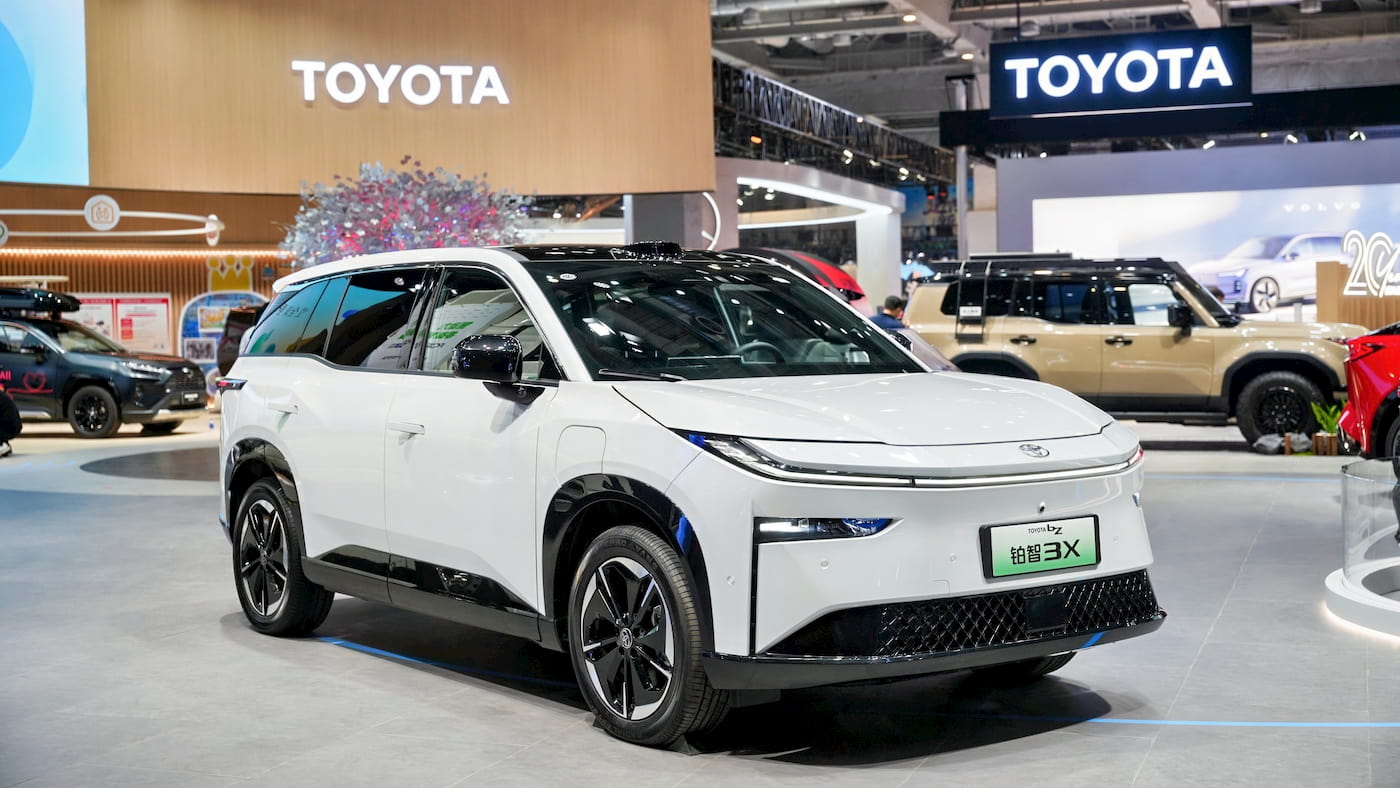
Toyota may deny it, but it’s increasingly relying on local parts to compete in China’s brutal electric vehicle market. Some estimates claim nearly 90% of the parts in the bZ3X, Toyota’s electric SUV that sells for just $15,000 in China, are sourced locally.
Toyota is tapping into China for EVs
It’s no secret by now that China is dominating the shift to electric vehicles. Global battery electric vehicle (BEV) sales crossed the 4 million mark for the first time in Q4 2025, and China accounted for nearly 3 million of them, according to PwC Research.
BYD and CATL, China’s leading battery manufacturers, accounted for over 55% of global EV battery sales in 2025 alone.
With some of the most advanced batteries, powertrains, software, and other EV components, major OEMs are increasingly turning to China for resources.
Toyota, like most major global automakers, is adopting Chinese EV technology to cut costs and keep pace with industry leaders such as BYD and Tesla.
So far, it seems to be paying off for the Japanese automaker, widely considered one of the biggest laggards in the transition to BEVs.

The bZ3X, Toyota’s most affordable EV in China, starts at just 109,800 yuan, or about $15,000. From September 2025 through January 2026, the bZ3X was the best-selling new energy vehicle (NEV) among joint-venture brands in China. That includes battery-electric (BEV) and plug-in hybrid electric vehicles (PHEVs).
Launched just over a year ago, the bZ3X started a so-called “bZ shock,” according to a new Nikkei xTECH report. Toyota and other Japanese brands, such as Nissan, are increasingly relying on China for parts and other EV components.


Toyota denies it, but several analysts estimate that nearly 90% of the parts used in the bZ3X are from China. Toyota’s Chinese joint venture, GAC Toyota, led the development.
While the bZ3X has been a hit for Toyota with over 80,000 units sold in its first year, it’s having a bigger impact back home.
The Nikkei report claims most of Toyota’s linked suppliers in Japan, the “Toyota Keiretsu group,” lost their contracts as a result.
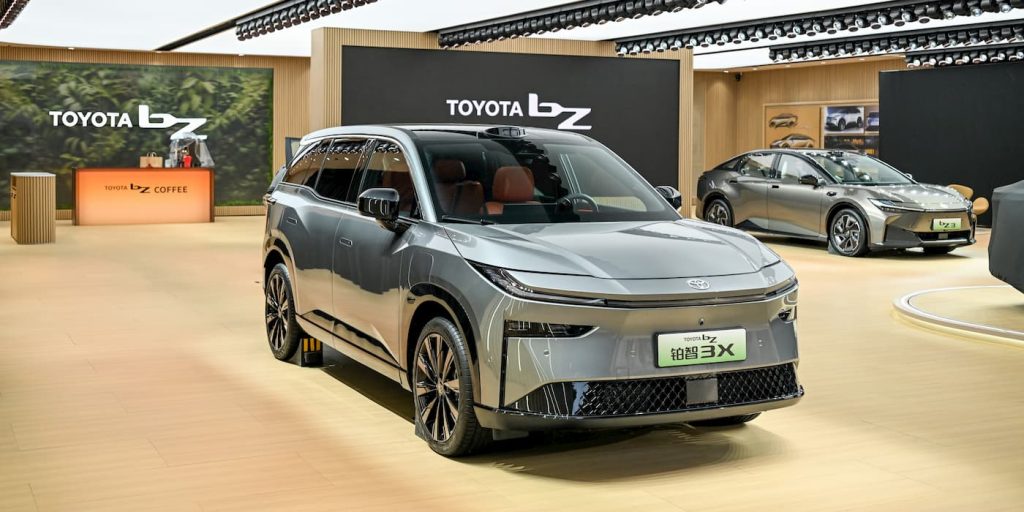
While some believed Toyota would use only Chinese parts in the bZ3X, it has since launched the bZ5 and, most recently, the flagship bZ7 earlier this month, both packed with locally sourced parts. The bZ7 has around 30% Chinese components.
Toyota is also reportedly planning to use Chinese tech in EVs sold overseas in regions like Southeast Asia. And Toyota isn’t the only one.

Nissan, through its joint venture partnership in China, Dongfeng Nissan, is ramping up EV exports to Europe and other overseas markets, including the N7.
Electrek’s Take
Top comment by Ben
Toyota could have dominated EVs. They chose not to.
It’s the classic incumbent problem. It would have cannibalised ICE sales and eroded profit margins, so they left the innovation field to Chinese manufacturers who had less of a legacy business to protect. And now they find out that these Chinese manufacturers used that on-ramp to build know-how.
Its really a well-known and well-documented issue, but despite everything, businesses fall into the same trap.
Emphasis of short term profit over long term strategy, managerial inflexibility (old men used to “yes” as an answer), and throw in good amounts of motivated reasoning (“EVs aren’t really a thing…” and “ok they are a thing but it’s slow transition”)…. Same story at every legacy car maker.
Question is now who gets the memo and who continues to be in denial.
Japanese companies, once known for their cost advantages, are starting to lose out to Chinese suppliers offering more advanced and lower-priced tech.
Honda, another major Japanese OEM, admitted last week that it was unable to compete with Chinese EV technology after announcing restructuring costs could reach 2.5 trillion yen ($15.7 billion). The company said in a statement that “Honda was unable to deliver products that offer value for money better than that of newer EV manufacturers, resulting in a decline in competitiveness.
After a slow start, Japanese brands and their supplier networks are now paying the price and becoming increasingly reliant on China for parts.
While Japan was one of the slowest to adopt BEVs, nearly every major global automaker is turning to China for EV tech, to sell locally, or overseas, including Volkswagen, Mercedes-Benz, Ford, GM, and Stellantis, to name a few.


FTC: We use income earning auto affiliate links. More.


Comments