
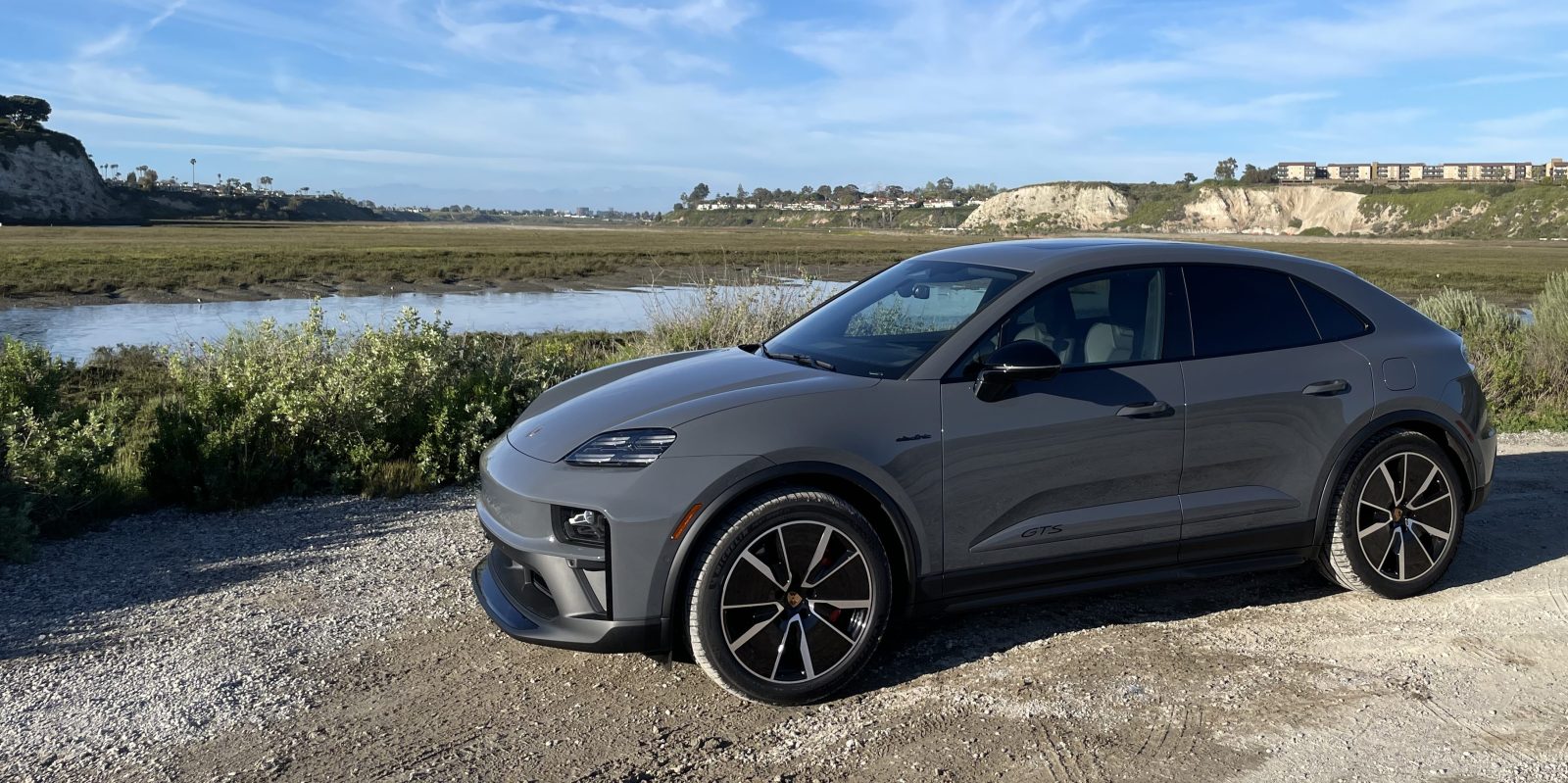
Porsche is out with a new trim of its electric Macan, positioned between the mid-spec 4S and top-end Turbo, and with power levels smack-dab in the middle of the two. It’s also got a few new touches and features the previous models didn’t have.
So is this Porsche’s “Goldilocks” car – not too much, not too little, just the right amount? We had a few days to test one out and see.
The Porsche Macan EV has been selling like hotcakes for the brand, outselling the gas model and opening Porsche up to new buyers.
It’s given Porsche the confidence to retire the gas Macan entirely – it’s already gone in Europe, and will be gone in the US within the next year.
And now Porsche is filling out its model line with more options, offering a new compromise between the bonkers 576hp Macan Turbo and the mid-spec 442hp Macan 4S. Porsche also sells a 335hp Electric model with RWD, and the 382hp 4 Electric model with AWD. (All can get a short boost of extra power in “launch control” mode)
We got an opportunity to review both the 4 and Turbo, which you can read about in our original Macan EV review. This review will cover the changes made in the GTS – the powertrain, new interior/exterior features, and some tech changes. To learn more about the model in general, check out our previous article.
563hp, right between the 4S and Turbo
The Macan GTS is almost exactly in the middle of the 4S and Turbo in terms of powertrain performance. All three have a “launch control” mode which gives maximum power, and a base mode for normal operation. In each mode, the GTS is right inbetween the two previous specs.
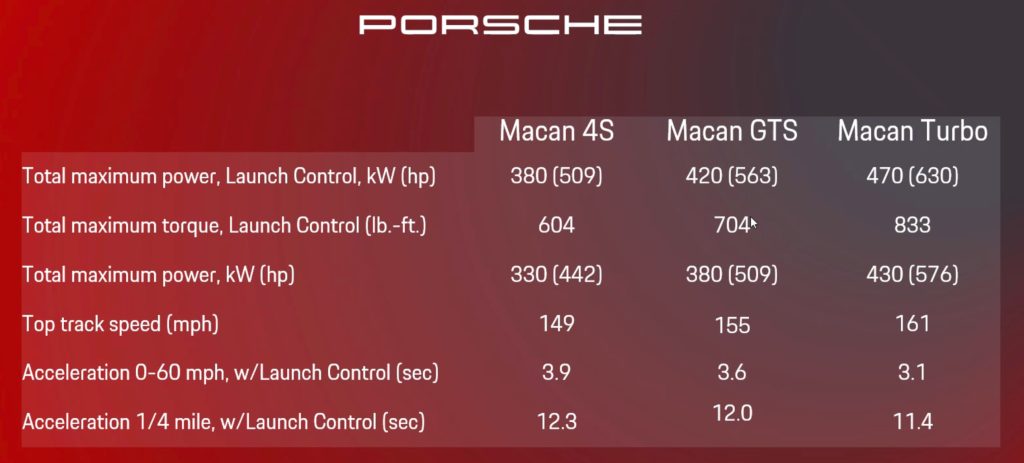
In practice, in the previous drives, I found the Turbo to be way too much. While I haven’t had seat time in the base RWD or 4S models, the 4 felt great to drive to me. I do tend to prefer RWD over AWD, but I was plenty happy with the performance of the 4 model.
The GTS tweaks a few features other than motor horsepower though. It’s essentially running a de-rated Turbo motor on the rear, which helps on thermals. The powertrain is otherwise quite similar between the two – the GTS has torque vectoring, which the Turbo has and the 4S and below do not.
Further improving thermal performance is a new “track endurance” mode carried over from the Taycan which helps to maintain optimal battery temperatures (~60ºF, apparently) regardless of ambient air temperature. Porsche says the GTS has the best thermal endurance of any Macan trim.
Interior and exterior changes are also performance-oriented.
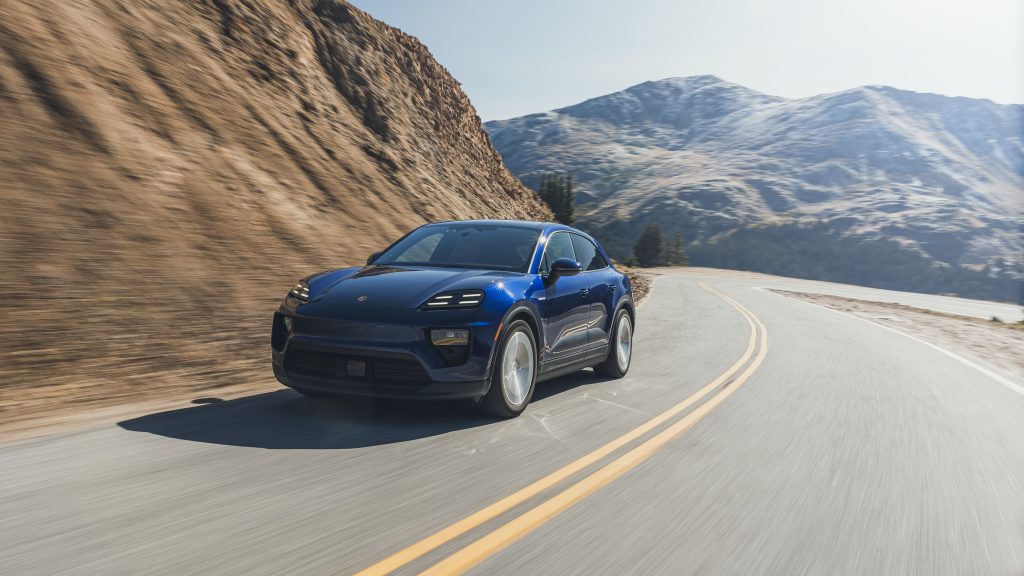
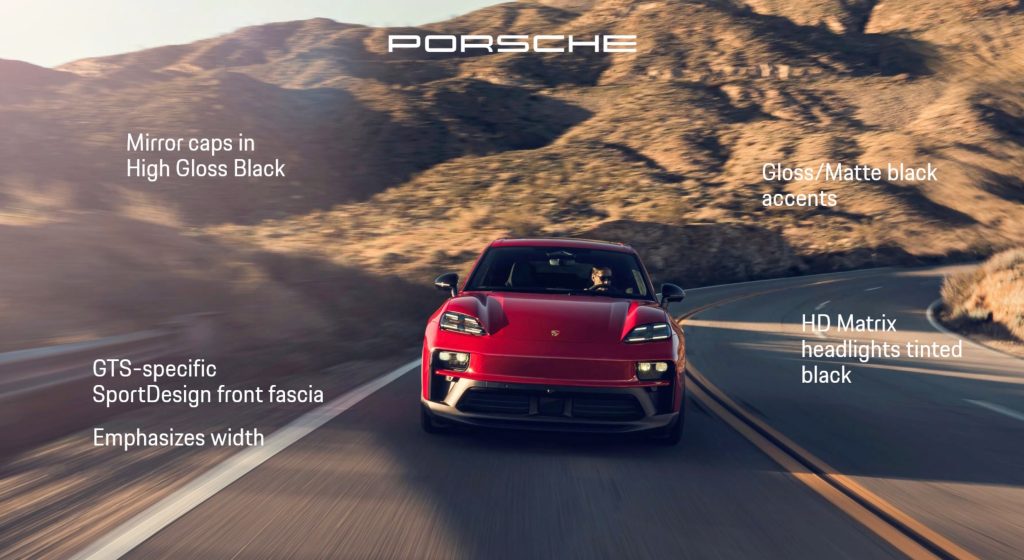
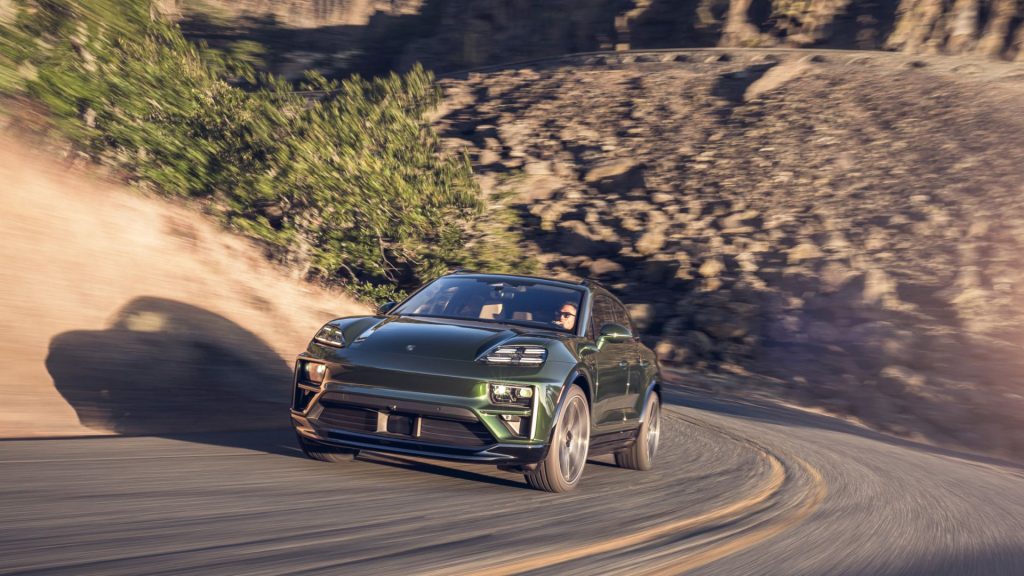
The exterior gains some slight changes like black-tinted headlights and more aggressive lower fascia, rear fascia that looks more like a diffuser (but likely offers little aero benefit), and side blades near the 21-22″ rear wheels (20″ not available on GTS). It also has black mirror caps and a different surface finish on exposed plastic parts.
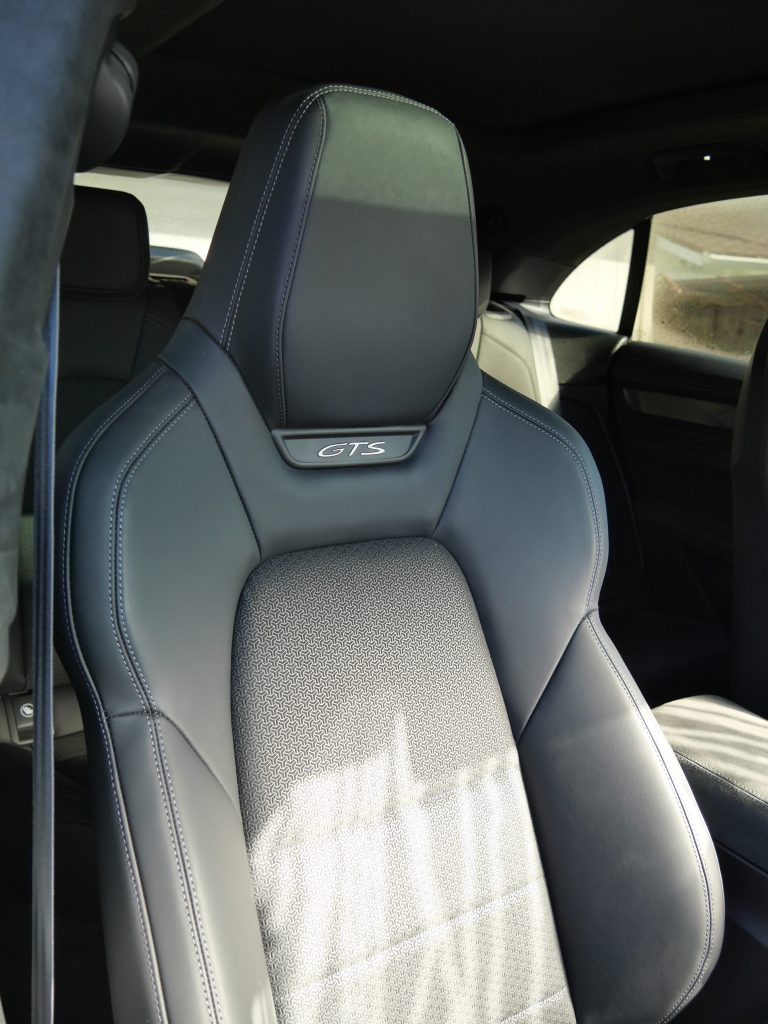
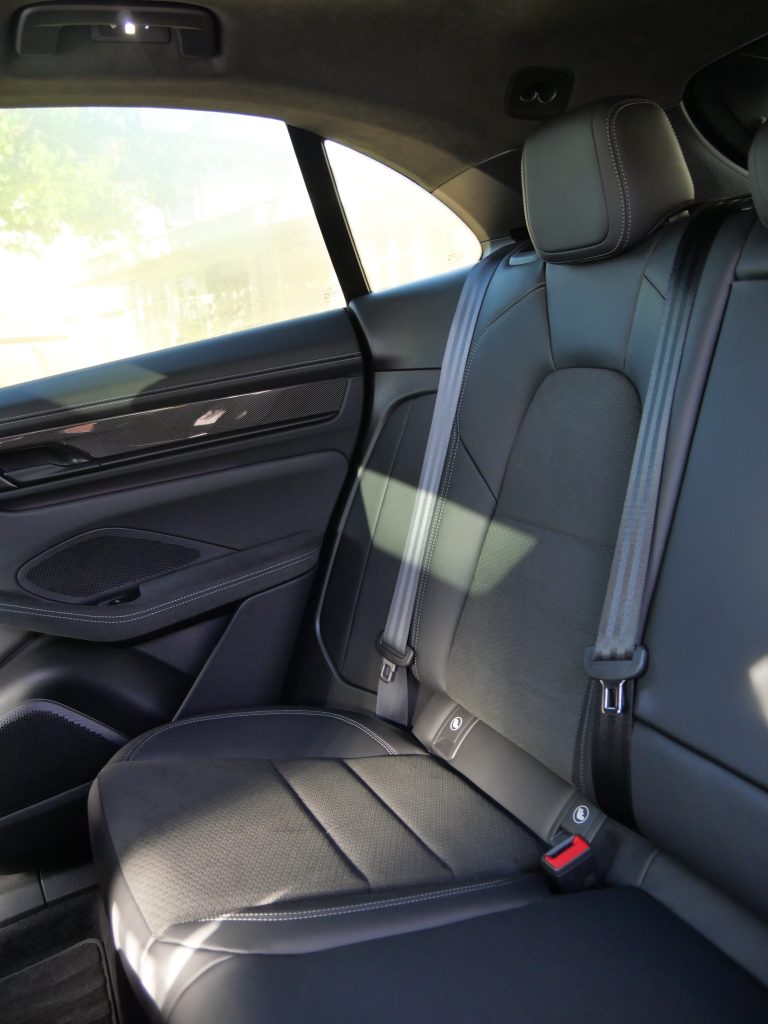
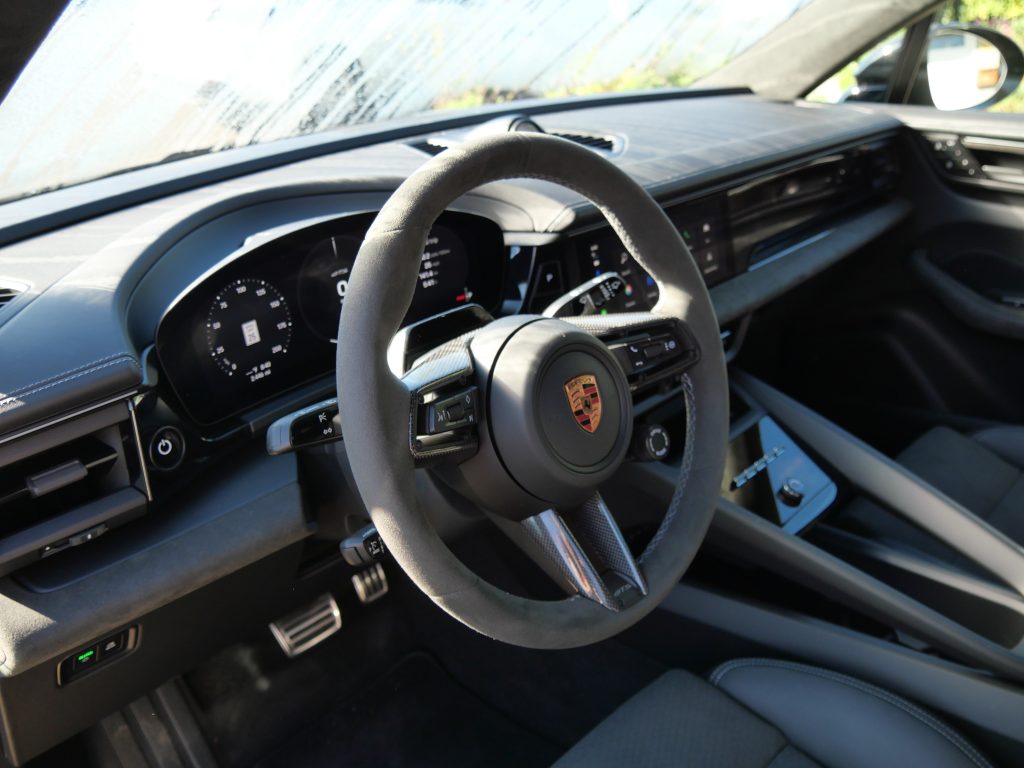
The 18-way adjustable seats have more side bolstering, both around the back and the thighs, which helps keep you in your seat during spirited driving but might feel a little restrictive for larger occupants. The steering wheel is wrapped in “race tex” microfiber suede, making it feel a little grippier (though we wonder what durability will look like over years of use).
New features for 2026
The 2026 model year gets a few new tech features which weren’t on the previous models we tested. Porsche’s driver assist system, InnoDrive, is now called Drive Assist, and can actively change lanes for you. The car we drove was not equipped with this though, so I didn’t get a chance to test it.
Multiple new features were added underneath the “active park assist” umbrella, including “trained parking” which lets you train the car to park in a certain spot on your property, then send it to park itself; “reversing assistant” which remembers the last short bit of driving and can help you reverse out of a difficult situation; and “transparent hood,” a feature that lets you use the vehicle’s front camera to see what’s directly in front of the vehicle.
And the most important tech feature: phone as key (!!!!). You can now use your phone or smartwatch as a key to get in and out of your car, and can share keys digitally with other users as well.
I didn’t get to test this, either, because the car wasn’t equipped with it, but this was immediately among my favorite things about the Tesla Model 3 back in 2017, and I’m glad to see it finally coming to some other cars (note: just make this a standard feature for all cars, Porsche and everyone else, and let users buy keyfobs if they want them).
A quick Supercharging test
But one thing I did get to test: Tesla Supercharging.
The Macan does not have a native NACS port, unlike the upcoming Cayenne EV. But it can charge at Tesla Superchargers via adapter (included on ’26 models, ’25 can get one for free, $185 otherwise), and this even works with Plug & Charge too, which means you can plug in and start charging without having to open an app or swipe a card.
(Earlier Porsche EVs can also charge at Superchargers now, but access had not been unlocked at the time of my previous review)
I did have a problem charging last time, which started with a problem with charger authentication servers, continued through several broken EA/EVgo chargers, and ended with a malfunctioning electric charge port door. I continue to recommend getting the default manual charge port door, which works fine.
This time there was no problem, and the charging experience was as simple as it gets.
One issue with non-Tesla chargers, on top of their generally lower reliability, has long been how long it takes to authenticate and start a charging session. For Teslas, a charge starts in seconds, whereas other cars and chargers have taken upwards of a minute to start charging in the past. This isn’t a huge deal all told, but can result in confusion and does mildly reduce throughput for busy chargers.
In our test of the Macan GTS, Supercharging started in about 10-15 seconds, and was effortless.
The car then charged at around 126kW – plenty quick enough, but nowhere near as quickly as the Macan can charge when full power is unleashed. We were at a 250kW charger, but since Tesla chargers operate at 400V and the Macan has an 800V system, it can’t get full power. Still, that’s a pretty quick charge, especially given the car was at ~30% SOC.
In our previous test of the Macan EV, once we worked out our charging issues, we peaked at over 250kW (on an 800V EA charger) and left the charging station before anyone else did. The GTS has the same charging system, so expect similar peak performance. This car is a charging champion.
But now, how did the GTS feel to drive, compared to the previous trims?
Driving the Macan GTS
To recap, there are 5 versions of the EV Macan: Electric, 4 Electric, 4S, GTS, and Turbo. I’ve driven the 4, the Turbo, and now the GTS.
The Turbo, I felt, was just bonkers overpowered. There was a big difference between the 4 and the Turbo, and I felt like the 4 had plenty of power at 382hp.
All of the Macans, as you might expect, feel good to drive. The steering is precise, the throttle is linear (well, maybe not on the Turbo, which is punchier than I’d like), the steering is as quick as I’d like, and the handling is pleasing/neutral despite the car’s heavy 5,000-5,4000lb weight (depending on spec).
I found the 4 to be preferable out of the two cars I previously drove. But Porsche thinks that the GTS is the sweet spot, allowing lots of performance but without being quite as silly as the Turbo version.
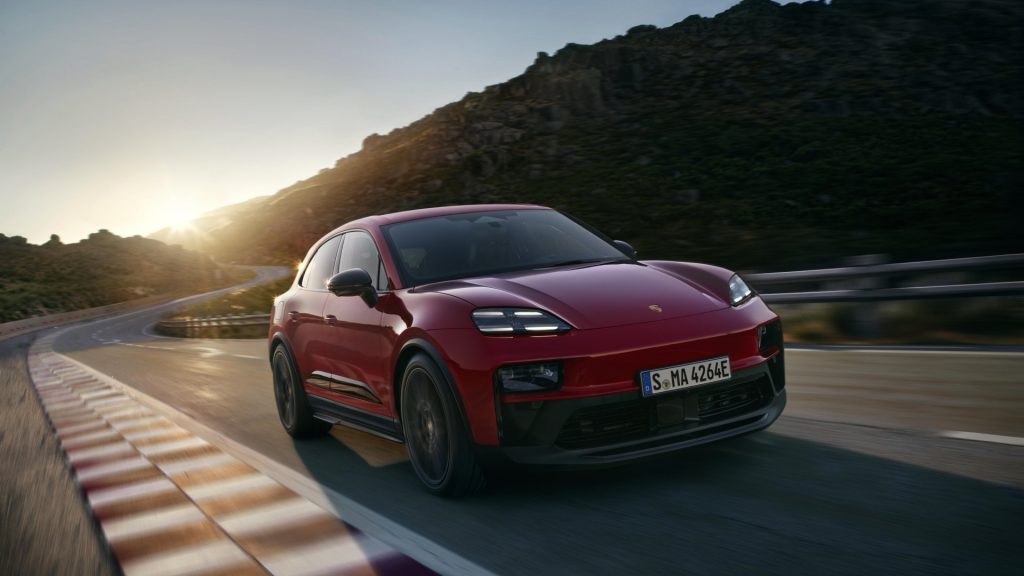
While the GTS does have torque vectoring, I found the handling of the 4 plenty enjoyable despite not having it. If I were really pushing the limit then maybe I’d have noticed more of a difference, but I was driving the car on normal roads rather than a track.
Despite that, the few times I did push the GTS a little, it did feel more alive. This is a car that seems to want to live closer to the limit.
On acceleration, it was still enormously powerful, but felt less like it was intentionally trying to harm its occupants just for existing (as was the case in the Turbo).
I did feel some strange oscillation from the motor/chassis when accelerating hard in a straight line, which felt to me like the car still had more power than suitable for the chassis. I also felt like the suspension damping didn’t feel quite right, regardless of which damping setting I used.
The GTS does use the same suspension hardware as other specs of the car, but is slightly lower at each setting (11mm on normal, 6mm on low, and 1mm on all other heights).
On range and efficiency, I averaged 302Wh/mi according to the car’s display over the course of 137 miles of mixed, mostly non-freeway driving on nice Southern California days. This is roughly in line with Porsche’s numbers for previous trims, and would result in ~314 miles of range from a full battery charge (GTS EPA range numbers aren’t out yet, but should average out just below 300). I do tend to be a more efficient driver than most, so others might have a little higher consumption than me.
Is the GTS ‘just right’?
And personally… after driving the GTS, I think I personally would still aim for the 4 (or, perhaps, had I driven it, the 4S). The GTS does reduce some of the excess of the Turbo version, but I still feel like it’s a bit above the Goldilocks zone – unless Goldilocks has suddenly gained a taste for spicy porridge.
Some drivers who are a little more accustomed to today’s hyper-performance vehicles might find the GTS a little more to their tastes than me. And before you think I’m not a performance EV guy – I do own a Tesla Roadster, which is plenty quick enough. I just feel like we’ve gone a bit too far with horsepower, and have sacrificed a certain amount of driveability in the chase for big number.
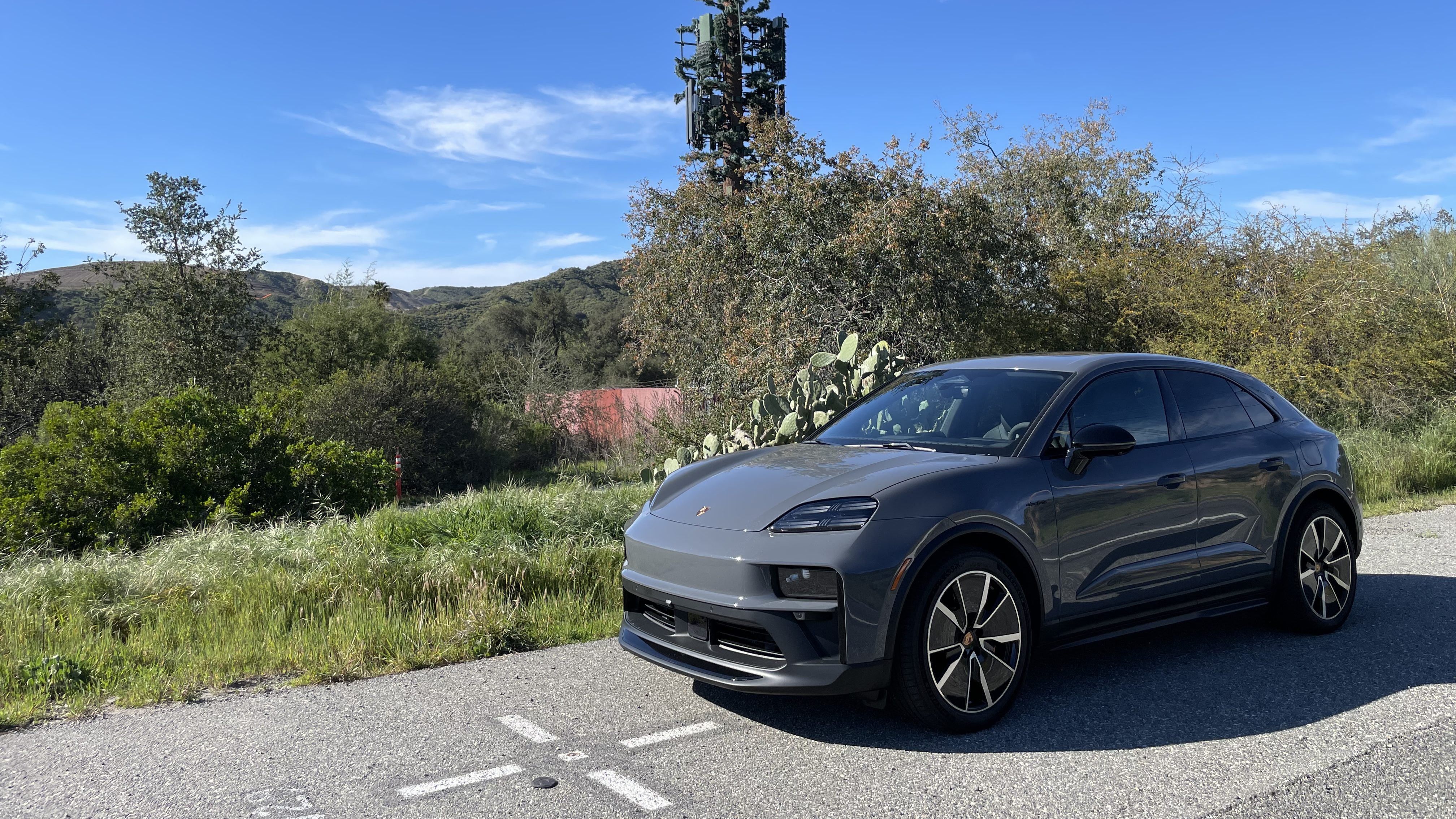
There’s also not a huge difference in price between GTS and Turbo. The GTS starts at $105,300 (the version I tested was optioned to $124,200), and the Turbo starts at $112,700 – though the GTS comes with a few options the Turbo doesn’t. So Porsche is targeting a pretty narrow market with this one – a wealthy customer, looking for an electric SUV that can also be taken on track days, but one that doesn’t mind not having the absolute top-of-the-line and is willing to give up a little laptime in favor of a little better thermal endurance.
Alternately, the 4 starts at $84k and the 4S at $90k, both offering a bigger chunk of savings (for whatever that’s worth, as the Porsche customer is typically less price-sensitive).
Overall Macan EV thoughts
As for my other thoughts on the Macan, they remain similar as in my previous review. I am impressed by Porsche’s UI and tech, which offers lots of customizability and control (if even bordering on a little too much, with some options appearing in multiple places underneath several menus).
I’m somewhat disappointed in Porsche’s EV-specific tech, though, particularly the lack of a one-pedal drive mode, which always signals to me that an automakers hasn’t fully committed to leveraging the unique advantages of an EV. The blended brakes also lead to a slightly choppy transition when coming to a complete stop (one which is actually managed more smoothly by the cheapest EV in America, the Chevy Bolt, which I also just drove).
We didn’t get to try the new Drive Assist system, but InnoDrive was far behind the state of the art when we last checked in. Though electronic safety features like blind spot warning and lane keep assist worked well (though erred perhaps a bit too much on the side of caution).
It still feels like Porsche is mid-transition into the “tech-car” realm – it’s progressing, but there’s a step or two left to go.
But that could be the right balance for Porsche’s customers, who have flocked to the Macan EV and seem quite satisfied with it. We the EV faithful may still want a few more steps in our direction, but for those who are in the niche Porsche is targeting – a trackable, sport-oriented SUV with a familiar drive experience but that doesn’t compromise on any of the potential pain points of EVs (e.g. fast charging capability) – then the Macan GTS could just be the one.
The Porsche Macan GTS EV is available now. If you’re interested in a 2026 Porsche Macan EV, you can use our link to get in contact with a local dealer and register your interest.
Charge your electric vehicle at home using rooftop solar panels. Find a reliable and competitively priced solar installer near you on EnergySage, for free. They have pre-vetted installers competing for your business, ensuring high-quality solutions and 20-30% savings. It’s free, with no sales calls until you choose an installer. Compare personalized solar quotes online and receive guidance from unbiased Energy Advisers. Get started here. – ad*


FTC: We use income earning auto affiliate links. More.


Comments