
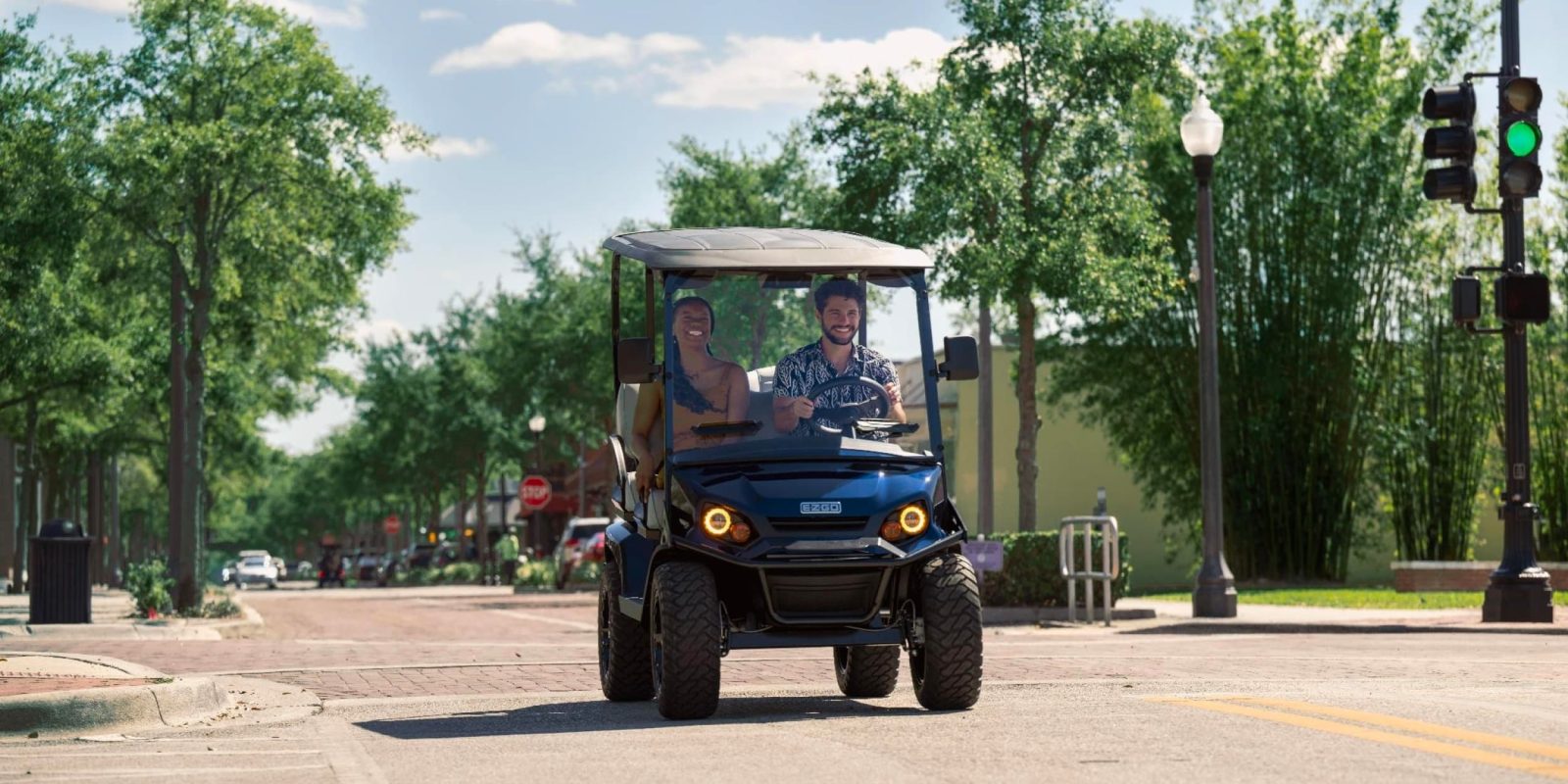
Across the United States, a quiet shift is taking place in how some local governments think about small, slow vehicles. More cities and states are updating their rules to make it easier for residents to legally drive golf carts on public streets, often through simplified permitting systems or special local ordinances.
Technically speaking, in order for a golf cart to be legally registered for public road use, it must meet guidelines for Low-Speed Vehicles, or LSVs, outlined in the Federal Motor Vehicle Safety Standards (FMVSSs). These include a dozen or more requirements (compared to the thousands of small requirements for fully-fledged motor vehicles), covering issues like reflectors, lighting, brakes, speed caps (25 mph or 40 km/h), but also include some more advanced requirements like backup cameras and those UFO-like noises that electric cars emit to warn blind or phone-blinded pedestrians.
Due to these requirements, the majority of golf carts sold in the US aren’t technically capable of meeting LSV requirements. And if we’re going to split hairs, most of the ones that claim to meet FMVSS for street-legal use, as they almost all lack those pedestrian warning systems. But a growing trend is seeing local city ordinances beginning to buck the federal guidelines, instead creating their own more lenient list of requirements for golf cart registration that tend to follow more of the spirit of the law than the letter of the law.
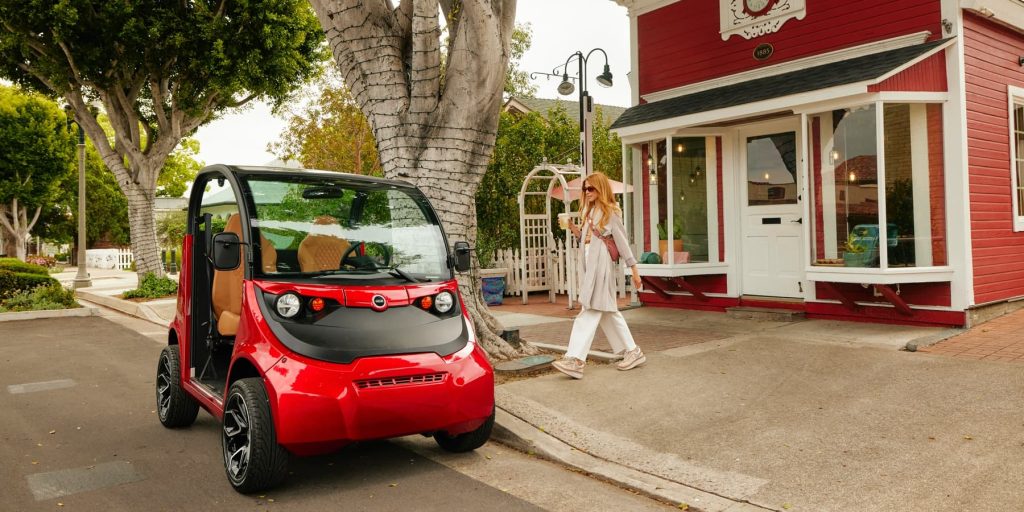
In some places, the change is happening through state-level legislation that allows municipalities to authorize golf carts on certain roads.
Michigan, for example, allows towns with populations under 30,000 to permit golf carts on local streets if they pass an ordinance allowing it. Other communities have taken matters into their own hands with local registration programs. Cities like Wahoo, Nebraska require owners to obtain a city permit sticker before operating a golf cart on public roads, while Lake Saint Louis, Missouri allows golf carts and similar low-speed vehicles on streets with speed limits up to 35 mph.
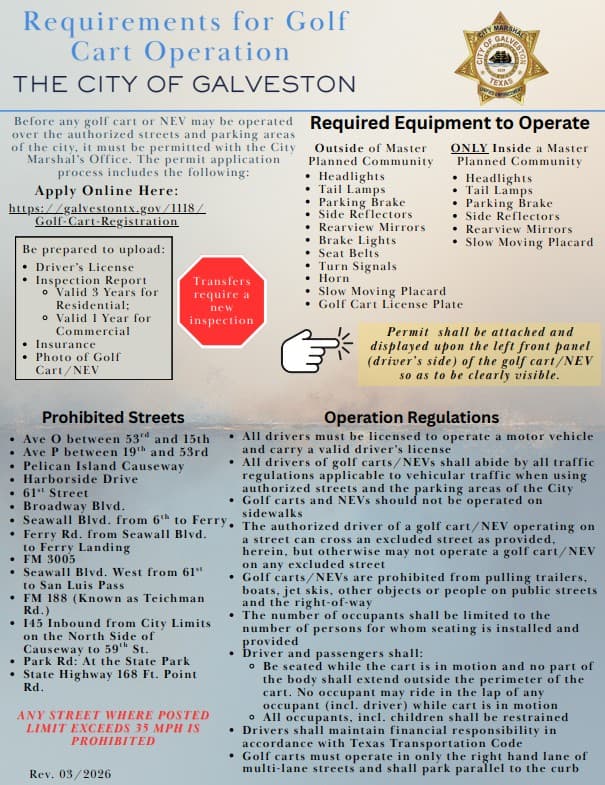
Beach towns and tourist areas have also embraced the trend. Galveston, Texas allows golf carts to operate on roads with speed limits of 35 mph or lower if they are registered with the city and display a permit decal. In many of these cases, these local programs allow golf carts that don’t necessarily meet the federal safety standards required for Low-Speed Vehicles (LSVs), instead applying simpler local requirements such as lighting, slow-moving vehicle signs, or driver licensing.
Basic requirements exist to cover DOT reflectors, seat belts, windshields, and lighting, but some of the stricter federal requirements are being overlooked, at least at the local level.
The growing acceptance of golf carts on public streets reflects their increasing usefulness as practical local transportation. In small towns, resort areas, retirement communities, and large suburban neighborhoods, a golf cart can function as a surprisingly capable second vehicle. With typical top speeds around 20–25 mph (40-48 km/h), they’re well-suited for short trips to the store, school pickups, neighborhood visits, or a quick ride to the beach.
They also fill an interesting gap between electric bicycles and full-sized cars. Compared to an e-bike, a golf cart offers a more car-like experience with seating for multiple passengers, cargo space, and some level of weather protection. Yet they remain far simpler and cheaper than cars, often costing a fraction of the price while avoiding many of the regulatory hurdles, insurance costs, and maintenance expenses associated with traditional vehicles.
For communities built around short distances and slower speeds, the humble golf cart is increasingly becoming something more than just a course companion. In many places, it’s turning into a legitimate form of everyday transportation.


FTC: We use income earning auto affiliate links. More.


Comments