
Another major Japanese automaker is jumping into the race for the “holy grail” of EV batteries after buying out an all-solid-state battery business.
Suzuki buys all-solid-state EV battery company
Suzuki Motor is the latest major Japanese automaker to bet on solid-state batteries for its upcoming electric vehicles.
On March 4, Suzuki announced an agreement with Kanadevia Corp to acquire its all-solid-state EV battery business.
Kanadevia is a leading Japanese industrial and engineering firm that began developing all-solid-state lithium-on batteries (AS-LiB) in 2006.
The batteries have been deployed in real-world situations, even in space. In February 2022, Kanadevia and the Japan Aerospace Exploration Agency (JAXA) launched an all-solid-state battery to the International Space Station, marking the “world’s first” mission of its kind.
The image shown below on the right was taken with a camera mounted on the spacecraft using the (AS-LiB) all-solid-state batteries. If you look closely enough, you can see Earth in the background.


Kanadevia said its all-solid-state batteries offer superior safety and performance across a wide temperature range from -40℃ to +120℃, making it a fit for use in aerospace and other high-temp, vacuum conditions.
Suzuki will acquire Kanadevia’s all-solid-state battery tech, including its proprietary dry manufacturing process. The deal is expected to close on July 1, 2026.


The batteries have passed nail-piercing tests without igniting, smoking, or exploding, whereas under the same conditions, a traditional lithium-ion battery would ignite.
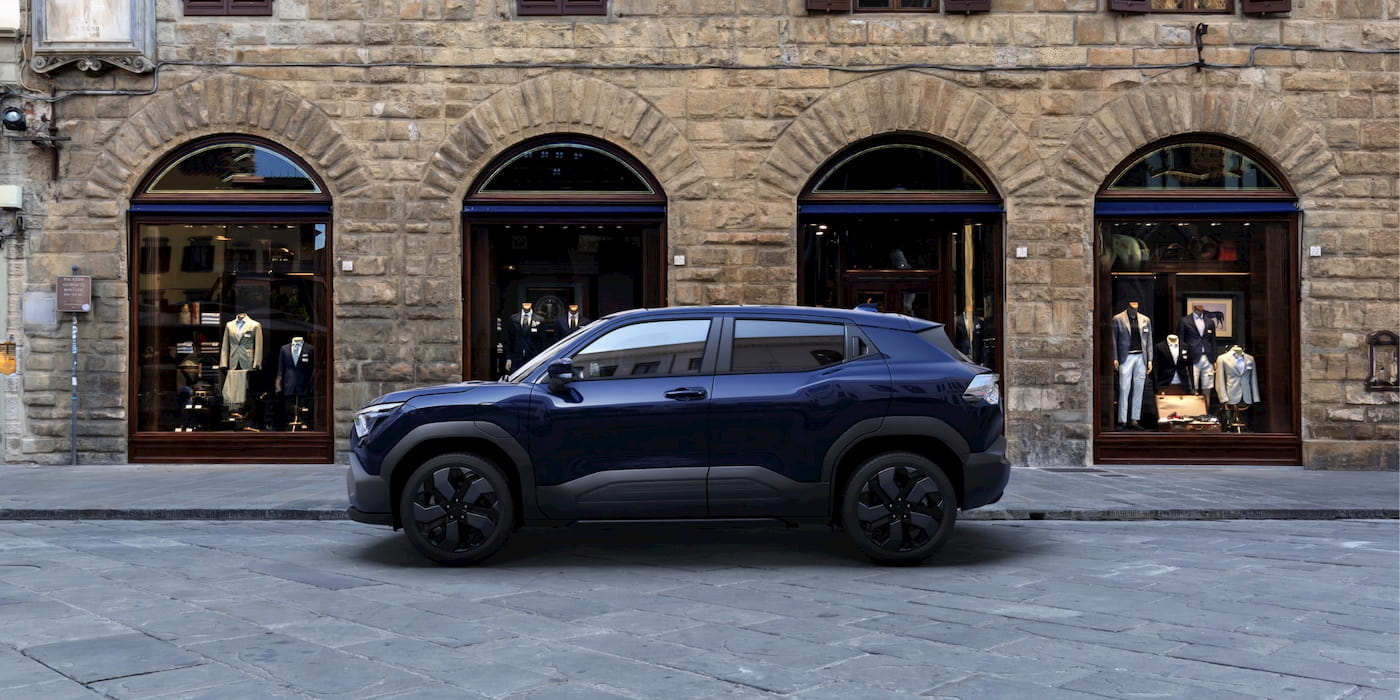
Suzuki launched its first mass-produced electric vehicle in late 2025, the e-Vitara, a twin to the Toyota Urban Cruiser EV.
Electrek’s Take
Suzuki joins Toyota, Honda, and Nissan with plans to develop all-solid-state batteries to boost range and safety for upcoming EVs.
In January, Japanese oil giant Idemitsu broke ground on its large-scale solid electrolyte pilot plant in collaboration with Toyota. The electrolytes will be used in all-solid-state batteries for future Toyota electric vehicles.
Toyota, Nissan, and Honda aim to launch EVs equipped with all-solid-state batteries around 2027 or 2028, with mass production planned closer toward the end of the decade.
While Japanese brands are racing to introduce promising new battery tech, China and German automakers have made recent “breakthroughs” as solid-state batteries move from the lab to the real world.
Suzuki didn’t reveal any details, such as estimated driving range or energy density, while Toyota revealed a solid-state battery pack last year, claiming it could achieve a 1,200 km (745 miles) range and fast charging in under 10 minutes.
While Toyota and others have been promising to launch solid-state EV batteries for years, the recent progress, not only in Japan, but also in China, Europe, and even in the US, is proving that electric vehicles will only become more efficient, faster charging, and more affordable as batteries, powertrains, and other EV tech continue advancing.
Meanwhile, at its Disruptive Technology event this week, BYD introduced its new LFP Blade Battery 2.0 and Flash Charging tech, which enable over 1,000 km of CLTC range and 10-minute fast charging.


FTC: We use income earning auto affiliate links. More.


Comments