
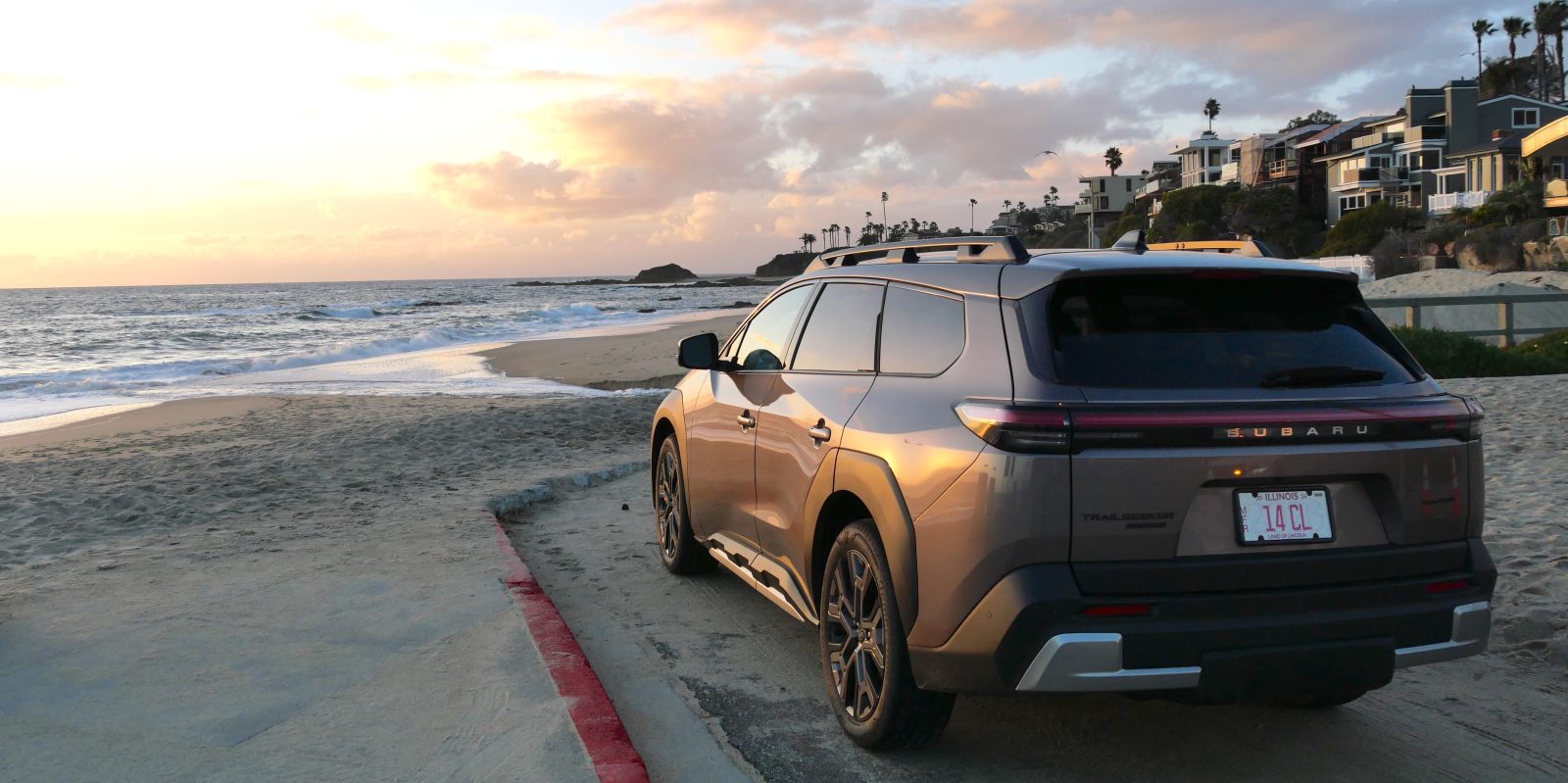
Subaru invited us to try out its upcoming rugged Trailseeker EV’s off-road chops on a muddy day in Southern California. But how does it compete in the crowded electric SUV market?
Last week, we told you about our first drive in the Uncharted, Subaru’s entry-level EV intended as an electric version of the Crosstrek.
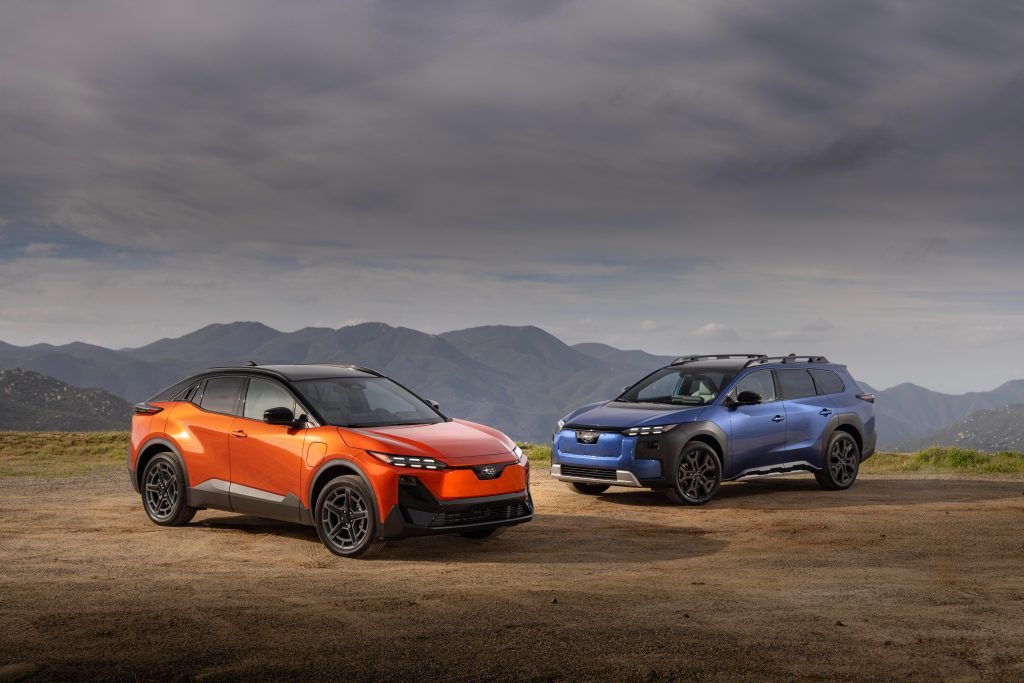
Now we’re back for the Trailseeker, which is Subaru’s electric version of the Outback.
Both of these first drives happened at the same drive event, so you’ll note plenty of similarities between our reviews.
The cars aren’t that dissimilar, either. While the Trailseeker is bigger (13 inches longer, 2 inches taller, ~100-300lbs heavier depending on spec), both are part of the same tie-up between Toyota and Subaru, with the companies collaborating on engineering and manufacturing.
Unlike the Uncharted, though, the Trailseeker is actually made in Subaru’s factory in Gunma, Japan, rather than Toyota’s factories. (The Toyota “version” of the Trailseeker is the Woodland)
The Trailseeker is also very similar to Subaru’s existing Solterra EV. We were told that the cars are basically the same ahead of the C-pillar, and behind it is where the Trailseeker adds that extra 6 inches of length compared to the Solterra.
So read on for more about the Trailseeker… but be prepared for a lot of similarities if you read our takes on the Uncharted.
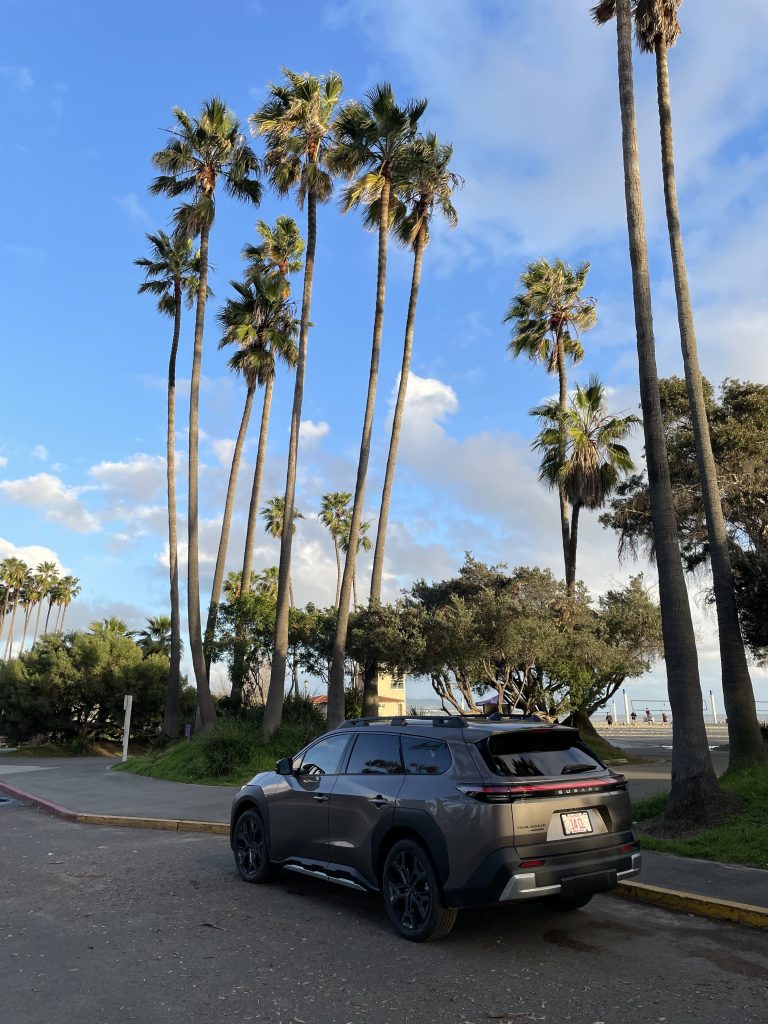
The Trailseeker is built for offroading
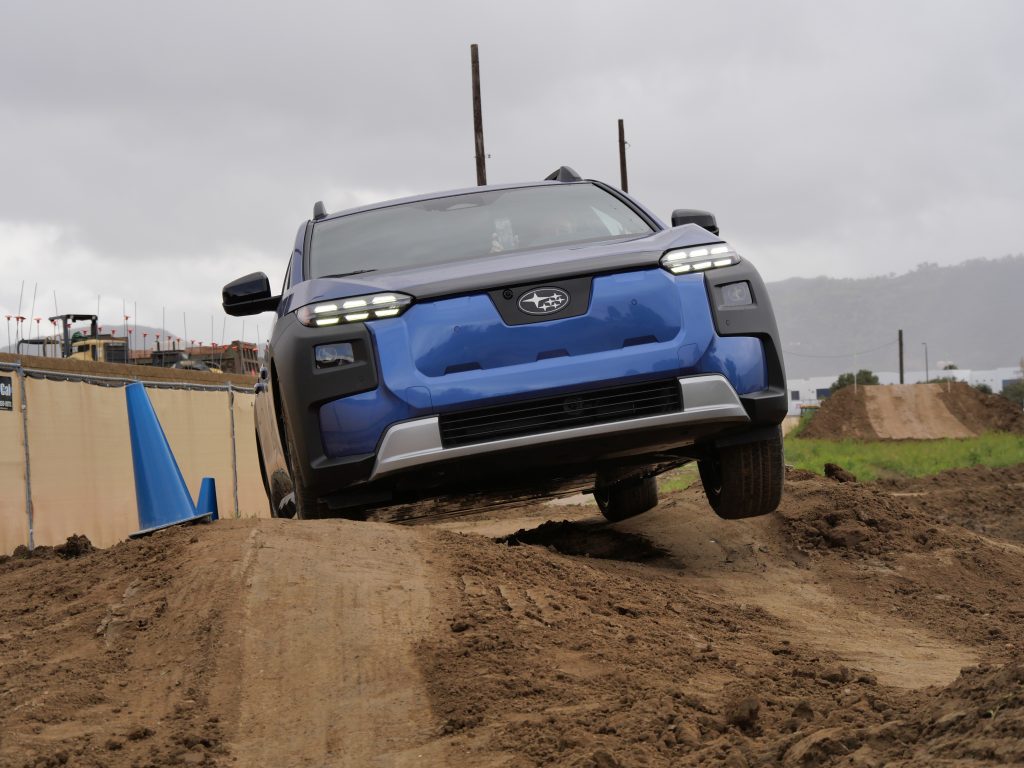
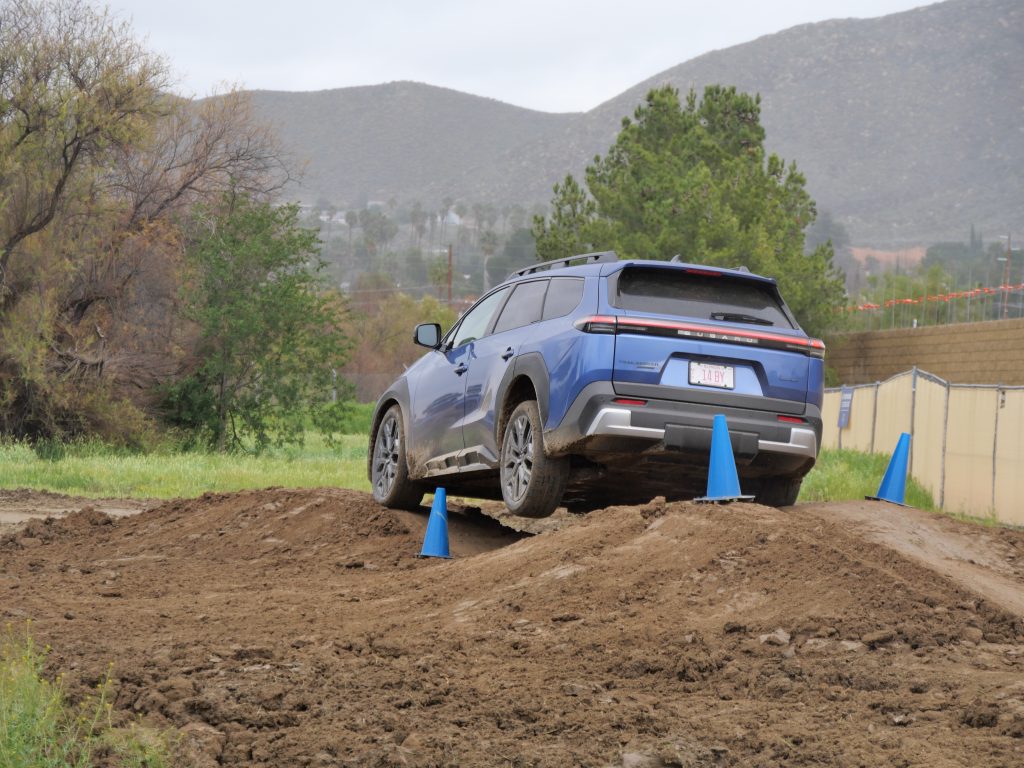
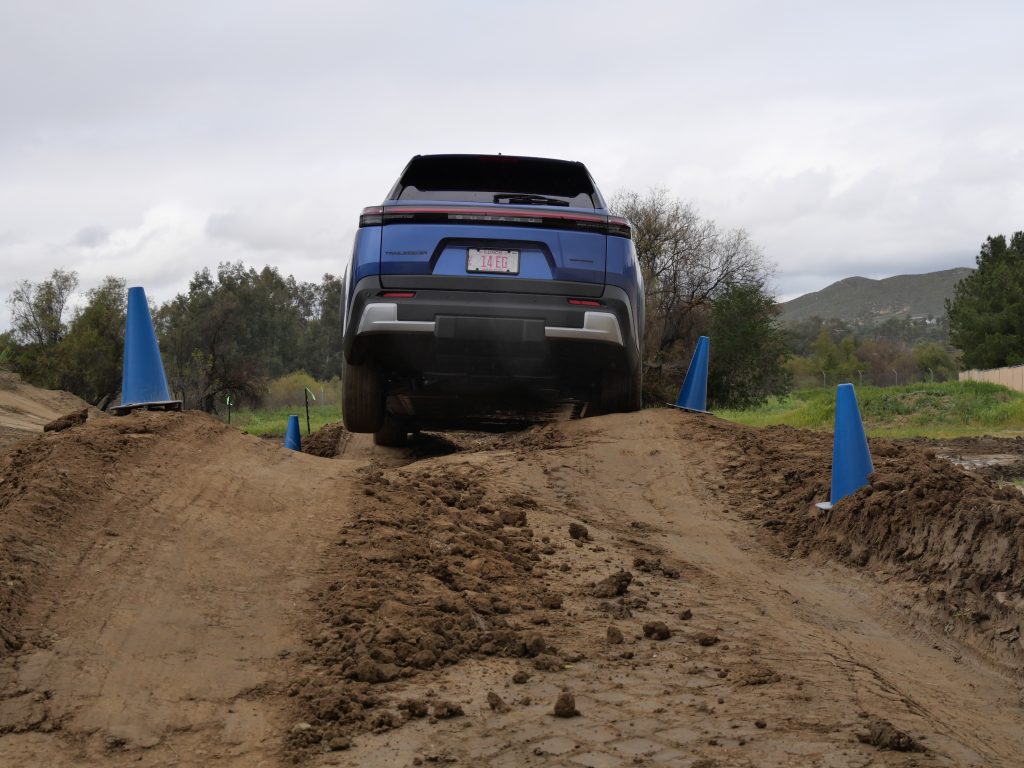
Like with the Uncharted, Subaru wanted to show off the Trailseeker’s off-roading prowess, so we got to go for a bit of a romp.
It had been raining the previous day and was still misting the day-of, so we had a good amount of mud to drive around on, but nothing too difficult.
The terrain was set up for some interesting challenges, all handled well by the Trailseeker.
Subaru encouraged us to try out X-MODE, its improved traction and braking system for all-wheel drive, best used in snow, mud and steep hills. This can be selected with a button next to the shifter.
The mud and standing water was mostly off of the path we took, but we still brought plenty of it along with us when we got back to the parking lot.

While this wasn’t the most extreme test of off-roading, it was far more than I’d ever expect to take any regular road car on. I was impressed with how well the Trailseeker handled it, and it seemed confidence-inspiring even for novice off-road drivers.
It’s also the most powerful Subaru yet
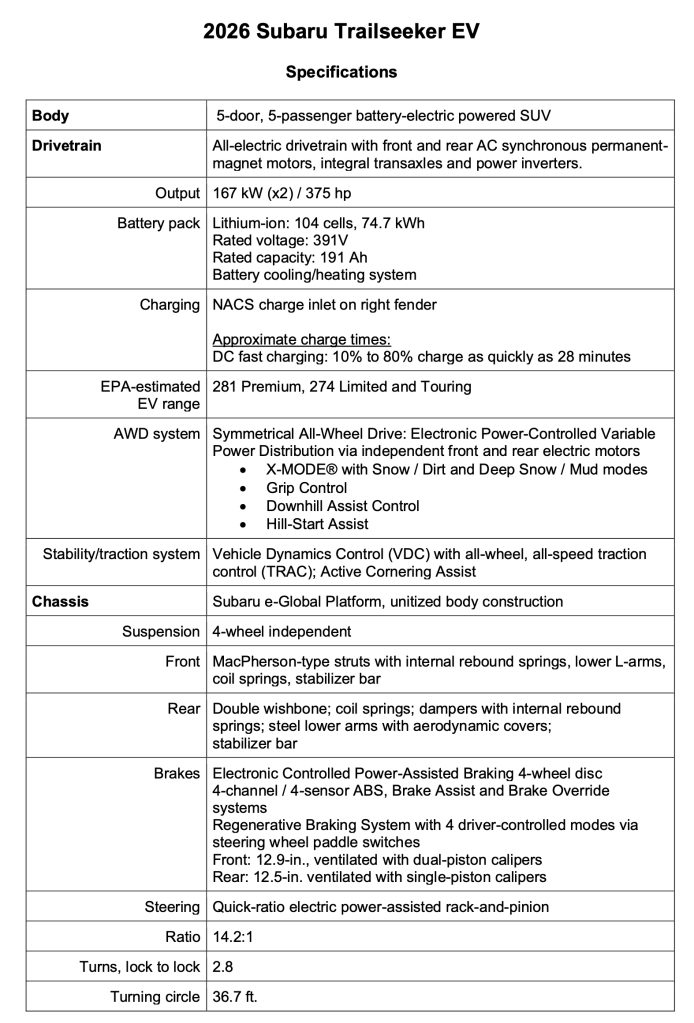
All this comes in a package with 375hp, which is the most powerful car Subaru has ever made, beating out the 341hp rally-racing WRX STI. That gets it from 0-60 in 4.4 seconds, which is also the quickest Subaru yet.
The Trailseeker has access to the same Eco, Normal and Power drive modes as the (upgraded) Uncharted, and the experience of using each of them is similar. Eco mode still feels plenty responsive, but Normal and Power just have more oomph.
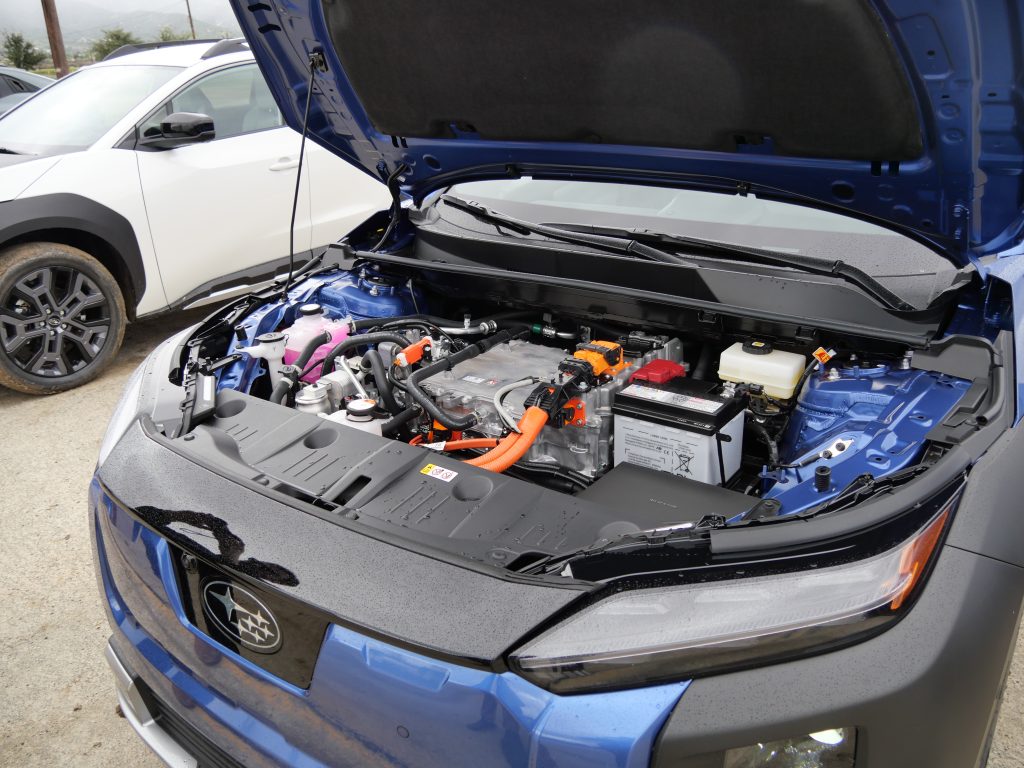
Regardless of drive mode, I found the throttle to be responsive and linear. Some other brands add weird delays or throttle smoothing which I find to be distasteful; Subaru, though, has gotten it right.
The Trailseeker is obviously less tossable than the lighter and shorter Uncharted, as an extra 13 inches will do to you. It still feels good to drive, but the Uncharted will be a better canyon-carver (and a non-SUV would be even better… do those exist anymore? anyone? can we get one freaking car, ever, please?)
But much like the Uncharted, I think regenerative braking modes are too limited. While the paddles on the steering wheel offer a nice way to modify regen levels, the strongest was not strong enough to enable true one-pedal driving. And, generally, I don’t bother to use the paddles – I just want to set regen to the strongest setting and expect it to stay there forever. I wish automakers would just let me do this.
Comfortable interior, not a ton of tech
The Trailseeker is spacious and comfortable for occupants. The seats aren’t anything particularly special or cush, but I like a bit of a more spartan interior anyway – as I expect the outdoors types buying Subarus might as well.
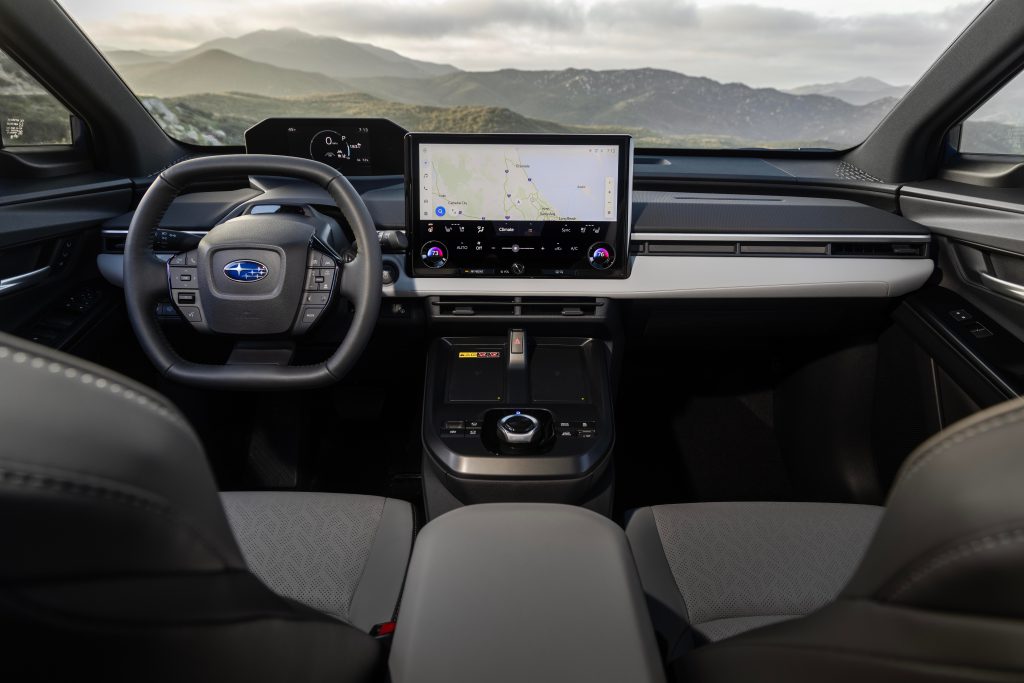


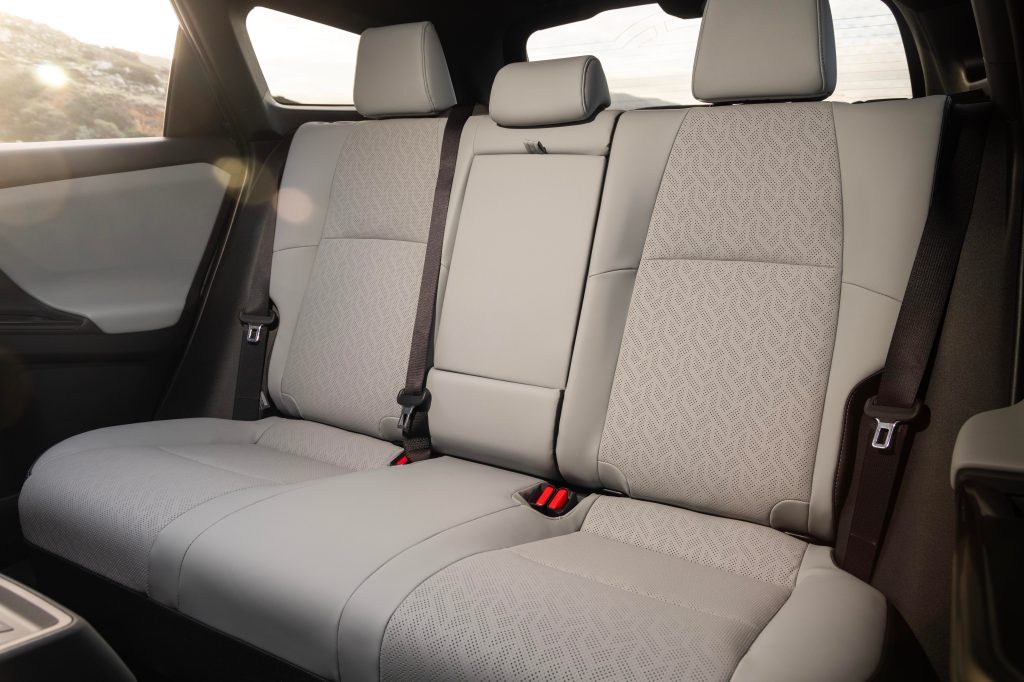
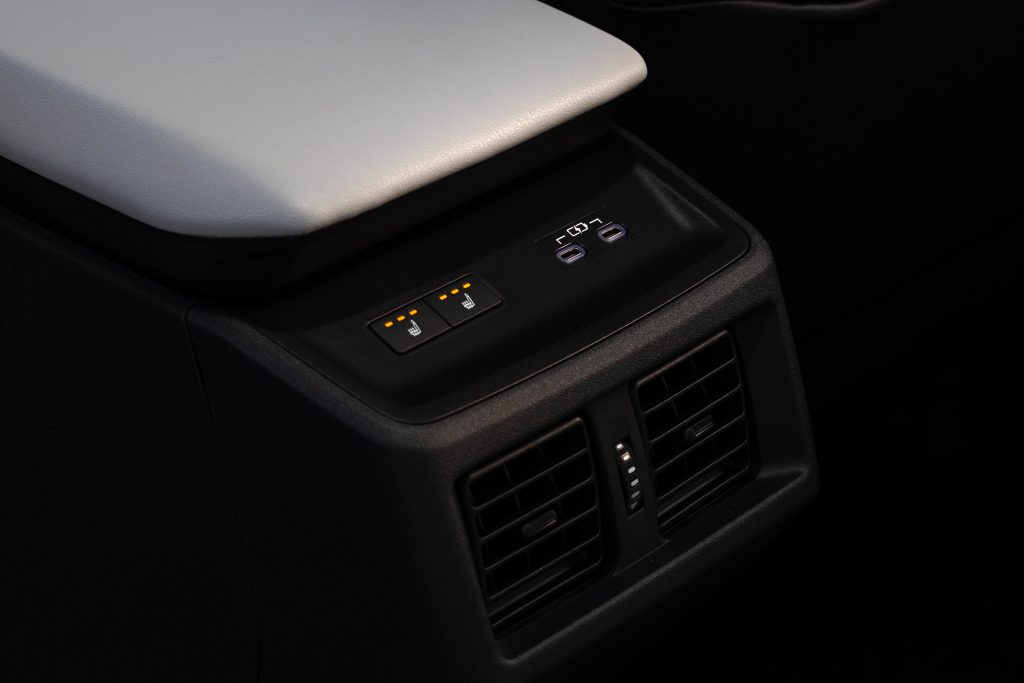
The tech in the car has many of the basic features you’d expect, like two phone charging pads, USB-C ports in the front and rear, wireless CarPlay and Android Auto, and lots of active safety features (cross traffic alert, speed limit warning, pre-collision brake assist and the like).
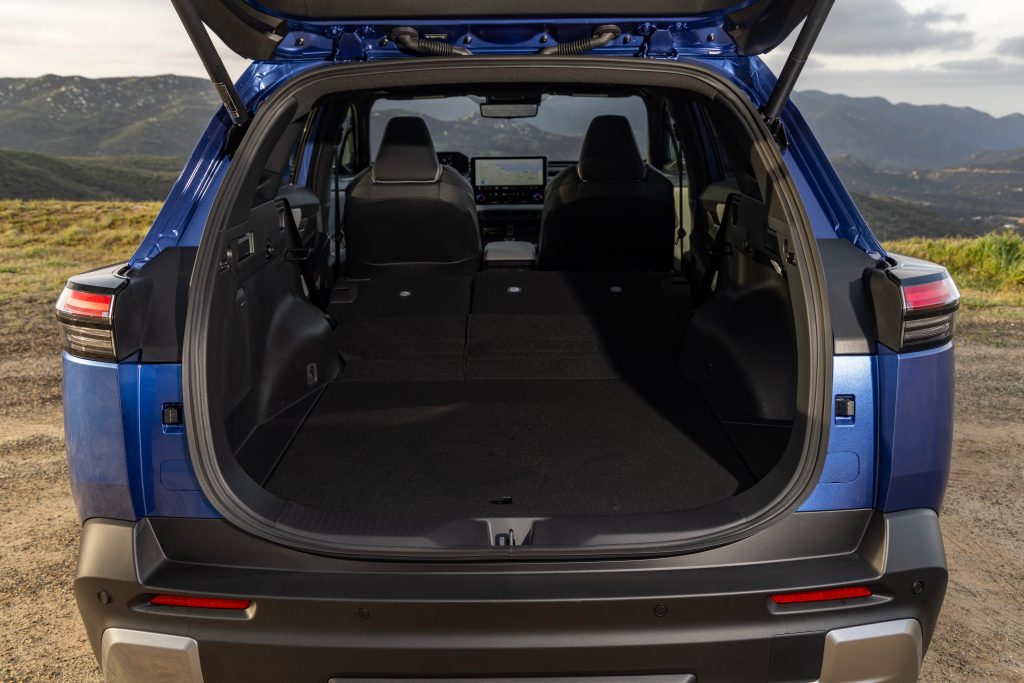
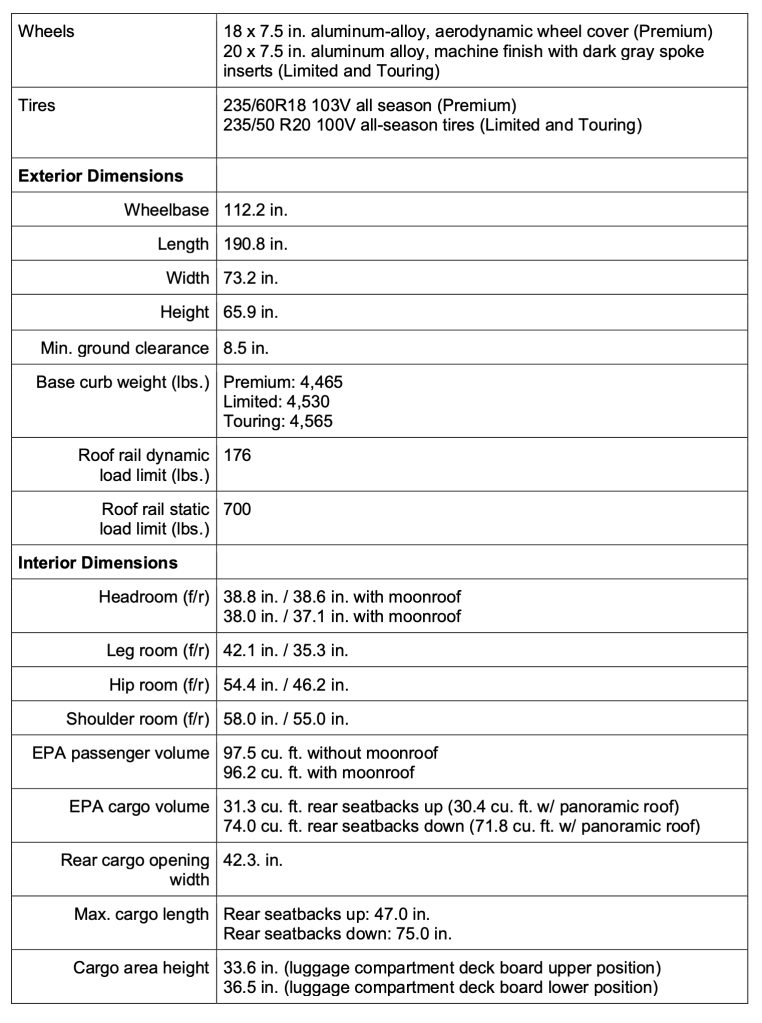
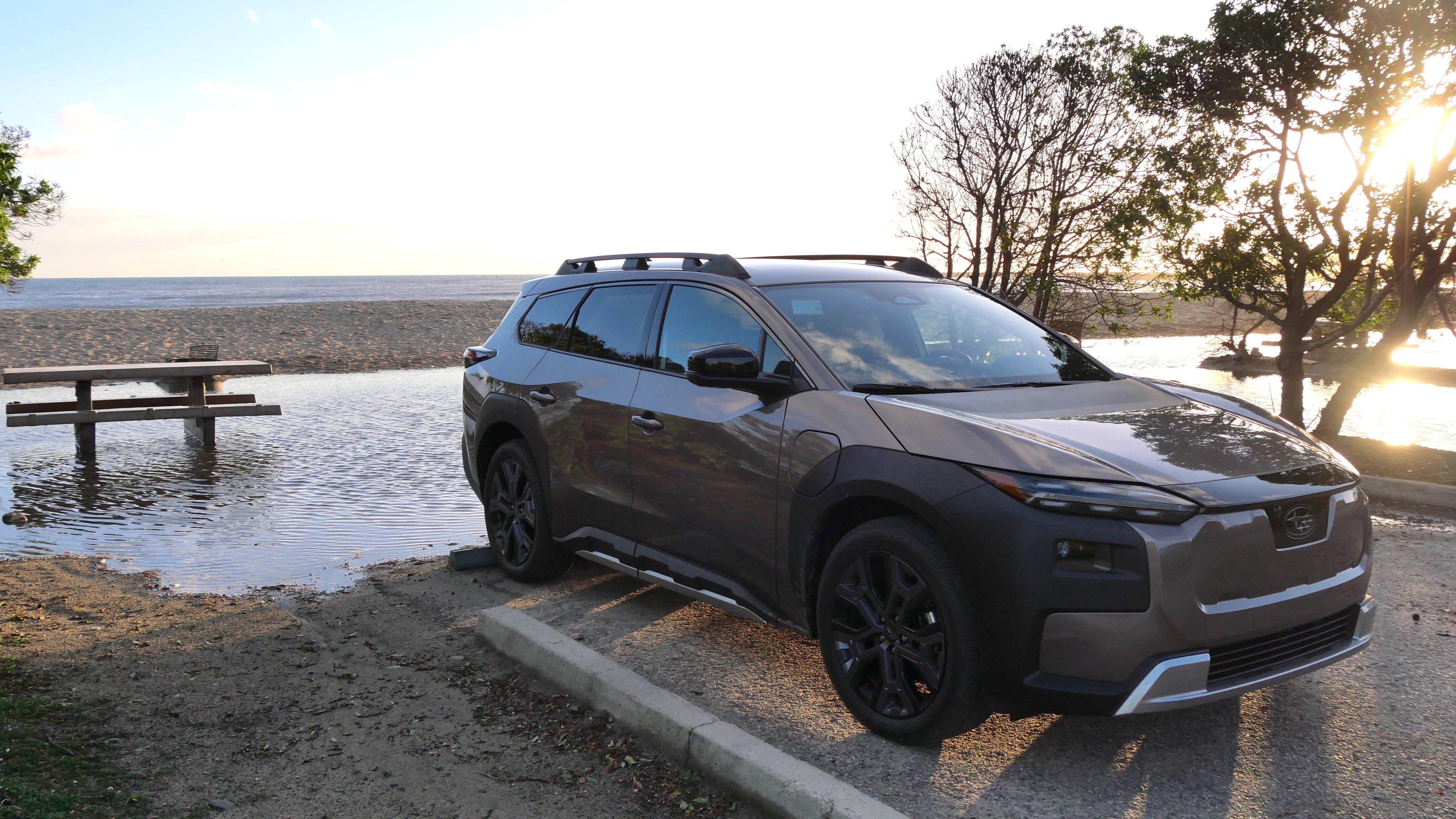
The Trailseeker has significantly more cargo space than the Uncharted does, and the seats fold down but not entirely flat. With the seats down, the car has 75 inches of cargo length (about 10 more than Uncharted)… so sleeping in the back could be possible, but it would be tight for taller folks. The lack of a frunk is unfortunate here, since that’s a nice place to fit some extra gear if you’re going to use the back for sleeping in – but the roof rails give a great option for external storage.
Charging
Subaru does promise much better charging performance from the Trailseeker than from the first-gen Solterra, which was known to have pretty poor charging performance (the 2026 Solterra is massively upgraded in this respect).
Charging peaks out at 150kW, and Subaru quotes a charge time of 28 minutes to fill the 74.7kWh battery from 10-80%, with a range of 281 miles with a full charge. That’s neither the best or the worst charging performance out there, and I’d describe it as at “pretty good.” As usual: just plan your bathroom and food breaks at chargers and you’ll be fine.
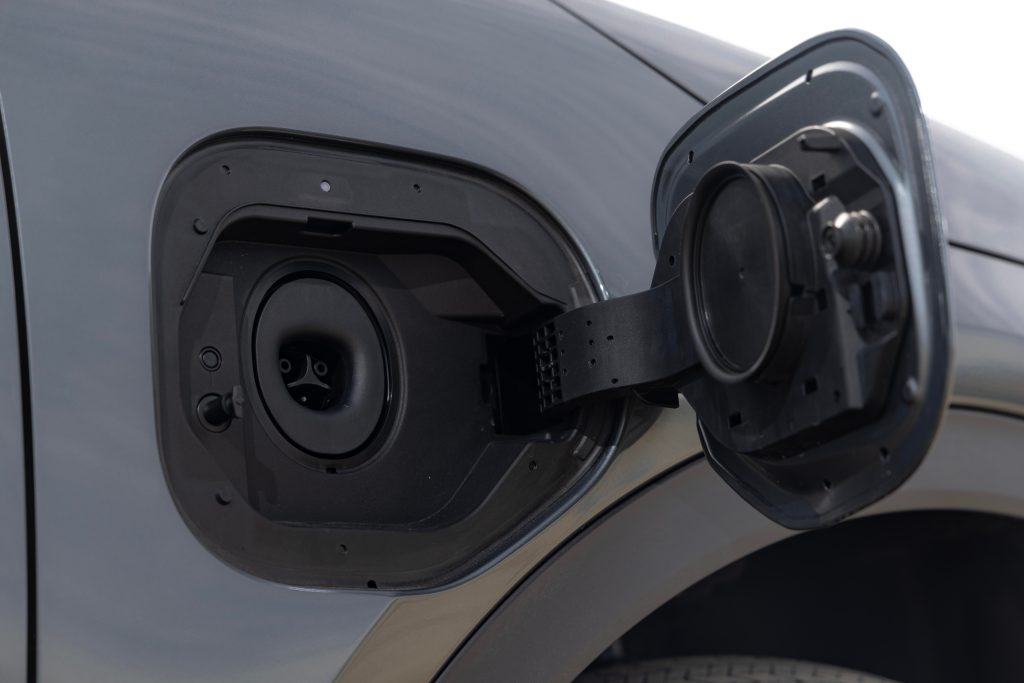
What’s more important is that the Trailseeker comes with a native NACS port, allowing connection to “25,000 charging stations across the US.” Like other non-Tesla cars, it can’t charge at the oldest V2 Tesla Superchargers, but everything else should be golden, as it also comes with adapters to allow charging at CCS stations (and it has Plug & Charge capability too).
As for discharging, the Trailseeker has a single 1500W outlet in the trunk for running devices off the car’s battery – but this is only on Limited and higher trims, unlike the Uncharted, which gets the outlet in all trims. The car does not have true vehicle to grid/home functionality, but the ability to offload battery power to run devices is very useful, especially for camping purposes (think a portable induction cooktop for camp cooking, for example).
Software
One thing it doesn’t have is charge routing. While you can search for charging stations (through Subaru’s Remote Connect feature, which also allows for remote start and climate, but only for a 1-year trial, which seems rather restrictive), the car will not route you through those charging stations.
That’s a step down from what’s available on many EVs these days, and on other cars that do have it, it helps make EV roadtrips so easy.
Speaking of which, we pressed Subaru on software updates, and couldn’t get any answers at all about their strategy on this. Not only would the company not commit to regular updates, it gave us a “no comment” answer on whether the cars are even capable of over-the-air software updates that many EV owners have come to expect and appreciate. (The Solterra has received software updates, but we’re only aware of ones that have been applied by dealers)
Now, maybe on-board software matters less for cars that have CarPlay and Android Auto (both come standard), but there are aspects of the vehicle that those systems can’t control, so a good OTA update strategy is still important in this day and age.
And one missing software feature that has become common on EVs: despite Subaru’s “dog tested” marketing, the Trailseeker does not include a “dog mode” to keep your HVAC activated while your car is parked. It does, however, include a “My Room” mode which has somewhat similar functionality, though it only seems to work while plugged in.
Driver assist features
On the highway, we got a chance to test Subaru’s EyeSight drive assist features, despite the slightly confusing steering wheel button chords needed to activate it (can everyone just take a cue from Tesla and make this a one-button activation please?).
Traffic aware cruise control and lane centering worked well, even in challenging road conditions with rain and reflections making it tough to see where road markings were.
The car did warn us rather quickly when we looked away from the road, and when we let go of the steering wheel for more than a couple seconds, it threatened to turn off driver assist features on us. Other safety features like cross-traffic alert worked as you’d expect them to if you’ve been in any modern vehicles.
Subaru does have some additional subscription driver assist features like hands-free driving under 25mph on supported roads, active navigation and traffic jam assist, but we didn’t get to try these.
Verdict: Better than I expected from a Japanese EV
Our reviews of the Uncharted and the Trailseeker are similar because the cars are quite similar. They’re not all that far off in features, price range, interior design, and even use the same battery, and we had a similar drive experience in both of them. So our thoughts on each aren’t that far off, either.
Longtime readers of Electrek may know that I’m quite critical of Japan’s EV strategy. The country has been behind the rest of the world in EV adoption and production plans, and its largest entities (namely, Toyota) are among the most anti-environment companies on the planet.
Japan’s intransigence on EVs could be devastating for the country (and, via climate change, for the world), so I’ve long wanted to see its automakers change course. They already lost their export crown to China, and more trouble will come if they don’t move quickly.
For Subaru specifically, each time I visit their trade show booths, which are gorgeous and have a pro-environment/outdoors message, I have been bothered to see them filled with nothing but gas cars. That changed a couple years ago with the Solterra, and now another EV is coming to join it (with more on the horizon, which we’ll have more news about soon).
So, we’re seeing progress, but I’ve remained skeptical until I see solid efforts to produce and market EVs that are competitive with the state of the art of the rest of the market. Especially when Subaru just three months ago shifted to focus more on ICE cars, while global EV sales rise and ICE car sales decline.
But the Trailseeker EV at least seems to be heading in the right direction.
It’s not the flashiest or techiest, but it offers a solid set of specs and a drive experience that felt competent and capable. And it certainly appeals to the Subaru outdoorsy crowd.
I do still think there have been some missteps which show that Subaru is not quite at the state of the art when it comes to EVs, like the lack of charge routing or commitment to OTA updates. This could be a sign of the overall conservative strategy that has been typical of Japanese automakers. Some buyers may appreciate the slow and steady approach, but I still think we need some quicker movement, especially from a company that is already behind.
It’s also a shared vehicle. Between the Subaru Trailseeker, Uncharted and Solterra, and the Toyota Woodland, C-HR and bZ, we do finally have multiple Japanese EVs on the market… which are all quite similar to each other.
What we need next is more variety, something outside of the “mid-size SUV in the $40k range” paradigm that literally everyone is in right now. But if you’re in that area, you could do worse than the Trailseeker.
Overall, the proof is in the pudding here. The car is pretty good. There is a time that I would have actively encouraged people away from buying pretty much any EV from Japan (except the Leaf). Now, if I hear about someone with their heart set on the Trailseeker, I think I’d say “I do think there are some better EVs, but that’s a solid choice. I liked driving it.”

And for outdoorsy types, it might even be the best choice out there right now, especially for those looking for value (sorry Rivian, the R1 isn’t cheap, but let’s circle back on this when the R2 hits the road).
Now, do I prefer the Uncharted or the Trailseeker? Well, I’m a small-car guy, so I’d prefer the Uncharted for sure. But beyond the different lengths and slightly different prices and feature sets, the two cars are quite similar in a lot of ways, so it’s down to what you need (and, frankly, we all overestimate what we need, so you should consider right-sizing with the Uncharted if you’re in the market).
But how does it fit into the market?
The Subaru Trailseeker EV starts at $39,995 for the base Premium trim, $43,995 for the Limited trim, and $46,555 for the Touring.
That’s about $5k more at the base price than Subaru’s own Outback, though Subaru says the Trailseeker comes with some extra standard features.
And the base price is $5k higher than the base Uncharted, but the base Uncharted doesn’t have AWD – the Sport AWD version starts at just $200 cheaper than the base Trailseeker. The base Solterra, for comparison, starts at $38,495… so all three cars are in a virtually identical price range (except for that $35k FWD Uncharted).
Top comment by Jack
I think it's good enough to win over loyal Subaru drivers (of which there are many here in Colorado). I don't think it will win over drivers from other brands. Overall, great to see Subaru with 3 decent EV models now.
As for the rest of the market, the $40k space is quite crowded. There are a lot of high-quality EVs out there in the same category as the Trailseeker. If you need the off-roading capability then this might be your best choice, but if you’re not going much deeper than dirt roads and camp sites, there are a lot of options out there – and ones from manufacturers that have been in the EV game a lot longer, and have better developed software too.
Subaru thinks that it will be able to stand on its brand loyalty and its off-road cred, along with various best-in-class numbers and residual value awards. Those are all beneficial and do earn the company some valuable points, but is that enough to overcome Subaru’s relative inexperience in EVs in a very crowded $40k space?
If it’s enough for you, deliveries to dealers start in April. If you want to get in line, you can contact your local dealer about the 2026 Subaru Trailseeker.
Charge your electric vehicle at home using rooftop solar panels. Find a reliable and competitively priced solar installer near you on EnergySage, for free. They have pre-vetted installers competing for your business, ensuring high-quality solutions and 20-30% savings. It’s free, with no sales calls until you choose an installer. Compare personalized solar quotes online and receive guidance from unbiased Energy Advisers. Get started here. – ad*


FTC: We use income earning auto affiliate links. More.



Comments