
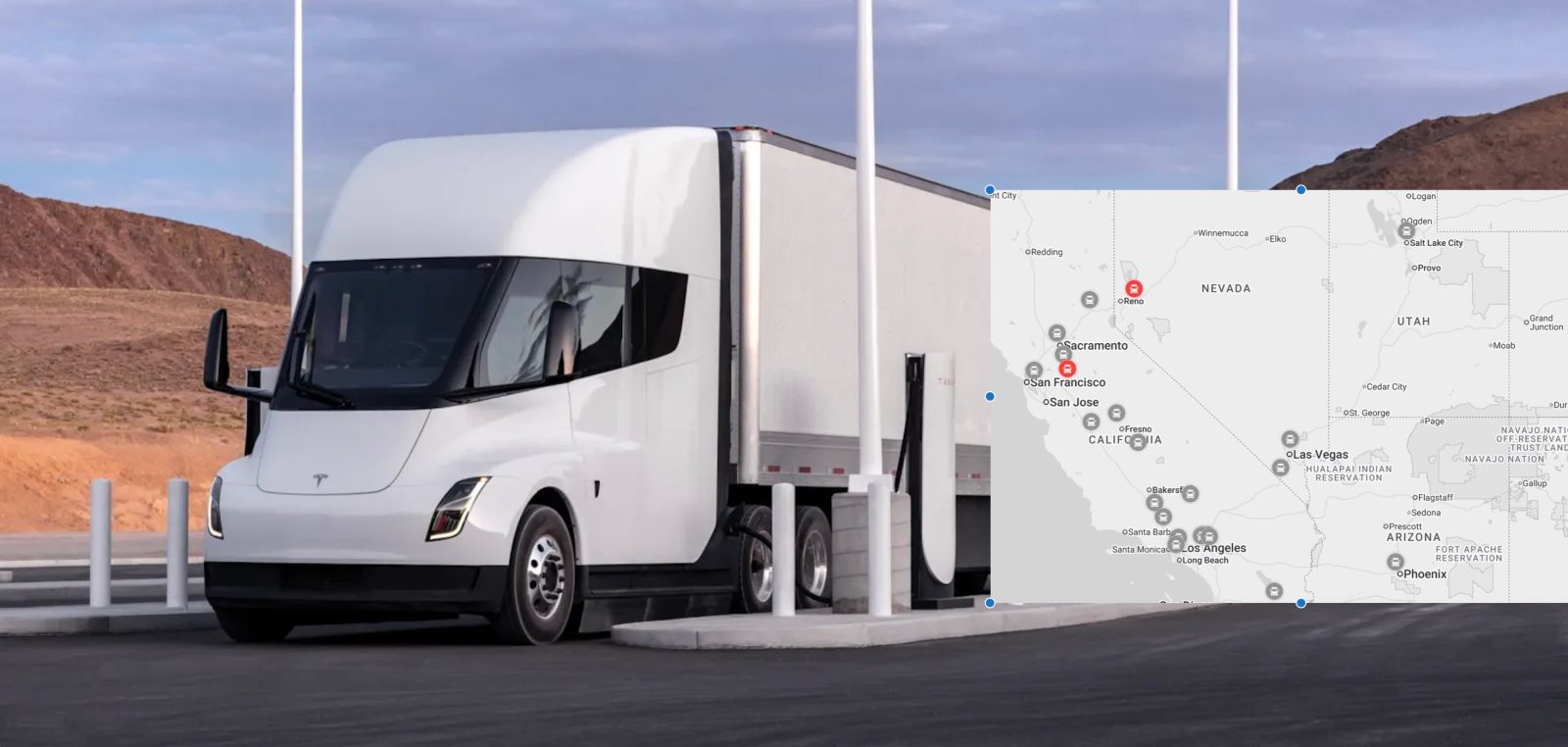
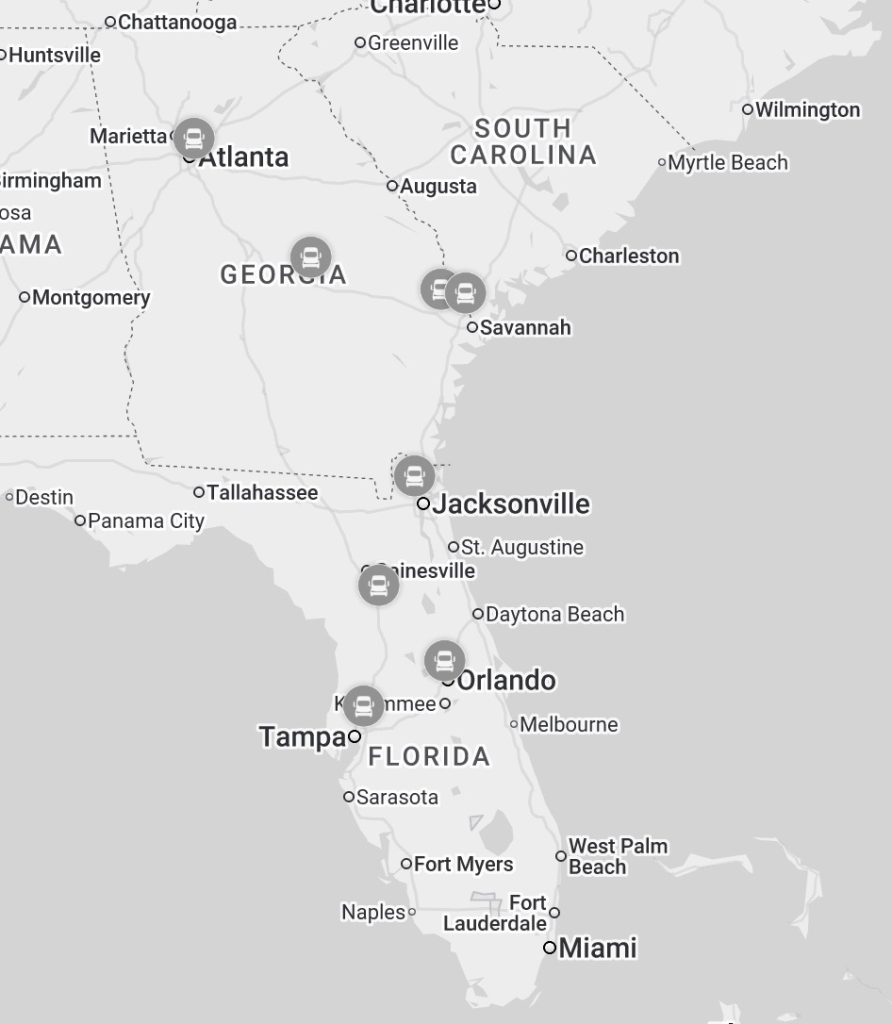
Tesla has updated its “Find Us” map with 64 new Megacharger locations across 15 states, giving the clearest picture yet of the charging network it is building to support the Tesla Semi.
Combined with 2 sites already operational, the map now shows 66 total locations covering major freight corridors from the West Coast to the East Coast.
Jason Gies, who joined Tesla’s Semi business development team after stints at ABB E-mobility and Windrose, shared the updated map on LinkedIn, highlighting the progress Tesla has made in building out the heavy-duty charging infrastructure needed to scale electric Class 8 trucks.
64 sites across 15 states
The state-by-state breakdown reveals that Tesla is concentrating its Megacharger buildout where freight traffic is heaviest. Texas leads with 19 planned sites, followed by California with 17.
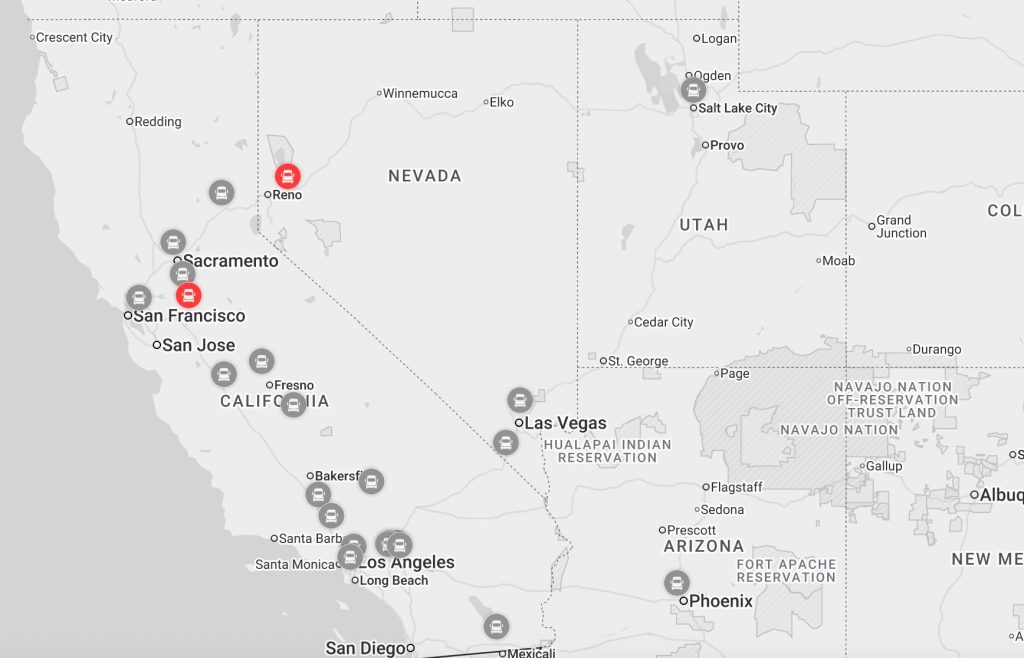
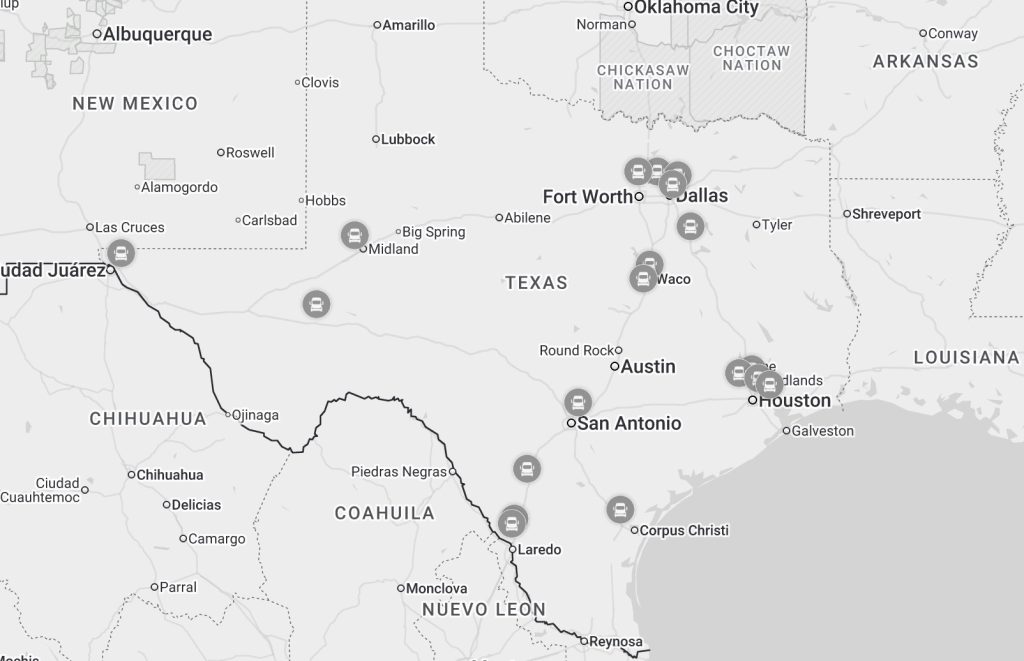
Florida, Georgia, Illinois, and Washington state each have 4 locations in the pipeline. New York and Nevada get 2 each, while Arizona, Colorado, Utah, Oregon, Indiana, Pennsylvania, and Maryland each have 1 planned site.
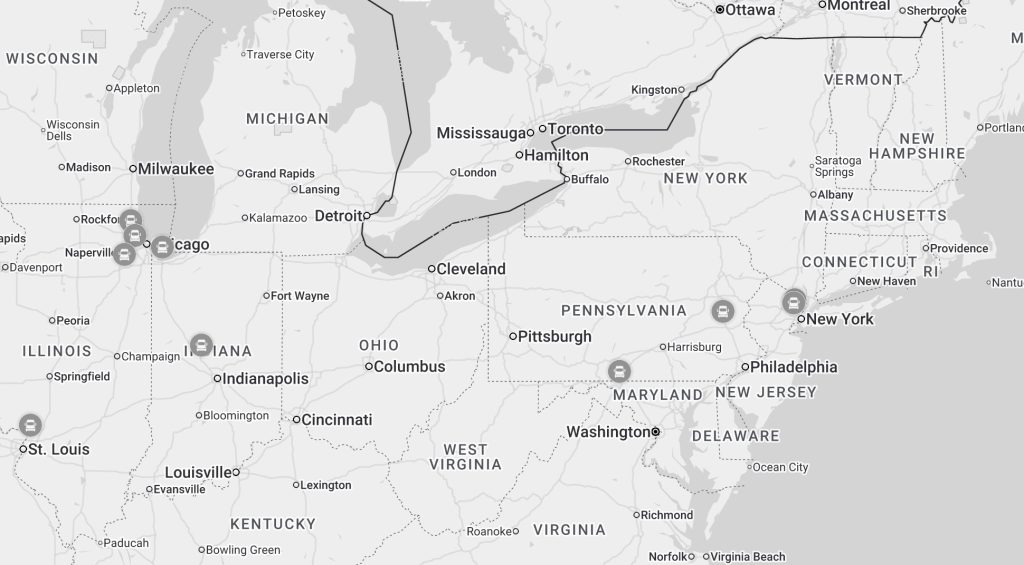
The two currently operational Megacharger sites are at Giga Nevada in Sparks, NV and at a dedicated station in Carson, CA, the latter located near the 405 and 110 freeways and the Port of Long Beach, with up to 12 stalls designed to accommodate Class 8 trucks and trailers.
Routes and corridors
The geographic spread tells a clear story about which freight corridors Tesla is targeting first. The heavy concentration in Texas and California aligns with Interstate 5 (I-5) and Interstate 10 (I-10), two of the busiest freight corridors in North America.
I-5 runs the entire West Coast, connecting major ports and distribution centers from San Diego to Seattle. I-10 is a critical east-west artery from Southern California to Texas and beyond. These are the routes where early Tesla Semi customers like PepsiCo are already operating.
The Florida and Georgia sites suggest Tesla is also planning for I-95 and I-75 coverage along the East Coast and Southeast, while Illinois and Indiana point to Midwest logistics hubs and the I-65/I-94 corridors around Chicago. The Washington state and Oregon sites extend the I-5 coverage all the way to the Pacific Northwest.
Timelines: all “coming soon” for now
One notable detail: all 64 planned sites are currently listed as “coming soon” on Tesla’s map, without differentiated timelines. Tesla hasn’t specified exactly when each site will come online, but there are a few reference points to work with.
In April 2025, Tesla Semi program lead Dan Priestley said the company is aiming to deploy 46 Megacharger stations by early 2027. Tesla’s Q4 report showed about 37 sites planned for 2026 specifically.
The Pilot Travel Centers partnership announced in January provides a more concrete timeline for some sites. Construction of Tesla Semi chargers at select Pilot locations across California, Georgia, Nevada, New Mexico, and Texas is set to begin in the first half of 2026, with the first stations expected to open by summer 2026. Each Pilot site will host 4 to 8 Megacharger stalls capable of delivering up to 1.2 MW.
Pilot, a wholly owned subsidiary of Berkshire Hathaway, operates more than 900 travel centers in 44 states and 5 Canadian provinces — making it the nation’s largest truck stop operator.
1.2 MW charging demonstrated
The charging technology itself is ready. Tesla released video last December showing the Semi charging at 1.2 MW — a peak rate that can replenish up to 60% of the Semi’s range in just 30 minutes. Both the Standard Range (325 miles) and Long Range (500 miles) versions of the Semi support MCS 3.2 charging.
At that charging speed, the Semi can recover roughly 300 miles of range in half an hour — a critical threshold for making long-haul electric trucking practical during mandated driver rest stops.
Beyond charging, Tesla has also revealed plans for approximately 20 dedicated Tesla Semi service locations across the US, and the company is hiring commercial business developers in Germany, signaling that a European Megacharger expansion is in the works as well.
Electrek’s Take
I think the Supercharger network is probably Tesla’s best product ever.
Top comment by Grant
Insightful piece Fred thanks. The charging network needs to be established before EV trucking adoption can occur. Tesla would be wise to get in both markets just as it did with cars.
It took a decade, but Tesla built the largest, most reliable, and most widely used EV charging network in the world — to the point where every major automaker has adopted Tesla’s NACS connector. Analysts now value the Supercharger business at potentially $100 billion and project it could generate $10 to $20 billion in annual revenue by 2030.
If Tesla can replicate that playbook for trucks, it would be a massive deal, enabling long-haul electric trucking. The trucking industry runs on infrastructure. Fleet operators won’t switch to electric without a reliable, fast, and widespread charging network along the corridors they already drive. That’s exactly what Tesla is building with these 64 Megacharger locations.
No other company is close to matching this in North America. Daimler, Volvo, and Traton formed the Milence joint venture for European truck charging, but that’s Europe-focused and targeting 1,700 charging points by 2027. ChargePoint has announced MCS support but hasn’t deployed at scale. Tesla is the only company that has proven it can actually build a massive charging network from scratch and run it profitably. The Pilot Travel Centers partnership shows that truck stop operators already understand this, they saw what happened with the Supercharger network and want in on the ground floor.
The big question now is execution speed. All 64 sites are listed as “coming soon” without specific dates, and Tesla’s history with the Semi program includes years of delays. But the Pilot partnership, the 1.2 MW charging demonstration, and the addition of 64 locations to the map all at once suggest that this time, the infrastructure is moving in lockstep with production. If Tesla delivers, it won’t just sell trucks, it will own the refueling infrastructure.


FTC: We use income earning auto affiliate links. More.




Comments