
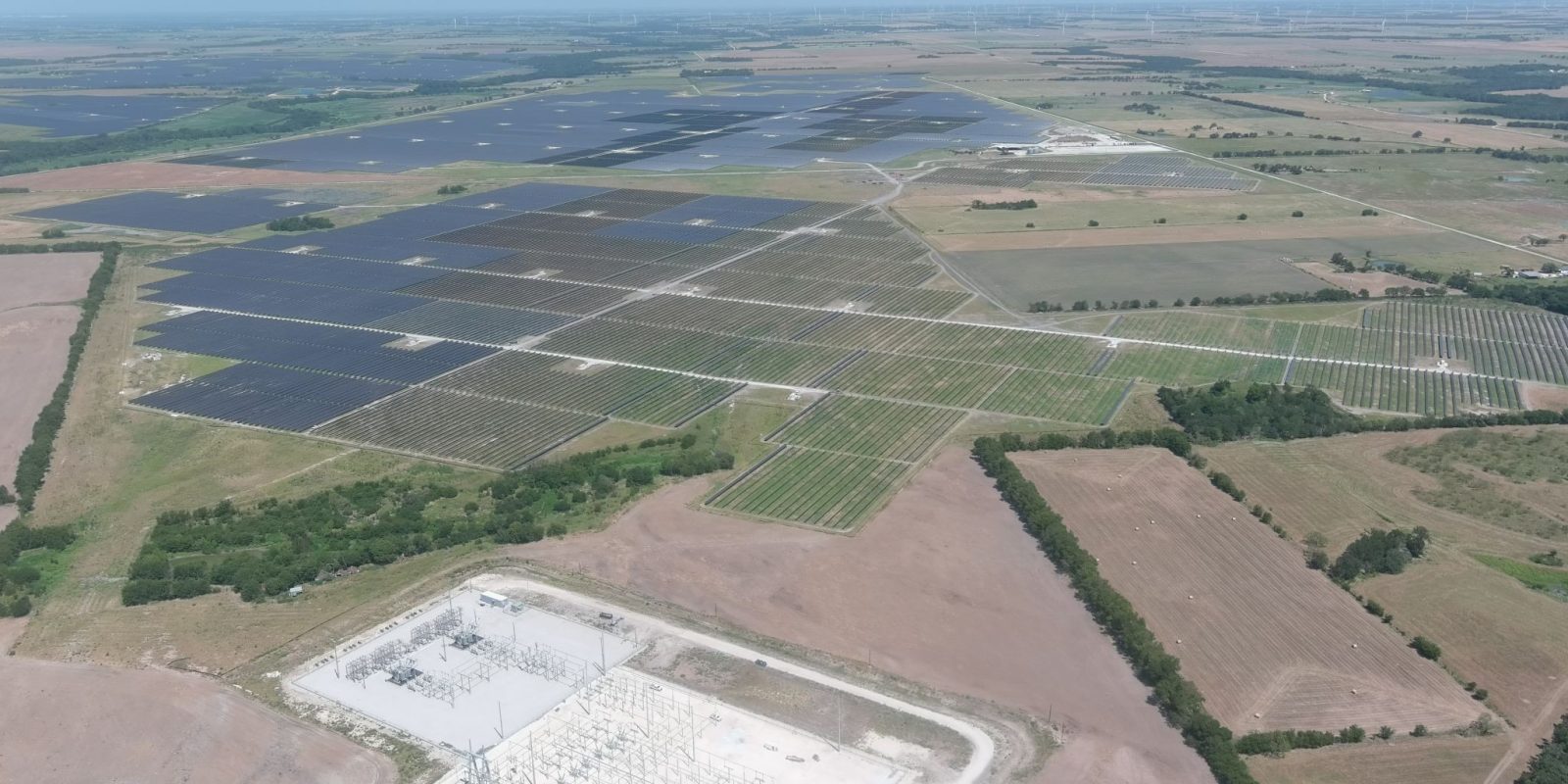
A new report finds Texas is set to overtake California in battery storage as US installs hit a record 57.6 GWh in 2025, up 30% year-over-year.
According to the US Energy Storage Market Outlook Q1 2026 from the Solar Energy Industries Association (SEIA) and Benchmark Mineral Intelligence, installations are now four times higher than totals from just three years ago.
The US had a total of 137 GWh of utility-scale storage installed as of 2025, plus 19 GWh of commercial and industrial systems and 9 GWh of residential storage.
Analysts expect the growth streak to continue. More than 600 GWh of energy storage is projected to be deployed nationwide by 2030, even as the Trump administration targets clean energy industries.
Two-thirds of utility-scale storage installed in 2025 was built in red states, including nine of the top 15 states for new installations. Texas is projected to surpass California as the country’s largest battery storage market in 2026.
Standalone battery projects accounted for nearly 30 GWh of new capacity in 2025, while solar-plus-storage installations made up about 20 GWh. Residential storage deployments reached 3.1 GWh last year, a 51% increase year-over-year. Analysts say virtual power plant programs in states such as Massachusetts, Texas, Arizona, and Illinois are helping drive adoption by reducing costs and easing strain during peak demand periods.
The supply chain is shifting to support the boom. In 2025, some battery cell manufacturers pivoted production from EV batteries to dedicated stationary storage cells, converting existing lines and adjusting future plans. Lithium-ion cell manufacturing for stationary storage reached more than 21 GWh in 2025, enough to power Houston overnight, according to SEIA’s Solar and Storage Supply Chain Dashboard. Meanwhile, US factories now have the capacity to manufacture 69.4 GWh of battery energy storage systems annually.
SEIA interim president and CEO Darren Van’t Hof said, “Deployment is rising fast, but without a course correction from federal actions targeting the industry, Americans will face higher electricity prices and a less resilient energy system.”
Benchmark Minerals research head Iola Hughes added, “At a time of rising electricity demand, driven in part by the growth of data centers and AI infrastructure, energy storage will be critical to ensuring the grid can scale reliably and efficiently.”
Electrek’s Take
The numbers confirm what grid operators and developers have been saying for the past two years: storage isn’t just growing, it’s becoming essential infrastructure. The scale of installations now rivals major generation buildouts, and the fact that growth is accelerating even amid policy uncertainty shows how strong underlying demand is.
Top comment by Hans
TX is the only state that isn't part of a grid interconnect, consequently any local disturbance (e.g. extreme weather or technical issues) immediately impacts the stability. Having backup capacity in the grid kinda mitigates that, so I'm not surprised TX overtakes CA, albeit perhaps for different reasons.
The political geography is also telling. With most new capacity landing in red states, storage can no longer be viewed as a partisan climate solution but rather as a reliability and cost tool that utilities simply can’t ignore. If projections hold, reaching 600 GWh by 2030 would put the US firmly in an era where batteries are a core pillar of the electricity system rather than a niche add‑on.
Read more: US electricity demand surged in 2025 – solar handled 61% of it
If you’re looking to replace your old HVAC equipment, it’s always a good idea to get quotes from a few installers. To make sure you’re finding a trusted, reliable HVAC installer near you that offers competitive pricing on heat pumps, check out EnergySage. EnergySage is a free service that makes it easy for you to get a heat pump. They have pre-vetted heat pump installers competing for your business, ensuring you get high quality solutions. Plus, it’s free to use!
Your personalized heat pump quotes are easy to compare online and you’ll get access to unbiased Energy Advisors to help you every step of the way. Get started here. – *ad


FTC: We use income earning auto affiliate links. More.



Comments