
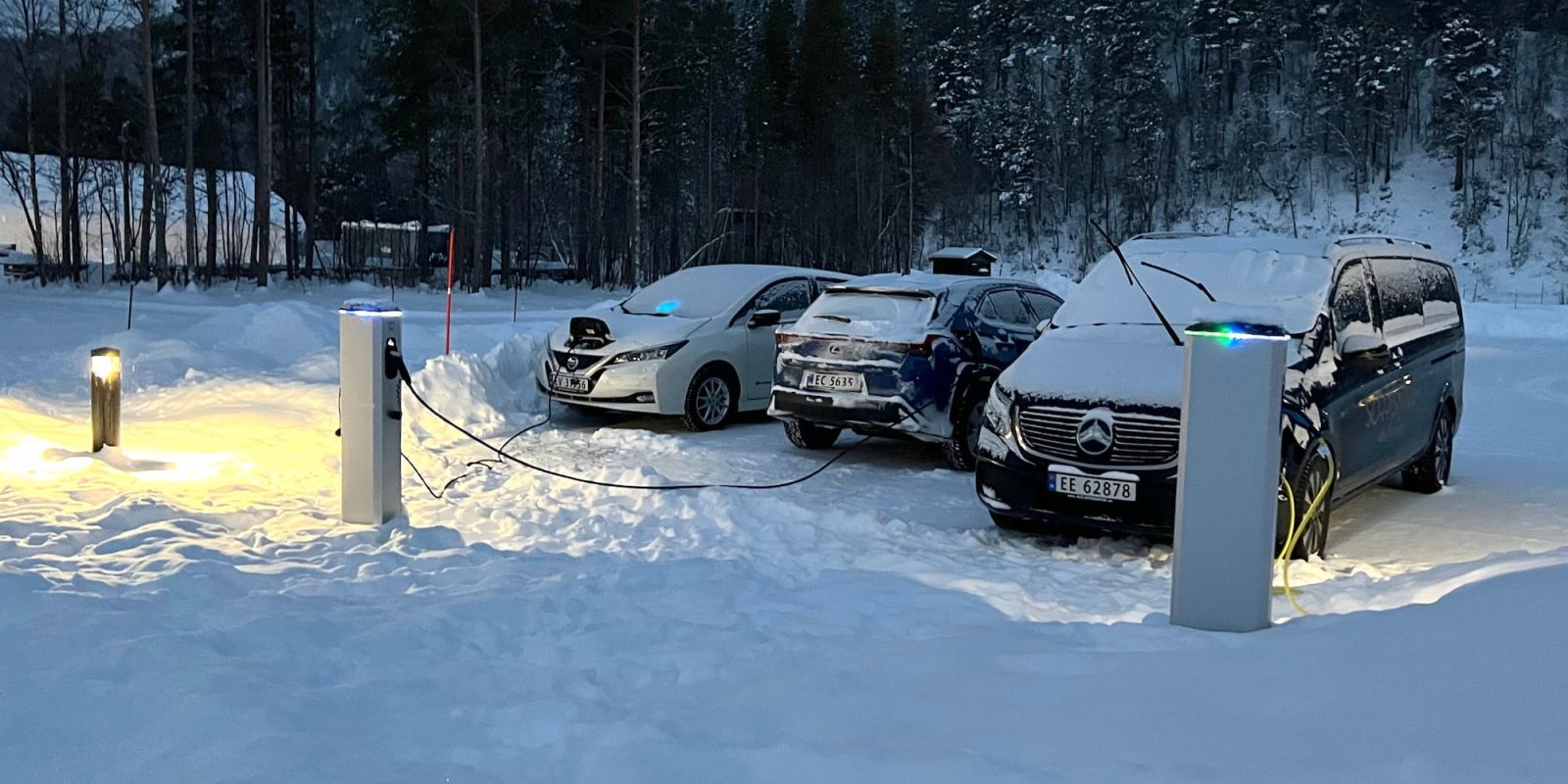
Norway, the world’s leading country in EV market share, still managed to maintain high EV market share right after retiring EV incentives, showing the world a path to resilient electrification of the auto industry.
Norwegian auto sales numbers are out for the month of January, and after a record December, there was some nervousness about what could happen once EV incentives were reduced.
Norway has had generous incentives for EVs over the years, including tax exemptions, special access, free parking and the like. These were all meant to work towards Norway’s world-leading goal of 100% EV sales by 2025, a number that it has basically met despite many thinking only a few years ago that it would be impossible.
Many of Norway’s incentives have been pared down over time as EV momentum became inevitable, but the biggest change in a while just went into effect.
Norway said “mission accomplished” on its EV transition in October, and declared that by the end of the year, it would add a cap to tax incentives. This meant that higher-priced EVs would become more expensive, though lower-priced EVs (under 300k NOK, or ~$30k) would maintain incentives for the time being.
So, there was a rush to buy cars. Norway saw a huge EV sales record, and was one of the few countries where Tesla sales increased amid a continent-wide decline (it’s back to declines in Norway at the start of 2026, though).
But there was a worry that that record in December would just be a fluke, and that the removal of EV incentives could result in a reversion to the mean. Now that data is out, Norway seems to have avoided that fate.
Did Norwegian EV sales drop after incentives were cut? Nope, they’re strong as ever
EV market share did drop slightly, but by such a small percentage as to be negligible. In January 2025, EVs made up 95.8% of the Norwegian market, and in January 2026, they made up 94%. In December, they were 97%. Needless to say, these are all high numbers.
The actual numbers show that there’s nothing to be concerned about here: In January 2026, only 98 diesel cars were sold across all of Norway, alongside 29 hybrids and 7 petrol-only cars. In a nation with nearly 6 million vehicles on its roads (the plurality of which are now electric). And that actually represents a decrease in fossil car sales from last January, not an increase.
Meanwhile, 2,084 EVs were sold in January – which is also a big drop from December and from last year, but we’ll get to that.
The “concerning” way of framing these numbers would be to say that diesel car market share nearly tripled year over year, going from 1.5% in Jan 2025 to 4.4% in 2026, as EV sales dropped to about a quarter of their previous numbers. But that’s more a reflection of diesel car unit sales being so small as to be negligible, and EV unit sales being shifted forward into December instead of January.
The reason that diesel market share increased is because the overall car market dropped. Norway usually sells 10-15k cars per month, but in December, sold over 35k new cars. The bump was due to Norwegians who would have bought an EV in January doing it in December instead, in order to take advantage of incentives.
So in fact, fossil car sales didn’t increase after incentives were retired – EV sales just “decreased,” insofar as they were pulled out of January and into December, making diesel cars look like a larger percentage of a smaller number.
Overall car sales only numbered 2,218 cars in January, well below the average, and you can see how the “missing” ~10k cars from January were instead bought in December (and this is likely to continue into February, and perhaps a few more months, as well).
So instead of expressing concern over the “rising” diesel market share, what these numbers tell us is that EVs have well and truly taken over in Norway. EVs are the standard now, and there is no reason to bother with anything else.
Top comment by KingFisher
I’m betting Norway has seen the effects of not having local gas cars polluting their streets and cities. The effect is better tourism and environment with cleaner air in cities and huge drop in general background noise.
Local outdoor shops and restaurants get more business. With a better experience.
Tourist destination to see what it’s like!
Norwegians all have experience with EVs, and therefore know they’re better than fossil cars, just as most people who’ve had any experience with EVs know. (We previously reported that the only Norwegians buying fossil cars are rental companies, to serve tourists who don’t “get” EVs)
Those minuscule, double-digit fossil car sales are simply not significant, and certainly not enough to justify the various infrastructure investments needed to upkeep a fossil car fleet. And, even after incentives get decreased, we’re not seeing a reversion to fossil sales, because it simply wouldn’t be reasonable to invest in a fossil car when everyone knows there are better options available.
The writing is on the wall, and EVs have won – and Norway isn’t the only country this is inevitable in. And we think that Norway’s example here can serve to help other countries learn that after EVs are allowed to gain a foothold (against the vast propaganda and subsidies gas cars benefit from), the advantages of electrification can remain resilient, as long as incentives are allowed to run their course.
Charge your electric vehicle at home using rooftop solar panels. Find a reliable and competitively priced solar installer near you on EnergySage, for free. They have pre-vetted installers competing for your business, ensuring high-quality solutions and 20-30% savings. It’s free, with no sales calls until you choose an installer. Compare personalized solar quotes online and receive guidance from unbiased Energy Advisers. Get started here. – ad*


FTC: We use income earning auto affiliate links. More.



Comments