
Germany produced 18% of its electricity through solar power in 2025, up from 14% in 2024, a significant leap that meant solar overtook both coal and methane gas in the country’s electrical supply – despite the high latitudes the whole country sits at.
Germany has been through several significant changes in its energy system in recent years, often brought on as a result of some sort of disaster.
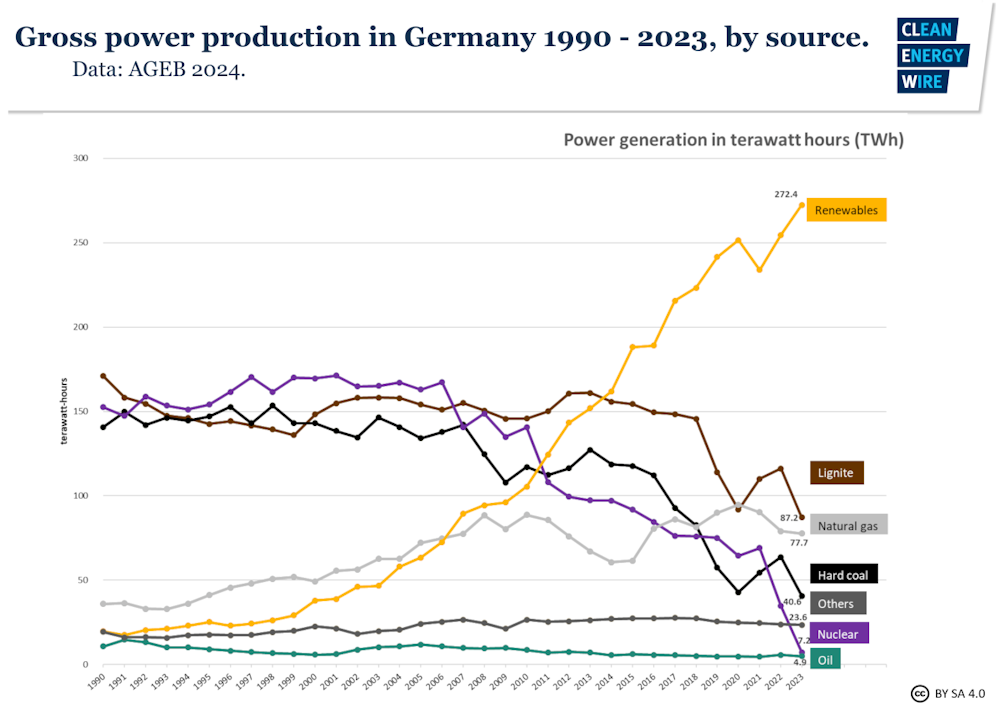
In a move that made waves internationally, Germany committed to shutting down all its nuclear plants after the Fukushima disaster. Many pointed out that this decision could lead to dirtier electricity due to likely increased reliance on fossil fuels, and some estimates suggest that the carbon intensity and fossil fuel reliance of Germany’s electricity supply increased significantly in the wake of this decision.
But at the same time, the country was also installing heaps of solar power. Due to generous solar incentives, rooftop solar is ubiquitous in Germany, and at one point the country was even the largest producer of solar power in the entire world – quite a feat given its high latitude, where sun is more scarce than countries that are closer to the equator.
The ubiquity of solar power in Germany has come alongside relatively low installation costs. For some time now, it has been much cheaper to install solar panels in Germany than the US, making up for the difference in sunlight between the countries.
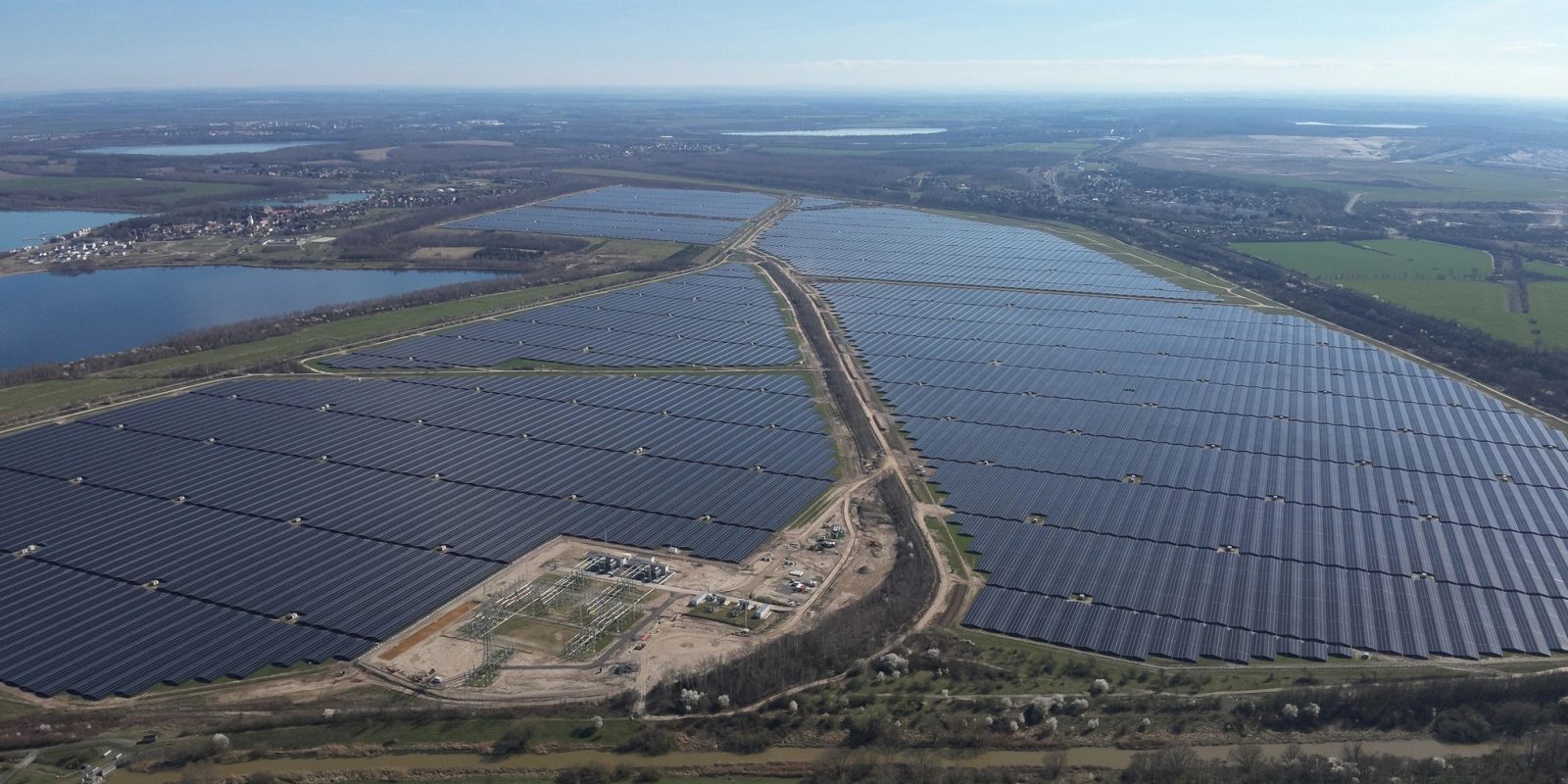
And it’s not just rooftop solar, Germany also became home to Europe’s largest solar farm in 2024.
All that solar has helped to make up for the loss of nuclear power, meaning that Germany’s lost nuclear generation capacity was mostly replaced by renewable capacity – both in the form of wind and solar.
At the same time, oil and gas conflicts arose throughout Europe. Russia, emboldened by the lack of an international response to its annexation of Crimea in 2015, invaded Ukraine in 2022, thinking that Europe’s reliance on Russian gas would keep the continent from acting.
Europe responded to this with a rush to get off Russian gas, which spiked energy prices on the continent, including in Germany. Had the country and continent reformed its energy system even sooner, this pain could have been avoided.
All of this underlined the need to get off of fossil fuels even more.
And according to this week’s news, Germany’s advancement of solar power seems to be going along quite well – with solar overtaking the main fossil fuel sources of electric power generation in 2025.
Solar rose to be 18% of German electricity supply in 2025 (up from 14% in 2024), according to the German Solar Industry Association. Solar accounted for 87TWh of Germany’s power, up from 72TWh in 2024.
Notably, that leapfrogs both lignite (brown coal) at 14% and methane gas at 16% in Germany’s electricity mix. Now, solar is the second-most prevalent source of electricity in the country, behind wind, which remains king at 27% of total generation (and, notably, is more reliable than coal).
Overall renewable penetration in Germany did remain the same between ’24 and ’25, though, at around 56% of total electricity generation. And solar growth stayed level between ’24 and ’25, with around the same amount of solar panels being installed in both years.
Despite the win, the solar association says that Germany needs more solar growth in order to meet its 2030 decarbonization targets. While solar installations were significant in 2025, the pace needs to increase to meet those legally binding targets.
Electrek’s Take
I always find it interesting to cover German solar power, because there are a lot of excuses, particularly from more northern-oriented Americans, for why it can’t work for them.
But, clearly, it can. A country that is much more densely populated than ours, that is colder on average, and where every part of the country gets less sun than ours does, has still managed to become a world leader in solar power. It not only has a lot of power, it’s continuing to install a lot, and it does so cheaply, due to a policy environment that encourages efficiency (which is out of character for Germany, a country with a rather archaic bureaucracy).
So, this story is meant to highlight: if they can do it, then why are we in the US, with some of the best solar resources in the world and no lack of financial or technological resources, having a tough time?
If you’ve got a guess at some of the reasons why, feel free to leave them in the comments. And to be part of the solution, feel free to use our solar referral link and get yourself started on a rooftop solar installation.
If you’re considering going solar, it’s always a good idea to get quotes from a few installers. To make sure you find a trusted, reliable solar installer near you that offers competitive pricing, check out EnergySage, a free service that makes it easy for you to go solar. It has hundreds of pre-vetted solar installers competing for your business, ensuring you get high-quality solutions and save 20-30% compared to going it alone. Plus, it’s free to use, and you won’t get sales calls until you select an installer and share your phone number with them.
Your personalized solar quotes are easy to compare online and you’ll get access to unbiased Energy Advisors to help you every step of the way. Get started here. – ad*


FTC: We use income earning auto affiliate links. More.



Comments