
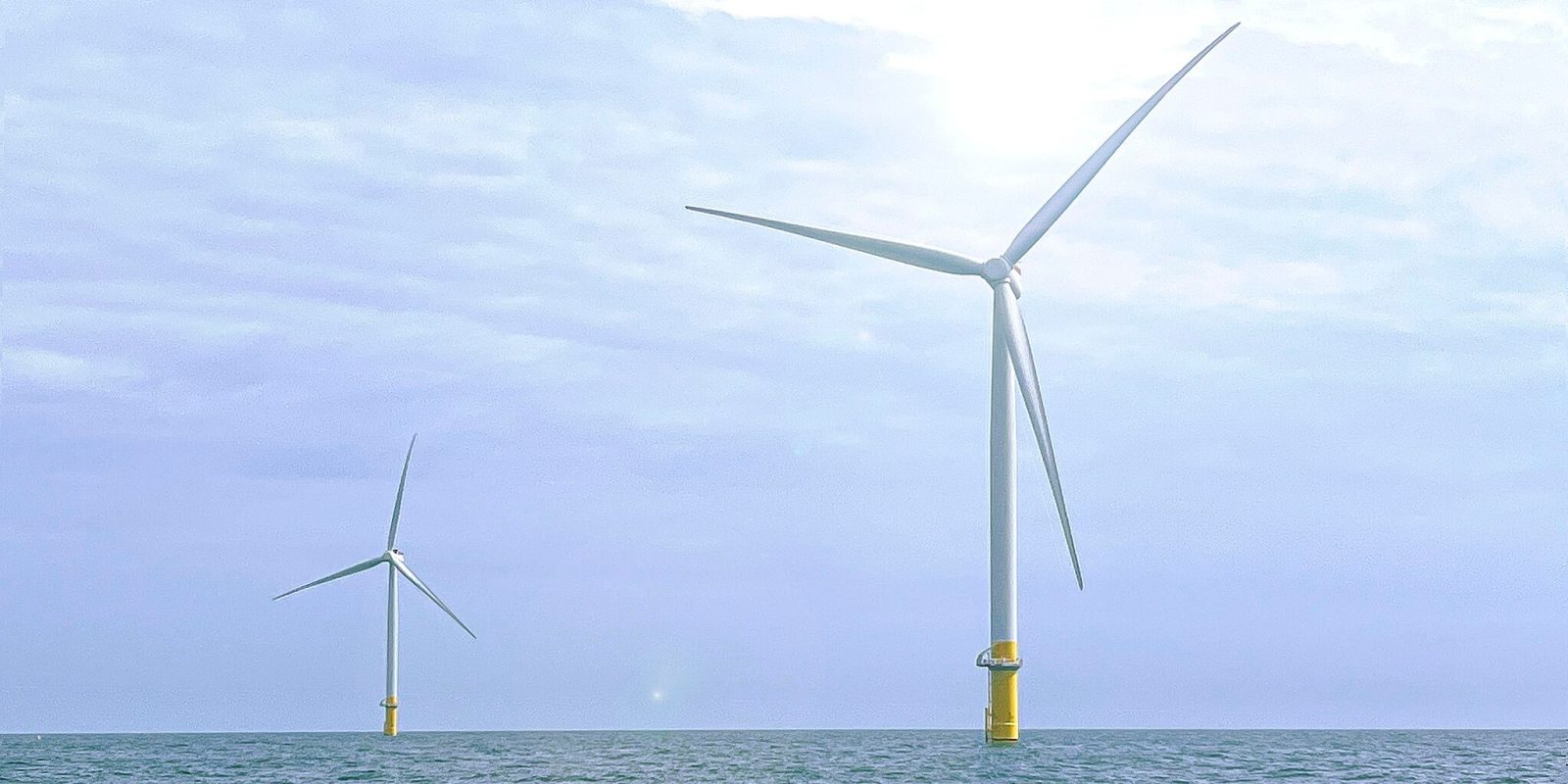
Dominion Energy is suing the Trump administration after the US Department of the Interior ordered five offshore wind projects currently under construction to stop offshore work on December 22 – including Dominion’s 2.6 gigawatt (GW) Coastal Virginia Offshore Wind (CVOW), the largest offshore wind farm in the US.
CVOW has been under construction since early 2024 and was scheduled to come online in early 2026. It’s capable of providing enough clean energy to power about 660,000 homes. Dominion said it has already spent around $8.9 billion on the $11.2 billion project, and its customers are footing the bill. Additionally, Virginia has become a hub of data center growth, making its energy needs urgent.
At the center of the dispute is a typical Trump administration claim, ie, vague, thin on evidence, and released at an awkward time (right before Christmas this time): offshore wind turbines could pose “national security risks” based on “recently completed classified reports” because their spinning blades and reflective towers can create radar “clutter” – interference that can generate false targets or mask real ones.
Dominion claims the stop-work order is “arbitrary and capricious” and unconstitutional, as offshore vessels and crews are forced to sit idle while costs pile up.
Five projects hit at once
The stop-work order applies to five US offshore wind farms currently under construction: Coastal Virginia Offshore Wind in Virginia; Vineyard Wind 1 in Massachusetts; Revolution Wind serving Rhode Island and Connecticut; and Sunrise Wind and Empire Wind in New York. Democratic governors in the other four states have vowed to fight the stop-work order.
All five projects are active construction sites that rely on narrow weather windows, specialized vessels, and tightly timed supply chains.
Dominion is first to sue
Dominion was the first developer to file a lawsuit over the stop-work order on December 23.
In a key early move, US District Judge Jamar Walker converted the case from a temporary restraining order to a motion for a preliminary injunction. If the court grants the injunction, offshore work could resume while the broader legal fight continues.
‘Classified’ evidence
Maritime Executive reports the government told the District Court it estimates it can provide the classified information underpinning the stop-work order during the week of January 5. The court stated that the information is crucial to evaluating the request.
The judge also directed the government to inform the court by December 31 whether it will provide the confidential information to Dominion Energy’s representatives.
Next steps, per the court schedule described by Maritime Executive:
The government is directed to supply the information to the court by January 9, along with a response from Dominion. A hearing in Norfolk on January 16 will consider the converted motion for the preliminary injunction.
Electrek’s Take
Of course, this didn’t come out of nowhere. Trump repeatedly says he wants to shut down offshore wind, and his administration has been instructed to doggedly look for ways to choke the offshore wind industry. A sudden, across-the-board stop-work order, justified by vague references to classified reports, looks like yet another attempt to kneecap projects that are already in the water.
Also, radar interference from turbines isn’t a new discovery. Dominion, for example, told the New York Times that its wind farm was situated in coordination with the military. So if there are new issues, the government should put them on the table and pursue mitigation, rather than pulling an emergency brake on five active construction sites without providing any detail whatsoever for the public – or even the developers – to evaluate what’s allegedly so urgent.
Top comment by OrangeRadio
A common factor in these projects is Orestad, a Danish company and one of the largest offshore developers globally, majority-owned by the Danish government. Just before Christmas, the Trump administration made another attempt at Greenland, which received strong pushback from Denmark. Could this be a subtle way to retaliate against Denmark?
Dominion argues in its lawsuit that the order is “the latest in a series of irrational agency actions attacking offshore wind and then doubling down when those actions are found unlawful.” I reckon that’s a perfect summary.
Read more: Interior Dept cuts 400k homes’ electricity just before Christmas, raising prices

If you’re looking to replace your old HVAC equipment, it’s always a good idea to get quotes from a few installers. To make sure you’re finding a trusted, reliable HVAC installer near you that offers competitive pricing on heat pumps, check out EnergySage. EnergySage is a free service that makes it easy for you to get a heat pump. They have pre-vetted heat pump installers competing for your business, ensuring you get high quality solutions. Plus, it’s free to use!
Your personalized heat pump quotes are easy to compare online and you’ll get access to unbiased Energy Advisors to help you every step of the way. Get started here. – *ad


FTC: We use income earning auto affiliate links. More.



Comments