
All-solid-state batteries may be the key to unlocking longer range, faster charging, and overall more efficient electric vehicles. After a series of breakthroughs, scientists in China overcame several hurdles that have been holding the new EV battery tech from hitting the market.
China is advancing all-solid-state EV batteries
Automakers, startups, battery makers, and plenty of other companies from around the globe are racing to introduce the next-generation of EV batteries.
Although they have shown promise in lab tests and even in smaller, niche markets, producing all-solid-state EV batteries at a mass scale has not been so easy.
All-solid-state batteries replace the liquid electrolyte, used in current lithium-ion batteries, with a solid one. Some companies are already using solid-state batteries with a small amount of electrolyte.
One of the biggest hurdles holding all-solid-state batteries back is finding the right electrolyte solution, one that offers superior conductivity and doesn’t crack or break.
Commonly used solid sulfide-based electrolytes are hard and fragile, which makes them difficult to bond and causes poor conductivity. And then of course, you have to source those materials and manufacture them on a mass scale, which is costly in itself.
In China, scientists, universities, and other researchers have teamed up to advance all-solid-state EV batteries in the country.
According to a report from China Central Television (CCTV) on October 16, scientists achieved three breakthroughs that could be key to unlocking the next-gen battery tech.
The first, “special glue,” or iodine ions, was developed by the Institute of Physics, Chinese Academy of Sciences, and other researchers.
While the battery is running, the iodine ions serve as “traffic cops” following the electric field to the interface between the electrode and the electrolyte. They actively attract lithium ions, plugging the gaps and enabling a better bond.
The second breakthrough, “flexible transformation,” was achieved by the Institute of Metal Research and the Chinese Academy of Sciences.
Scientists created a “skeleton” for the electrolyte using polymer materials. According to the report, the new material can be “bent 20,000 times and twisted into a twist without breaking.” It also features small chemical components that accelerate lithium-ion movement, while others “grab” more lithium ions, which the report claims can increase battery storage capacity by 86%.
Chinese scientists have recently made a series of significant breakthroughs in unlocking all-solid-state lithium metal batteries, which are expected to prompt the range of electric vehicles powered by 100-kilogram battery from the original 500 kilometers to over 1,000 kilometers.… pic.twitter.com/irpgv2ynqv
— CCTV+ (@CCTV_Plus) October 17, 2025
The third, “Fluoro Reinforcement,” was developed by Tsinghua University. Researchers used fluorinated polyether materials to create a “shield” on the electrolyte surface.
The technology reportedly passed needle penetration tests and was put in a test chamber with temperatures of over 120°C (248°F).
As CCTV claims, the breakthroughs could allow a 100 kg battery pack to deliver over 1,000 km (620 miles) of range.
Electrek’s Take
China is already dominating the global EV battery market, with CATL and BYD accounting for over half of sales. The new developments could help it stay one step ahead of the rest of the world.
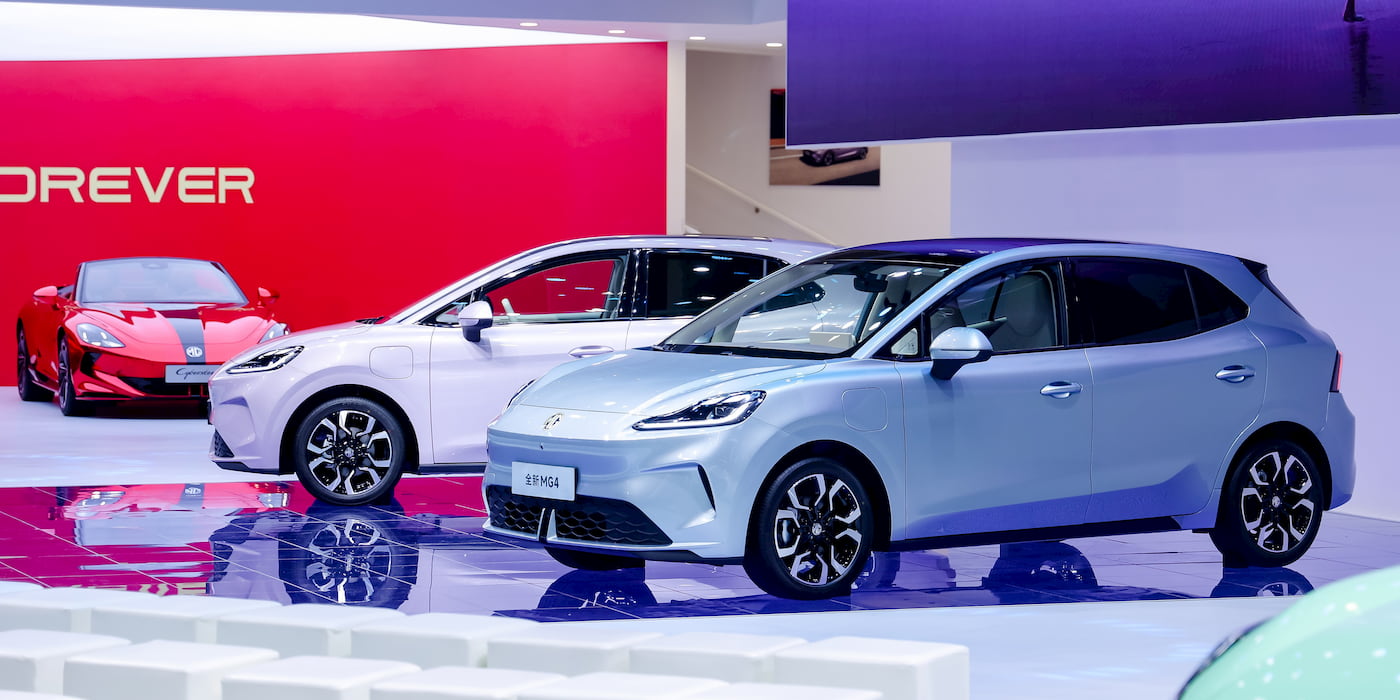
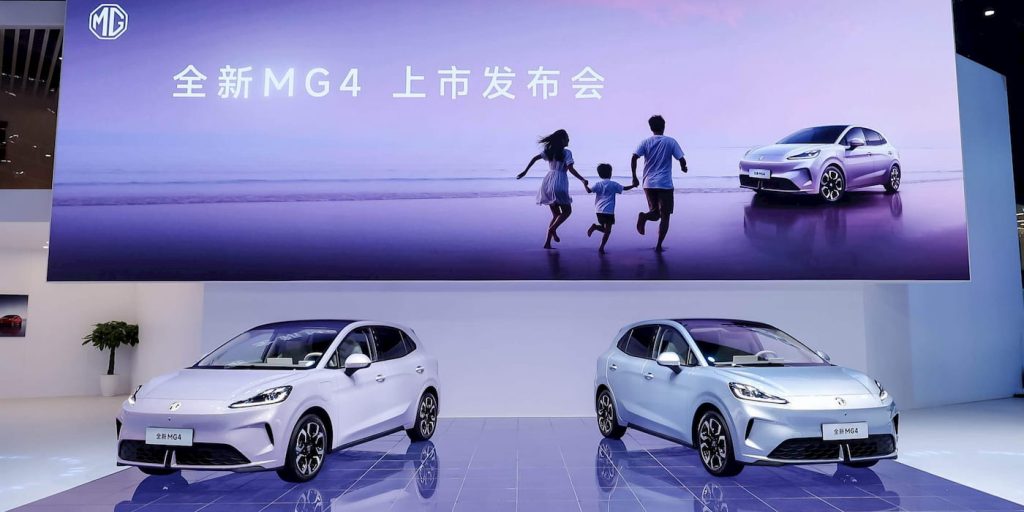
SAIC MG already launched what it calls “the world’s first mass-produced semi-solid-state” EV, the new MG4, at the Chengdu Auto Show in August.
Top comment by Connor Paull
it's great to see more progress in solid state battery tech. I still question why they seem more excited by these big, but not actually useful range numbers because IMO it's much more exciting to be able to drastically cut down weight.
Then again, others are also quickly advancing the new battery tech. Mercedes-Benz announced it drove a modified EQS, equipped with solid-state batteries, for 1,205 km (750 miles) on a single charge just last month.
After securing a new partnership with Sumitomo Metal Mining Co. to mass produce cathode materials earlier this month, Toyota said it aims “to achieve the world’s first practical use of all-solid-state batteries in BEVs.” Toyota said it looks to launch its first all-solid-state battery-powered EV in 2027 or 2028.
CATL and BYD plan to introduce solid-state batteries around 2027, with mass production following around the end of the decade.
Source: CarNewsChina, CCTV


FTC: We use income earning auto affiliate links. More.


Comments