
A recent tragic incident in Portland, Oregon, one of countless similar occurrences, is putting a spotlight on a less-discussed but very real threat to micromobility riders: the condition of our roads.
Earlier this month, a Portland husband and father tragically lost his life while riding an electric scooter along an otherwise innocuous local street. It was marked just 25 mph, but it wasn’t the road’s speed that was the issue, or even the car traffic, which is usually to blame for most riders’ deaths. According to reports, Randy Phelps was thrown from his scooter after hitting a pothole in the road. He spent nearly three weeks on life support before passing away. His organs went on to save the lives of three others.
The loss is heartbreaking – but sadly, not unique.
The pothole had been reported to the city many times, including by local residents and businesses located along the street. Just a few days after Phelps died, the city finally filled in the pothole.
We talk a lot about the dangers that cars pose to cyclists and scooter riders. And for good reason… they are far and away the leading cause of injuries and fatalities for micromobility users. But it’s time we start recognizing that crumbling infrastructure is another deadly factor.
Potholes, cracks, unmarked trenches, and uneven pavement may go unnoticed or simply seem like minor annoyances to drivers in SUVs or pickup trucks. But to someone on an electric scooter or e-bike, they can be catastrophic. Especially at the typical speeds many of these vehicles travel, often between 15 to 28 mph (25 to 45 km/h), a sudden jolt or loss of control from hitting a deep pothole can easily send a rider flying.
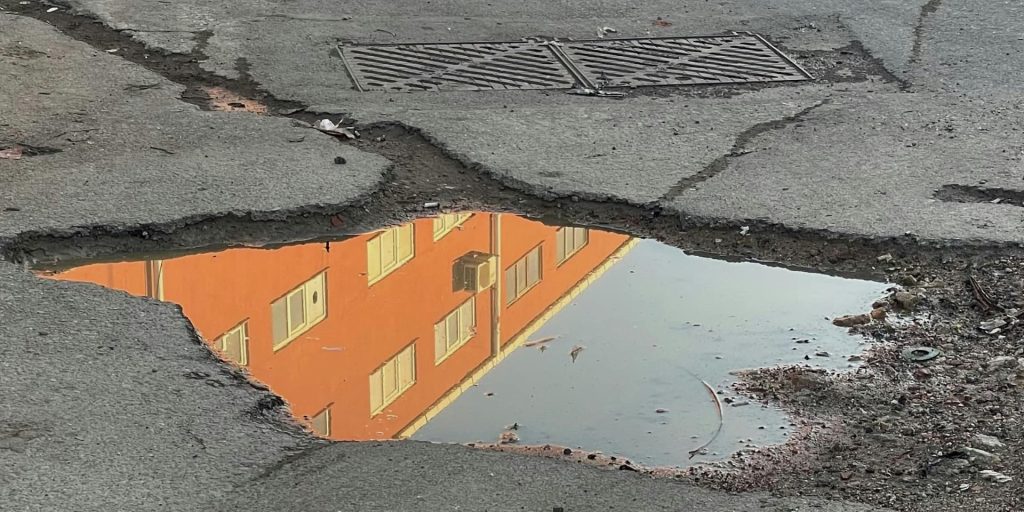
Electric scooters are particularly vulnerable here. Commonly available with small 8 to 9-inch wheels, they simply don’t have the ability to roll over wide cracks or potholes that larger diameter wheels have. Instead, they tend to fall into them. Hitting a large pothole on a scooter can often end in an immediate crash. E-bikes usually fare better, with larger diameter wheels offering a bit more forgiveness. But even on a bike, deep pot holes or simply the wrong bump at the wrong angle can flip you over the handlebars or throw off your line, especially if you’re already navigating traffic or a narrow bike lane. And the edge of a pothole can easily puncture an underinflated bicycle innertube with a pinch flat, leading to loss of control at speed.
It’s part of why fat tire e-bikes – with their big, 3 or 4-inch wide tires – are so popular. Not only do they give a cushy ride, but they offer a layer of protection by rolling more smoothly over broken pavement and filling in small potholes instead of dropping into them. They’re not a magic solution, but they help on rougher roads.
I’ve recently been spending time on the new VMAX VX2 Hub e-scooter, which, by electric scooter standards, has relatively large 10-inch tires. They’re also tubeless, functioning closer to motorcycle tires. While 10 inches still isn’t huge, I tend to prefer these types of larger-wheeled scooters versus the small-wheeled budget options precisely for the extra safety that those larger tires offer.
Top comment by Ben
It’s worthwhile to draw attention to this. While with cars, wheel sizes have been ever increasing, with cycles and scooters it’s the inverse. But because the prio for most municipalities is cars, they seem to think the odd pothole here and there is ok. It doesn’t just mess up scooters and foldies with small wheels, hitting a pothole can also easily deform a road bike rim.
For the moment, like the article suggests, large, broad rims and fat tyres are the way to go. My Brompton hasn’t seen much action since I moved to North America, for this very reason.
Ultimately though, this isn’t just about tire width or diameter. This is about infrastructure. Many cities across the US have done a great job encouraging people to choose alternative forms of transportation. In fact, Portland is often seen as one of the most cycling-friendly cities in the country, and even there it took the death of a local rider to get a pot hole filled in.
It takes more than just encouraging people to switch from cars to scooters or bikes. It means they have a responsibility to maintain safe conditions for those users. That includes repaving cracked roads, filling potholes quickly, and keeping bike lanes clear and usable – not just painting lines and calling it a day.
And while I hope this doesn’t come across as victim-blaming, we riders also need to recognize that part of surviving on two wheels means riding defensively – not just against cars, but against the road itself. That might mean scanning ahead more actively, slowing down when visibility is poor or the pavement is suspect, and choosing routes with safer surfaces whenever possible. On one of my first e-bikes back in 2010, I turned my wheel from an O-shape into a D-shape while following too close behind a car to see a big pot hole in time, and that taught me a big lesson that I still remember 15 years later.
None of this is meant to place blame on riders. The responsibility is on cities to fix their roads. But until that happens — and while we push for it — we riders have to ride like our lives depend on it. Because often times, they do.



FTC: We use income earning auto affiliate links. More.


Comments