From 2010-2011, Weintraub covered all things Google for Fortune Magazine, amassing an impressive rolodex of Google contacts and a love for Silicon Valley tech culture.
It turns out that his hobby – the 9to5Mac news site – was always his favorite, and in 2011, he went full time adding his Fortune Google followers to 9to5Google, in addition to adding the style and commerce component of 9to5Toys gear and deals site. In 2013, Weintraub bought one of Tesla’s first Model S EVs off of the assembly line, which began his love affair with electric vehicles and green energy — this, in turn, became Electrekin 2014.To cover the burgeoning world of drones and UAVs led by China’s DJI, DroneDJ was born in 2018, and then more recently, Connectthewatts and SpaceExplored were launched to cover connected fitness and space.
From 1997-2007, Weintraub was a Global IT director and Web Developer for a number of companies, with stints at multimedia and branding agencies in Paris, Los Angeles, New York, Sydney, Hong Kong, Madrid, and London before becoming a publisher/writer.
Seth received a bachelor’s degree in Industrial and Systems Engineering from the University of Southern California with a minor in Multimedia and Creative Technology in 1997. In 2004, he received a Master’s from NYU’s Tisch School of the Art’s ITP program.
Weintraub is a licensed single-engine private pilot and a certified open-water scuba diver, and he spent over a year backpacking to 60 cities in 23 countries. Whatever free time exists is now guaranteed to his wonderful girlfriend, Alana, and two amazing sons.
So each Model S uses 2000 times the amount of lithium-ion batteries that a laptop would use (And then multiple times that for tablets and portables). Considering that every indicator including Tesla’s own forecasts show Tesla doubling production over the next few years, we might see a shortage of batteries if makers like Panasonic and Samsung aren’t able to keep up. Something however tells me that Tesla is aware of the issue and is working on alternatives.
Having begun the first European deliveries of Model S, Tesla Motors opened its Tilburg Assembly Plant. The Tilburg facility will serve as the final assembly and distribution point for Model S vehicles sold in Europe as well as Tesla’s European service and parts headquarters.
…Parts can be distributed to anywhere across the continent within 12 hours. Tilburg, about 80 km (50 miles) from the port of Rotterdam, is connected by an excellent rail and motorway network to all major markets.
Another smart move for Tesla. This will allow quicker deliveries to Europeans with the variety of options packages staying in tact. Instead of ordering a Tesla and having it shipped from the US, Tesla will ship a bunch of mostly finished Teslas on a ship and save a month (eventually in ship times.
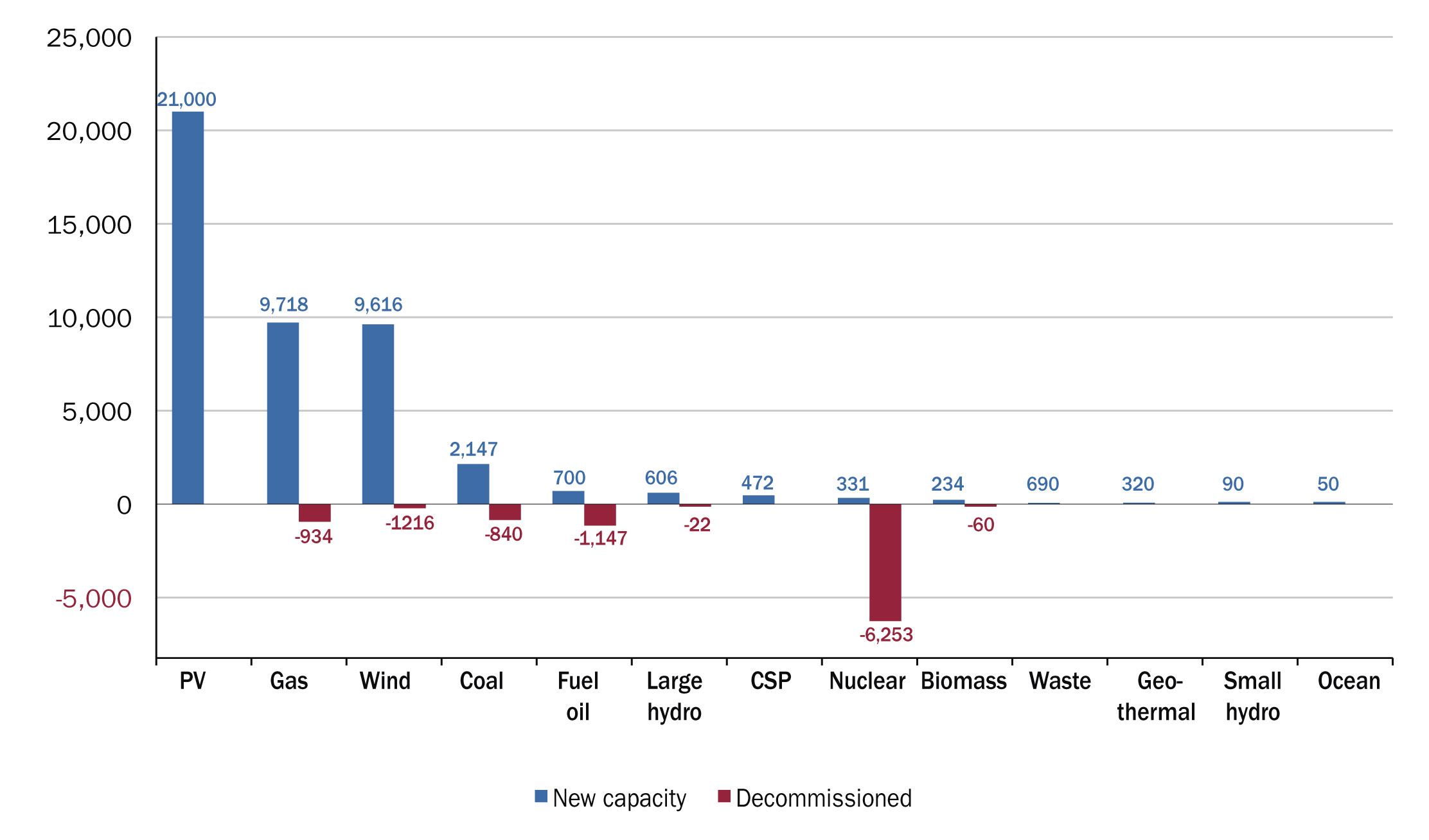
He talked about how the government is now aiming toward a 100% renewable electricity supply by 2050. The press release on this from the agency (from almost two years ago now) quotes Flasbarth as saying that “The results of the study demonstrate that electricity supply can be generated completely from renewable energies by 2050 and that secure supply can be guaranteed at all times.”
Feasible? It’s already well in train. In fact, solar PV penetration into the German electric markets is already lowering the price for wholesale electric power at the hours of peak demand by 40% from only very recently. This recent item from Renew Economy lays out how this is being accomplished. I asked President Flasbarth to comment on this and he confirmed that this was indeed the case. Prices during peak demand hours, as you know, have traditionally been way above the average for the rest of the day. Solar PV is standing this paradigm on its head. You have high demand on hot sunny days – largely because of air conditioning. But, you are also going to have the highest boost from PV during that same time under those same conditions. Ergo, with sufficient PV capacity installed, you are going to be able to supply more-than-enough peak power to offset demand and lower prices.
Germany has only a few rivers and mediocre wind, little coastline and shitty sun yet they can go sustainable. Meanwhile with vast swaths of land with intense sunlight, lots of wind and every other resource available, the U.S. has no such aspirations.
Check out what happens when the smart electric drive goes offroading. It’s as painful to watch as a truck trying to park in a city. Take a ride in the all-new, all-electric, smart electric drive.
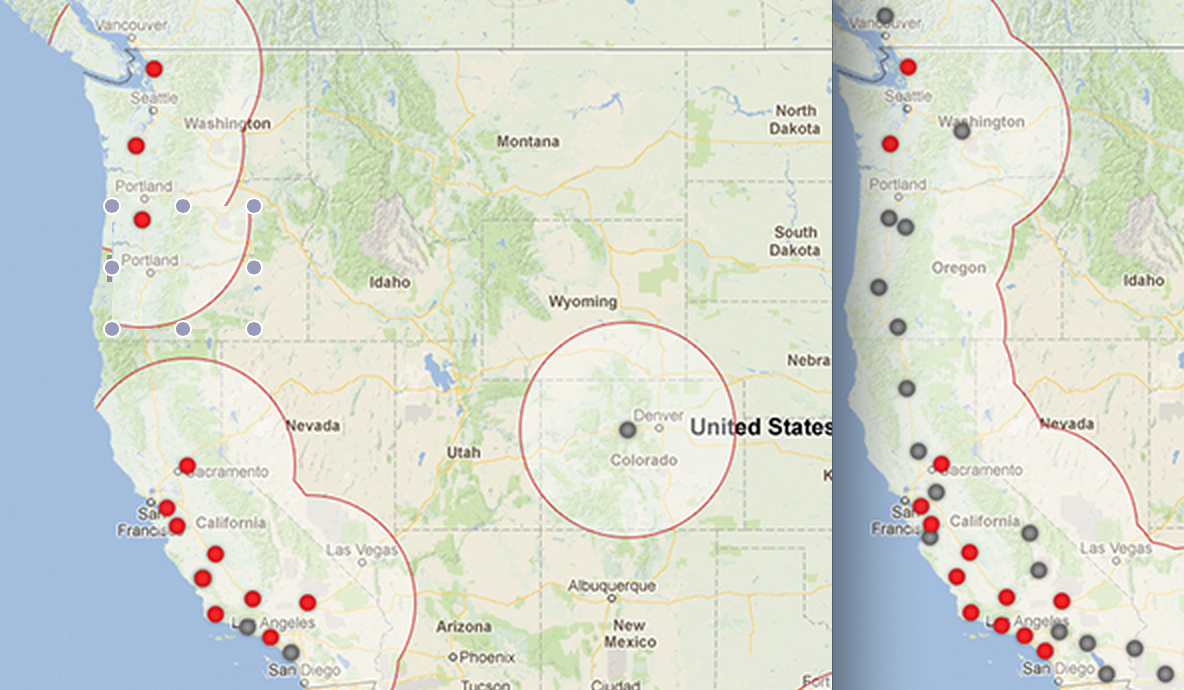
The California-based maker of the Model S electric car will open its first supercharger station in Oregon on Thursday. The charging station will be located in Woodburn, 255 N. Arney Road near Elmer’s Restaurant, and will expand Tesla’s I-5 corridor network. Up until now, the nearest supercharger stations were in Centralia and Burlington, Wash. A ribbon cutting is planned for 10 a.m.
The new station is between Portland and Salem on the way South to Corvallis and Eugene. Even with Tesla’s gratuitous radius mapping, it still doesn’t quite close the Western Coast loop. Doing a quick Google Maps directions, it is about 570 miles of highway between the Sacremento/Folsom Supercharger and the new South Portland station. Tesla expects to close the loop this Fall.
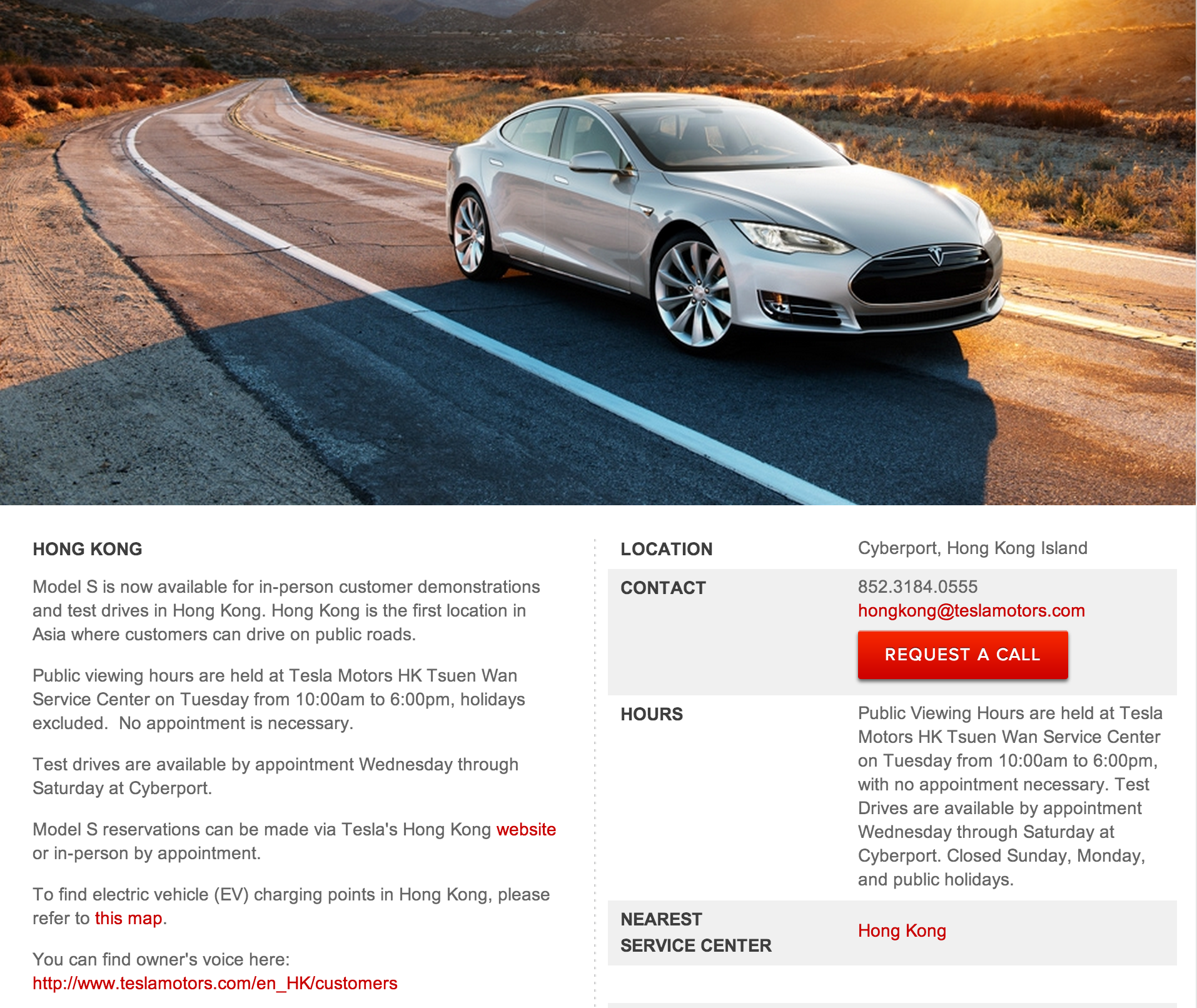
According to a Bloomberg report, Tesla is getting a lot of interest in Hong Kong. Over 300 people have already put down deposits for the vehicles without knowing the local price
Ho is among the 300-plus Hong Kong residents who have made refundable deposits of HK$39,000 to HK$330,000 ($5,000-$42,500) to reserve a Model S, even before the company has said how much the cars will cost. That’s more orders than Tesla has seen in the U.K., Japan or Australia, sales manager Kenneth Lui said.
The Hong Kong success may bode well for the Palo Alto, California-based company in mainland China, where it plans to open a Beijing showroom this year.
Hong Kong is a relatively small place which is perfect for electric vehicles and the highly affluent upper class of Hong Kong won’t blink at whatever price Tesla throws out.
China, on the other hand might be a harder nut to crack. There are only 168 EV charging stations nationwide and subsidies have waned in recent years. Then there’s the price.
Some interesting perspective from a Sparq owner. I really hope Chevy expands the Sparq into more markets. Its low price + 4 doors+ lots of storage space+7 sec 0-60 all make this a really compelling offer, perhaps a lot more so than the Volt in a lot of markets. Too bad it is fugly.
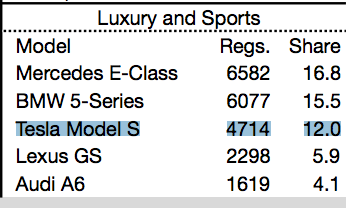
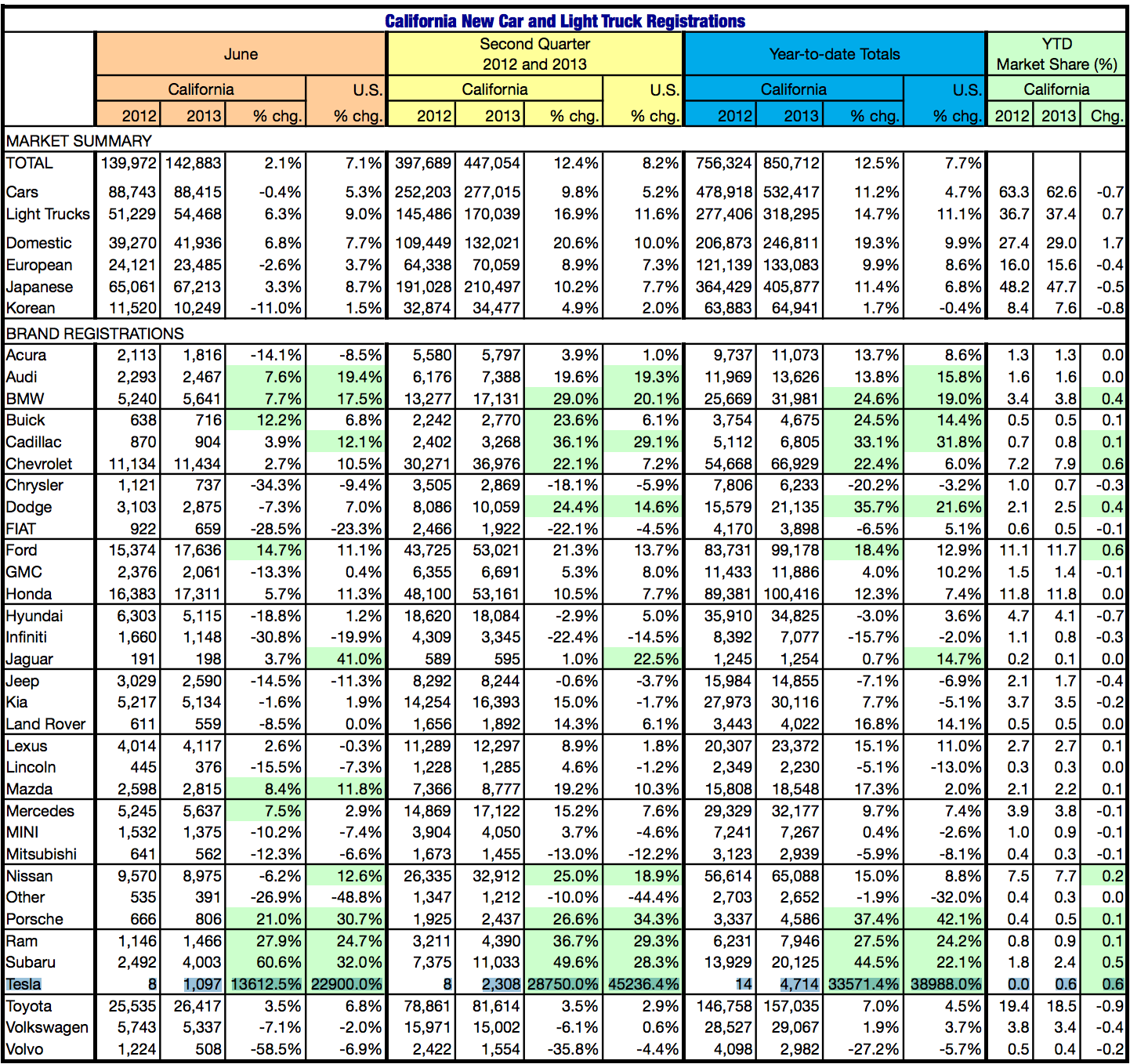
According to the latest figures from the California New Car Dealers association, Tesla is growing exponentially on its California home turf. The Model S (12%) is now the number 3 luxury car Model behind the Mercedes E Class (16.8%) and the BMW 5 Series (15%). The Audi A6 (4.1%) and Lexus GS (5.9%) combined are still two points below Tesla.
Tesla states that it is now making 500 Model Ses per week. If that were the case in June, over half of the Model S production went to California which, according to the report, registered 1097 new Model S’s. If California is indeed a bellwether state for the rest of the country, the news is very good for Tesla. Full figures below:
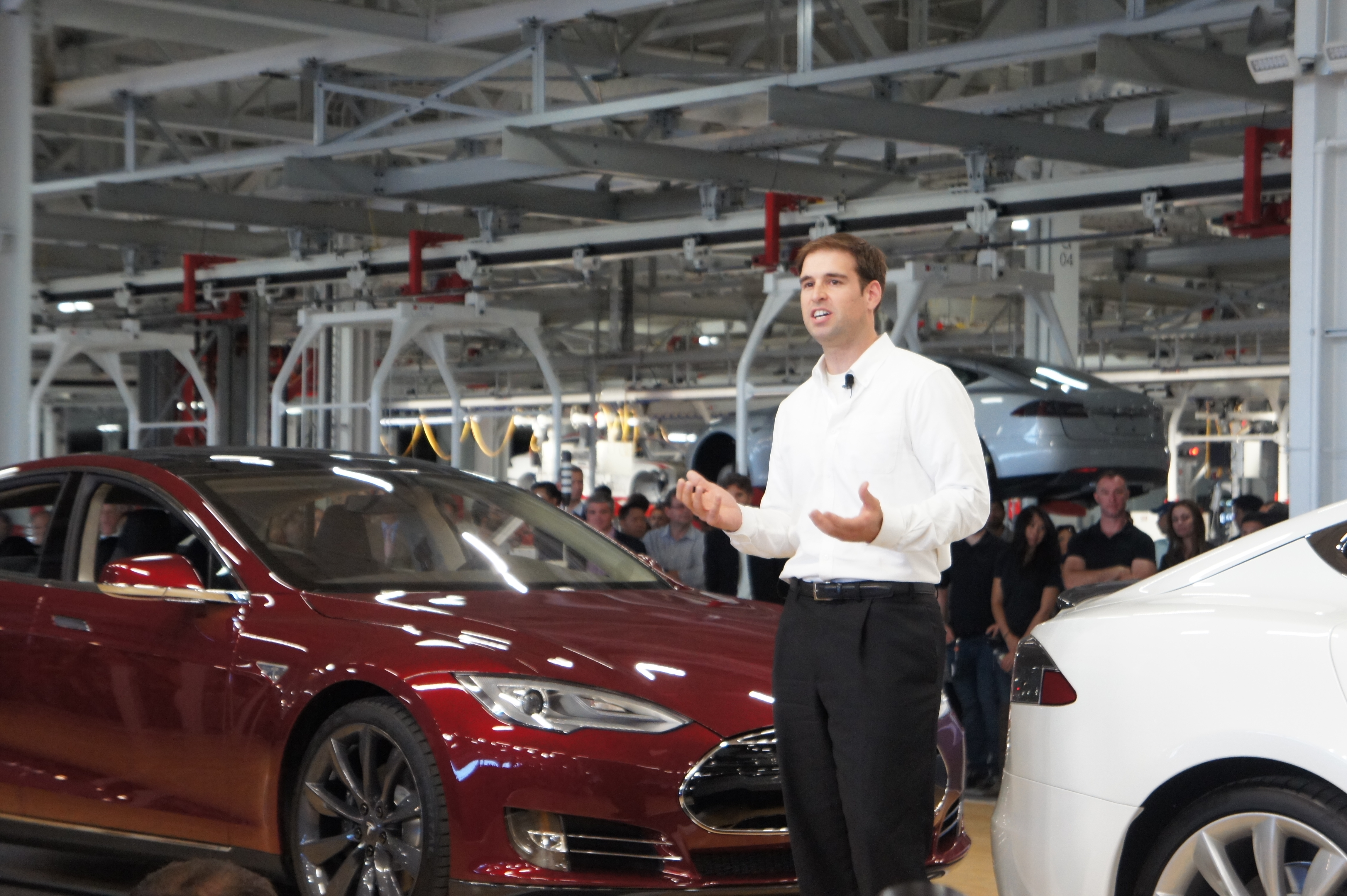
In an interview with MIT Technology Review, Tesla CTO JB Straubel says that battery charging technology is going to get even quicker than it is now.
“It’s not going to happen in a year from now. It’s going to be hard. But I think we can get down to five to 10 minutes,” Straubel said in an interview with MIT Technology Review. He noted that the current superchargers, which deliver 120 kilowatts of electricity, “seemed pretty crazy even 10 years ago.” Conventional public charging stations deliver well under 10 kilowatts.
Tesla has already reduced its Supercharger times in half going from 40 minutes to 20 minutes for a half charge. A few more ‘half times over the next few years and we’ll be there. One of the barriers of this type of charging is heat so this might involve external or internal cooling for battery charging.
One challenge of fast charging is that delivering power to a battery very rapidly can cause it to overheat. To avoid damaging the battery, the outside charger needs to communicate with the electronics that monitor the state of the batteries, including their voltage and temperature, and quickly adjust charging rates accordingly. “To do that kind of charging, everything has to be designed and working in perfect synchrony,” Straubel says.
Achieving five-minute charges will require not only further improving the charging system, but also improving the interface with the electrical grid. As it is, only some places on the grid can handle 120-kilowatt charging. Drawing large amounts of power from the grid also incurs demand charges from the utility, increasing the cost of the system.
But Straubel says that Tesla plans to get around these problems by equipping supercharging stations with solar panels and batteries.
TechinAsia has the story. With this car you could ‘perpendicular park’ and the back end could slide into the spot with a smaller profile than even parallel parked cars.
Expect a lot more of these types of exotic car designs as we move into an electric car economy.