
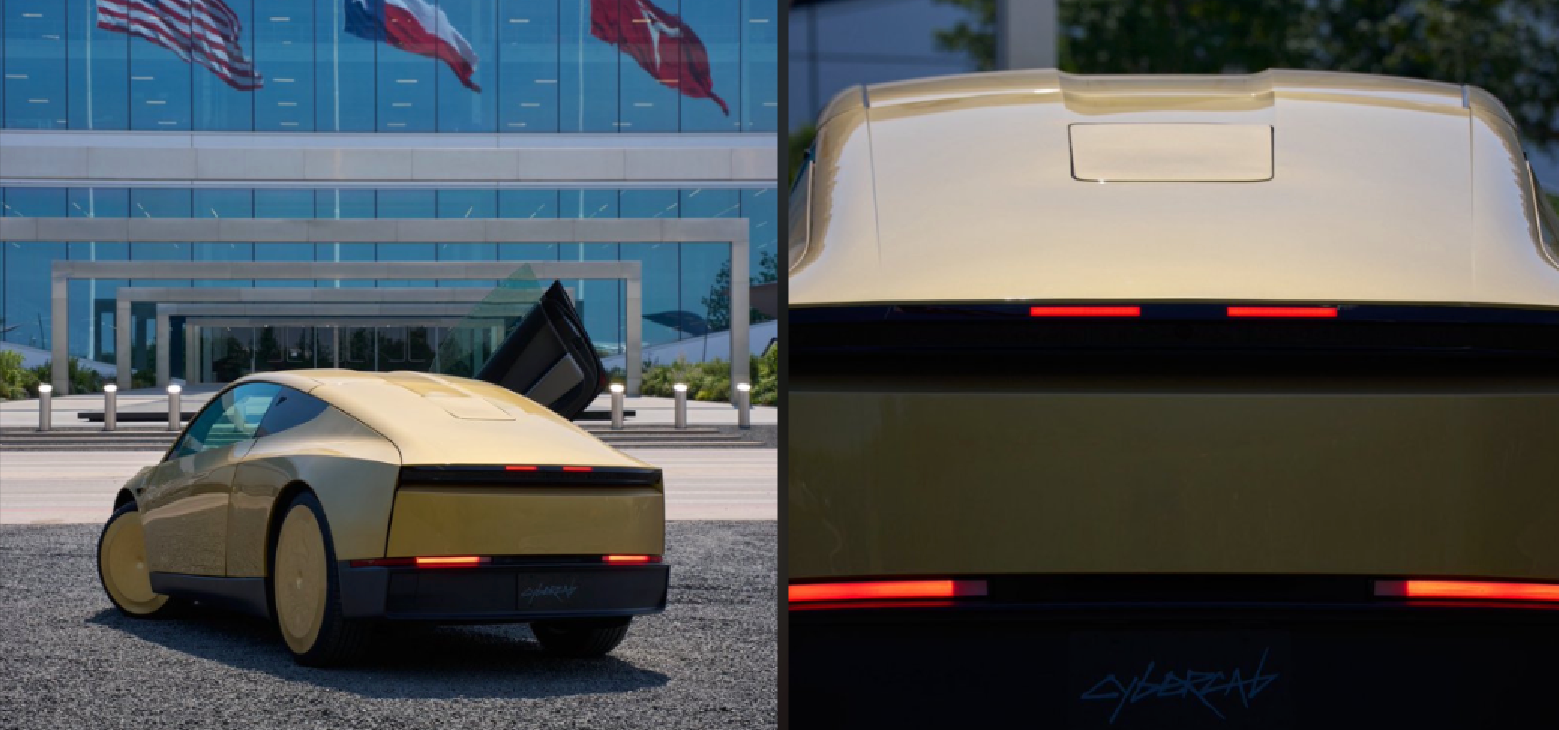
Tesla’s Cybercab is already under federal investigation. NHTSA opened an audit into how Tesla certified the vehicle the same day the company started putting passengers in it in Austin.
The probe targets the exact thing that makes the Cybercab unusual: it has no steering wheel, no pedals, and no mirrors, and Tesla certified it as road-legal anyway.
Tesla launched the Cybercab commercially in Austin yesterday, and the event turned out to be the nothing-burger we expected. There was no livestreamed reveal, no stage presentation, and no public remarks from Elon Musk.
Instead, Tesla invited a small group of shareholders and friendly influencers to ride in the two-seater, with guests reportedly required to sign NDAs, before rides opened up more broadly through the Robotaxi app.
What NHTSA is investigating
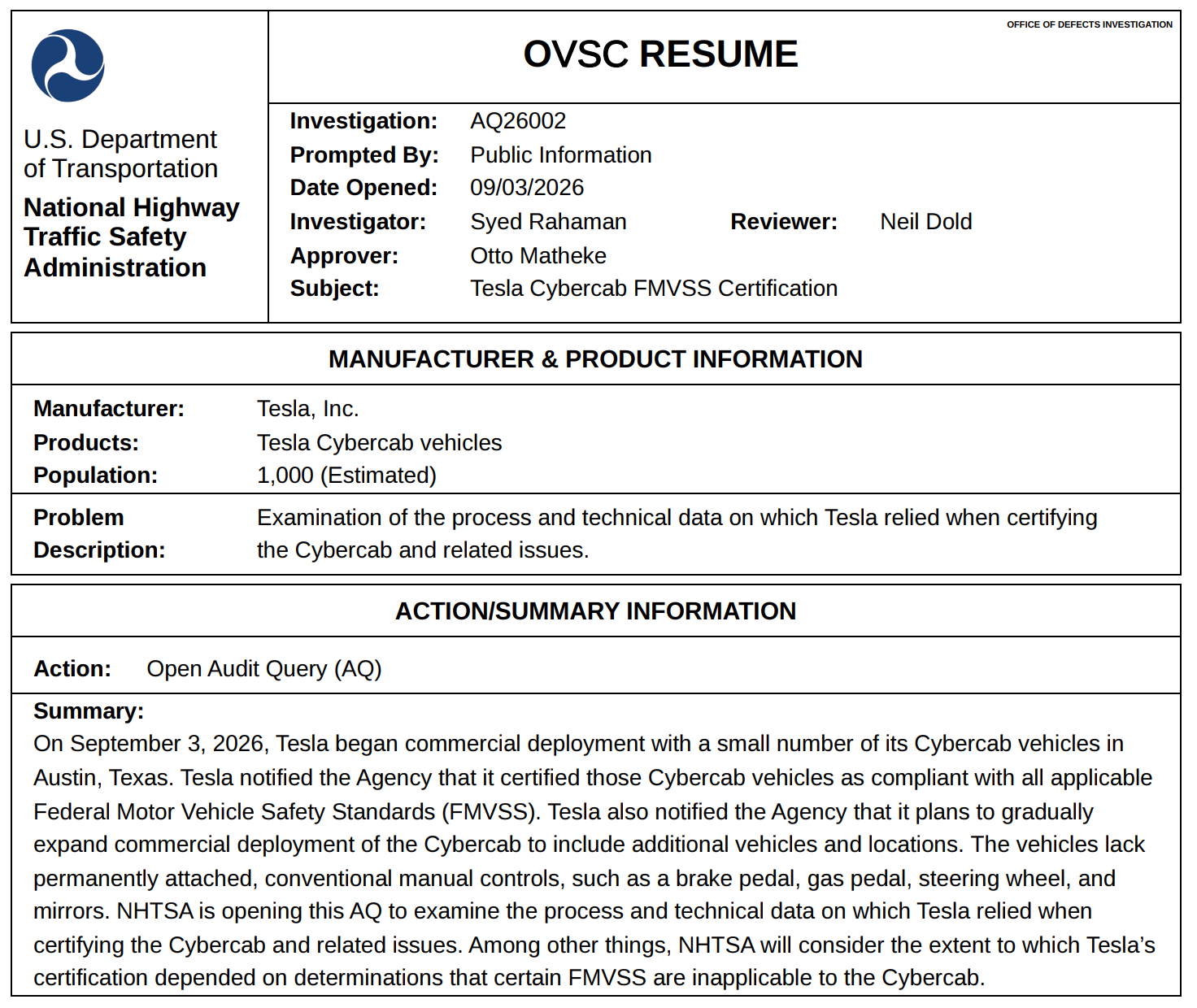
The investigation is an Open Audit Query, numbered AQ26002, from NHTSA’s Office of Defects Investigation. It was “prompted by public information,” according to the filing, opened September 3, and it covers an estimated 1,000 Cybercab vehicles.
NHTSA says it’s examining “the process and technical data on which Tesla relied when certifying the Cybercab and related issues.”
Tesla told the agency it certified the vehicles as compliant with all applicable Federal Motor Vehicle Safety Standards, and that it plans to gradually expand deployment to more vehicles and more locations.
The question is how Tesla got there. NHTSA says it will consider “the extent to which Tesla’s certification depended on determinations that certain FMVSS are inapplicable to the Cybercab.”
A car with no controls, self-certified
In the US, automakers don’t get their vehicles pre-approved by a regulator. They self-certify that a vehicle meets the federal safety standards, and NHTSA can investigate after the fact.
That system runs into a problem with the Cybercab. Many of the FMVSS were written around a human driver. They assume there’s a steering wheel, a brake pedal, side mirrors, and controls the driver can reach. The Cybercab has none of those.
Tesla’s answer was to decide that some of those standards simply don’t apply to a car with no human controls. Now NHTSA wants to see the work behind that decision.
Top comment by Dcashmer
How does the 'fleet' thing work? Are fleet owners going to have to set up their own premapped geofenced areas and include the needed 'back office' oversight? Or will they only work within Tesla's geofenced area with Tesla oversight?
This isn’t happening in a vacuum. Tesla’s driverless ambitions are already under a stack of federal scrutiny. NHTSA has an open probe into “Full Self-Driving” covering 3.2 million vehicles after a series of visibility-related crashes, and it collected crash data showing a Tesla remote operator crashed a Robotaxi earlier this year. The Cybercab runs on a very similar FSD software.
Electrek’s Take
Of course, this is an NHTSA investigation of Tesla, so like the Cybertruck launch, it’s more likely than not going to be another nothingburger.
Anyway, as we previously reported, Tesla is only going to deploy Cybercab in its limited geo-fenced robotaxi service. They won’t be sold to the public anytime soon.
In fact, Tesla is trying to pull another FSD and have fleet owners buy the Cybercab to deploy their own robotaxi services – shifting the burden to them. It’s going to be a mess.
If you’re riding in EVs, you might as well power the ones you own at home with your own electricity. With electricity rates up almost 10% last year and expected to keep climbing, going solar is one of the best ways to protect yourself against rising costs. And with lease and PPA options, you can do it with zero upfront cost and start saving immediately. If you want to find the best deal, check out EnergySage. It’s a free service with hundreds of pre-vetted installers competing for your business, so you save 20 to 30% compared to going it alone. No sales calls until you pick an installer. Get your free quotes here.


FTC: We use income earning auto affiliate links. More.



Comments