
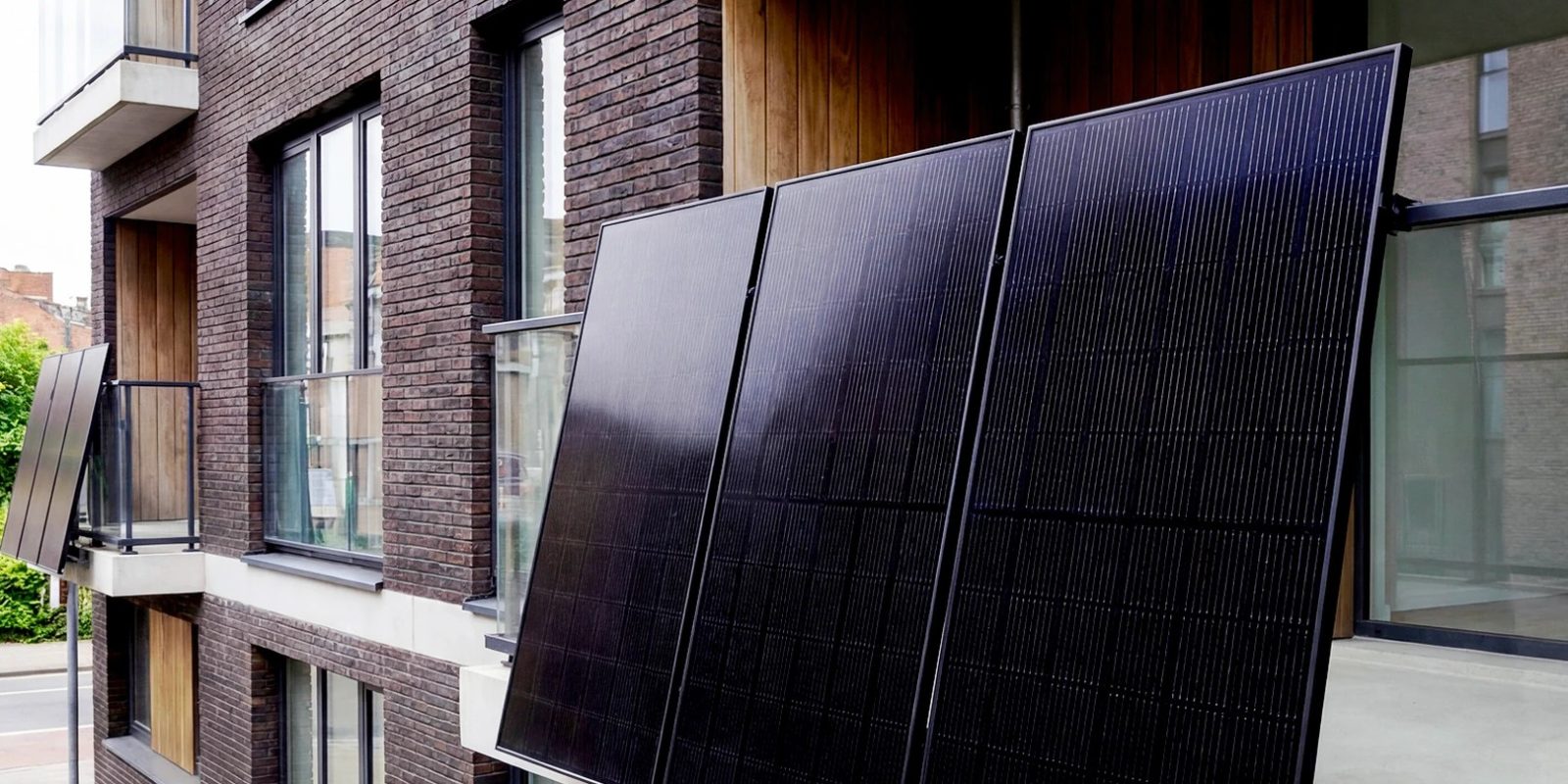
New Jersey renters and apartment dwellers will soon be able to lower their electricity bills with solar panels that plug directly into a standard wall outlet – no roof required.
Governor Mikie Sherrill (D-NJ) today signed the Garden State Balcony Solar Act, legalizing small, portable solar systems that plug into an ordinary 120-volt outlet. That means residents without a solar-friendly roof will soon be able to generate some of their own electricity without a permit or utility approval.
The law covers plug-in solar systems with a combined output of up to 1,200 watts – roughly two or three modern solar panels. The panels can go on a balcony, patio, or in a sunny yard, then connect to the home through a standard outlet.
A small microinverter converts the panels’ direct-current electricity into the alternating-current power used in the home. That solar power helps run whatever is switched on – say, a refrigerator, dryer, or TV – so the household pulls less electricity from the grid.
“Balcony solar is a practical, easy-to-use tool that can help families save money while allowing more people to participate in our clean energy future,” Sherrill said. “This bill cuts unnecessary red tape, expands access to affordable solar power, and proves that affordability and sustainability can go hand in hand.”
Just plug it in – with some safety rules
Qualifying systems won’t need an interconnection agreement or advance approval from the electric utility. Utilities also can’t charge an extra fee, require additional controls, or demand equipment beyond what’s already built into the system.
Municipalities can’t ban plug-in solar or require a permit, application, license, fee, or other approval to use it. If the installation requires separate construction or electrical work, however, that work will still have to meet the usual building and electrical codes.
The equipment itself must be certified under the UL 3700 plug-in solar safety standard or a comparable standard recognized by a national testing laboratory. It must also automatically stop sending electricity into the grid during an outage, which protects utility workers repairing power lines.
Systems of 400 watts or less won’t be subject to code provisions that would otherwise require changes to the building, wiring, or electrical panel. Larger systems of up to 1,200 watts still qualify for the simplified process, but they must meet all applicable installation rules.
These systems are exempt from net metering, so owners shouldn’t expect credits for extra electricity sent to the grid. The savings come mainly from using the solar power in the home as it’s produced.
Landlords can’t simply say no
The law also gives renters some teeth. A landlord can’t flat-out ban a qualifying system if the tenant pays the unit’s electric bill. Homeowners associations, condo associations, and similar groups can’t impose blanket bans, either.
They can set reasonable rules covering the equipment’s size, location, and placement. Tenants must provide at least 14 days’ written notice, say where the system will go, and submit documentation showing that it meets the law’s requirements.
“Plug-in solar is a simple concept – solar small enough to plug in but big enough to provide real environmental and bill benefits for residents who couldn’t go solar otherwise,” said Doug O’Malley, director of Environment New Jersey.
A couple of panels on a balcony aren’t going to wipe out an electric bill like a full rooftop system might. But for renters and other New Jerseyans who’ve effectively been locked out of home solar, making even a portion of their own electricity is a great start.
The new law takes effect March 1, 2027.
Read more: The US’s first UL 3700 balcony solar microinverter is here
If you’ve ever considered going solar, make it easy by finding a trusted, reliable solar installer near you that offers competitive pricing by checking out EnergySage. It has hundreds of pre-vetted solar installers competing for your business, ensuring you get high-quality solutions and save 20-30% compared to going it alone. Plus, it’s free to use, and you won’t get sales calls until you select an installer and share your phone number with them.
Your personalized solar quotes are easy to compare online, and you’ll get access to unbiased Energy Advisors to help you every step of the way. Get started here.


FTC: We use income earning auto affiliate links. More.



Comments