
Tesla told federal regulators that its driver-assist system was “verified engaged” when a Model 3 crashed at 104 mph and killed its driver in Clute, Texas — a detail that never appeared in any police statement or news report about the crash, which happened in May 2026.
The gap between Tesla’s own data and the public account of the crash is the latest example of how little the public learns about crashes involving the company’s Autopilot and “Full Self-Driving” systems.
This article is part of an ongoing Electrek investigation that uncovers fatal crashes involving Tesla’s ADAS system that the automaker is trying to hide through redactions in its NHTSA reports. You can keep track of the investigation through this hub.
What Tesla reported to NHTSA
The crash appears in Tesla’s own filings to the National Highway Traffic Safety Administration under the Standing General Order (SGO), which requires automakers to report crashes where a Level 2 driver-assist system was engaged within 30 seconds of impact and someone was killed, injured, or the vehicle was towed.
We found it while analyzing the full SGO dataset, which now contains nearly 4,000 Tesla driver-assist crashes.
In the report, Tesla lists the vehicle as a 2025 Model 3 driven by a consumer, and marks the automation “Engagement Status” as “Verified Engaged.” That’s a step beyond the “unknown” or “reported” labels that appear on many records — it means Tesla confirmed, through its own telematics, that Autopilot or “Full Self-Driving” was active. The report also shows Tesla had telematics data available for the crash.
Tesla logged the vehicle’s pre-crash speed at 104 mph, on a road it categorized as a “Street,” and recorded the outcome as a fatality.
Then it redacted almost everything that would explain how those facts fit together. The crash narrative, the specific software version, and even the field indicating whether the road was within the system’s approved operating area are all blacked out as “confidential business information” — the same redactions Tesla applies to 99.9% of its crash reports. Because the software-version field is hidden, the public file cannot even confirm whether the system engaged was Autopilot or “Full Self-Driving.”
What police and the media said
The public account of the same crash contains none of that.
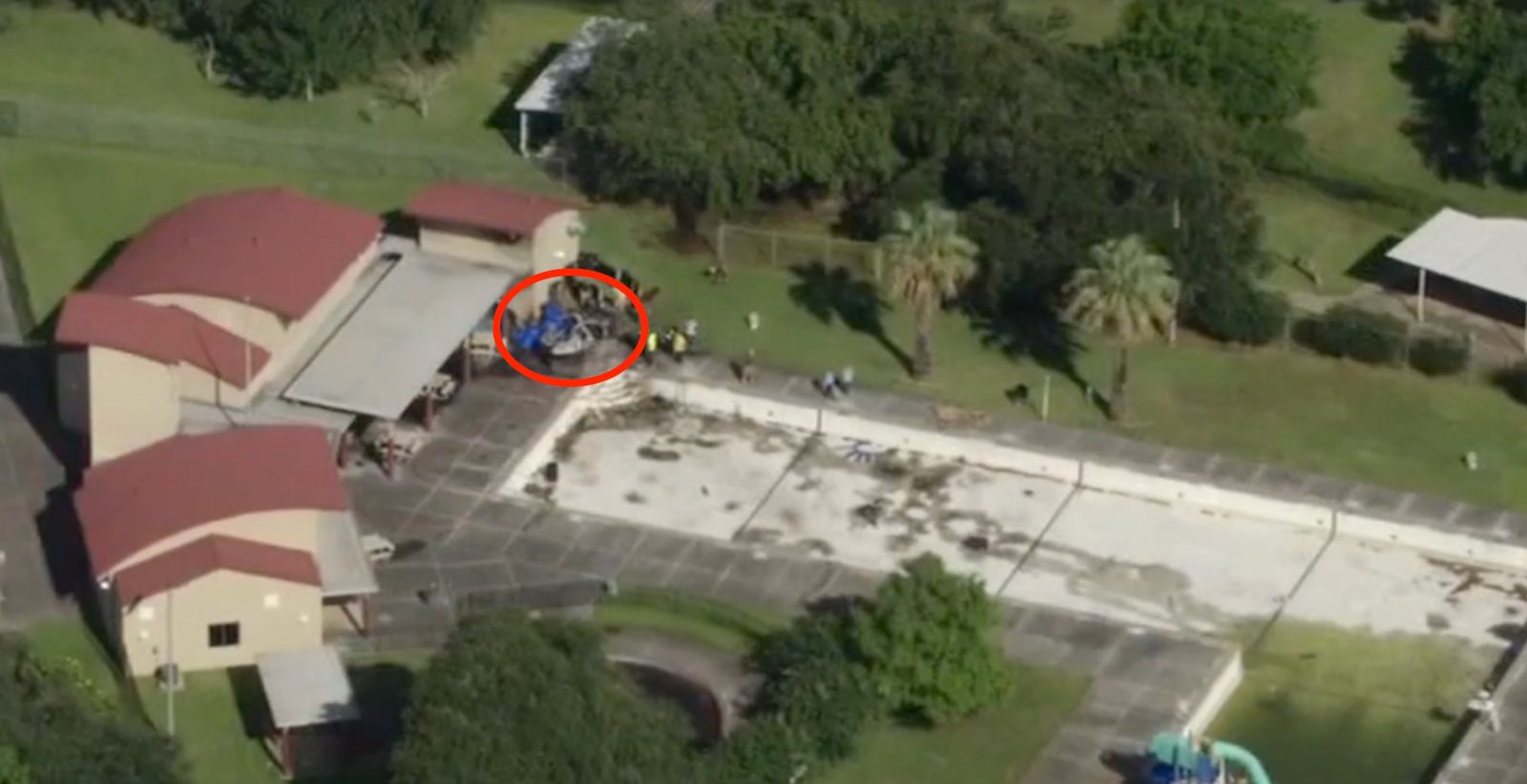
The driver was Steven Alvarez, 23, an IT technician at Lake Jackson Intermediate School and a Brazoswood High School graduate, according to Brazosport ISD, which mourned him publicly. Local outlets reported that on the afternoon of May 20, 2026, his car left Brazoswood Drive, crashed through a fence at Clute Municipal Park, and hit the complex of a decommissioned, empty pool, where it caught fire.
Clute police said their preliminary belief was that Alvarez had suffered a medical episode. No outlet mentioned Autopilot, “Full Self-Driving,” or any Tesla driver-assist system. And crucially, no police statement or news report cited a speed — the only public hint that speed was a factor was a single description of a “speeding Tesla” on social media. The 104 mph figure exists only in Tesla’s telematics.
What could have happened — and why we can’t tell
Tesla’s data confirms one thing: the driver-assist system was on. It does not, on its own, tell us what role the system played. Several possibilities are consistent with the redacted record.
The system could have been actively driving in a way that contributed to the crash. But Autopilot and “Full Self-Driving” do not normally take a car to 104 mph on a residential street on their own, which points toward driver input.
Tesla’s speed figure could be wrong. SGO speed fields are self-reported and occasionally inconsistent, and 104 mph is extreme for the setting. It deserves independent verification against the police crash report and any physical evidence.
Or the police theory and Tesla’s data could both be right at once: Alvarez may have suffered a medical emergency and involuntarily pressed the accelerator while the system was engaged, pushing the car past any speed the software would command. That is close to what Tesla says happened in the fatal Katy, Texas crash, where it admits “Full Self-Driving” was on but blames the driver for flooring the accelerator to 73 mph.
The point is that the public cannot distinguish between these scenarios — and neither can investigators working only from the public file — because Tesla sealed the narrative, the software version, and the operating-area field.
Electrek’s Take
I want to be careful here, because a young man died and his family deserves accuracy, not a narrative. We do not know that Tesla’s driver-assist caused this crash. It’s entirely possible a medical emergency did, with the system a bystander.
Top comment by BlueButton
Easy to see future, like EU and China that FSD cannot exceed posted speed limit or only for very short period (minutes) like passing. Otherwise it's facilitating breaking the law.
But that’s exactly the problem. Tesla holds the data that would answer the question, verified engagement, the telematics behind that 104 mph, the software version, the video, the driver-monitoring state, and it has chosen to black all of it out. The public was told this was likely a medical episode. Tesla’s own records say its automation was verified engaged in the crash. Both can’t be the whole story, and only Tesla can reconcile them.
This is the strongest argument for why the redactions have to end. When Autopilot or “Full Self-Driving” is verified engaged in a fatal crash, “confidential business information” should not be allowed to bury what the car was doing. Tesla is already under NHTSA investigation over how it reports these crashes, and its own AI trainers have told Reuters they don’t trust its safety stats. A family in Clute is left with a police theory, while the company that sold the software sits on the data. That shouldn’t be Tesla’s call to make.
I strongly advocate that Tesla stop redacting crash data from NHTSA. We need to understand exactly how these automated systems are involved in crashes happening on public roads, especially as Tesla claims that it won’t require supervision soon.
If you’re a Tesla owner, powering your EV with home solar is one of the smartest ways to lock in low fuel costs. With electricity rates climbing nearly 10% last year, home solar protects you against future rate increases. And with lease and PPA options, you can go solar with zero upfront cost and start saving immediately. If you want to find the best deal, check out EnergySage. It’s a free service with hundreds of pre-vetted installers competing for your business, so you save 20 to 30% compared to going it alone. No sales calls until you pick an installer. Get your free quotes here.


FTC: We use income earning auto affiliate links. More.


Comments