
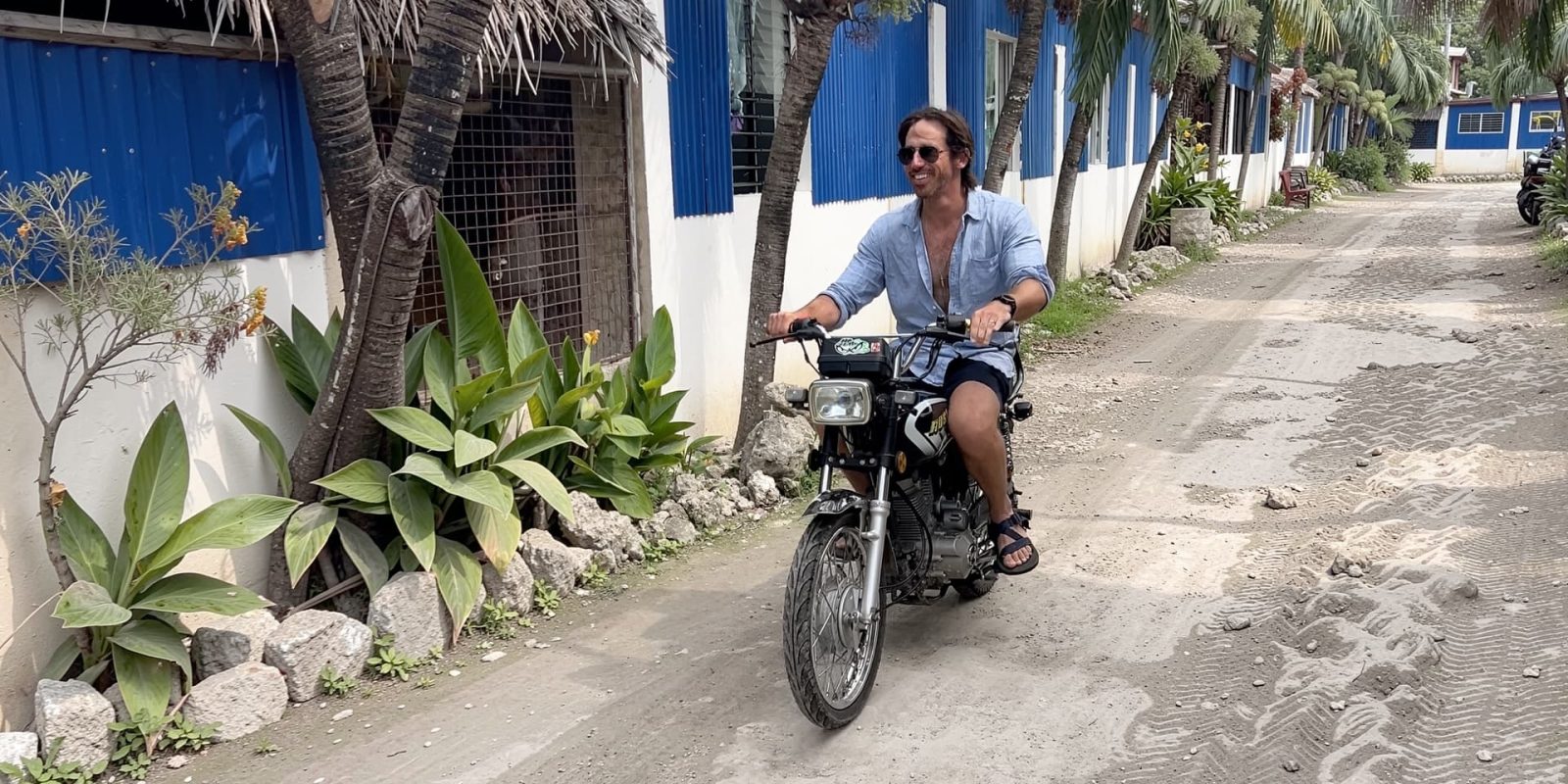
For the last few weeks, my wife and I have been hopping between islands in the Philippines, and like so many travelers (and locals), we’ve been getting around on small gasoline-powered motorbikes.
It’s a big change from our normal electric steeds back home, and an eye-opening reminder of just how stark the everyday differences truly are.
First of all, no matter what is powering it, a motorcycle or scooter is a fantastic way to travel, whether at home or especially abroad. In this case, these were a great way to travel through a new country.
You can explore tiny villages, pull over at hidden beaches, climb mountain roads, and stop wherever something catches your eye. You can park anywhere, squeeze past stopped traffic, and often take roads or routes that would disallow four-wheeled vehicles.
For many places around the world, motorcycles are simply the standard, normal transportation choice.
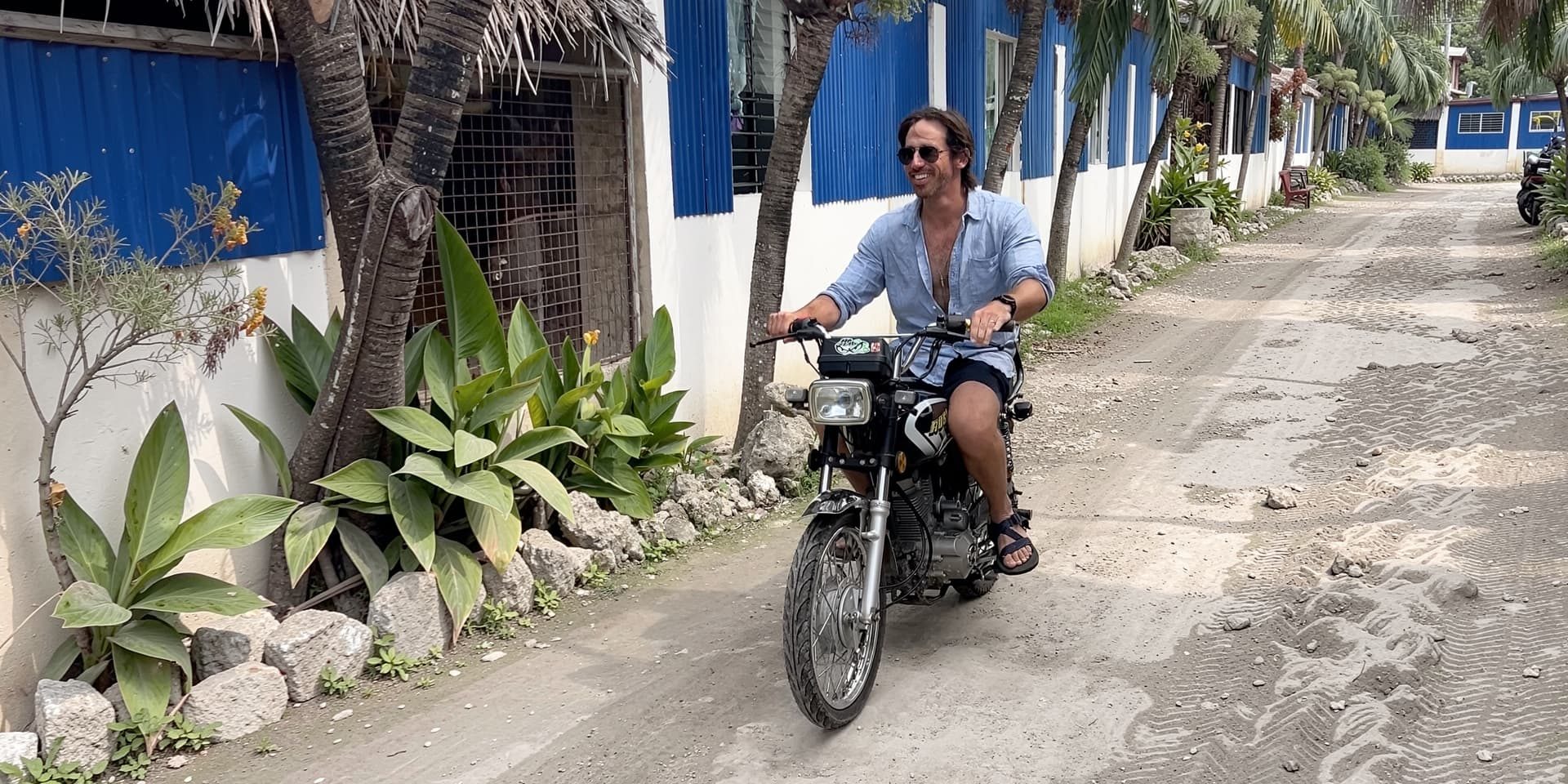
[Safety note: I always try to gear up for rides, but my wife caught me here while I was just moving the bike a short distance to the hostel parking area.]
But as much fun as I had on the trip, the experience also reminded me just how different small electric motorcycles can be compared to their fuel-burning cousins.
First of all, I’ll still give gasoline bikes one major win: fueling.
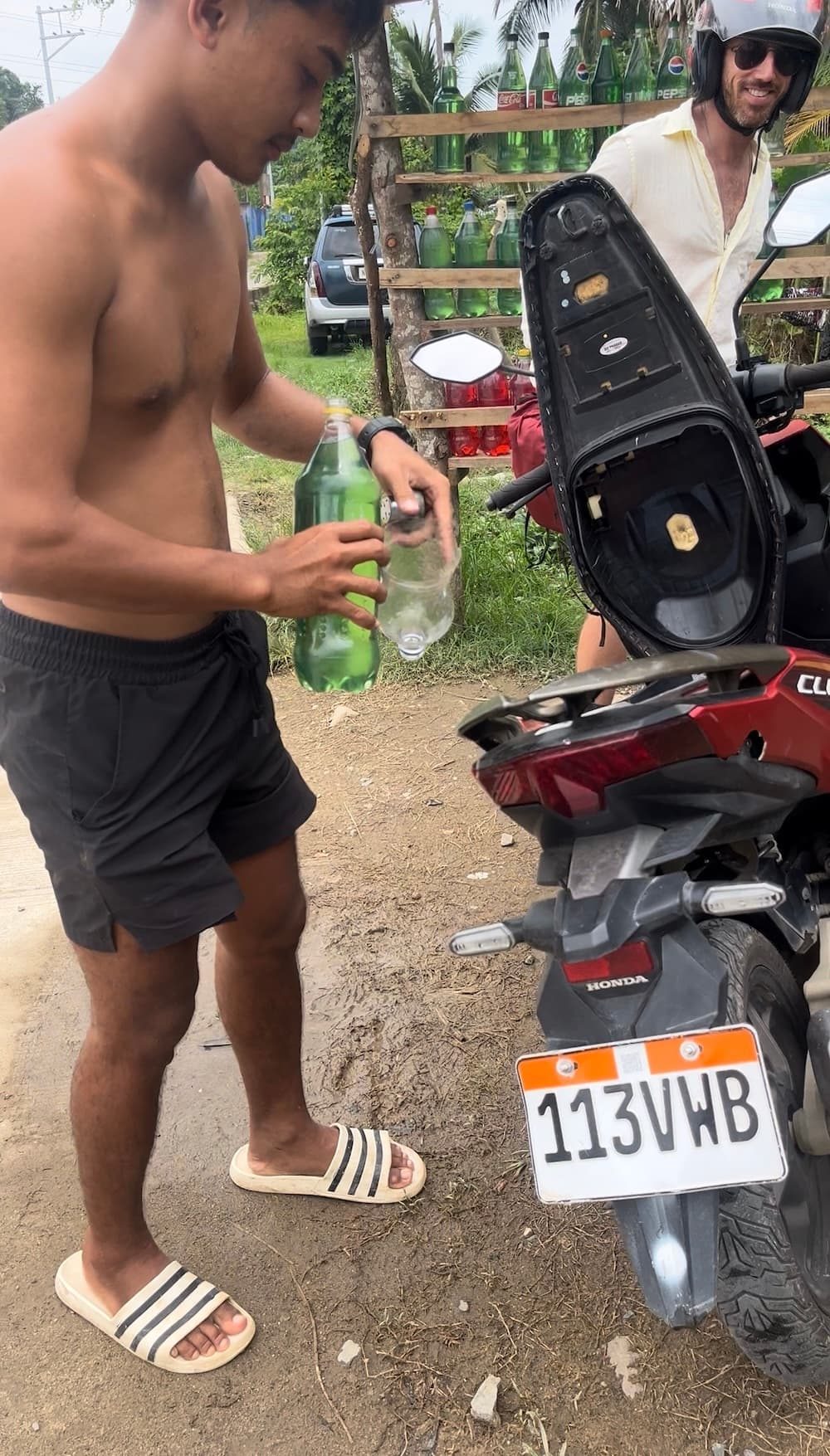
Need gas? It’s everywhere. Sure, there are regular gas stations, but what is even more convenient is how in these types of countries, there are so many little roadside convenience shops that seem to always have recycled liquor bottles filled with gasoline sitting out front. Running low wasn’t something I ever worried about. A couple of dollars later, you’re back on the road. I’ve seen this often in my travels around Asia, and I can’t deny how convenient it is.
That’s still an advantage electric motorcycles don’t universally have, especially in developing regions where charging infrastructure is limited. Sure, we can charge our electric motorbikes just about anywhere there’s an electrical outlet, which is theoretically a big win (there are way more electrical outlets than gas stations), but there aren’t necessarily electrical outlets available everywhere. So for a few more years, the distributed gasoline station and/or liquor bottles of gasoline infrastructure still has some advantages.
After that, though, I found myself missing almost everything about riding electric.
The first thing I noticed was the vibration.
You don’t really appreciate how much a little single-cylinder engine buzzes until you’ve spent several hours on one. By the end of longer rides, I could still feel the tingling in my hands, arms, and bottom for several minutes after I stopped. The handlebars, the seat, even the foot pegs are constantly humming away beneath you. It’s not unbearable, but after spending years riding smooth electric motorcycles and scooters, it felt strangely primitive.
Then there’s the heat.
Small displacement motorcycles don’t produce huge amounts of power, but they certainly produce plenty of waste heat. Every time I pulled a bottle of water from the storage compartment under the seat, it was practically warm tea. That compartment shares a wall with the engine, turning it into a convenient little warming drawer. There might be an advantage there somewhere in the winter, but I didn’t find it.
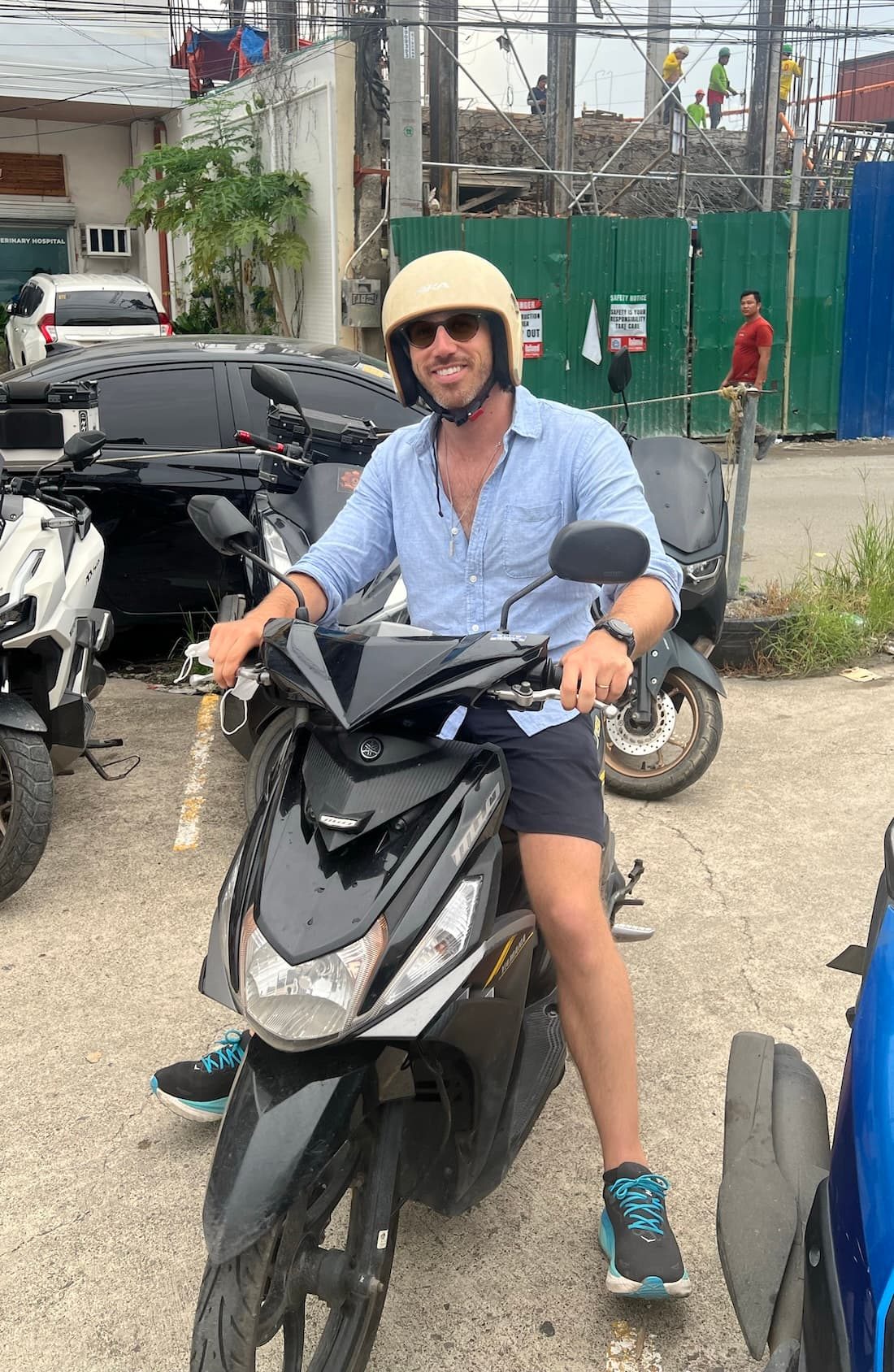
I also found myself constantly reminding my wife not to let her ankle drift too close to the exhaust pipe when getting on or off the back of the bike – not a concern I’ve ever had on my electrics.
The noise is another thing many people may gradually stop noticing – until you ride electric again.
These little engines spend much of their lives revving near the top of their RPM range, especially climbing hills or accelerating away from traffic lights. It’s not deafening, but it creates a constant soundtrack that becomes mentally fatiguing over the course of a full day in the saddle. With an electric motorcycle, the ride becomes quieter, making it easier to hear the environment around you, carry on conversations during brief stops, or simply enjoy the scenery.
At one point, I rode through a beautiful forest, but the engine noise certainly overwhelmed the natural wind and bird noises I’m used to hearing when riding on my electrics.
Then there are the little annoyances.
Waiting a few moments for the engine to warm up before setting off. The occasional whiff of gasoline when filling up. Hunting for neutral on the motorbikes and the slight jerkiness of low-speed clutch work in heavy traffic (not a concern on the scooters). Having to remember oil changes, air filters, spark plugs, and all the other routine maintenance that internal combustion engines quietly demand. Fortunately, I didn’t have to deal with any of those maintenance concerns since I was on rental bikes the entire time, but there’s nothing like a hundred moving parts underneath you to remind you that it’s someone’s headache, even if not yours.
None of these is a major problem individually. They’re all manageable and overcomable. But together, they remind you how much mechanical baggage we’ve simply accepted for over a century.
Electric motorcycles strip away nearly all of it. Twist the throttle and go. No vibrations, almost no noise, no scorching exhaust, no hot engine between your knees, and dramatically less maintenance. I’ll never forget the first time I showed my brother-in-law the controls on my LiveWire S2 Del Mar motorcycle (an 80 hp beast that does 0-60 MPH in 3.1 seconds), to which he remarked, “So it’s basically just a big e-bike?”
“Yeah,” I shrugged. “Basically.”
Top comment by Grant
Great story. Asia and Africa are good markets for E bikes and it's just a matter of time before they become the norm.
That’s really all there is to electric two-wheelers. Twist and go – no headaches. Compared to gasoline-powered bikes, e-motorcycles are easy like Sunday morning.
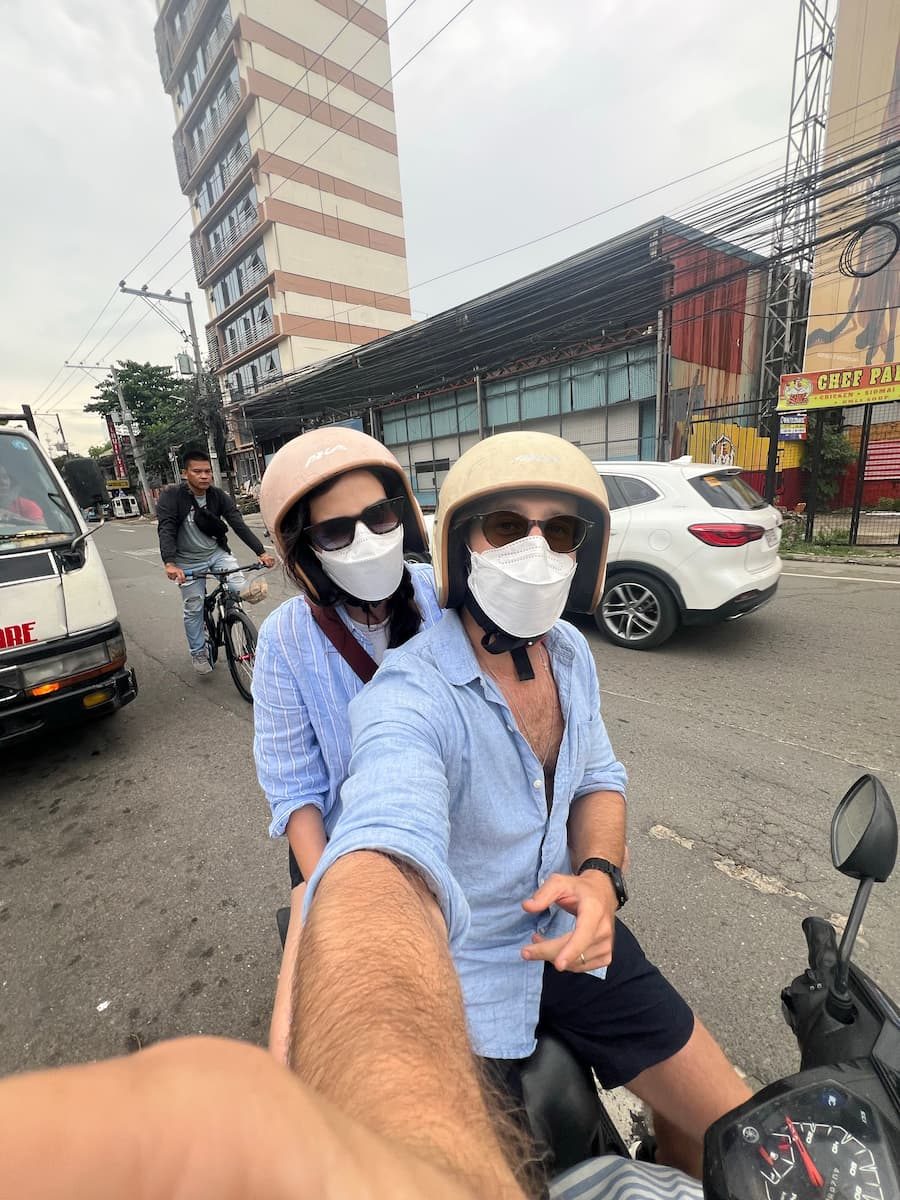
Ironically, the Philippines may actually be one of the places that stands to benefit most from electric two-wheelers. The country already relies heavily on motorcycles for daily transportation. Trips are often relatively short. Air quality in many cities would improve (it was bad enough in Cebu City that my wife and I stopped at a local pharmacy to buy masks, though the smaller islands were much better). And while charging infrastructure still has a long way to go, electricity is ultimately easier to distribute than liquid fuel once the investment is made.
I’m not going to sit here and tell you that my vacation was ruined by riding gasoline motorcycles. Quite the opposite – I loved every minute of exploring the islands on two wheels. It was still a lot of fun, and it’s never a bad idea to practice shifting again to keep skills fresh in case you ever need them.
But every day I climbed back onto another buzzing, vibrating little engine, I found myself thinking the same thing: This is exactly the kind of riding that electric motorcycles were made for.


FTC: We use income earning auto affiliate links. More.



Comments