
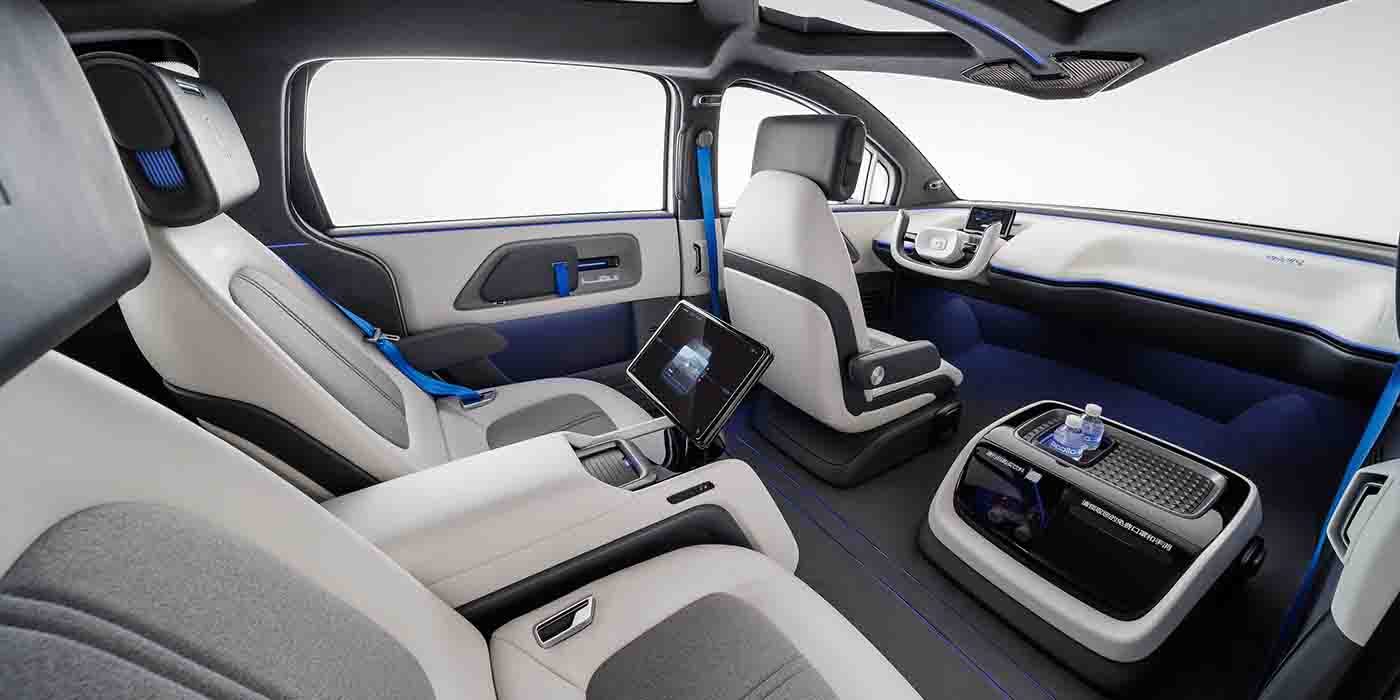
Baidu’s Apollo Go started robotaxi road testing in London today, and it’s doing it with both of ride-hailing’s biggest names at once — Uber and Freenow by Lyft.
The launch lands days after Apollo Go ran the first fully driverless trial in any right-hand-drive market, in Hong Kong. Two milestones in one week, on opposite ends of the world.
London: both ride-hailing giants at the same time
Testing with Freenow by Lyft kicks off in Brent, a borough in west and northwest London, using Apollo Go’s sixth-generation RT6 vehicle. Safety operators are on board for now, and the route covers a mix of urban and suburban driving. Apollo Go and Freenow by Lyft say public rides won’t start until 2027, subject to regulatory approval.
The London deployment comes out of two separate deals Baidu signed in 2025. The Lyft partnership is meant to scale thousands of Apollo Go vehicles across key European markets. The Uber partnership targets thousands of vehicles on Uber’s platform across global markets outside the US and mainland China.
Uber and Lyft compete everywhere, and here they’re both leaning on the same Chinese autonomy stack to get driverless cars onto their platforms. Uber has spent more than $10 billion building out robotaxi partnerships rather than owning the tech itself. Baidu is now on both sides of that fight.
Hong Kong: first driverless trial in a right-hand-drive market
The bigger technical proof came a few days earlier. On July 23, Hong Kong’s Transport Department granted Apollo Go the city’s first fully driverless trial permit, and the trial began July 27 on Airport Island.
No safety operator on board. That’s the first time for a Level 4 trial on Hong Kong’s public roads, and Baidu says it’s the first fully driverless trial in any right-hand-drive market.
“An important step toward realising the goals of driverless, scaled-up and commercialised AV operations,” Commissioner for Transport Winnie Tse said of the approval. According to the Transport Department, day-one vehicles yielded to pedestrians, obeyed traffic signals, and held up in heavy rain. The Airport Island route throws roundabouts, yield intersections, and varying traffic densities at the cars.
Apollo Go was the first to win Hong Kong’s pilot AV licence back in November 2024. Since then it’s expanded from Airport Island to North Lantau, Kowloon East, and Hong Kong Island South, logging over 240,000 km. What it learns in Hong Kong ports goes straight to other right-hand-drive markets, London included.
The lead nobody’s really contesting
Right-hand-drive is a segment almost no Western AV company has touched. Waymo is working toward a London launch, and Tesla still has no Level 4 approval anywhere in Europe, or anywhere outside Texas. Baidu already has driverless cars on Hong Kong roads and testing in London.
In left-hand-drive markets, it’s further ahead. Apollo Go runs fully driverless commercial service in Dubai and Abu Dhabi, won a Level 4 permit in eastern Switzerland under the AmiGo brand, and remains China’s largest autonomous ride-hailing operator. Central Asia is next — Baidu signed an MoU with Freedom Holding at WAIC 2026 to explore bringing the service to Kazakhstan.
The scale backs it up. Apollo Go had passed 22 million cumulative rides as of April 2026. In Q1 2026 alone it ran 3.2 million fully driverless rides, up more than 120% year-over-year. As of May, its fleets had covered over 330 million autonomous kilometers, more than 220 million of them fully driverless.
Electrek’s Take
At this point, I think it’s clear that the global race for unsupervised self-driving robotaxis is led by Waymo and Baidu.
While everyone in the US argues about Tesla’s robotaxi timeline and watches Waymo add cities one at a time, Baidu has quietly built the widest international AV footprint of anyone. China, Hong Kong, the UAE, Switzerland, now the UK, with Kazakhstan on the whiteboard. Nobody else is close on geographic spread, and the right-hand-drive markets are just the latest addition.
The catch is what “testing” actually means here. London has safety operators on board and no paid rides until 2027. Switzerland is the same story. So in the West, Apollo Go is still a supervised pilot, not a driverless service. Hong Kong is the exception, and it’s a small, controlled airport route. The gap between “first driverless trial in a right-hand-drive market” and “you can hail one” anywhere in the city is still there.
Uber and Lyft both hedging their autonomy bets on the same supplier tells you how few companies can actually deliver driverless cars at scale outside the US and China.
If you’re weighing an EV, the cheapest way to fuel it is with your own power. With electricity rates up almost 10% last year and expected to keep climbing, going solar is one of the best ways to protect yourself against rising costs. And with lease and PPA options, you can do it with zero upfront cost and start saving immediately. If you want to find the best deal, check out EnergySage. It’s a free service with hundreds of pre-vetted installers competing for your business, so you save 20 to 30% compared to going it alone. No sales calls until you pick an installer. Get your free quotes here.


FTC: We use income earning auto affiliate links. More.



Comments