
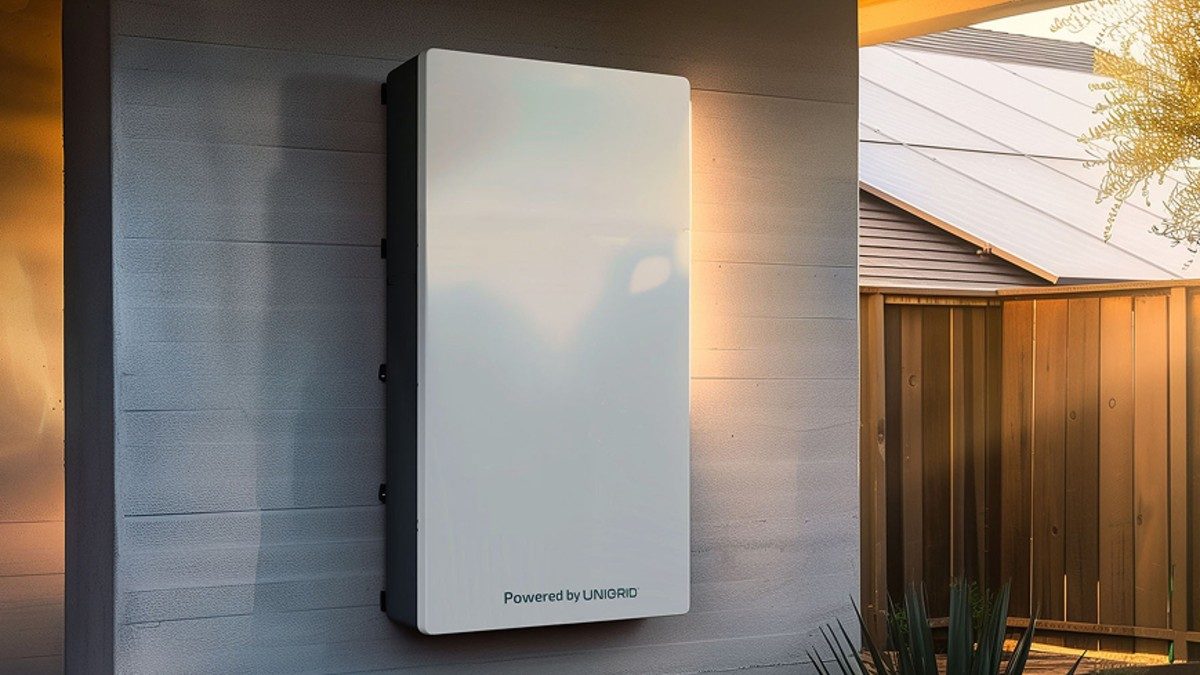
Lithium-ion has long dominated home battery storage, but sodium-ion is starting to make its move. Sodium-ion battery startup UNIGRID has shipped the first units of its Na+Casa residential battery, with the first systems now installed in homes across Europe.
The California-based company says US installations are expected by the end of 2026, pending North American certification requirements for sodium-ion batteries.
Home battery storage is becoming more popular as homeowners pair batteries with rooftop solar for backup power, lower electricity bills, and more energy independence. Most of those home systems use lithium-ion batteries, but companies like UNIGRID are betting that sodium-ion can offer a safer, longer-lasting alternative while avoiding the supply chain challenges that come with lithium, cobalt, and nickel.
UNIGRID says its Na+Casa battery is designed to last 25 years – roughly the lifespan of a rooftop solar system. If it performs as promised, that could eliminate the need to replace the battery halfway through the life of a solar installation.
The company also says the battery’s sodium-ion chemistry eliminates the risk of thermal propagation, the chain reaction that allows battery fires to spread from cell to cell. While modern lithium-ion home batteries already include multiple layers of safety protection, reducing fire risk remains a major focus for battery developers.
Na+Casa stores 9.25 kilowatt-hours (kWh) of electricity and is compatible with most existing hybrid inverters, making it suitable for both new solar installations and retrofits. UNIGRID says it’s priced the battery competitively with lithium-ion systems.
Another advantage is temperature tolerance. The battery is designed to operate in temperatures ranging from -40F to 140F (-40C to 60C), making it resilient across the full range.
“As residential energy bills rise – especially during extreme weather events such as the record heatwave we are seeing around the world – homeowners need storage that is safe, reliable, and financially sound,” said Darren H. S. Tan, CEO and co-founder of UNIGRID. “With Na+Casa, UNIGRID is moving NCO sodium-ion from just a promising technology to a tangible residential storage product, giving installers and integrators a lucrative alternative to lithium-ion.”
UNIGRID is currently producing enough battery cells to supply 200 MWh of battery storage per year, but it has much bigger ambitions. The company plans to boost annual production to 2 GWh in 2027 through manufacturing partnerships in China, South Korea, and Japan.
Top comment by European Bob
It's been quite a while since home lithium batteries contained cobalt and nickel, here in europe the Tesla Powerwall was one of the last companied to use NCM, and I think that changed a few years ago.
Still, sodium is nice, but the price needs to reflect the cost, so I'll be waiting a while.
Sodium-ion batteries have attracted increasing attention over the past few years because sodium is abundant, inexpensive, and doesn’t rely on critical minerals. The tradeoff is lower energy density than lithium-ion batteries, making them less attractive for EVs (although that’s being explored, too), but potentially a good fit for stationary energy storage, where weight and size aren’t nearly as important.
Read more: GM is betting on battery cells that don’t use lithium

If you’ve ever considered going solar, make it easy by finding a trusted, reliable solar installer near you that offers competitive pricing by checking out EnergySage. It has hundreds of pre-vetted solar installers competing for your business, ensuring you get high-quality solutions and save 20-30% compared to going it alone. Plus, it’s free to use, and you won’t get sales calls until you select an installer and share your phone number with them.
Your personalized solar quotes are easy to compare online, and you’ll get access to unbiased Energy Advisors to help you every step of the way. Get started here.


FTC: We use income earning auto affiliate links. More.



Comments