
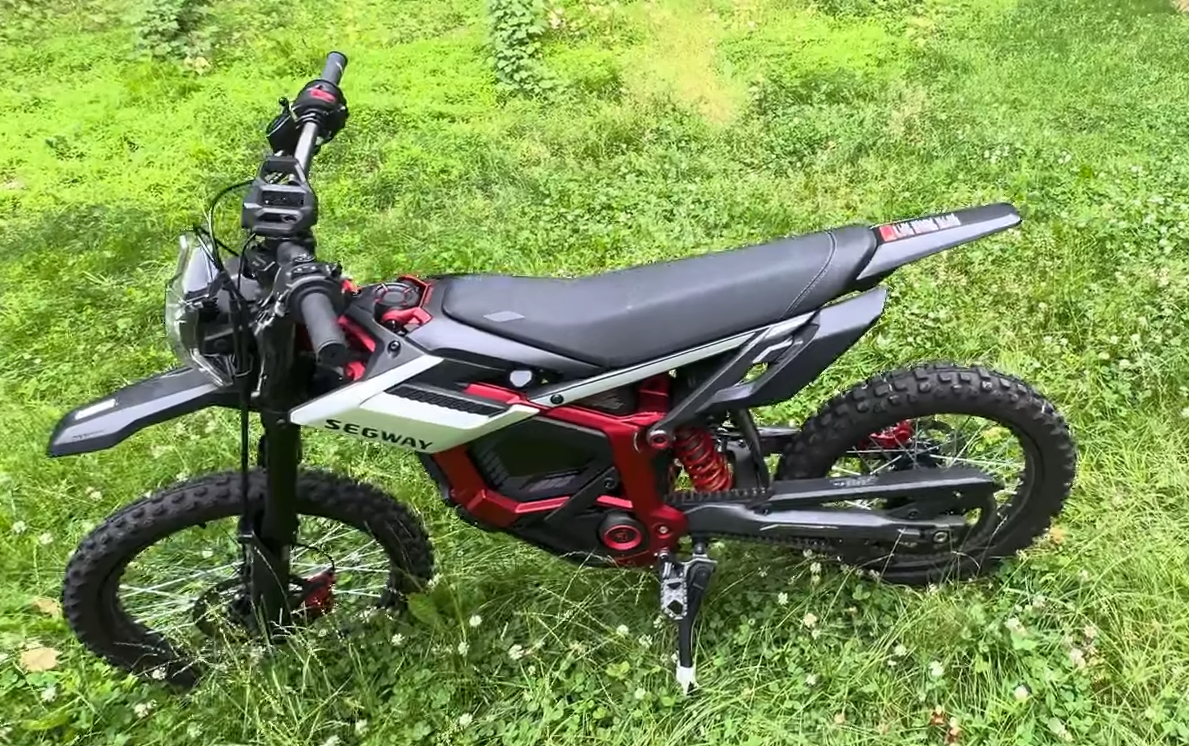
When you think of Segway, you might still think of the self-balancing personal transporters that mall cops and tour groups employ to get around. The company, however, since being acquired by Beijing-based Ninebot a decade ago, has morphed into E-bikes, e-scooters, go-karts, off-road UTVs — the company has been stacking up two- and four-wheeled hardware for a while now. But with the recent launch of the new Xaber, however, they are now into very serious 60+mph-capable electric off-road motorcycles.
We’ve spent the last month with the Xaber and, after dining on a bunch of bargain emotos, the Segway Ninebot Xaber almost seems to be in a class by itself…
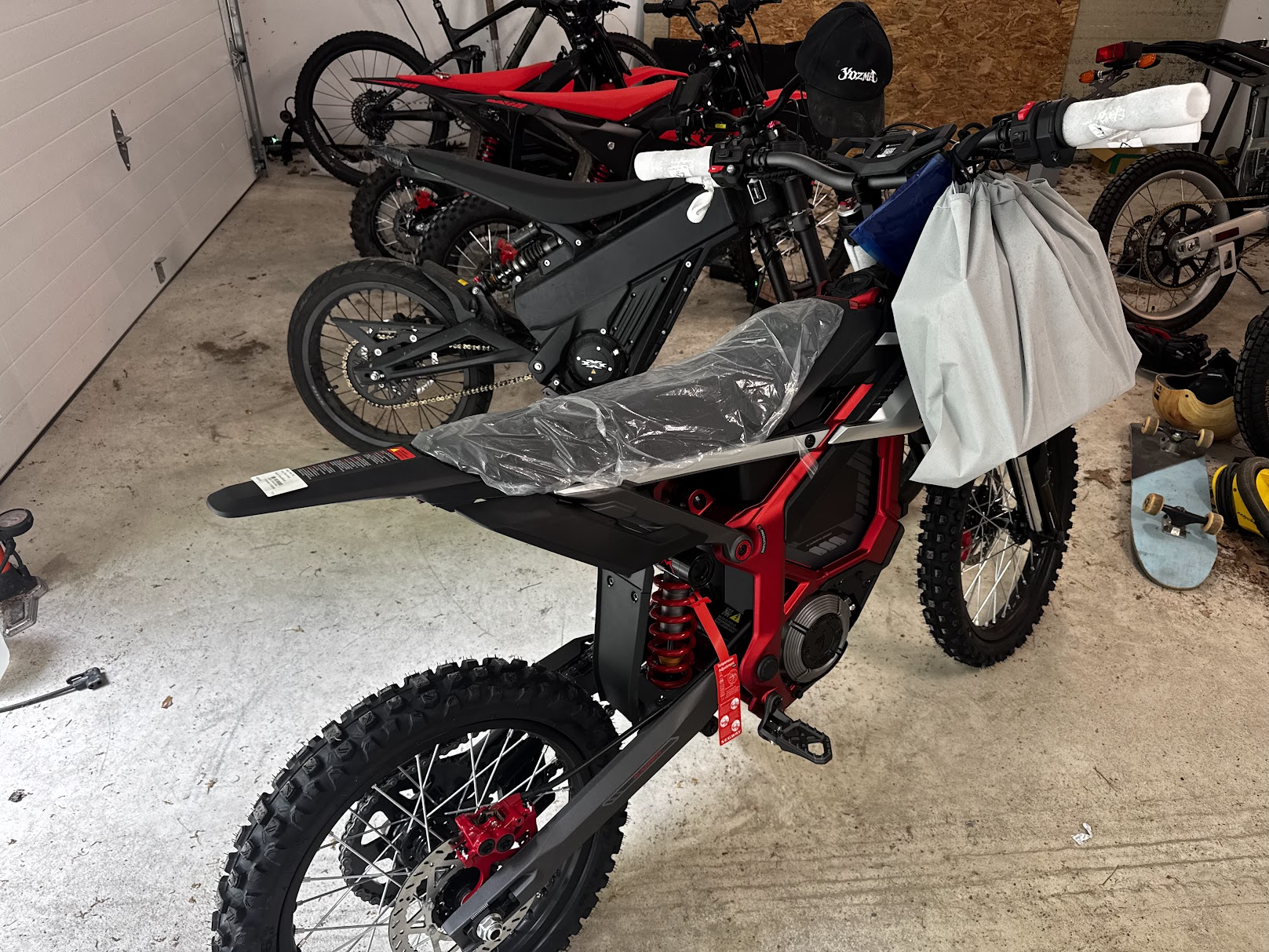
The difference started with the delivery. The lower-cost e-bikes we’ve reviewed in the $1000-$2000 range are basically thrown out of the back of the FedEx truck in a mutilated e-bike box like an overdose victim at a hospital. The Xaber came fully assembled on a pallet softly delivered with relatively eco-friendly packing. The budget bikes take about an hour to assemble, while all you have to do with the Xaber is plug in the battery and connect the app. The App is actually very useful in fact! Very Concierge. Segway even has a dealership network – the closest to me was about 10 miles away – where you can try before you buy.
The bike itself is a departure from what I’ve been trying out. Instead of ~4kW mini e-motos, this thing eventually tops out at 21kW, and it is more full-sized. The quality and complexity of the components are apparent at first sight.
You’ve got anti-lock front brakes, handlebars full of controls and so many extras like a functional app and complete tool set under the seat!
Yes, but the Ride?
Segway does something that I don’t know if I’ve seen any other bike manufacturer do: They only let you open the bike up to its full potential after riding it for 100km or 62 miles. Thanks mom!
The Xaber 300 puts out 21 kW of peak power – roughly 28 hp – which Segway says is good for a 60 mph (96 km/h) top speed and a 0–50 mph (80 km/h) sprint in 5.5 seconds. On a bike that weighs just 187 lb (85 kg), that works out to a power-to-weight ratio of 0.25 kW/kg, which is properly quick for anything in this class.
The software is the secret weapon: Where the Xaber 300 separates itself from the Sur Rons and Talarias of the world is the electronics, and this is exactly where you’d expect a company like Segway to lean in.
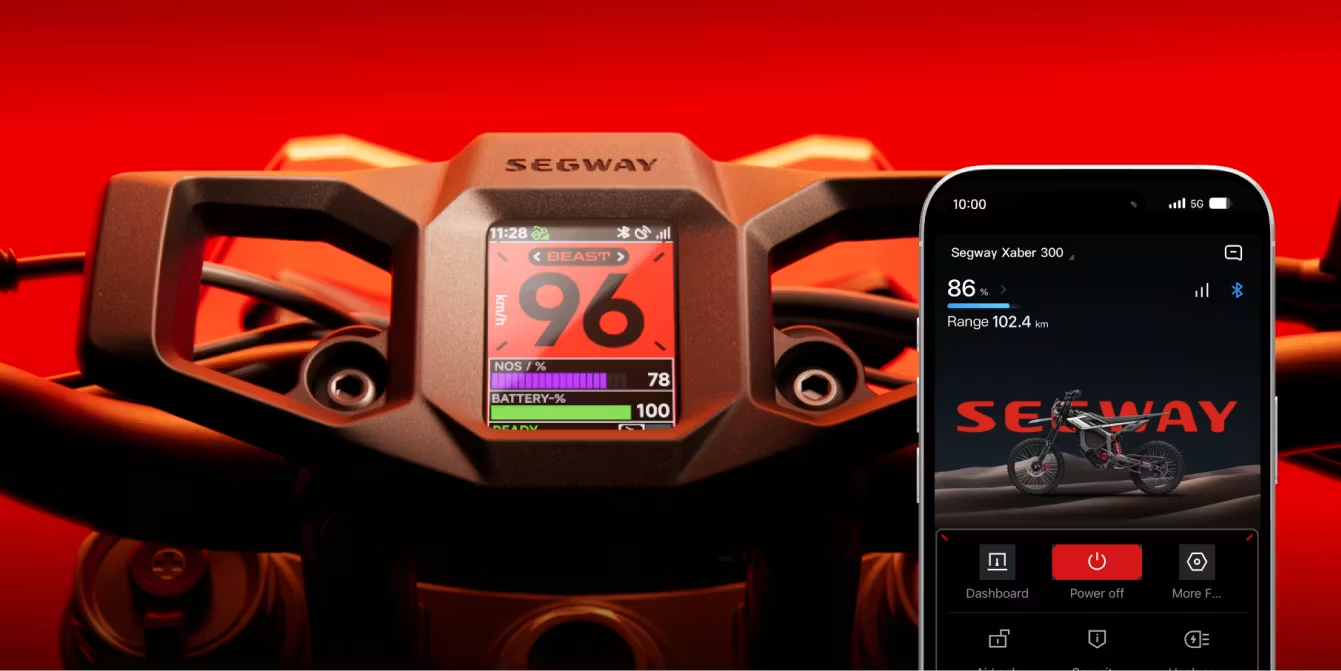
Riders get four power modes – 150, 200, 300, and a maxed-out Beast Mode – that effectively let the bike impersonate different displacement classes. Mode 200 rides like a friendly 200cc four-stroke: smooth, predictable, and confidence-inspiring for newer riders. Beast mode is, well, the reason you buy the bike, all respect due to Marshawn Lynch.
On top of that there’s traction control, regenerative braking, and a “virtual electronic clutch” that simulates the feel of a traditional motorcycle. A neat trick, but not something you’ll use on a daily basis. A forthcoming Virtual Wheelie Coach will let riders set a maximum wheelie angle – essentially training wheels for hooligans. I was really waiting for this, but it seems to be a ways off still, unless you want to retrofit a Moxin controller.
GPS tracking, geo-fencing, and over-the-air updates round out the package, all managed through a well-protected 2.4-inch TFT display with built-in connectivity.
Until you hit 100kms, you can’t put it into 300cc mode. The same goes for beast mode, which just lets you have access to all of the e-bike’s power with a twist of the handle. I’ve looped much less powerful bikes than this, so I took it easy here. Beast mode is way too much power, and building my own slower power curve was the sweet spot for me.
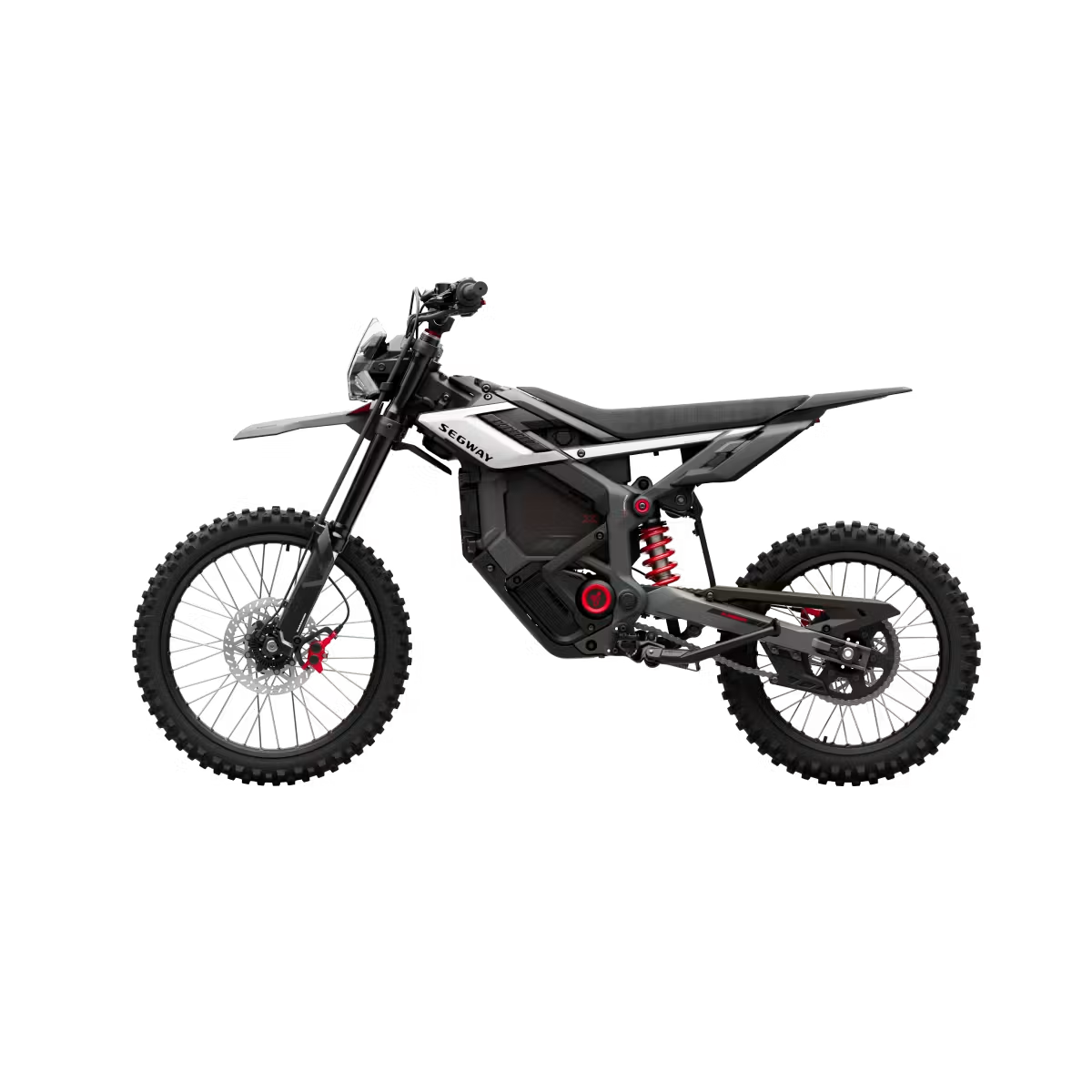
I will say again, the Segway Xaber is entirely different from the low-end bikes I’ve been looking at lately. Not only is it bigger and more of a full-sized dirt bike, but it is also so much more refined. Instead of hearing the chain rattling against the frame, all you hear is the whine of the powerful electric motor. And their Beast Mode will shoot you right past their stated 60mph top speed. How far? Don’t know and probably not going to find out, though I did see a “7” as the first number on the speedometer when I gave up. Even cooler is that you can forgo Beast Mode and build your own mode with the requisite power curve and regen profiles.
Power comes from a 72V, 44Ah battery packing just over 3 kWh of capacity built on Samsung 50S automotive-grade cells. Segway claims up to 62 miles (100 km) of range in the lowest power mode, though hard riding in the higher modes will realistically cut that to around 30-40 miles. The pack supports a 5C discharge rate, which means the bike can sustain its peak output without the voltage sag that plagues cheaper systems when you hold the throttle open. You can really feel that power all the way through the battery drainage.
The chassis is where Segway “flexed” its muscles. The forged aluminum frame is derived from the company’s Dakar-tested prototype, and suspension duties go to adjustable Marzocchi components with 220 mm of travel front and rear. Braking is handled by four-piston hydraulic calipers on thicc 220 mm rotors. That’s real motorcycle hardware, not the parts-bin stuff we’ve come to expect at this price.
This is where I go to the end of my riding capabilities. The Xaber is meant to be ridden hard through berms, jumps and competitions. My 50 year old body isn’t quite ready to test this out. But I can offer this: Instead of saying “this $1500 ebike will make it through the trails without breaking”, I can say that I’ve never ridden a bike so smoothly through the trails behind our housing development with such ease. Where I’d bottom out on a $2000-$3000 Light Bee clone, The Segway Xaber is like butter.
Here’s a neat bonus: There’s even a fully integrated toolkit under the seat with an adjustable wrench and a bit set covering every bolt on the bike – a small touch, but the kind that tells you riders were in the room when this thing was designed. I’d love to see other makers copy this feature or at least put one of those Swiss army knife of bits in there.
What Xaber’s up against
The obvious comparison is the Sur Ron Ultra Bee, which has owned this segment since its launch, along with Talaria’s Sting lineup. At $5,299, the Xaber 300 undercuts the Ultra Bee’s typical pricing while bringing a software stack neither competitor can match, plus a dealer network and the manufacturing scale of a company that just moved a million units of a single scooter model. Maybe you will eventually see these at your local Target or Walmart next to the scooters?
The flip side: Sur Ron and Talaria have years of aftermarket support, proven durability records, and huge communities. Segway is the new kid at the motocross track, and long-term reliability is an open question no first review can answer.
Electrek’s take:
The e-moto segment has been waiting for a big player to take it seriously, and Segway showing up with Dakar-derived hardware, Marzocchi suspension, and genuine software chops at $5,299 is exactly that. This isn’t a toy, and it isn’t a science project – it’s a legitimate lightweight electric motorcycle from a company with the scale to support it. They’ve clearly put some work into this.
Top comment by Mrvc
Ninebot raising the standard is on brand. Could be interesting to see if the Segway name will get them anywhere. I could see someone a little older having name recognition with Segway helping to make a sale.
The questions that remain are the ones only time answers: durability, parts availability, and whether Segway’s dealer network treats powersports as a priority or a side hustle. But on hardware, features, and price, the Xaber 300 doesn’t just compete in this segment – it raises the bar for it.
Now let’s see where Segway takes this. Will it put turn signals on this bike to match the controls on the handlebars and make a street-legal option? Will there be variants for sport riders? Will it ever get Wheelie mode? I’m really looking forward to seeing where Segway takes this.
The Segway Xaber 300 is available now through authorized dealers at $5,299.


FTC: We use income earning auto affiliate links. More.


Comments