
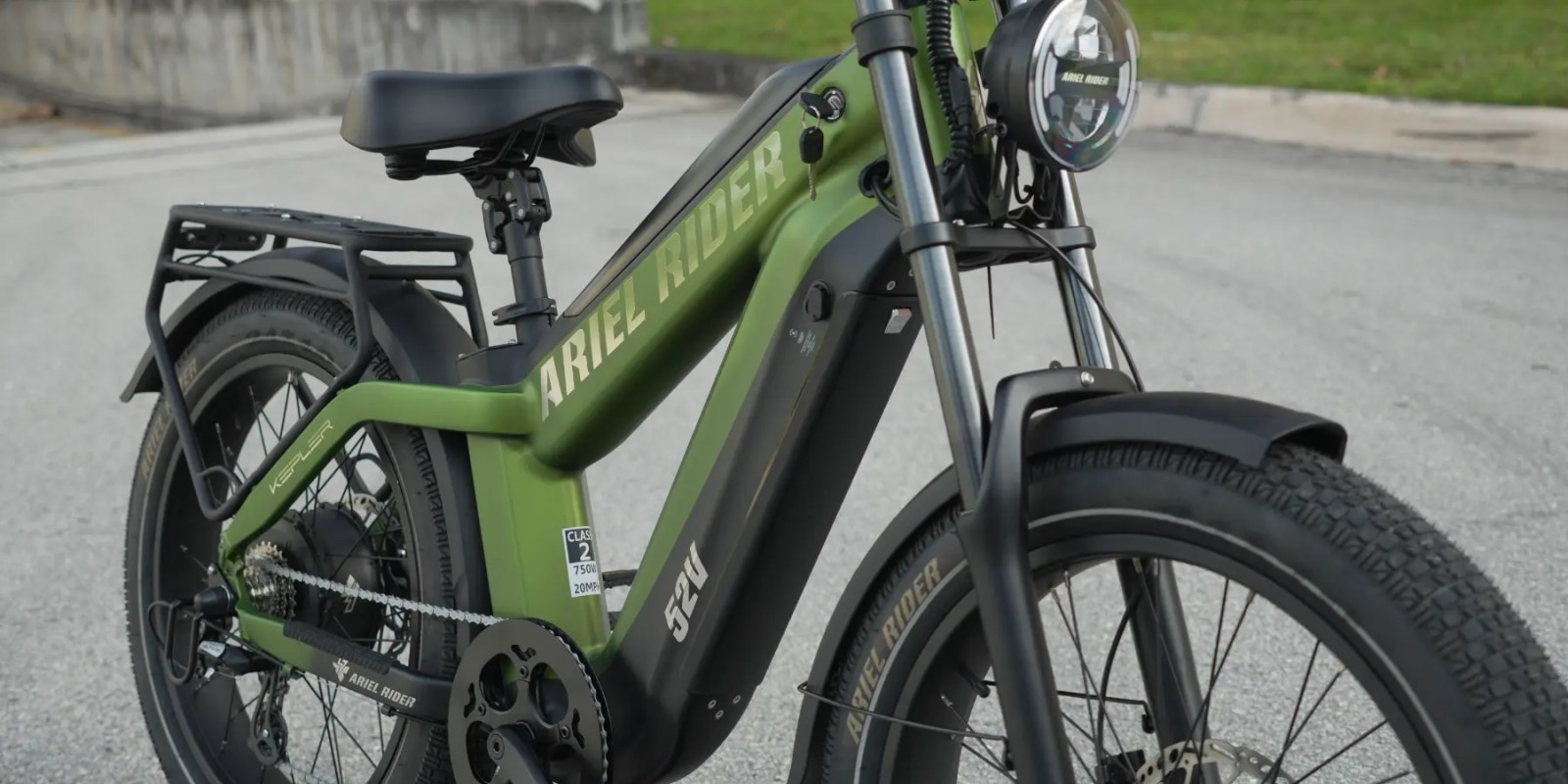
Ten years ago, if you had told me that I’d be riding what I would soon call an “excellent commuter e-bike” despite it weighing 118 pounds (53.5 kg) and rolling on 24×4.0-inch fat tires, I probably would have laughed. Today, though, I’m not so sure.
The Ariel Rider Kepler occupies a category that doesn’t really exist on paper but makes a lot of sense in the real world: the fat tire commuter. Plenty of riders buy adventure-style e-bikes and end up using them almost exclusively for city riding anyway, enjoying the comfortable fat tires, upright riding position, and confidence-inspiring handling. Ariel Rider seems to have looked at that trend and decided to lean into it instead of fighting it.
After spending a good amount of time riding the Kepler, I came away impressed.
It’s powerful without being ridiculous, it has enough battery capacity to make range anxiety almost disappear, and at its current sale price of $1,999, it feels like a lot of e-bike for the money.
To see the bike in action, check out my video review below. Or if you’re more of a reader, keep scrolling for the full article below.
A commuter with adventure bike DNA
The Kepler is built around a 750W rear hub motor that produces a claimed 110 Nm of torque. On a spec sheet, that’s plenty of power, but it’s also refreshing that Ariel Rider didn’t chase the increasingly common trend of stuffing absurd multi-kilowatt motors into something that is still supposed to be an electric bicycle. So yes, it’s powerful. But it’s not a motorcycle. It’s just a powerful and torquey electric bicycle.
The result is a bike that accelerates confidently and climbs hills well, but never feels like it’s trying to rip the handlebars out of your hands.
The bike ships as a 20 mph (32 km/h) Class 2 e-bike with its removable twist throttle installed, but it can also be adjusted to Class 3 operation with pedal assist up to 28 mph (45 km/h). Check your local laws to see if you live in an area where that’s allowed, and whether or not you need to remove that throttle to make it fully kosher.
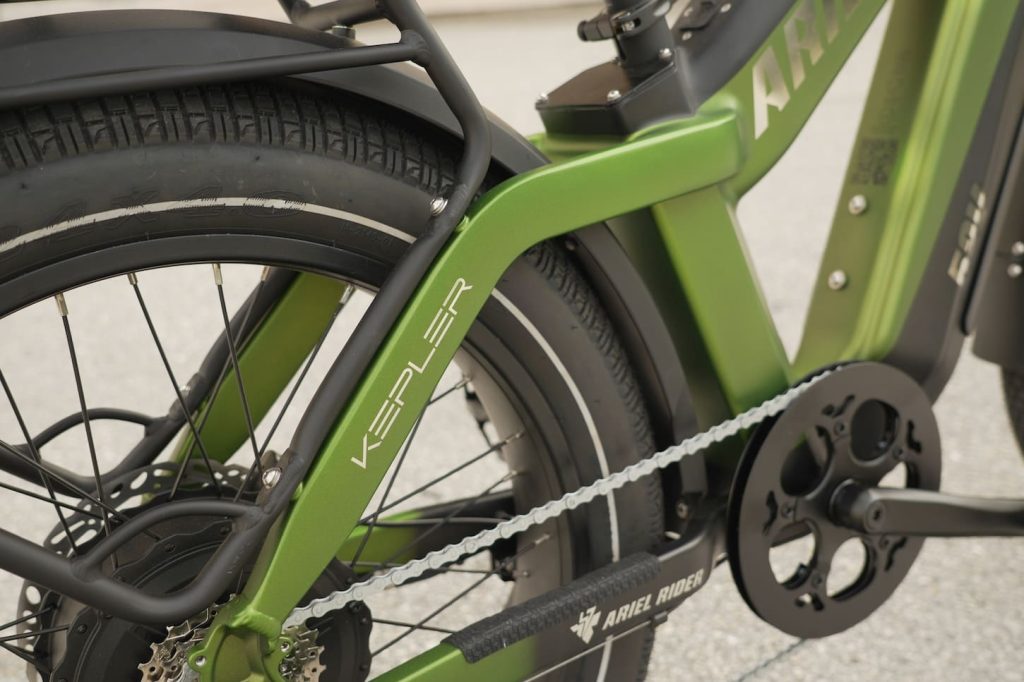
One feature I particularly liked was the ability to switch between torque sensing and cadence sensing. Some riders want the natural, responsive feel of a torque sensor, while others prefer the easy cruising of a cadence sensor.
Ariel Rider lets you choose, which is something we’re seeing more companies adopt as part of a growing trend toward multi-sensor e-bikes.
It makes a lot of sense, since different riders prefer different riding styles. I’m very much a torque sensor guy, but I can understand how some riders prefer the “foot throttle” effect that a cadence sensor can provide. Different strokes for different folks.
Dual batteries done right
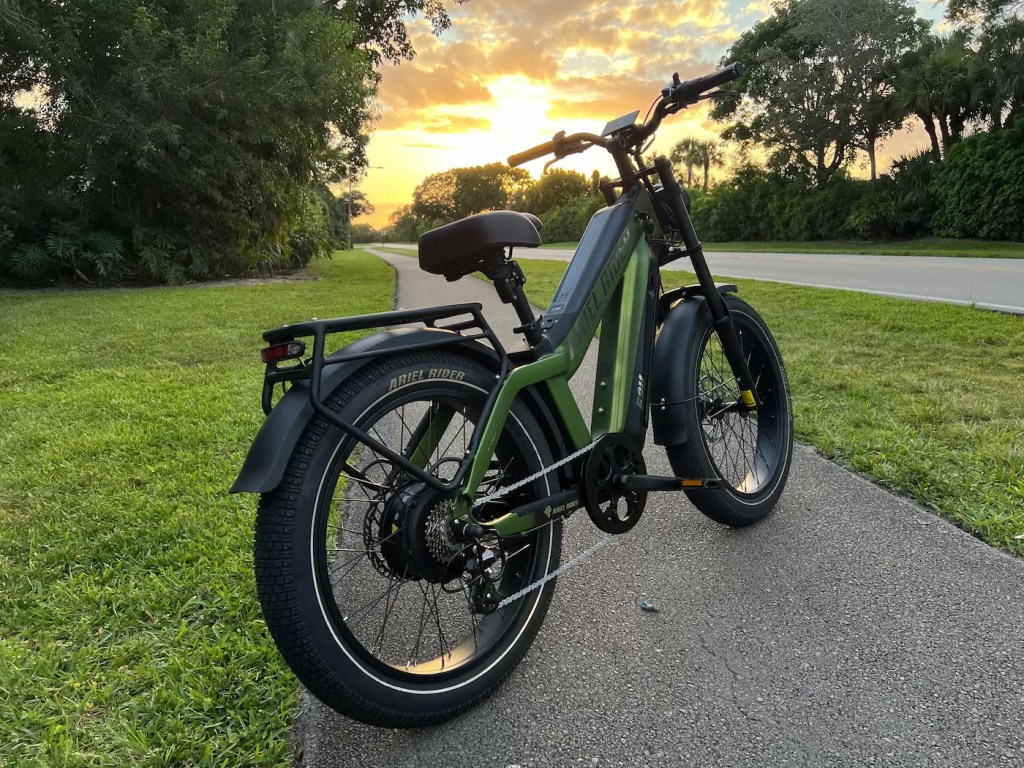
The power and torque are nice, but the biggest selling point and key differentiator here is obviously the dual battery system.
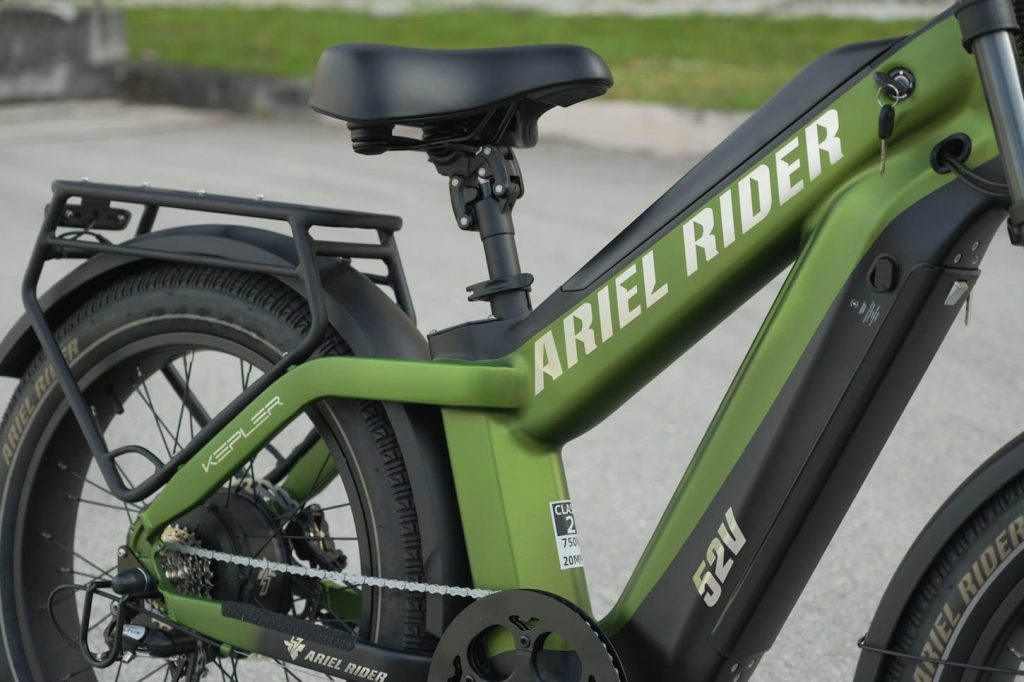
The Kepler combines a 52V 20Ah battery with a second 52V 15Ah battery for a total capacity of 35Ah. That works out to a huge amount of stored energy (1.82 kWh on an electric bicycle!) and helps deliver a claimed range of 85-105 miles (135-170 km).
As always, range estimates depend heavily on riding style, terrain, rider weight, and assist level, but the simple reality is that this bike carries enough battery that you’re probably going to run out of time before you run out of charge. Unless you’re just laying on the throttle 100% of the time or always climbing hills, range simply will never be an issue.
I also appreciate that Ariel Rider appears to have put real effort into battery safety instead of simply chasing big numbers. The packs use Samsung 21700 cells, resin-filled construction for thermal protection, CANBUS communication, and the entire system is UL 2849 and UL 2271 certified.
That’s exactly the kind of engineering effort I like seeing, especially as battery safety continues to be a major topic in the e-bike industry.
Surprisingly refined for such a beast
For a large, heavy fat tire e-bike, the Kepler actually rides with more composure than I expected.
The 24-inch wheels wrapped in 4-inch puncture-resistant tires strike a nice balance between stability and agility. Sure, you do sacrifice some agility when you go that fat, but the 24″ size keeps them a bit more compact than larger 26″x4″ tires that can feel massive. And you can’t deny that the extra rubber and air help smooth out rough pavement, potholes, and expansion joints that would be much harsher on a conventional commuter bike.
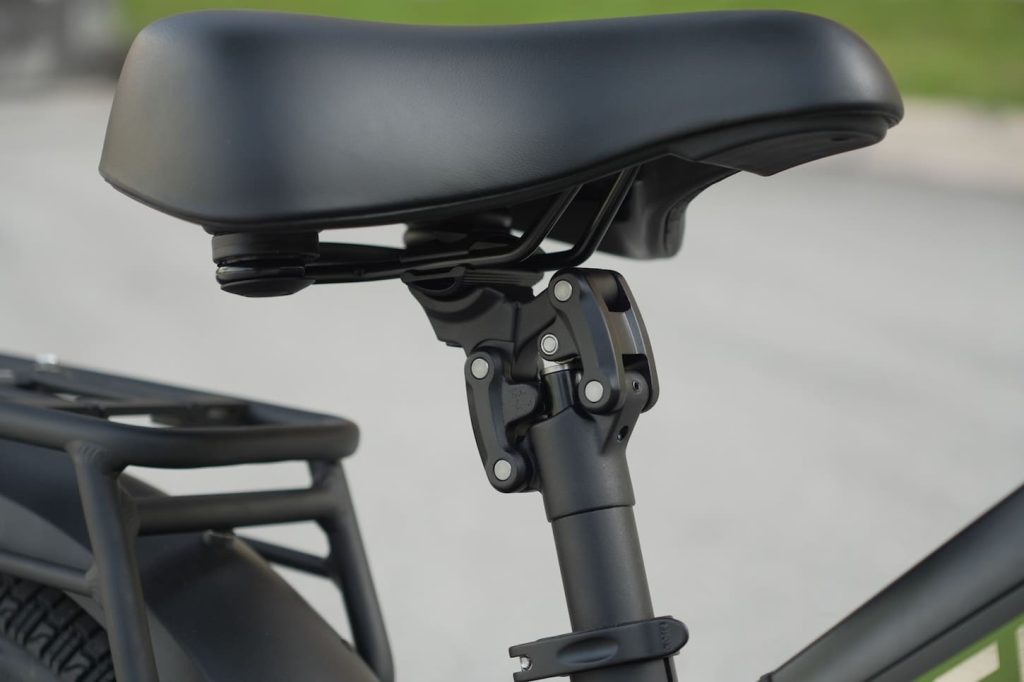
The 80 mm double-crown suspension fork and suspension seatpost add another layer of comfort, while the adjustable stem makes it easy to dial in the riding position. That suspension seat post deserves extra credit for offering parallel link suspension instead of the more typical telescoping spring suspension seat posts. It may sound like a small distinction, but you feel it where it counts.
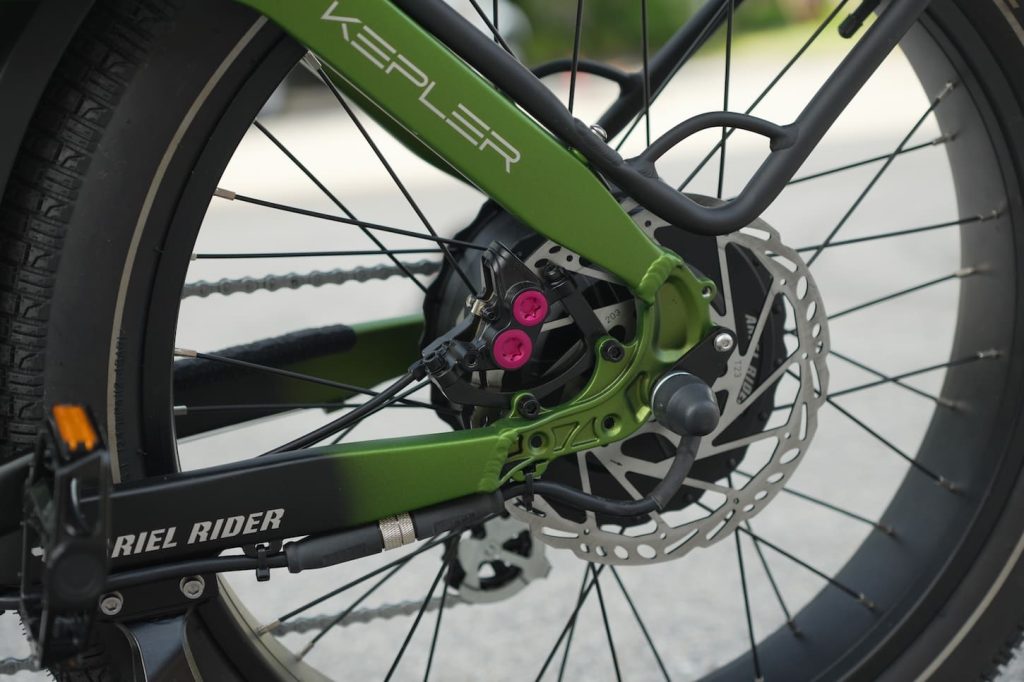
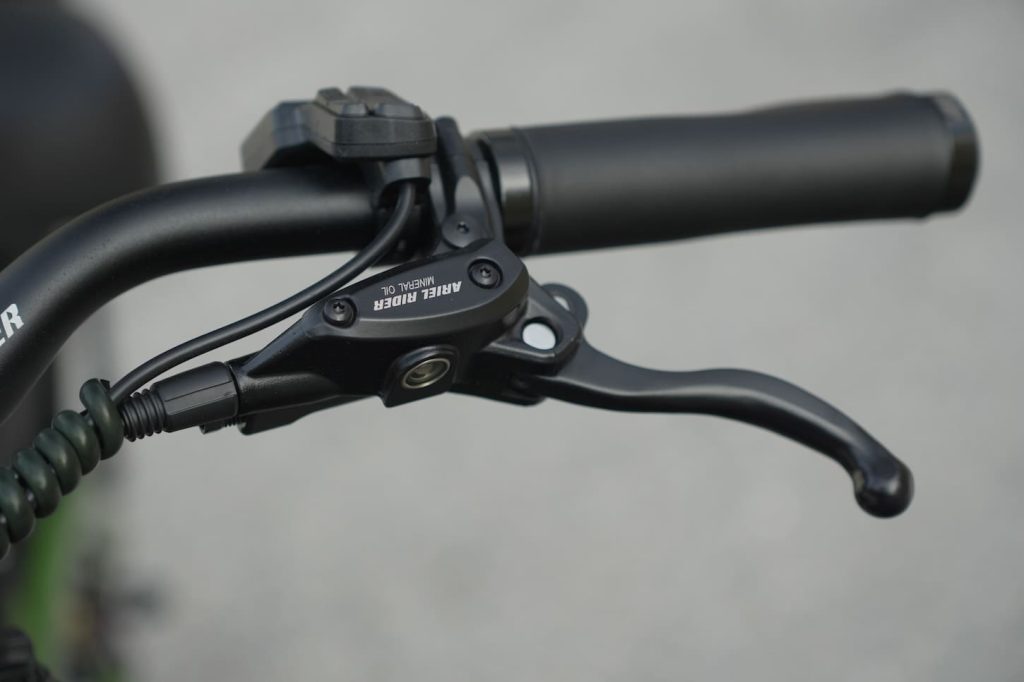
Braking performance is another strong point. Four-piston hydraulic disc brakes with large 203 mm rotors front and rear provide plenty of stopping power for a bike that can weigh nearly as much as a small motorcycle once you add a rider and cargo.
Ariel Rider also packed in a surprising number of commuter-friendly features. Integrated front and rear lighting, built-in turn signals, a brake light, electric horn, Apple Find My compatibility, app support, and even over-the-air updates all help the bike feel modern.
The MIK-HD rear rack, rated for 60 pounds (27 kg), adds genuine utility for grocery runs or daily commuting. You could throw some high capacity panniers on there and really load up with a lot of gear or groceries, and the MIK system allows you to click in all sorts of accessories right on top of the rack.
The downsides
No bike is perfect, and the Kepler definitely has a couple of drawbacks.
The first is weight.
At around 118 pounds (53.5 kg), this thing is absolutely massive. You’re not carrying it up apartment stairs, casually lifting it onto a bike rack, or maneuvering it around tight storage spaces without putting in some effort.
The weight sort of disappears (or at least reduces) once you’re riding, but you’ll definitely notice it any time you have to move the bike manually.
The second issue is something I didn’t really think about until I started living with the bike: locking it.
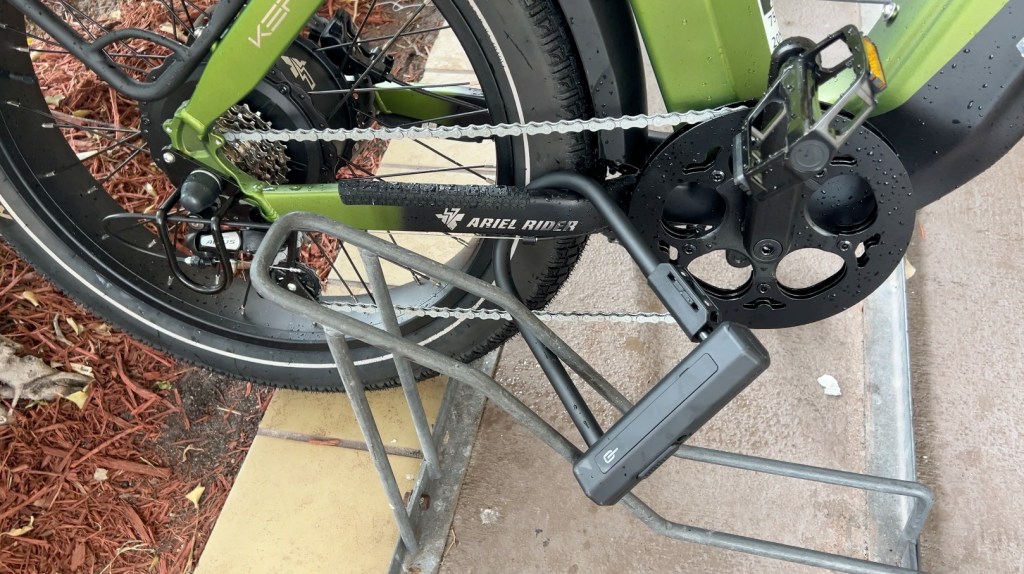
Because the frame houses those huge batteries, both the down tube and top tube are extremely thick. That limits your options with traditional U-locks, and depending on the bike rack or pole you’re using, it can be surprisingly difficult to get a secure lock placement. I couldn’t fit even my biggest U-locks around the top tube or down tube.
A heavy-duty chain lock or folding lock may actually be the better solution here, but since I tend to go with U-locks, I had to get creative in locking to other parts of the frame, like the rear triangle.
Final thoughts
The Ariel Rider Kepler feels like a bike that understands how many people actually use fat tire e-bikes.
Instead of pretending they’re all headed deep into the wilderness, the Kepler embraces the fact that many riders want a comfortable, stable, confidence-inspiring commuter that can also handle rough roads, gravel paths, and the occasional adventure.
It’s powerful without becoming excessive, the dual battery setup offers exceptional range, and the safety-focused battery design is something I genuinely appreciate. It also manages to look pretty good despite being an undeniably chunky machine.
Sure, it’s heavy. Really heavy. And the oversized frame tubes can make locking it a bit frustrating.
But at $1,999 during the current sale, those compromises are easy to live with when you get two huge batteries, impressive power, good suspension, a beautiful screen, bike-tracking technology, and several other smaller features thrown in as a cherry on top.
If you’re looking for a fat tire commuter and don’t mind piloting a heavyweight, the Ariel Rider Kepler offers a compelling combination of range, capability, and value that’s hard to ignore.


FTC: We use income earning auto affiliate links. More.


Comments