
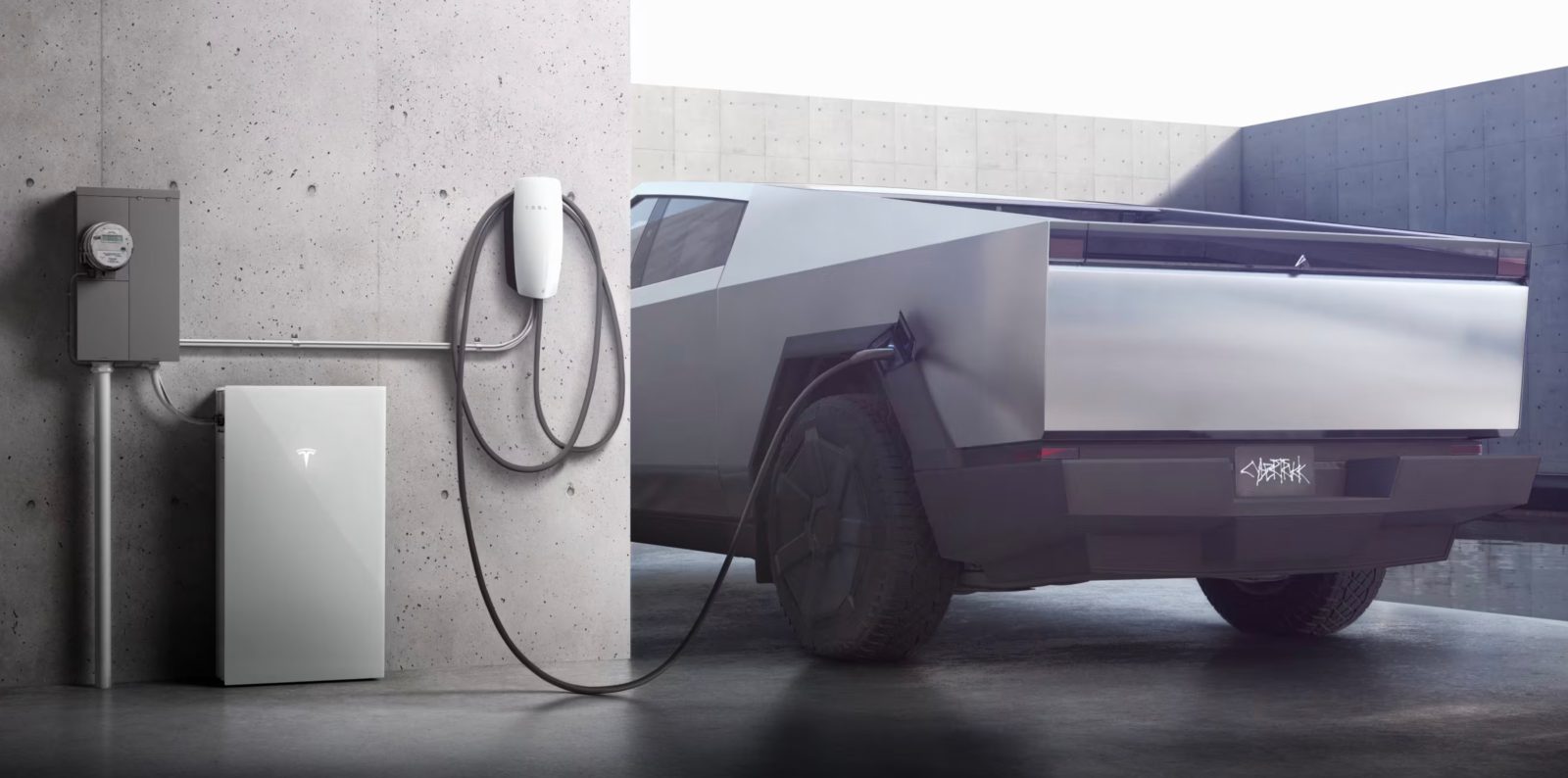
PG&E and Tesla have announced that the Cybertruck is now approved to sell power back to California’s grid through the utility’s residential Vehicle-to-Everything (V2X) pilot program. The approval comes with up to $4,500 in incentives toward equipment and installation costs.
What makes this notable: it’s the first time California has approved an AC-based vehicle-to-grid system for residential use — a technically simpler and cheaper approach than the DC-based setups that Ford and GM rely on in the same pilot.
How it differs from Ford and GM’s V2G setups
PG&E’s V2X pilot has been running for a while now. The utility kicked off the program with Ford’s F-150 Lightning paired with a Sunrun Home Integration System, and later added GM’s Ultium-based vehicles — the Chevrolet Silverado EV, Equinox EV, Blazer EV, Cadillac Lyriq, and GMC Sierra EV. All of those systems rely on DC bidirectional chargers, which require specialized hardware that can costs between $6,000 and $10,000.
Tesla’s Cybertruck takes a different approach. The Powershare system uses AC power natively, which means it connects through a Powershare Gateway and Universal Wall Connector — conventional residential electrical equipment rather than specialized DC infrastructure. The result is lower hardware complexity, lower installation costs, and better interoperability with existing home electrical panels.
That AC distinction matters for scaling. DC bidirectional chargers are expensive, require dedicated circuits, and can need electrical panel upgrades. An AC-based system that works through standard residential service removes a major cost barrier for homeowners who want to participate in grid programs.
How the program works
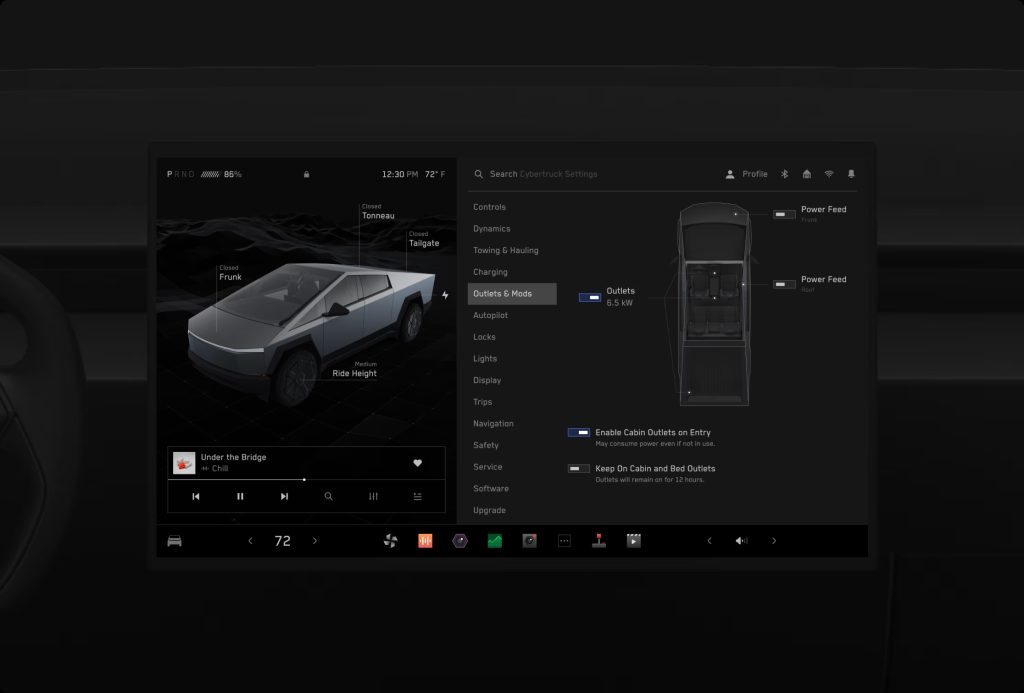
Cybertruck owners in PG&E’s service territory — covering over 16 million people across Northern and Central California — can now enroll in the V2X pilot to activate two capabilities: Powershare Home Backup, which lets the truck power the home during outages, and Powershare Grid Support, which exports energy to the grid during high-demand events.
The program runs on an opt-in basis — owners choose whether to participate in specific grid events, which are coordinated through PG&E’s Emergency Load Reduction Program (ELRP). Owners retain full control over how much energy they contribute and can set discharge limits to reserve battery capacity for driving.
The financial structure includes up to $4,500 in incentives applied toward bidirectional equipment and interconnection costs, additional compensation for participating in grid events, and bonus incentives for staying enrolled through the pilot’s completion. PG&E’s broader V2X pilot offers up to 1,000 residential customer spots.
The Cybertruck’s 123 kWh battery pack, equivalent to roughly nine Powerwalls, makes it one of the largest mobile energy storage assets available to the grid. That capacity matters during California’s peak demand periods, typically summer evenings when solar generation drops and air conditioning loads surge.
Expanding from the Texas launch
This California approval follows Tesla’s launch of the Powershare Grid Support program in Texas in February 2026, where Cybertruck owners in CenterPoint Energy and Oncor service areas began earning bill credits for discharging to the grid during high-demand events. The Texas program was Tesla’s first V2G offering in the United States.
California represents a much larger opportunity. PG&E serves more EV drivers than any other U.S. utility, and the state has the largest EV market in the country. Tesla already has a substantial virtual power plant operation in California — its Powerwall VPP paid out nearly $10 million to participants in 2024 and has delivered over 100 MW to the grid during peak events.
Adding Cybertrucks to that virtual power plant network could meaningfully expand its capacity. Each Cybertruck contributes 123 kWh versus 13.5 kWh for a Powerwall 2 — roughly nine times the storage per unit.
Top comment by Eduardo Pelegri-Llopart
V2X over AC is supported by multiple vendors in Europe. IIRC all Renaults support it.
EUrope has the benefit of 3/phase 240 at home. We in the USA have 120 split phase.
“Electric vehicles can do more than move people — they can help power homes and support the grid,” said Jason Glickman, PG&E’s Executive Vice President of Strategy and Growth. Colby Hastings, Senior Director of Tesla’s Residential Energy business, added that “Powershare Grid Support enables Tesla vehicles to strengthen our electricity system, while earning money for EV owners.”
Electrek’s Take
The AC vs. DC distinction here is interesting. Ford and GM got to PG&E’s V2X pilot first — the F-150 Lightning has been approved since 2023 and GM’s Ultium vehicles joined in early 2025. But they all use DC bidirectional chargers that cost thousands of dollars in specialized hardware. Tesla showing up with an AC-based system that works through conventional residential electrical equipment could make V2G adoption far more practical for average homeowners.
We’ve been tracking the V2G space closely, and the biggest barrier has always been cost and complexity on the homeowner side. A DC bidirectional charger running $6,000-$10,000 before installation makes the economics questionable for most people, even with utility incentives, unless you were already looking to have a generator hook-up. If Tesla’s AC approach can deliver the same grid services at a fraction of the hardware cost, that changes the math considerably.
The limitation right now is that only the Cybertruck supports Powershare. Tesla confirmed the new Model Y Performance has bidirectional charging hardware, but the feature hasn’t been activated yet beyond the latest Model Y Performance. When Tesla eventually rolls out Powershare across its full lineup — potentially millions of vehicles in California alone — the virtual power plant potential becomes enormous. For now, though, this is a proof of concept with Tesla’s lowest-volume vehicle, and we’ll be watching to see how many Cybertruck owners actually enroll and how the AC system performs during real grid events.


FTC: We use income earning auto affiliate links. More.


Comments