
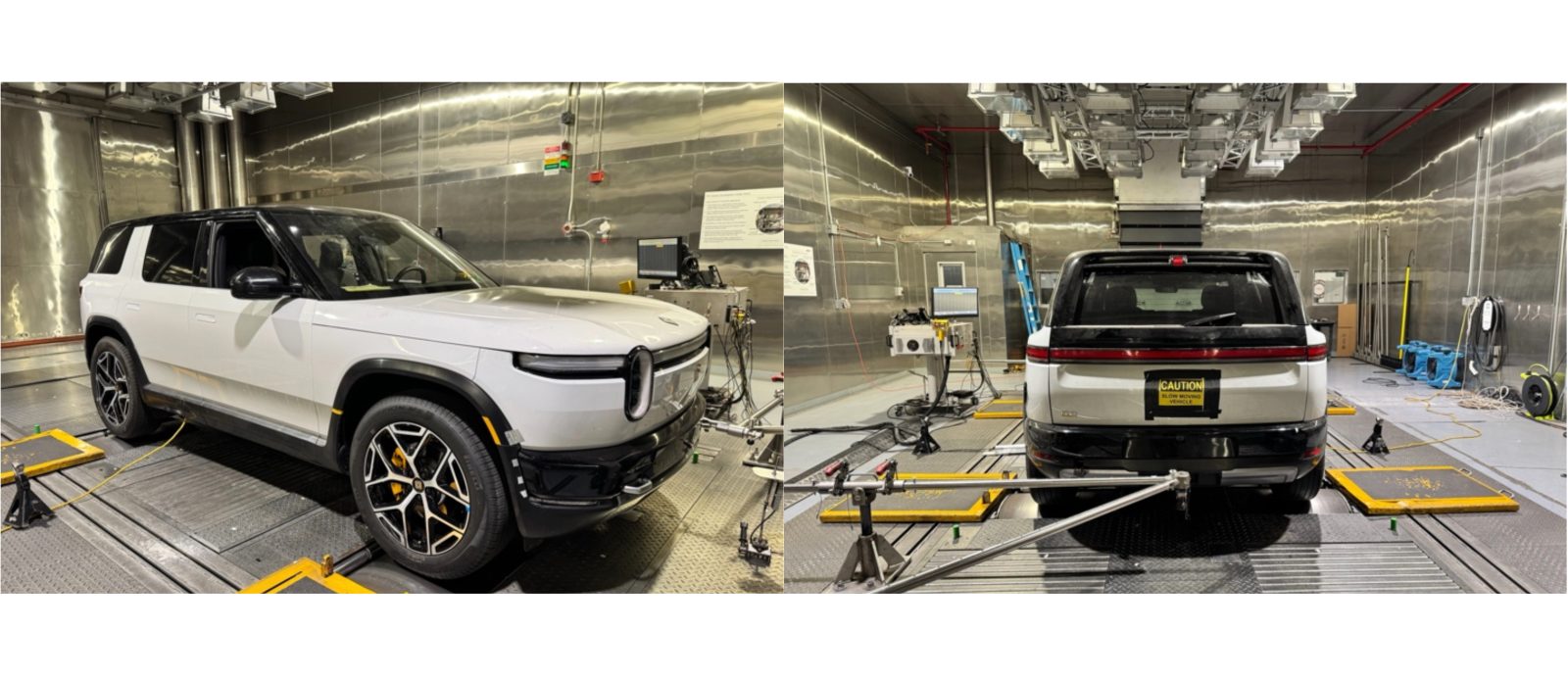
The EPA certification for Rivian’s upcoming R2 was found and posted on Rivian Forums this morning, and it includes some interesting insights about the vehicle – including one note that has fans worried about cold weather range, but we reached out to Rivian to get the facts.
The main, headline spec that everyone seems to be interested in is the range, which stands at 328 miles for the launch performance edition with default 21″ wheels and all-season tires. That’s in line with Rivian’s 330 mile estimate that it mentioned on launch day.
Notably, we also know the difference in range from the 20″ all-terrain tires, which reduce efficiency (as is the case on any vehicle). Per the certification, the R2 will have a range of 310 miles with all-terrain tires equipped, which isn’t all that bad of a loss all things considered.
EV fans might be surprised by this – usually, larger wheels have lower range, often because the larger wheels will have stickier tires and flashier wheels. In this case, the difference is due to the tire surface, rather than the size of the wheel.
Future R2 vehicles will be available with 20″ wheels and all-season tires, and we would expect those to have slightly better efficiency, but we’ll have to wait and see.
Other specs, like the Standard Long Range with 345 mile estimate, and Standard with 275+ mile estimate, were not tested. These vehicles aren’t available until next year, so their certification will come later.
Are these numbers optimistic? (Update: yes, mostly because we interpreted the test wrongly)
Originally on posting this article, we said that the efficiency numbers in the document seemed wildly optimistic, as they listed the R2 as being nearly as efficient as the Lucid Air.
It turns out our suspicions were partially correct… but mostly because we misinterpreted the results. The EPA applies a “correction factor” to these calculations, which varies based on testing cycle, and we were looking at the uncorrected efficiency numbers.
After applying this correction factor (which we also applied to range numbers above), the R2 looks like it will have a combined MPGe of 109 with all-season tires, and 99 with all-terrain tires. These numbers are more reasonable – more efficient than the R1, less efficient than other highly-efficient vehicles, and about in line with other SUVs of similar size.
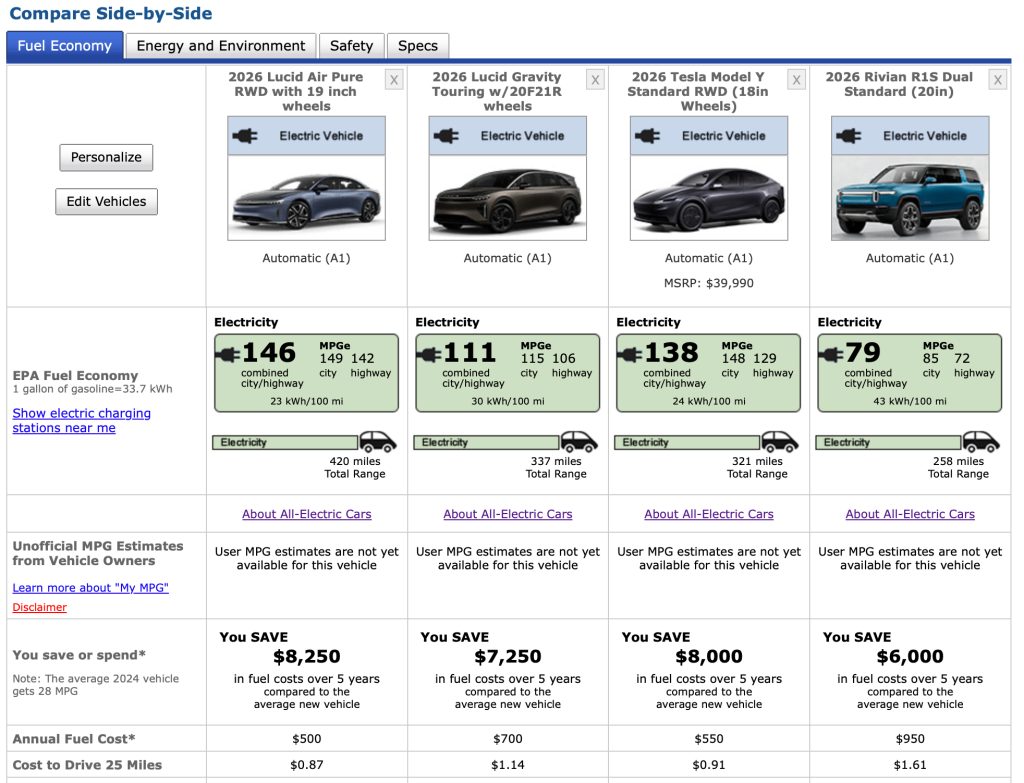
The car is around 1,300lbs lighter than its larger sibling (5,250lbs as-tested, compared to the ~6,600lb curb weight of the R1S), which is why it’s much more efficient than the R1.
However, the EPA also gives manufacturers some wiggle room on testing, allowing them to use more or less lenient procedures. The EV startups tend to use the more-lenient procedures, resulting in higher range numbers which don’t necessarily translate to the real world. All the more reason not to consider range numbers as gospel, and remember the age-old phrase, “Your Mileage May Vary.”
Charging is quick too
But personally, I find charging much more interesting than range. High ranges are rarely needed as long as you have suitable access to charging, so what’s better is the knowledge that you can stop for a quick meal or bathroom break and come back to your car with plenty of charge to fuel the next leg of your journey.
Here, the R2 has solid performance too. The car seems capable of a peak DC rate of 217kW, which is similar to the peak rate seen on Rivian’s other vehicles. It isn’t the fastest available today (especially if you count China), but is better than what I would say is the baseline expectation of ~150kW.
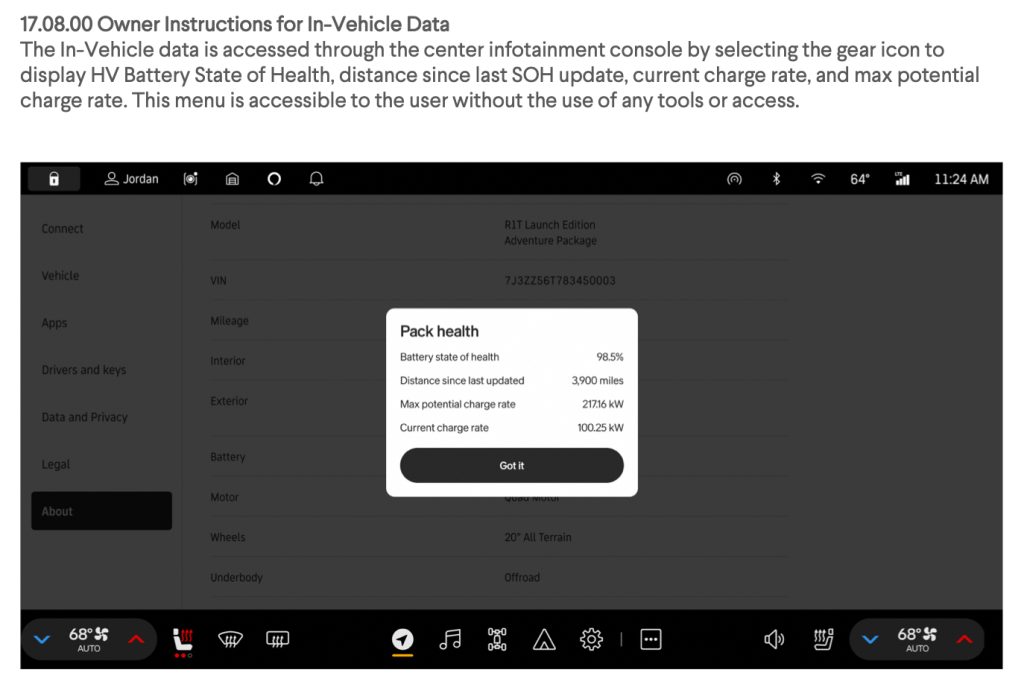
Like all EVs, peak DC rates only apply at low battery state of charge, and then charge rates slow down as the battery fills up more. What you want is a “broad charge curve” where high charge rates are maintained for a longer period of time. Comparing peak and average charge rate, the R2 looks like it won’t be as good as the best performer out there.
Rivian previously told us that the car would be able to charge from 10-80% in 29 minutes, which would mean an average charge rate of ~107kW, a little slower than the R1’s average charge rate of ~125kW, which could be due to having a smaller battery.
As for ease of charging, The R2 comes with a NACS connector, and Rivian operates the Rivian Adventure Network DC charging network and bought A Better Route Planner, a charge-planning app, so expect to have an easy time finding places to plug in.
Concern over lack of heat pump unfounded, says Rivian
There is one concerning line in the certification, though, as many enthusiasts noticed: the tested version of the vehicle didn’t have a heat pump, per this line:
● Real world range is expected to improve over R2 Launch vehicles (which is equipped with conventional AC system) when cabin reheat or heating is required (roughly below 20°C).
Top comment by PaganRites
The only bummer for me about R2 design is that it's not on 800v architecture.
Having driven an Ioniq 5 for the last few years, I am used to the exceptional charge curve and speeds Hyundai delivers in their EVs.
That said, I'm getting the R2. It hits the market for me in almost every category.
This matters because EVs are more efficient than gas vehicles, so they produce less waste heat. So in cold environments, EVs must create heat to run the car’s heating systems, which takes extra energy.
A heat pump is a more efficient method of cabin heating, as instead of creating heat through traditional resistive heating, it finds heat where it can and moves it around. This can be 3-4x more efficient, thus saving range. (It can also work for air conditioning, but heating is the main benefit in an EV).
However, we reached out to Rivian to ask if this was the case, and Rivian assured us that “Launch Edition R2s will have a heat pump.” So, direct from the horse’s mouth.
Charge your electric vehicle at home using rooftop solar panels. Find a reliable and competitively priced solar installer near you on EnergySage, for free. They have pre-vetted installers competing for your business, ensuring high-quality solutions and 20-30% savings. It’s free, with no sales calls until you choose an installer. Compare personalized solar quotes online and receive guidance from unbiased Energy Advisers. Get started here. – ad*


FTC: We use income earning auto affiliate links. More.




Comments