
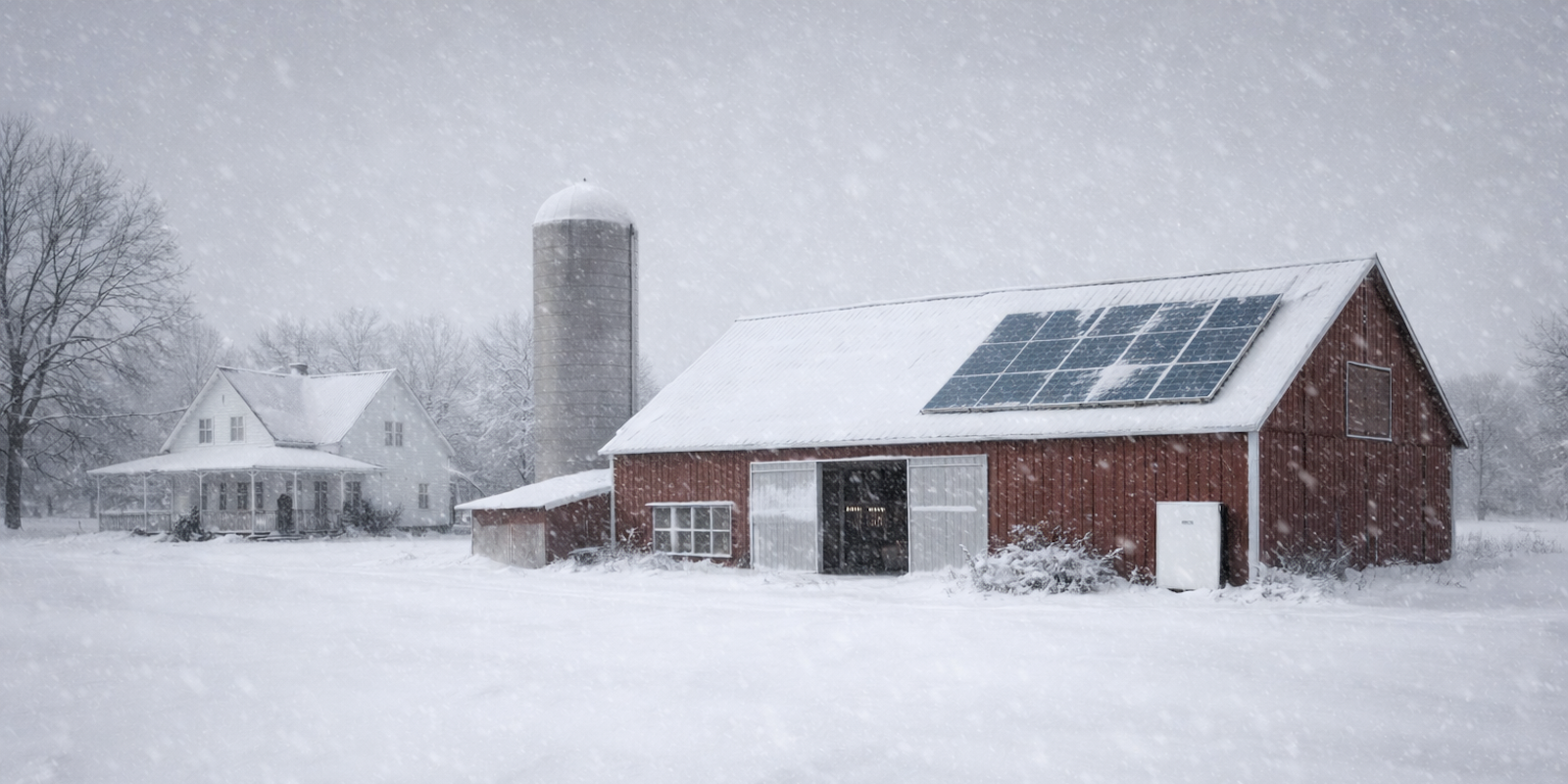
Does adding a new home solar panel system makes sense in northern climates? This Canadian homeowner did just that – and after a cold, dark, and dreary winter collecting data, they’re sharing their real-world results online!
Earlier this week, a Redditor landed on the r/solar sub and presented what had to be one of the worst-case rooftop solar scenarios above ground.
“We live in the foggiest, cloudiest city in Canada,” writes spenney09, setting the dreary scene rather nicely. “We are at 47° N latitude. Our 130 year old house has a flat roof: 0° incline. We have (an) 8.1 kW solar system on that roof.”
Despite dealing with factors like the northern latitude, fog, and flat roof working against them, spenney09 also had to deal with some pretty extreme weather, too – including nearly two feet of snowfall in a single day!
“Yesterday, we had a late March snow storm: 51 cm (~20 inches) of snow,” they write. “During the storm, very little (not none) power was produced from solar. In the afternoon, after the storm had stopped, the panels started producing power again, not much but some. After 51 cm of snow!”
The next day, though, spenney09’s rooftop system was back online. “Today, our panels produced 27 kW of power,” they wrote, the excitement coming through the screen. “During the middle of the day, they produced way more than the house needed and the excess was sold back to the grid. 24 hours after a major snow storm!”
If that kind of dramatic turnaround for solar power generation seems surprising to you, at least you’re not alone.
Winter wonders
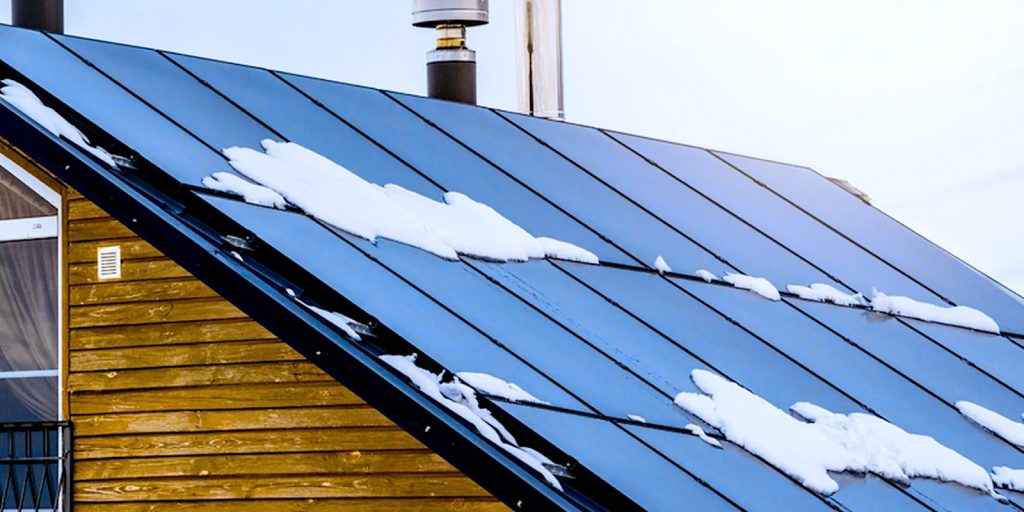
“It’s a common myth that solar panels don’t work during winter,” writes EnergySage contributor Kristina Zagame. “Interestingly, cold temperatures typically improve solar panel output, which means your panels will produce more power for each precious hour of sunshine during the short days of winter.”
Ironically, while cold weather can improve solar performance, excessive heat does the opposite – panel output typically drops once temperatures climb above 25°C (~75°F), though how much their efficiency changes due to weather can vary by panel type and manufacturer.
That dynamic helps explain why solar doesn’t just “work” in colder climates, it can actually be more valuable than it is in states like California, Florida, and Texas, where solar is booming. Homeowners in colder regions can sometimes see bigger savings, too – not just because of improved panel performance, but because colder states tend to have higher energy prices, too, making each kW generated by solar more valuable.
That said, it’s important to note that, while spenney09 seems to be having a positive experience with home solar, they’re not wholly dependent on it, either.
“Do our panels produce 100% of what we need? No, nowhere near it,” they explain. “Last year the panels produced 23% of our needs. That means that we pay 77% of our electricity demands and the roof pays the rest. When the price of power goes up (and it will) it will only go up for 77% of our energy requirements. They’ll pay us more for the portion of electricity that we sell back to the grid!”
And, since sperry09 seems to be a good writer who’s doing most of the heavy lifting for this article, anyway, I’ll let them close it out, in their own words:
Does solar work in Canada? Ours must be the worse case scenario and the panels still generate 23% of our energy needs. Remember that we live in the foggiest, cloudiest city in Canada… in a leaky, inefficient, 130 year old house… with a flat roof. We love it!
Top comment by Craig Merrow
That's impressive! I live in southern Maine; my system produces around 16 kwh during the winter, and 36+ during late spring before some of the trees fill in on the east side which reduces my early morning production a bit.
As always, it’s worth understanding your own energy needs before jumping into a project like this. Getting multiple quotes and talking things through with a trusted financial advisor and knowledgable tax specialist is the right thing to do.
YOU MIGHT ALSO LIKE:
- EV driver shares surprising, real-world data after installing solar panels
- Homeowners share surprising, real-world data after installing solar panels

If you’re considering going solar, it’s always a good idea to get quotes from a few installers. To make sure you find a trusted, reliable solar installer near you that offers competitive pricing, check out EnergySage, a free service that makes it easy for you to go solar. It has hundreds of pre-vetted solar installers competing for your business, ensuring you get high-quality solutions and save 20-30% compared to going it alone. Plus, it’s free to use, and you won’t get sales calls until you select an installer and share your phone number with them.
Your personalized solar quotes are easy to compare online and you’ll get access to unbiased Energy Advisors to help you every step of the way. Get started here.


FTC: We use income earning auto affiliate links. More.




Comments