
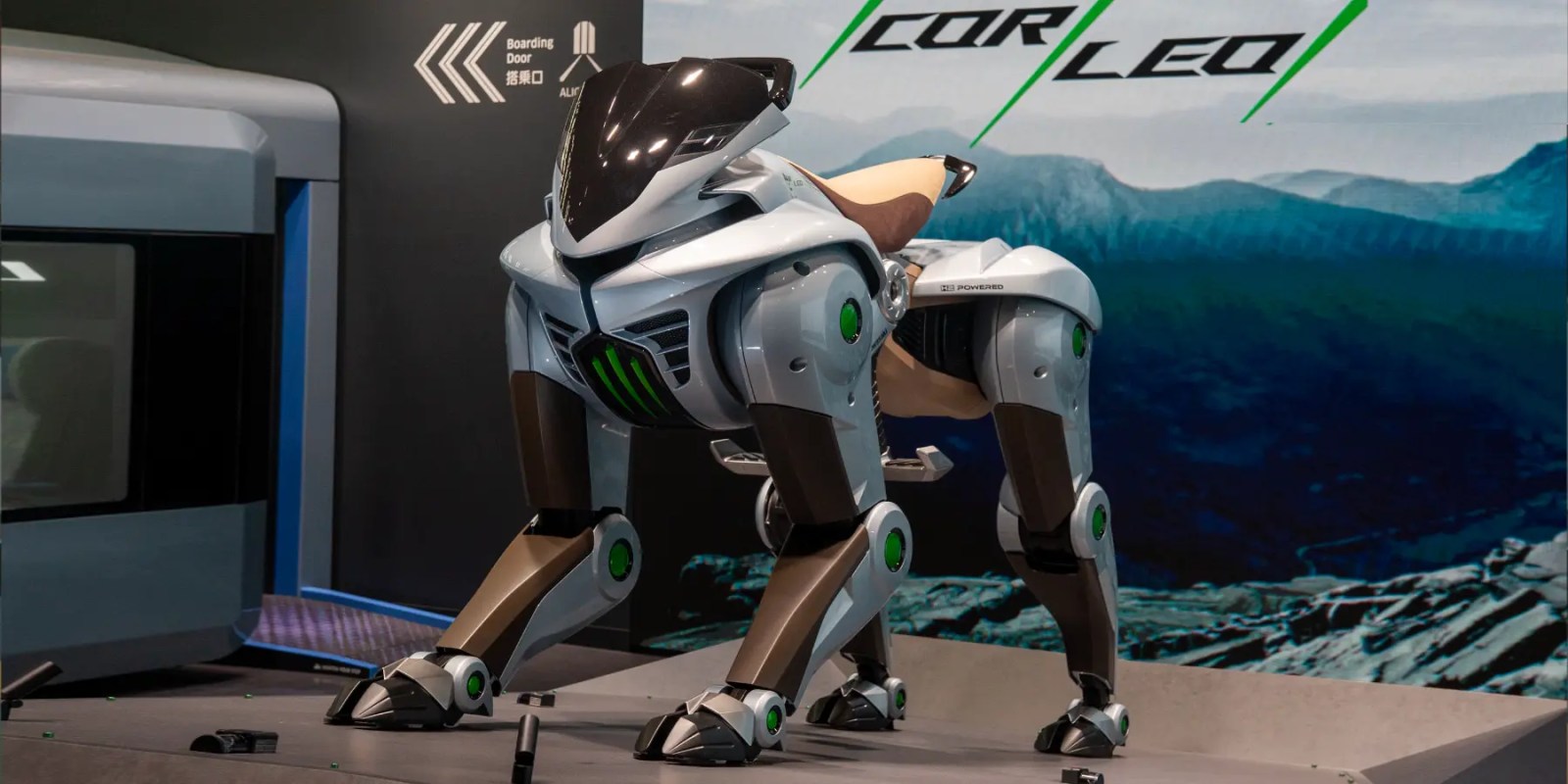
Just when you thought the micromobility world couldn’t get any stranger, Kawasaki decided to build an electric horse.
And no, this isn’t just another vaporware concept destined for a trade show floor and then the archives. Kawasaki Heavy Industries says it has officially launched development toward commercialization of its four-legged off-road personal mobility vehicle known as CORLEO.
CORLEO first debuted at Expo 2025 Osaka, where it racked up an eye-watering 1.2 billion social media impressions from some fairly lame CGI video. Now Kawasaki has created a dedicated “SAFE ADVENTURE” Business Development Team reporting directly to the company president, signaling that this isn’t just a design exercise. The company is even targeting potential use as an on-site mobility vehicle at Expo 2030 in Riyadh.
What exactly is it? Think robotic horse meets electric adventure machine, like an e-ATV with legs.
CORLEO is a four-legged mobility platform that blends Kawasaki’s robotics expertise with its burgeoning experience in electric motorcycles. The rear legs use a swing-arm mechanism derived from motorcycle suspension, allowing independent vertical movement to absorb shocks. The rider controls it by shifting body weight, similar to horseback riding, with electronic support systems helping stabilize the vehicle over rough terrain.
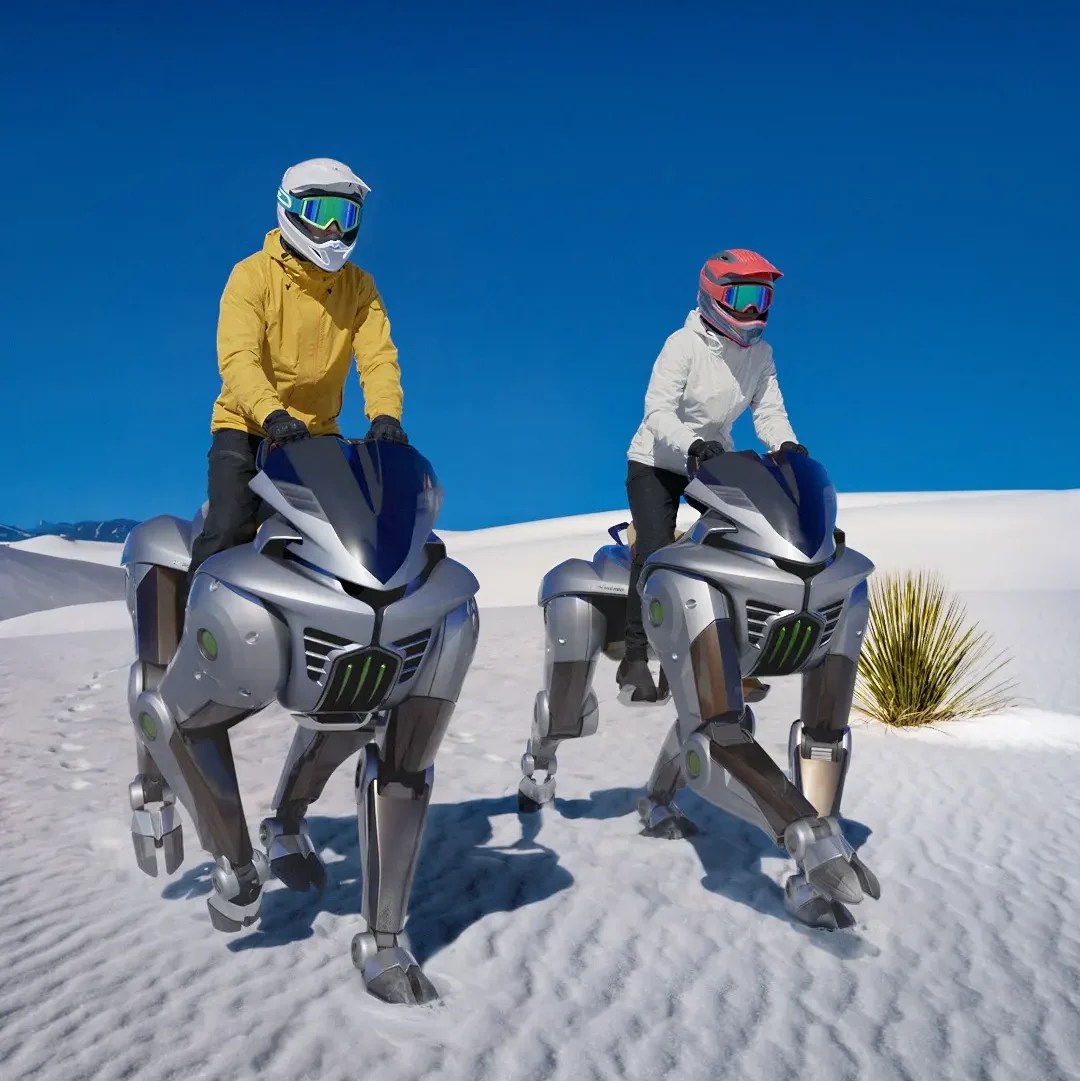
Unlike electric dirt bikes or eMTBs, staples of the off-road electric mobility world, CORLEO isn’t rolling on wheels. It’s designed to traverse mountainous terrain and even water-adjacent areas using articulated robotic legs. And instead of a battery pack, it runs on hydrogen to generate electricity for propulsion.
Kawasaki is also building a riding simulator based on CORLEO’s motion data, with plans to deploy the digital models into gaming and e-sports as early as 2027 ahead of a world debut of the functional prototype in 2030.
Top comment by BCGeiger
And in a world obsessed with humanoid robots, Kawasaki may have quietly chosen a more interesting path: building something that doesn’t try to be human at all.
I really think that will be a better strategy than humanoid robots. First is the whole uncanny valley thing. Then a human form is only ideal in a limited set of environments. Look at the automotive industry. Their welding and painting robots don’t look anything like the people they replaced. Your Roomba looks nothing like a person pushing a vacuum. Where they are trying to introduce robots into food service, the most successful ones are optimized for the job and that doesn’t look like a bipedal primate. So I think as we see more robots they will look like these, or the Boston Dynamics dog-bots, or things that defy description, but are perfectly suited for their job. What I don’t expect to see is hordes of Optimus robots making dinner or dusting the china, or typing, or…
It’s easy to roll your eyes at something like this. But Kawasaki operates both robotics and motorcycle divisions under one roof, making it one of the few companies that could realistically attempt something like a rideable quadruped robot.
Will we all be trading our e-bikes for robotic horses by 2030? Probably not. But Kawasaki is for some reason quite insistent that this is not a flashy and concept and that we should really expect the company to do something with this wild idea.
And in a world obsessed with humanoid robots, Kawasaki may have quietly chosen a more interesting path: building something that doesn’t try to be human at all.
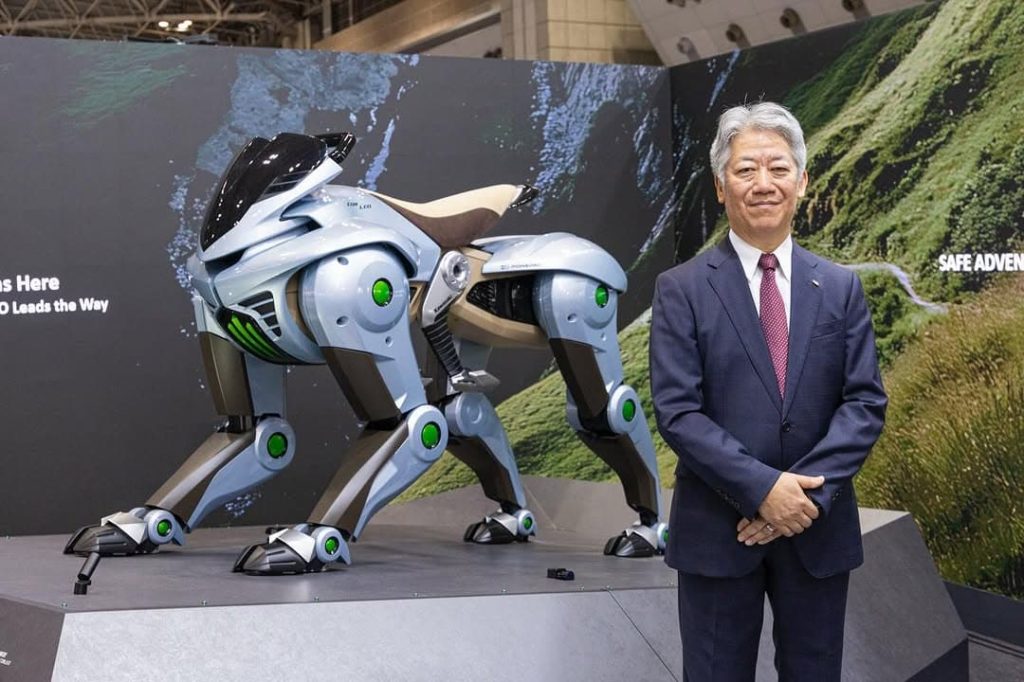
Image credit: Kawasaki


FTC: We use income earning auto affiliate links. More.


Comments