
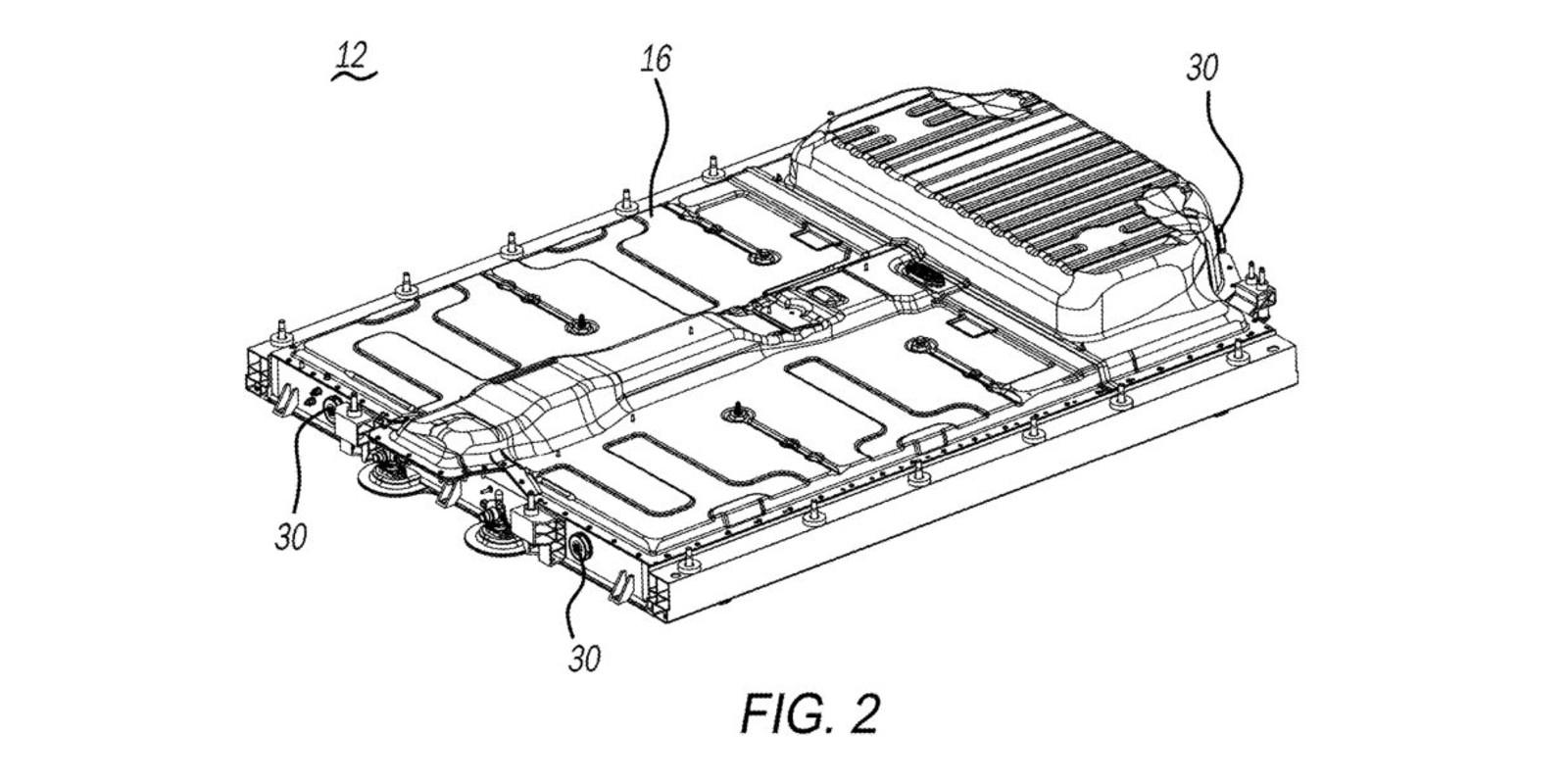
Stellantis may have backed away from planned EVs like the all-electric Ram REV and range-topping Dodge Charger Daytona R/T EV, but the company isn’t standing still. A newly awarded patent outlines an innovative, foam-based thermal runaway suppression system that’s built into an EV’s battery pack.
The indisputable fact of the matter is that electric vehicles catch fire far less often — and far less frequently — than their combustion-powered brethren. Still, a number of highly-publicized early Tesla fires and poorly managed recall on the first-gen Chevy Bolt have linked “electric car” and “fire” in the minds of many Americans, and the ones who have been waiting to test the EV waters until a better safety solution came along are going to absolutely love this latest setup from Chrysler parent company Stellantis.
MoparInsiders is reporting on a new Stellantis patent awarded on a proactive battery safety system that’s designed to stop thermal runaway (read: fire) before it can cascade through an entire EV battery pack.
Rather than relying solely on passive barriers or post-event containment, Stellantis’ freshly patented system uses strategically placed foam channels and deployment mechanisms that can flood the affected cells with high insulation foam when abnormal heat is detected in a cell, isolating the problem area and dramatically slowing (if not outright stopping) the chain reaction that leads to catastrophic battery failure.
The patent describes an electric car battery that, on the outside, will look familiar to EV enthusiasts, but there are some key differences “layered in” around the familiar bits. These include:
- A bladder filled with a fire-retardant chemical; located close to the battery cells, typically between the cells and the top of the pack. It’s made from a flexible polymer, so it can be punctured when needed
- Two sets of blades; the first aimed at the bladder, ready to pierce it and release the fire-retardant chemical while the second targets specific points on the coolant inlet line, outlet line, or heat sinks to rupture them and release cooling foam directly where it’s needed
- Special coolant line sections; designed with small sealed apertures that closed off with a soft plug material that’s easy for the blades to pierce but strong enough to maintain pressure during normal operation
- Actuation devices tied to a controller; that push the blades into the bladder and coolant components when a thermal event is detected
Special coolant lines
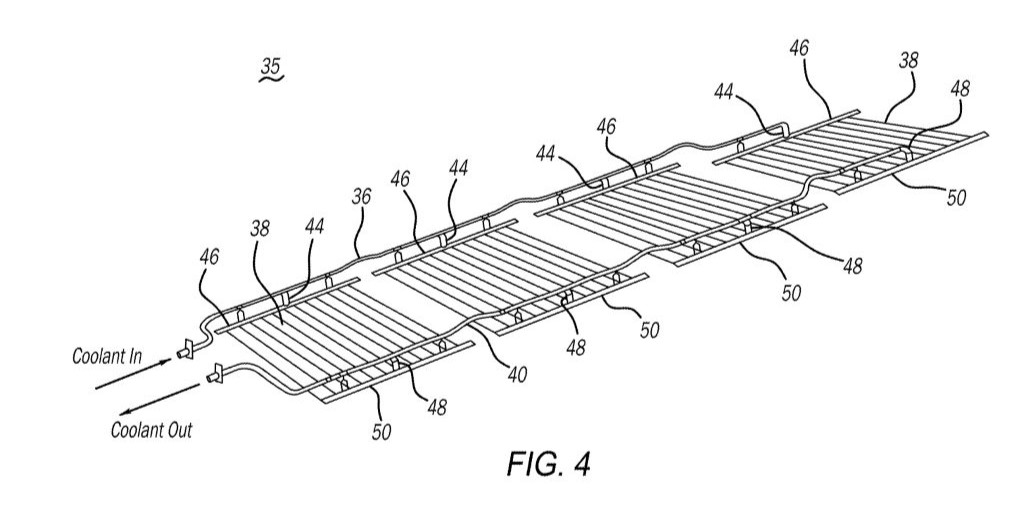
The system relies on a suite of existing temperature sensors throughout the battery pack, and seems like a viable enough solution to a problem that, while rare, certainly exists — and which looms large over America’s Early Majority tech adopters.
As for me, I think Stellantis should focus on bringing more compelling products to market and stop looking for ways to blame the customer, market, and government for its inability to sell Jeep products that, apparently, have enough markup to cover nearly $30,000 in discounts to help dealers move their metal. I look forward to hearing about your take in the comments.
SOURCE | IMAGES: US Patent Office, via MoparInsiders.

If you’re considering going solar, it’s always a good idea to get quotes from a few installers. To make sure you find a trusted, reliable solar installer near you that offers competitive pricing, check out EnergySage, a free service that makes it easy for you to go solar. It has hundreds of pre-vetted solar installers competing for your business, ensuring you get high-quality solutions and save 20-30% compared to going it alone. Plus, it’s free to use, and you won’t get sales calls until you select an installer and share your phone number with them.
Your personalized solar quotes are easy to compare online and you’ll get access to unbiased Energy Advisors to help you every step of the way. Get started here.


FTC: We use income earning auto affiliate links. More.




Comments