
Although several other Japanese automakers recently teamed up to develop new internal combustion engines (ICE), Nissan is standing by its commitment. Nissan said it will not invest in new gas or diesel-powered engines as the brand moves toward an electric future.
Although Nissan was once seen as a leader in the EV revolution, the brand has recently lost some ground.
Who can forget Nissan’s iconic electric hatchback? Nissan launched the LEAF in 2010 as the “world’s first mass-produced electric car.” The LEAF was the top-selling electric car globally until Tesla’s Model 3 surpassed it in early 2020.
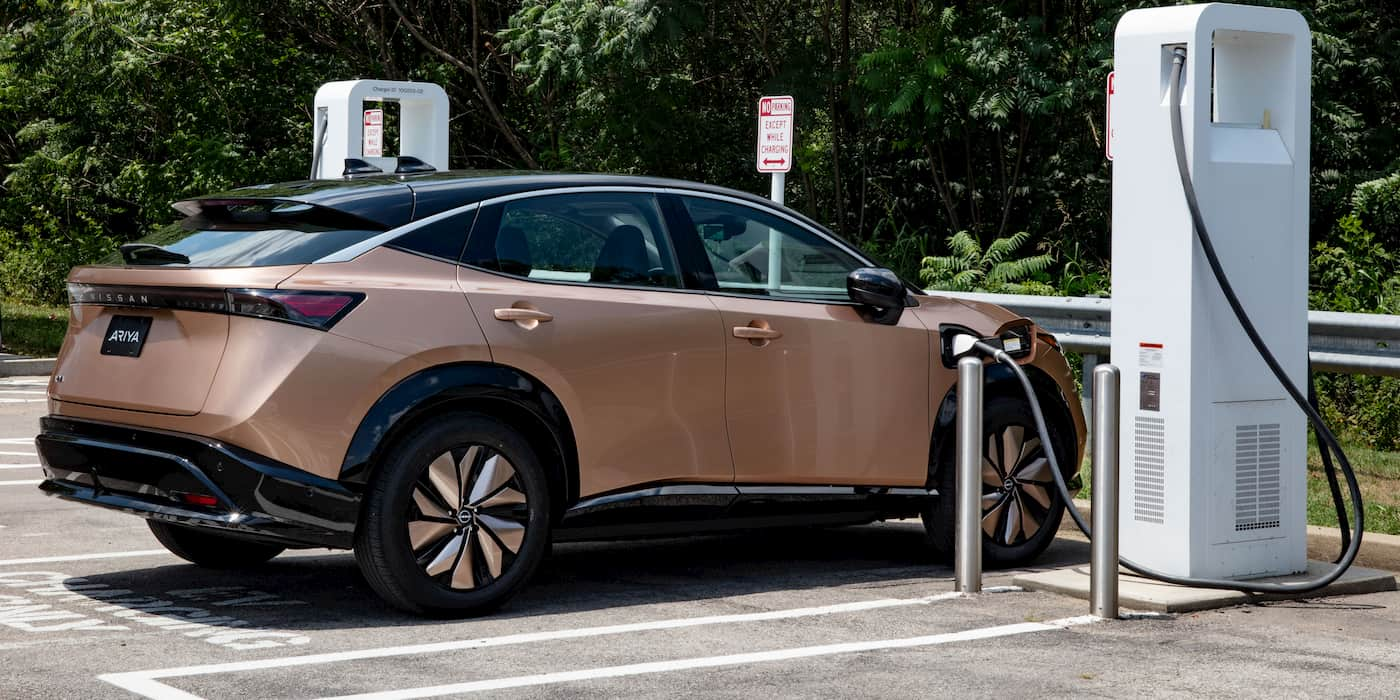
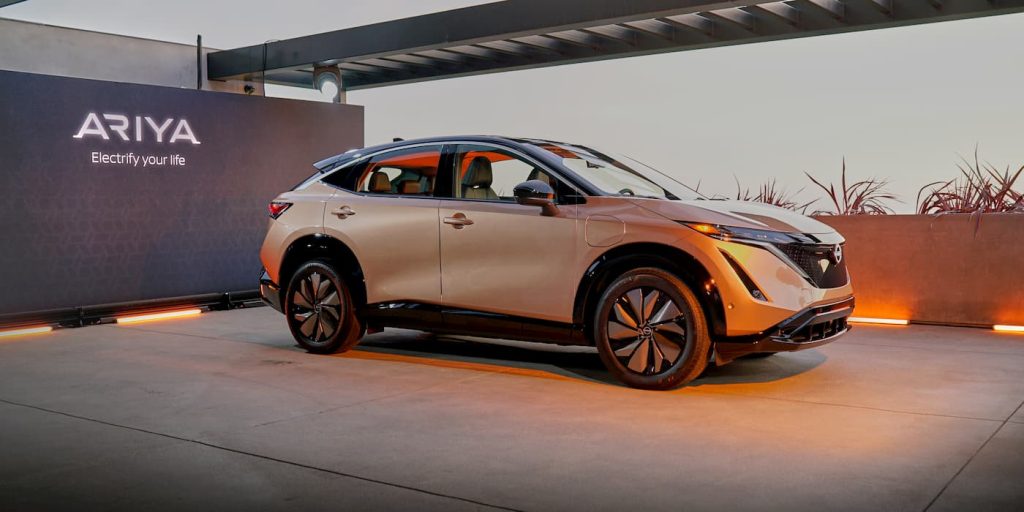
Over a decade later, Nissan launched its second global EV and first electric SUV, the Nissan Ariya.
Although the Ariya got off to a slow start, Nissan’s “Intelligent Factory” is now running smoothly. Nissan revealed the Intelligent Factory line at its Tochigi plant in 2021 to slash costs and ramp EV output.
With LEAF sales down significantly in every major region, Nissan’s Ariya is picking up the slack. Nissan has sold 5,640 Ariya’s in the US, 5,187 in Europe, and another 601 in Japan through April 2024.
Nissan says ICE engine funding is not part of the future
Despite Japanese rivals Toyota, Mazda, and Subaru committing to developing more efficient next-gen ICE engines, Nissan is still looking toward an all-electric future.
Nissan has already revealed plans to go all-electric in Europe by 2030, but now the automaker says it has no plans for future ICE engine funding.
Speaking at Nissan’s Sunderland factory, Francois Bailly, the company’s senior vice president and chief planning officer for the AMIEO (Africa, Middle East, India, Europe, and Oceania) region, told the media (via Drive), “Our future is EV.”
“e-Power is a stepping stone to get there, and each market will go at their own pace,” Bailly explained, adding, “We’re not investing in new powertrain for ICE, that’s for sure.”
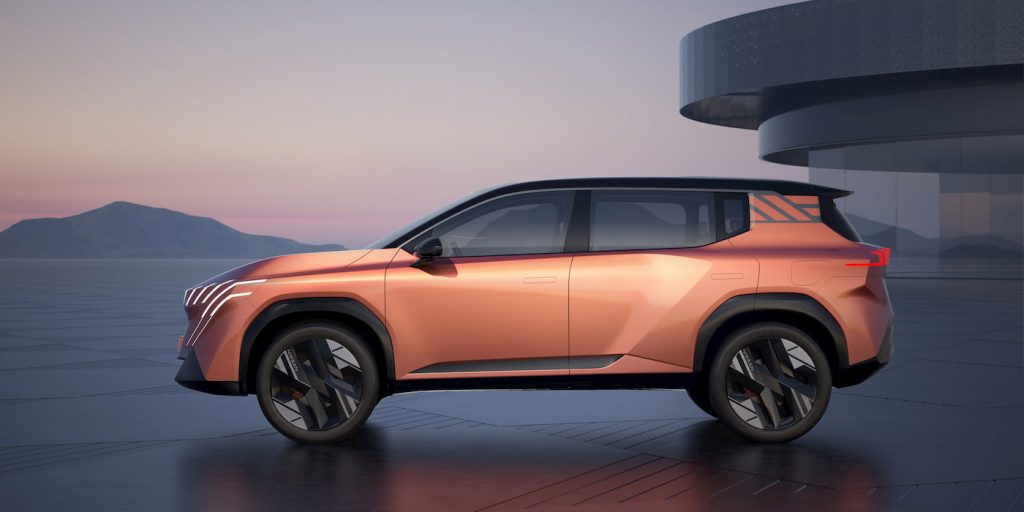
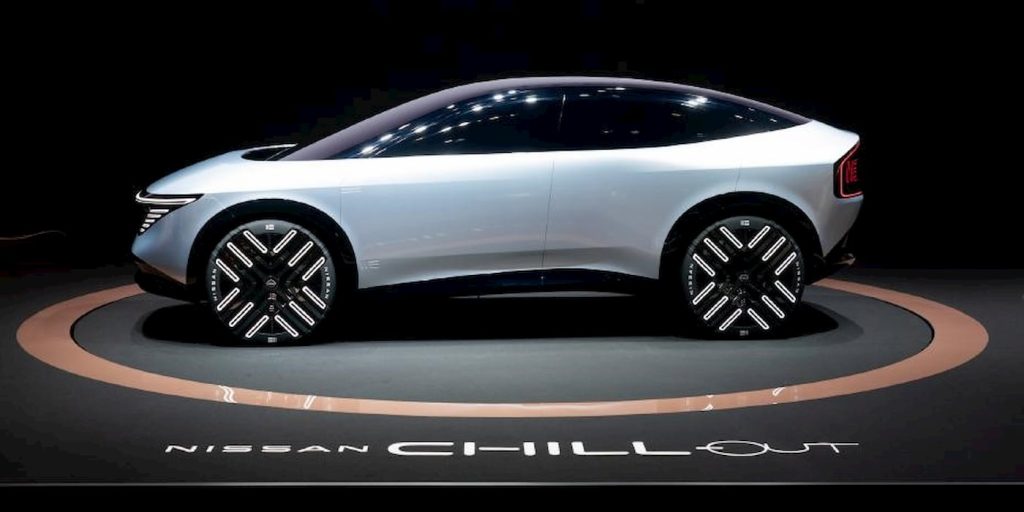
The news comes as Nissan preps to launch a wave of updated electric models, including a next-gen LEAF EV.
Nissan unveiled updated business plans for electrified vehicles to account for 60% of sales by 2030. In the US, Nissan is refreshing 78% of its line-up with new e-POWER and PHEV models.
In Europe, Nissan is launching six new EVs, aiming for a 40% electric car sales share by 2026. Nissan expects new innovations to reduce the costs of its next-gen EVs by 30%.
Electrek’s Take
Japanese automakers have been some of the biggest laggards as the industry shifts to all-electric. Despite Toyota, Mazda, and Subaru revealing plans to develop new ICE engines, Nissan is taking a different path.
Top comment by Kyle La Fleur
Greenwashing?? Luckily the GT-R is going to be hybrid. Electric cars are not what people think. There is a huge misconception GLOBALLY. The catastrophic events claimed due to carbon emissions are not scientifically backed. All regulations are guided by the Paris Agreement and is not legally binding, nor is it legitimized by science. The apocalyptic predictions are unrealistically high and not backed with scientific evidence and there is increasing evidence due to recent studies that the warnings and predictions are overstated. Not only that, EVs are not profitable, ruin the environment to produce, and AT LEAST 70% of production is child labor for batteries. A single EV battery requires 12 tons of rock for lithium (can also get from sea water) 5 tons of cobalt minerals which is a byproduct of 3 tons of nickel ore and 12 tons of copper ore or you deep sea mine which should be illegal based on the environmental issues it causes. Some manufacturers agree they won’t, but some still do. You need to move 250 TONS of soil for 26.5 POUNDS of lithium, 30 pounds of nickel, 48.5 pounds of manganese, and 15 pounds of cobalt. You also need 441 pounds of aluminum steel and or plastic, and 112 pounds of graphite. A caterpillar 994A moves the soil and consumes 264 gallons of diesel across 12 hours. An electric car therefore takes 7 years to become near carbon neutral. You need a new battery every 10 years. So only 3 years slowly reducing carbon footprint before restarting. Nissan will fail.
By doubling down now, Nissan is setting itself up to be more competitive in the future. Meanwhile, Toyota and other Japanese rivals are moving backward.
Toyota’s EV sales are around 1% of total volume this year. That’s well below most rivals with double-digit or 100% electric car sales by now.
With more funding and resources for ICE vehicles, Toyota, Mazda, and Subaru are only pushing themselves further behind the pack.
What do you guys think? Can Nissan separate itself from its Japanese rivals? Let us know your thoughts in the comments below.


FTC: We use income earning auto affiliate links. More.


Comments