
I’ve tested e-bikes that cost $10,000. I’ve tested e-bikes that cost $500. But until recently, I’d never tested a brand-new e-bike that cost less than a nice set of bicycle tires.
So when I stumbled across a $199 e-bike for sale through Walmart’s website, my curiosity got the better of me.
To be clear, I wasn’t expecting it to be good. I wasn’t even really expecting it to be acceptable. This was more of a morbid curiosity experiment: What exactly does $199 buy you in the world of e-bikes?
Apparently, the answer is: more than I expected, but also fewer pedals than I expected.
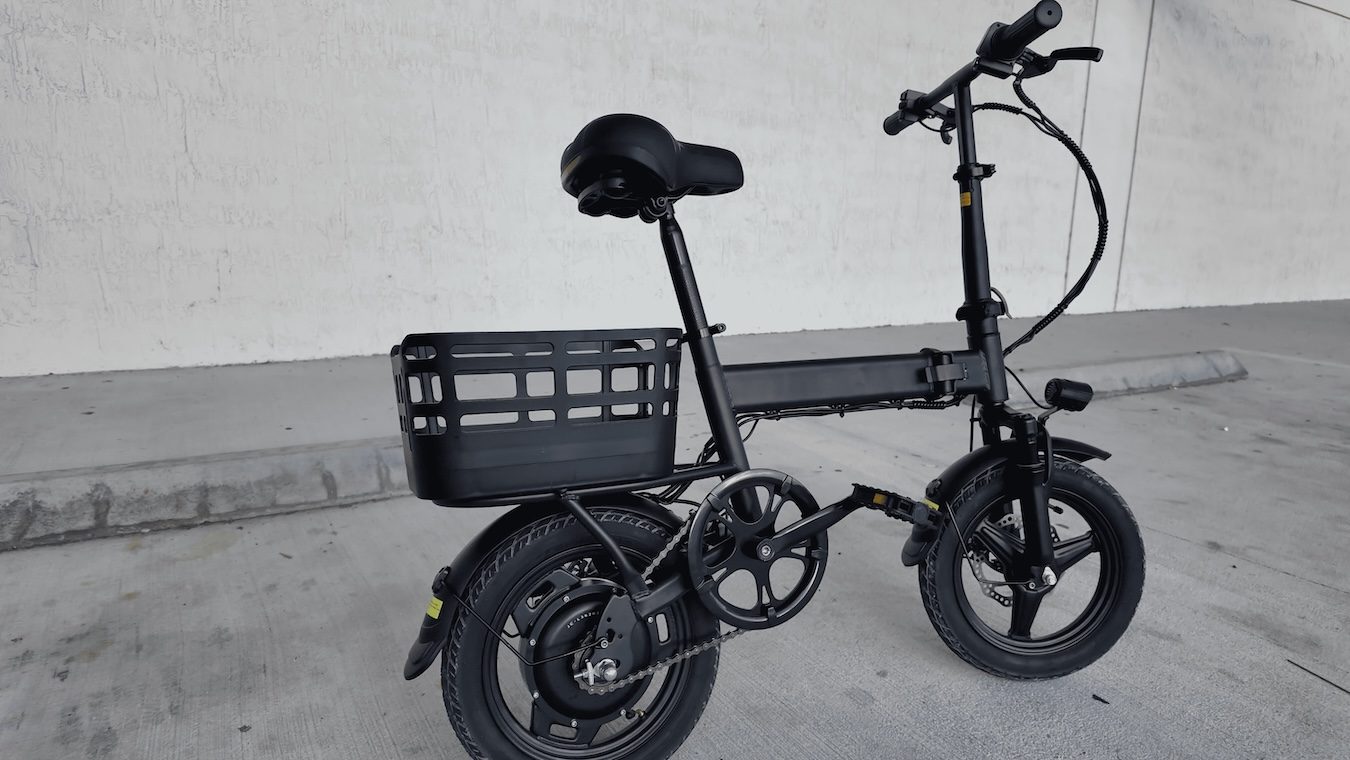
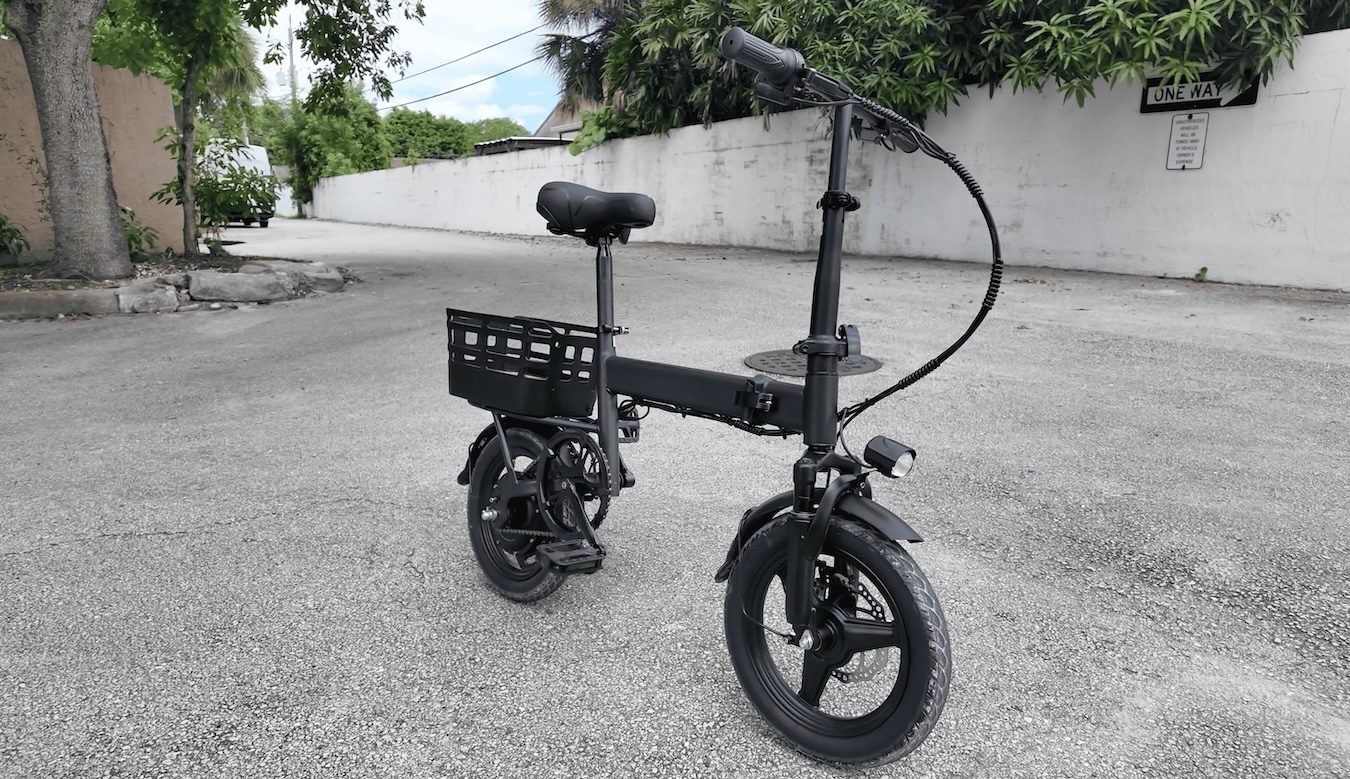
The bike in question is from a brand called “Bropath”, and it’s a tiny folding e-bike with 14-inch wheels, a 350/500W rear hub motor (disparity based on which marketing blurb you read), and a surprisingly large 576Wh battery.
On paper, that’s actually fairly impressive, especially for the rock-bottom price. The bike claims a top speed of 20 mph (32 km/h) and around 20 miles (32 km) of range. There’s a throttle, pedal assist, a suspension fork, mechanical disc brakes, a rear rack/basket that also houses the battery, and even a folding frame.
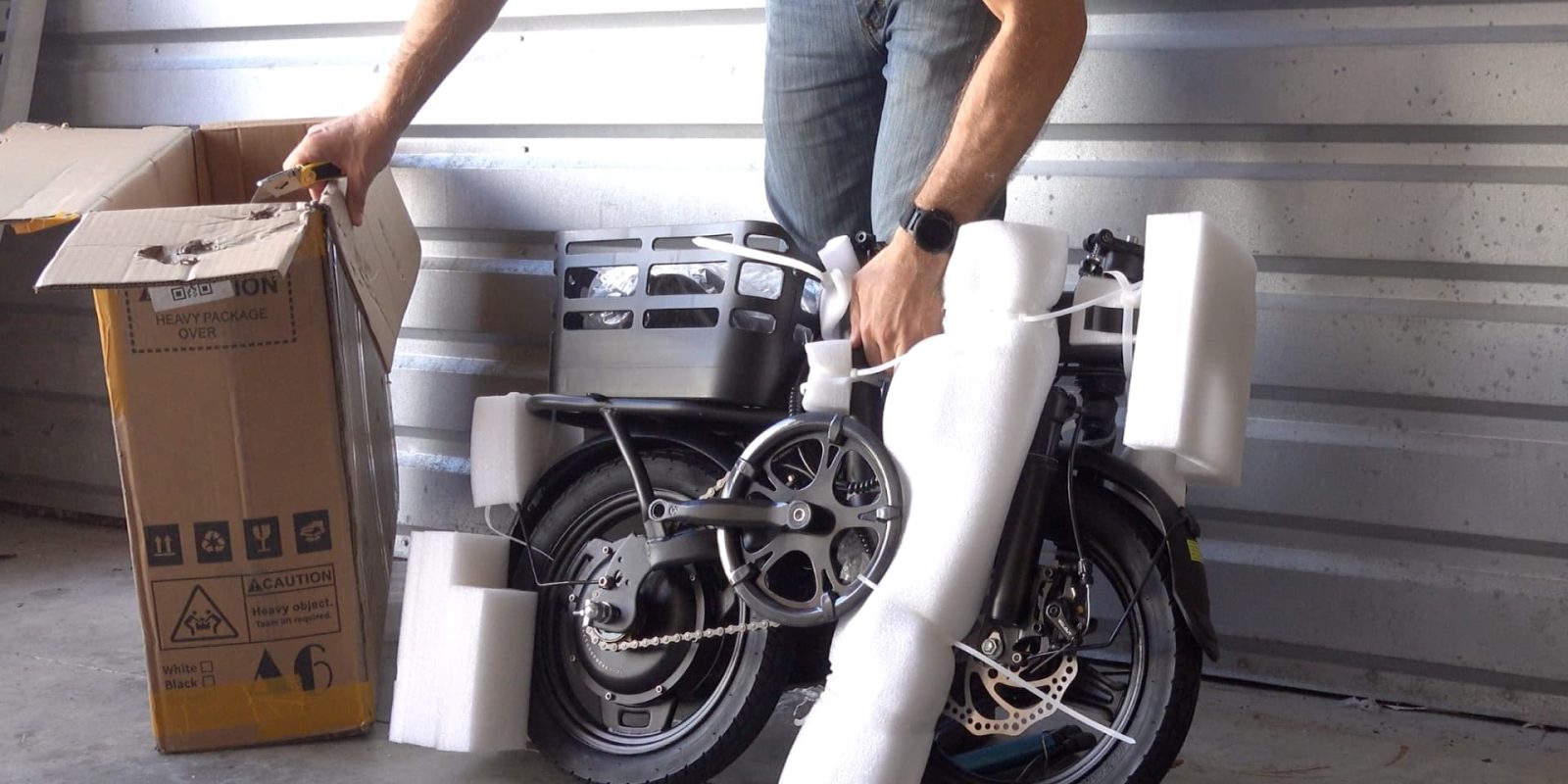
Things started getting interesting as soon as I pulled it out of the box, which you’ll definitely want to check out in my unboxing and testing video.
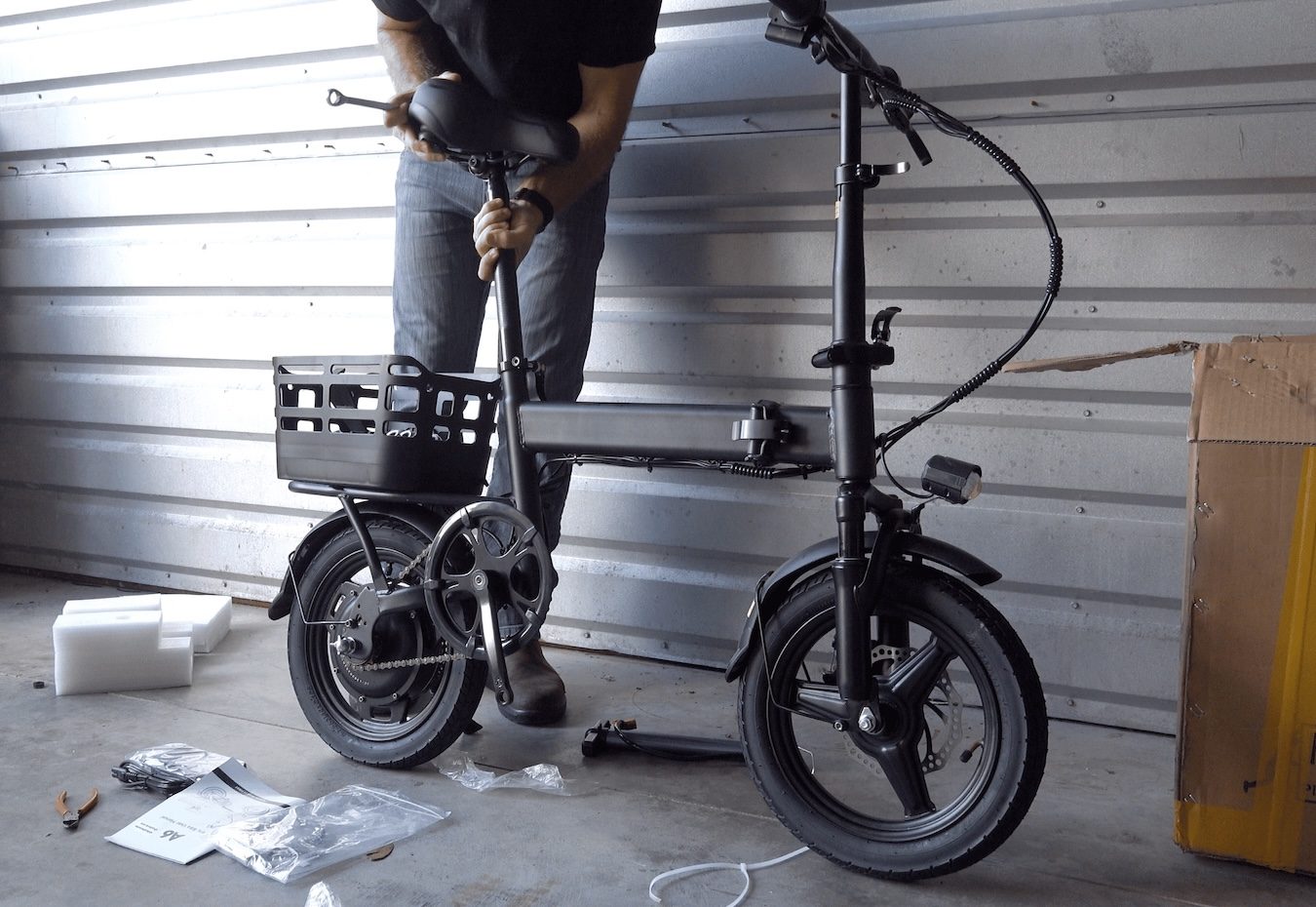
The bike was mostly assembled, but the battery basket wasn’t actually attached to the rack. There were holes where bolts clearly should have gone, but no bolts. I checked the box. I checked the packaging. I checked the instructions.
No bolts.
Eventually I resorted to temporarily ratchet-strapping the entire battery basket to the bike, which is not generally a step included in professional bicycle assembly.
Then, just as I thought I was ready for a test ride, I noticed another small problem: the bike didn’t have pedals.
Not “the pedals weren’t installed.” There simply weren’t any pedals in the box.
My guess is that an accessory box containing the pedals and battery mounting hardware was forgotten during packaging, or perhaps I received a re-packaged bike and they were left out. Fortunately, I live, eat, and breathe bikes, so my garage contains enough miscellaneous bicycle parts to make a small bike shop jealous. I eventually found two long bolts that fit the battery basket and a spare pair of pedals.
Before that, though, I did what any reasonable person would do: I rode it like a scooter with my feet resting on the bare cranks.
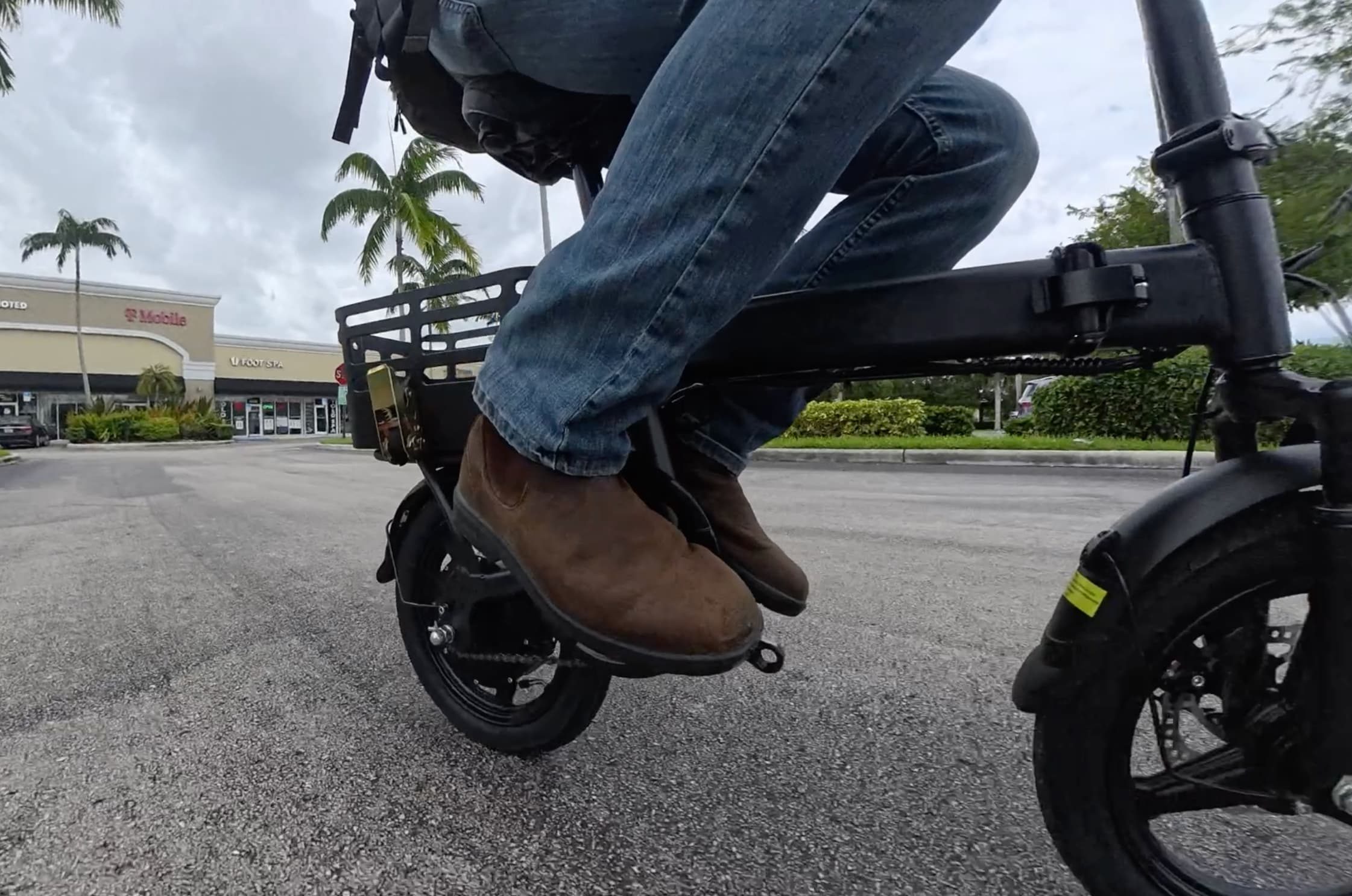
And that’s where things got surprising: the darn thing actually worked.
The little e-bike pulled away under throttle and moderately quickly got me cruising at nearly 20 mph (32 km/h). The brakes, which look like they were manufactured from approximately the same grade of metal as a soup can, actually stopped the bike reasonably well. The motor had decent power, the throttle worked, and once I installed pedals, the pedal assist worked too. On that note though: the single-speed design and small 14″ wheels meant that once the pedal assist kicked in, you’d quickly be going faster than your feet could keep up on the pedals. With that ghost pedaling in effect, the pedal assist quickly became useless, so don’t expect to ride this as a pedal-assist bike.
To test out the cargo capacity of the little battery basket, I took it on a shopping trip and managed to haul home several bags of groceries. I wouldn’t load it down with several cases of beer, but light duty grocery runs seems possible.
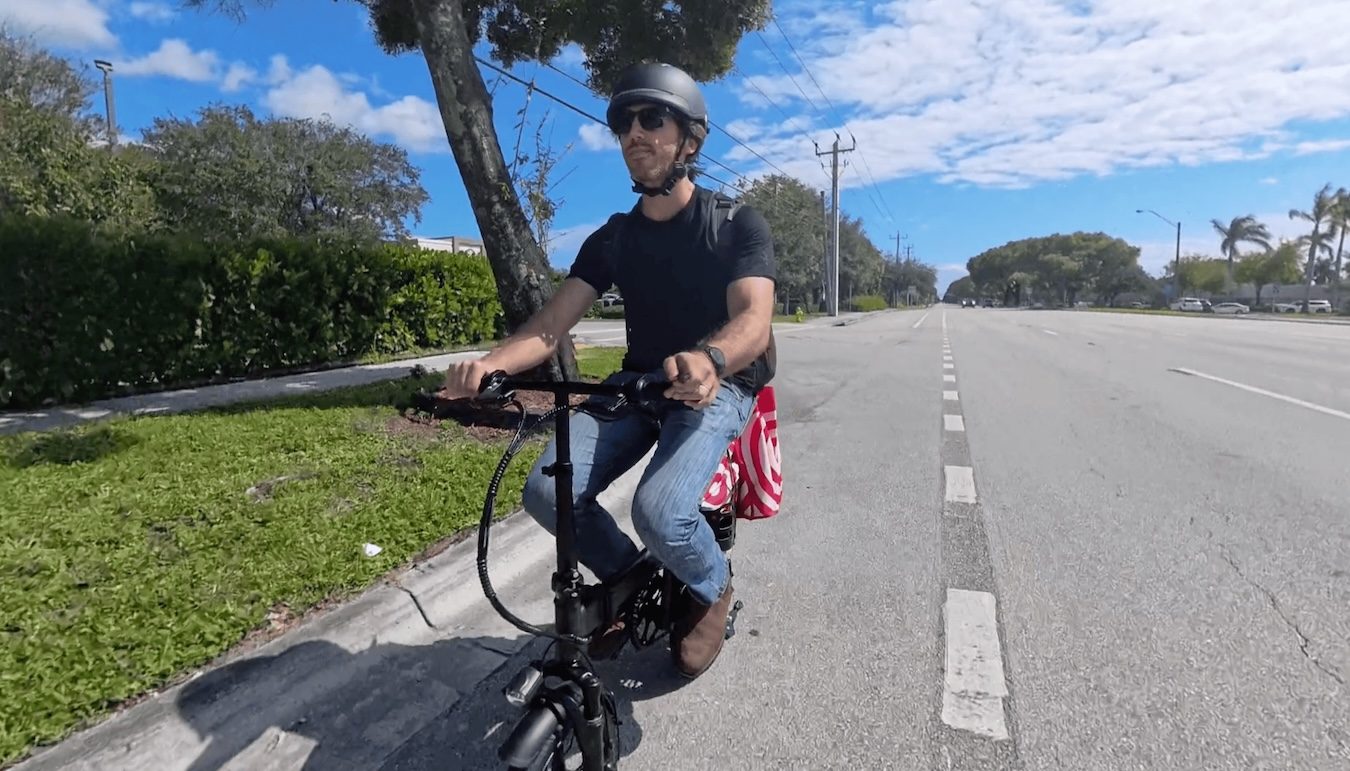
Is it a good e-bike? I wouldn’t go that far. But for $199, it was shockingly adequate. And I mean that as a compliment.
Yes, there are plenty of compromises. The suspension fork feels like a wet noodle, to the point that I’d probably rather have a rigid fork. The tiny 14-inch wheels combined with the cheap suspension make rough pavement and gravel paths fairly unpleasant. The seatpost is so short that even I can’t get a particularly good pedaling position, and I’m not exactly an NBA center.
And like I mentioned, the single-speed drivetrain also means that once the pedal assist gets you moving quickly, your legs can’t really keep up with the gearing. You wind up ghost pedaling while the motor does most of the work.
There are bigger questions, too.
I don’t know what cells are inside that 576Wh battery, and I certainly wouldn’t assume the battery has the sort of third-party safety certification I’d prefer to see on an e-bike. I don’t know how many years – or months – the suspension fork will last. I don’t know how the folding mechanism will hold up after hundreds of cycles, because it definitely doesn’t look robust.
And if something does break, you’re probably largely on your own. At this price, you’re not paying for a nationwide dealer network or a robust customer service department. This is basically a white-labeled budget e-bike, and part of the $199 experience is accepting that you will likely become your own mechanic.
That’s why I wouldn’t recommend this bike to most people.
If you can afford to spend more on a quality e-bike from an established company with better components, a certified battery, replacement parts, and real customer support, I think you should. When people ask me what the most affordable e-bike is that is still good quality, I generally send them to a $799 Lectric XP Lite-series e-bike. By the time you start upgrading parts on a bike like this $199 Walmart bike, adding likes better fork, brakes, drivetrain, or other components, you could have simply bought a better e-bike in the first place.
But there’s another side to this.
For someone who genuinely only has $200 to spend and needs transportation, this thing is transportation.
It got me to the store. It got me to lunch. It carried groceries. It cruised at nearly 20 mph. Once I supplied the missing parts myself, everything basically worked (and I assume most people will be luckier than me and get all the parts in the box).
And that’s what surprised me most.
Top comment by Mrvc
Good enough is better then nothing. It fills a gap. Most of China is riding around on sub $300 ebikes. Those folding bikes are getting very cheap I've seen them for around $50 fob. It's amazing they have brought the cost down for folding bikes so much 15 years ago they were several times more expensive then a regular bike. Now a folding ebike for less then the fancy brands and stores were trying to sell a folding bike. As long as a it last a few years and doesn't blow up it's a win for personal transportation.
I went into this experiment expecting a $199 e-bike to be almost comically terrible. Instead, I found something that was undeniably cheap, questionable in several places, and certainly not something I’d choose as my everyday e-bike – yet was also far more functional than it had any right to be at this price.
There’s a big difference between “good” and “good for $199.”
This bike definitely isn’t the former.
But somehow, against all odds, it might actually be the latter.


FTC: We use income earning auto affiliate links. More.

Comments