
Doug Field, the engineer who ran Tesla’s Model 3 program and later Ford’s entire EV operation, is now president of Mind Robotics, the industrial robotics startup Rivian CEO RJ Scaringe spun out of Rivian last year.
He lands at a company that has now raised more than $1 billion in under a year, and he’ll run product, engineering, and operations alongside Scaringe.
Field’s next job is robots
Field’s résumé reads like a tour of the most ambitious hardware programs in the industry. He was Tesla’s SVP of Engineering through the Model 3 launch, ran Apple’s car effort inside its Special Projects Group, and then spent nearly five years at Ford as chief EV, digital and design officer.
We reported in April that Ford was folding Field’s EV group into manufacturing as he left the company. Ford didn’t replace him with an outside hire, and his department ended up under COO Kumar Galhotra. Five months later, he has his next job.
In Mind’s announcement, Scaringe called Field “a remarkable leader with a track record of delivering new technologies in successful products,” adding that’s “exactly what Mind needs as we deploy robots into real factories and beyond.”
Field called the combination of AI and robotics “one of the most important—and difficult—engineering challenges of our time.”
A $1 billion war chest and a factory to practice in
Mind Robotics first surfaced as part of Rivian’s Q3 2025 earnings report, with a $115 million seed round led by Eclipse. The money has piled up fast since then:
- $115 million seed, led by Eclipse (late 2025)
- $500 million Series A, co-led by Accel and Andreessen Horowitz (March 2026)
- $400 million round led by Kleiner Perkins (May 2026), which Reuters reported valued Mind at $3.4 billion
That’s roughly $1 billion for a company that hasn’t shown a product publicly. Mind says it’s building foundation models plus “purpose-built” robot hardware for dexterous manufacturing work. It hasn’t said whether any of that hardware is humanoid.
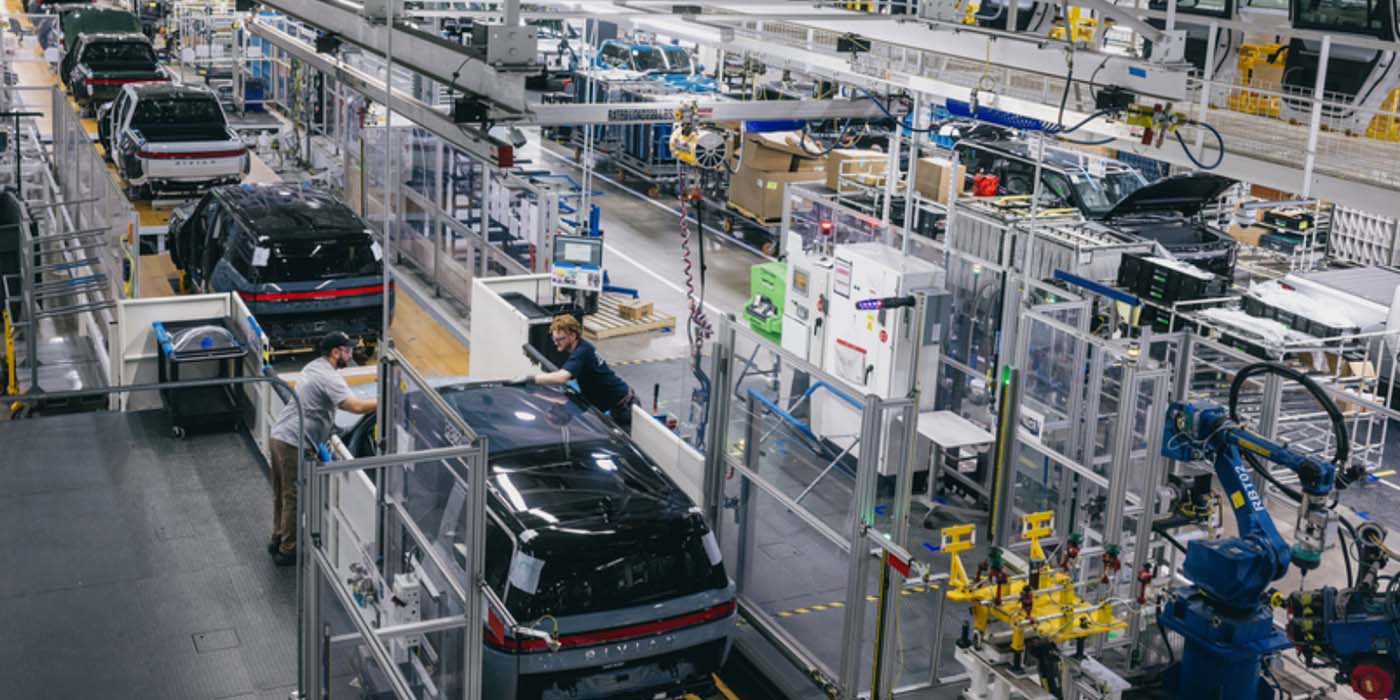
Mind’s real edge is its access. Rivian is a major shareholder and its launch customer, which gives the startup a live, high-volume auto plant to collect training data and deploy robots in. And that plant is busy: the R2 is ramping in Normal, Illinois, and Rivian delivered 19,248 vehicles in Q3 alone.
The Tesla comparison is unavoidable
Field’s hire puts Mind on a direct collision course with the program Tesla now uses to justify much of its valuation: Optimus.
Tesla’s track record there isn’t great. Elon Musk predicted about 10,000 Optimus robots built in 2025, with roughly 1,000 doing useful work in Tesla factories by year-end. In January, he admitted none were doing “useful work.” Tesla then ended Model S and Model X production at Fremont to convert those lines for Optimus, and it has pushed back the Optimus V3 reveal repeatedly. In July, Musk said production would be “extremely slow at first”.
Mind is taking a quieter route. No stage demos, no unit targets. Just robots trained on a real assembly line, with a customer that already owns a stake in the company.
Electrek’s Take
This is a smart hire.
Field is a hardware industrialization guy. That’s his whole career: taking a product that works in a lab and making it work at volume. The Model 3 got to mass production on his watch. It was messy, and he took a leave at the height of “production hell” in 2018 before leaving Tesla, but the car shipped and became the best-selling EV in the world for years.
His record since then is more mixed. The Apple car was canceled after he left. At Ford, Model e lost more than $5 billion in 2024 alone, and the company has since scaled back its EV ambitions. But the low-cost Universal EV Platform and the $30,000 midsize pickup coming out of Louisville in 2027 are his team’s work, and that’s the most promising thing Ford has going in EVs.
So why does Mind need him? Because foundation models are the easy part to fundraise on. Getting robot hardware reliable enough to run shifts in a car plant is where everyone, Tesla included, has struggled.
It also tells us how serious Scaringe is about this. He’s running Rivian through the most important launch in its history, plus Also and now Mind. Bringing in a president with Field’s profile is how you keep Mind from becoming a side project while focusing your needed attention on Rivian.
If you’re following EVs and the factories that build them, the cheapest way to power yours is to make your own electricity. With electricity rates up almost 10% last year and expected to keep climbing, going solar is one of the best ways to protect yourself against rising costs. And with lease and PPA options, you can do it with zero upfront cost and start saving immediately. If you want to find the best deal, check out EnergySage. It’s a free service with hundreds of pre-vetted installers competing for your business, so you save 20 to 30% compared to going it alone. No sales calls until you pick an installer. Get your free quotes here.


FTC: We use income earning auto affiliate links. More.




Comments