
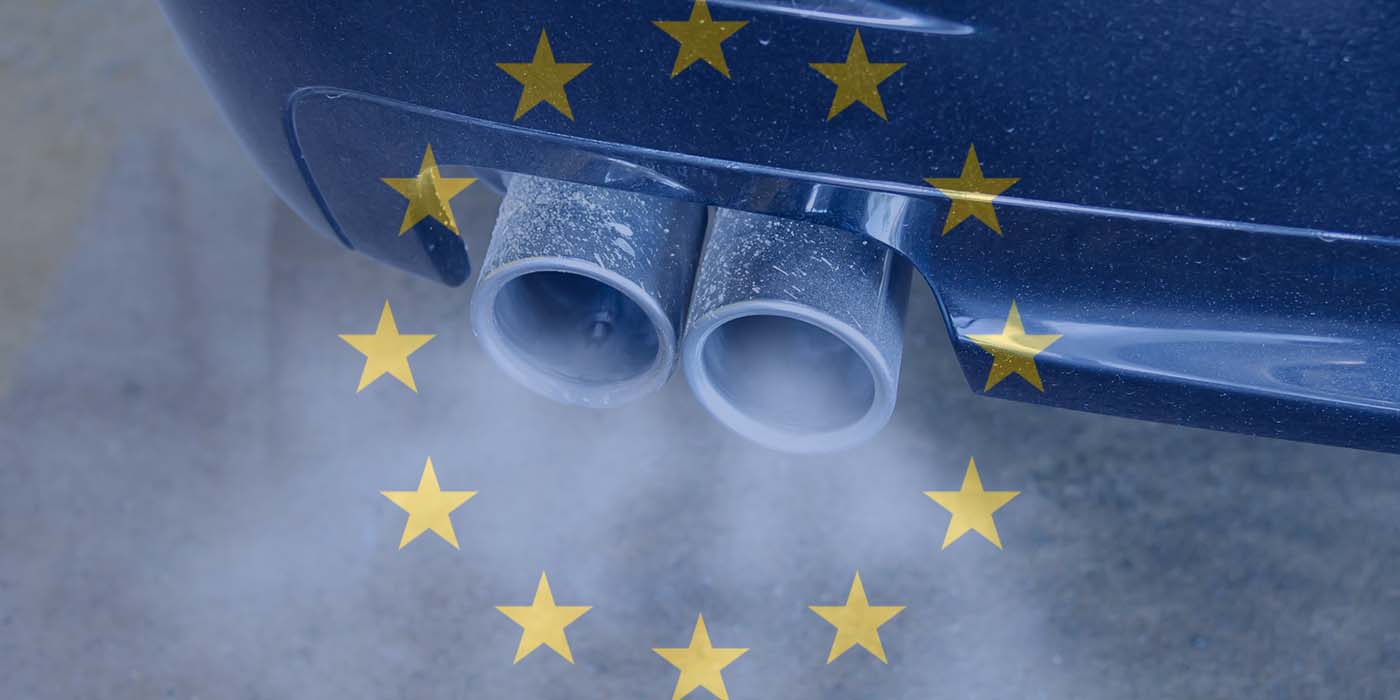
During multiple historic fuel crises and a climate crisis that left tens of thousands dead across Europe this summer, the bloc is reportedly close to striking a deal to allow its automakers to produce more of the vehicles that directly caused each of those problems.
In doing so, it would only ensure that its automakers are unprepared to compete against the country that actually is providing solutions to those problems: China.
Back in 2021, Europe announced a target to phase out new gas car sales by 2035, in order to meet an overall goal of 55% emissions reductions by 2030 and full climate neutrality by 2050.
These goals are important given the climate crisis the world is currently in the throes of, and how negatively it will continue to affect all living things on Earth until humans act to solve the problem we are causing. Those effects cannot be negotiated away by governments – they are a matter of physics.
Notably, that climate crisis led to record heat waves which killed 35,000 people this summer alone in what used to be a traditionally mild continent.
This crisis has been driven largely by overuse of resources by the Western world, though Europe has made some progress at reducing the rate at which it pumps deadly emissions into the atmosphere. And the faster we solve it, the easier it will be to solve.
Cars are a major contributor to this crisis – in rich countries, transportation is the largest-emitting sector, and the majority of transportation emissions come from personal gas-powered vehicles. So this means they are also among the most important things to regulate, given their outsized effect.
But in the last two years, Europe has made several foolish moves to loosen those EV targets. And it’s looking to make another.
Europe’s targets aren’t serious if they keep changing
The first was in March 2025, where EU gave automakers “breathing room” (ironically polluting the air more, and thus giving those of us who actually breathe, humans and all other animals, less breathing room) by reducing the amount of emissions reductions they would have to do in the short term.
Europe said at the time that “the [long term] targets stay the same,” but that didn’t last long.
Just nine months later, the EU rolled back those targets, allowing automakers to continue to make polluting vehicles after 2035, and only requiring a 90% emissions reduction rather than 100%. This 90% target was further watered down by an excess of optional credits, including allowing so-called “e-fuels,” which are not a green solution.
At the time, I took a dig that Europe’s regulations mean nothing if they shift whenever automakers so much as clear their throat, suggesting:
Given Europe has shown that it can change its mind every 9 months on regulations that were supposed to last for 14 years, maybe 9 months from now it can go back to the initial regulations that should have stuck around anyway.
And here we are, ten months later, almost as if on cue, and… the automakers have reportedly whined themselves into another loosening of regulations. Just the sort of regulatory whiplash that makes every target meaningless, because companies know they can just cry a little and get it changed as always.
France and Germany want another 10% of pollution
Clean Energy Wire reported this week that France and Germany have struck a deal that would bring emissions reductions down to 80%, from the current 90%, and would weaken interim targets once again as in the “breathing room” announcement.
Previously, France had opposed Germany’s proposal to loosen car rules (at the behest of its large auto industry) and Germany had opposed France’s “Buy European” demands, but the countries have now agreed to back each other’s proposals, and will present them to the EU on October 15. Six other countries opposed watering down car rules, but with France flipping sides, the votes are likely there to pollute European air more.
The move could have repercussions outside of Europe’s borders, too. Currently, Europe is trying to strong-arm the UK into putting a tariff on Chinese EVs, as a requirement for UK to join the “Buy European” agreement and allow its products the same preferred treatment in the EU market.
Heretofore the UK has not had tariffs on Chinese EVs, which has led to EVs being cheaper than gas cars in the country and BEVs being the most popular powertrain there. If UK is brought into the fold, EU could encourage it to slow down its own EV targets, something the UK government is already considering.
“Market conditions” suggest targets should be strengthened, not rolled back
Previous iterations of these rollbacks have used the excuse that they’re simply trying to match “market conditions,” suggesting that EV sales were not rising as quickly as expected.
But not only were EV sales on target then, Europe is leading the world in EV sales growth now.
So what’s the excuse now? If you change your mind every 9 months, and market conditions have proven your last rollback to be the wrong move, how is the current answer another rollback, rather than a more reasonable answer of returning to the original rules in the first place?
Besides, “market conditions” are not the reason for these targets. They were set 14 years in advance not because anyone knew what market conditions would look like in 2035, but because it’s government’s job to get everyone on the same page about the big, long-term questions society faces.
Cutting oil use, solving climate change, and maintaining high-tech domestic manufacturing are the priorities for government, not reacting to your quarterly reports.
It’s absurd that we’re talking about this during multiple oil wars
And if we do consider current “market conditions,” EVs are a perfect match for the market conditions of multiple (self-inflicted) crises facing global oil markets.
One of those crises is a continued war of aggression in Europe, perpetrated by Russia, and financed by oil, the country’s major export (well, until Ukraine started blowing up oil refineries). Given oil is a global market, every oil-burning vehicle sold in Europe buoys the price of oil and funds the war within its borders.
Due to all those oil crises, the price of oil is quite high right now. Seems like a good time to learn the lesson that it’s a bad idea to rely on this resource that everyone has known for decades that we need to stop relying on.
Which, incidentally, is both a short-term and a long-term consideration at the moment, so it’s ripe for everyone to coalesce around a solution that involves less oil, not more, as Germany and France are planning to propose.
China is taking advantage of all of this
And what actually is rising in popularity in European markets right now? It’s not European EVs, as automakers bungle their way into canceling models and cutting EV investments. It’s Chinese EVs, which are gaining share rapidly.
(Okay, that’s not entirely true, European EVs are also popular. So why are companies cutting models and asking for lower targets?)
Top comment by Axel Foerderreuther
Chinese electric vehicles aren't just cheaper because of the strategic long term regulation in place in China. That argument is too short and simplistic. What should be mentioned as well: Lower prices of raw materials, lower interest rates for investments, electricity costs that are a fraction of western Europe, much less regulation, no legacy manufacturing infrastructure, lower wages and cost of personnel (Unions? what unions?), longer working hours per person, much faster development cycles etc. All those together lead to cost advantages that are impossible to compensate on the product side. Without import tariffs Chinese OEMs could sell for 50-60% of equivalent European-made models and still earn money. So we will need import tariffs otherwise we can kiss our industry goodbye. But giving our OEMs slack in electrification isn't going to help anybody - not the consumers and not the industry in the long run. If we wanted to help our industry to compete we have to eliminate the disadvantages.
Chinese EVs are gaining share because the Chinese auto industry isn’t going though all this nonsense of whining about having to make electric cars, it’s just making them. As a result, it’s making them cheaper and better than Europeans.
This has led sales of Chinese EVs to continue to skyrocket in Europe and around the globe – China is bringing in tons of money on these exports, and the rest of the world’s auto industries seem content to let them have it.
And if Europe shows that it will once again loosen targets at the tiniest hint of whining from its automakers, its automakers will continue down the same path they’re lumbering down, refusing to recognize the reality of the world around them, refusing to offer the products needed to reduce today’s problems, and will end up falling even further behind the ascendant Chinese rivals that are currently eating their lunch. Tariffs won’t help, only waking up will. So knock it off with these stupid rollbacks.
Charge your electric vehicle at home using rooftop solar panels. Find a reliable and competitively priced solar installer near you on EnergySage, for free. They have pre-vetted installers competing for your business, ensuring high-quality solutions and 20-30% savings. It’s free, with no sales calls until you choose an installer. Compare personalized solar quotes online and receive guidance from unbiased Energy Advisers. Get started here. – ad*


FTC: We use income earning auto affiliate links. More.



Comments