
VW could stop building cars at four German plants as it prepares to cut another 50,000 jobs worldwide – bringing its total planned workforce reduction to around 100,000.
The automaker’s supervisory board unanimously approved its sweeping Future Plan 2030 on Thursday. It calls for fewer workers, models, options, managers, and investments as Volkswagen tries to cut costs and catch up with faster-moving Chinese rivals.
The four German plants facing an uncertain future are Emden, Zwickau, Hanover, and Audi’s Neckarsulm factory. Volkswagen said it cannot currently secure “competitive future production” for the sites once their existing vehicle allocations end at staggered points between 2031 and 2034.
In other words, VW doesn’t have new vehicles lined up to replace the ones those factories currently build. This isn’t an official closure announcement – yet. Volkswagen says it will look at other uses for the plants, but vehicle production at all four could end.
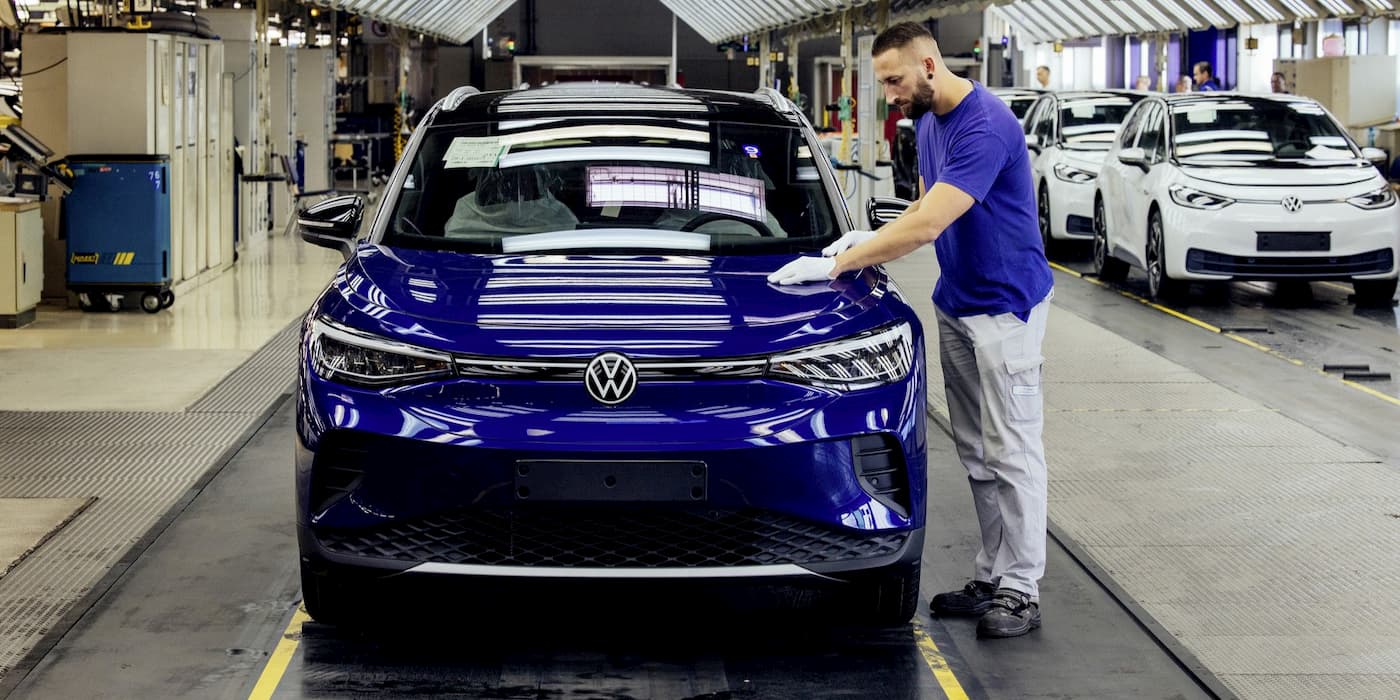
That would put a huge chunk of Volkswagen’s EV manufacturing footprint in the firing line. Zwickau became the company’s first large factory to switch entirely from combustion-engine vehicles to EVs, while Emden builds the ID.4 and ID.7. Hanover produces the ID. Buzz and ID. Buzz Cargo, and Neckarsulm builds the Audi e-tron GT alongside combustion and plug-in hybrid models.
Volkswagen acknowledged that its European factories are capable of building more than 500,000 vehicles a year beyond what customers are buying. It plans to devise a new production strategy for its European plants by the end of June 2027.
Another 50,000 jobs could go
VW’s restructuring calls for around 50,000 more job cuts across the Group, including management roles. That’s on top of around the 50,000 cuts already planned at Volkswagen, Audi, Porsche, and software arm Cariad, potentially taking the total to roughly 100,000.
Volkswagen employs around 650,000 people worldwide, so the combined cuts would amount to about 15% of its workforce.
The company hasn’t said where the latest cuts will fall or when they will be completed. It blamed tougher global competition (ahem, China), changing demand, and new automotive technology for the need to shrink its workforce.
Daniela Cavallo, Volkswagen’s chief employee representative, had previously pushed back hard against factory closures. She ultimately backed the plan but made clear that workers shouldn’t be left to carry the cost of Volkswagen’s turnaround.
“The Future Plan is a necessity to lead our Group successfully into the next decade – without placing the burden of that transformation solely on employees,” Cavallo said. “In doing so, Volkswagen once again affirms that job security and economic viability carry equal weight as shared corporate goals.”
Half the models, far fewer options
Volkswagen also plans to cut its global model lineup by around 50% by 2035 and reduce the number of equipment choices and other variants by roughly 75%. In other words, VW wants to sell fewer kinds of vehicles and give buyers fewer ways to configure them.
Top comment by Ivica Anic
the biggest problem at VW is incompetent senior management that is product of decades old toxic culture... if company can not do stable and profitable business in Germany and EU - there is no need for it and it should close. They are lucky to still exist after the diesel gate and their management made tons of strategic mistakes last 15 years, I would not have fait in anything they propose or plan to do, they are the problem in that company, not workers or products as such.
The overhaul will also simplify Volkswagen’s vehicle platforms, software, electronic architectures, and driver-assistance systems. Its portfolio of businesses and investments is set to shrink by around one-third, with non-core operations sold or reorganized.
Volkswagen expects to spend €135 billion ($157 billion) on capital investment and research and development from 2027 through 2031. It’s targeting annual sales of 9 million vehicles and a 9% operating margin by 2030, equivalent to an operating profit of around €31 billion ($36 billion).

If you’ve ever considered going solar, make it easy by finding a trusted, reliable solar installer near you that offers competitive pricing by checking out EnergySage. It has hundreds of pre-vetted solar installers competing for your business, ensuring you get high-quality solutions and save 20-30% compared to going it alone. Plus, it’s free to use, and you won’t get sales calls until you select an installer and share your phone number with them.
Your personalized solar quotes are easy to compare online, and you’ll get access to unbiased Energy Advisors to help you every step of the way. Get started here.


FTC: We use income earning auto affiliate links. More.




Comments