
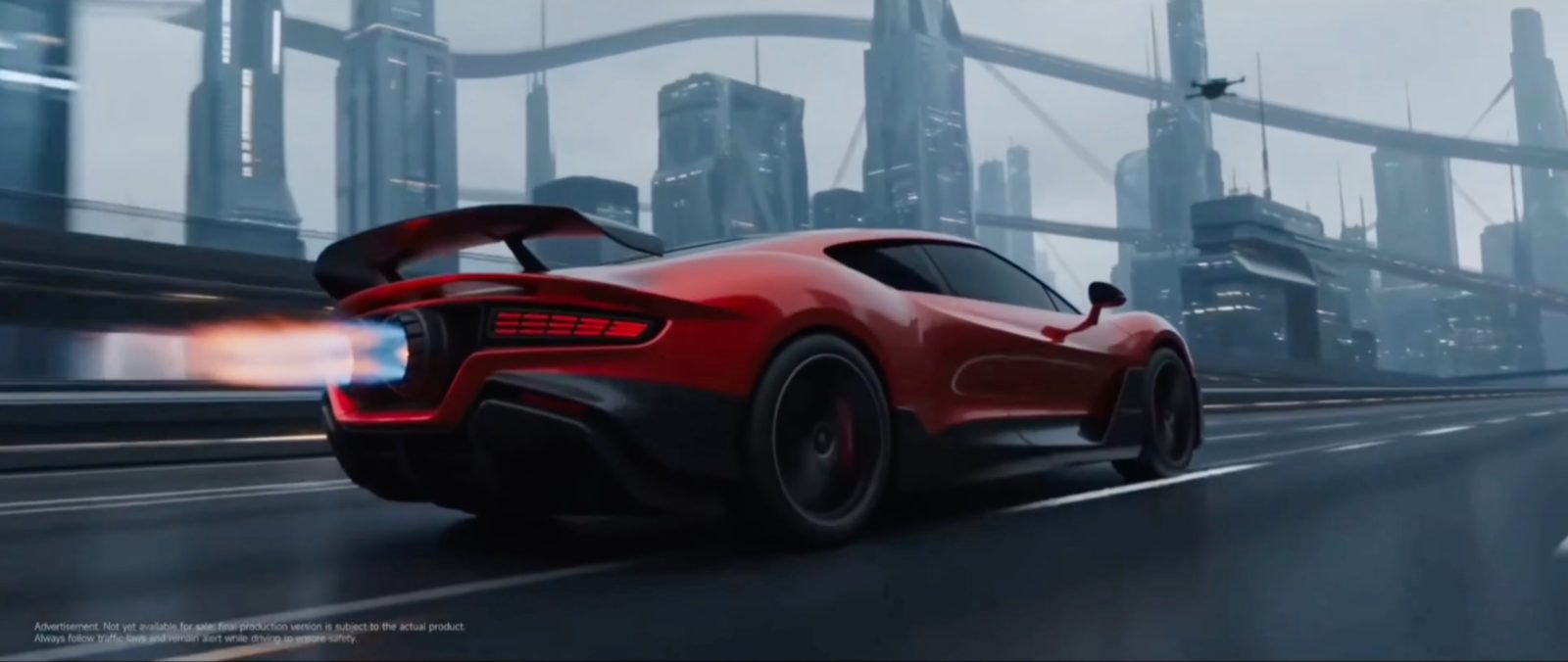
Dreame is no longer planning to build the electric hypercar it unveiled in April, which it had said would have solid rocket boosters to achieve 0-60mph in 0.9 seconds. It’s also shuttering the rest of its car-related ambitions.
As the trend continues of basically every company on the planet saying they’re thinking about building an electric car, Dreame, a Chinese company known for its robot vacuums and other home appliances, announced starting last year that it wanted to build luxury electric hypercars.
Dreame went on to unveil its first hypercar at CES this year, and even said that it plans to make an SUV to compete with the Rolls Royce Cullinan.
But then its announcements got even more wild. In April, it hosted an event in San Francisco to describe the future of its brand and products, and one of the announcements included a rocket-powered version of its hypercar.
The idea was to use presumably single-use solid rocket boosters to achieve otherwise unachievable performance. Many cars are currently “traction-limited,” which means their tires literally could not accelerate them faster even if you added more power.
But alternative methods of thrust, like rockets, could get around that traction limit. This is the idea behind the next-gen Tesla Roadster, or at least it was, until Tesla CEO Elon Musk stupidly kept saying the car would be able to “fly.”
So Dreame’s idea was theoretically sound, if completely impractical. Solid rocket boosters would have to be recharged whenever they’re used, so, not really that useful.
The underlying vehicle was still going to be interesting, as a “traditional” 1,876hp electric hypercar. But even that is gone now, as Dreame is getting out of the car business.
Dreame cancels all its car programs
CarNewsChina reports that Dreame is dropping all of its car programs, just about a year after starting them. The company reportedly had nearly 1,000 people working in the department at its peak, but the last few months have seen continuous layoffs.
A report in China Economy claims that internal sources told it that the car was more of a marketing and fundraising effort rather than a genuine manufacturing effort. (Hmm, never seen that before…)
Per that report, it seems the company never really considered it to be a serious effort, as it structured the department in a manner that didn’t use money effectively for R&D – and perhaps ran afoul of regulators.
Electric cars are much easier to build and design than combustion engine vehicles, due to the smaller number of parts required. So companies have been interested in getting into the industry, especially since it’s open to startups recently – and some of those startups, like Tesla and Rivian, have been successful at edging their way into a very difficult market full of very experienced global incumbent firms.
So if startups can do well, why not take a company that already has resources, a global reach, and some electronics expertise, and see if they can pivot into electric cars? That’s what Dreame thought, following examples like Xiaomi, the mobile phone company that has produced a few very capable EVs itself.
Top comment by JohnW
The stunt, and coincided with an advertising campaign. It worked for me, and I'd now put them in the same category as Dyson (but maybe more reliable) .
But others haven’t gone so well. The cancellation comes after some other high-profile cancellations of electric car projects by companies that are not traditionally associated with electric cars. Apple’s famous “Project Titan” supposedly span ten years, and produced no actual vehicle (I was always skeptical it would end up in anything). And Sony/Honda’s joint venture was cancelled this year.
And then, of course, there was Dyson, another vacuum company that spent a lot of money developing an electric car that went nowhere.
It seems like Dreame’s dream lands in the latter category. Given the unrealistic nature of its claims, and the relatively thin level of detail we received from them during their previous unveils, we can’t say we’re all that surprised. But hey, at least they cancelled it in a matter of months, instead of pretending a product is real for more than a decade.
Charge your electric vehicle at home using rooftop solar panels. Find a reliable and competitively priced solar installer near you on EnergySage, for free. They have pre-vetted installers competing for your business, ensuring high-quality solutions and 20-30% savings. It’s free, with no sales calls until you choose an installer. Compare personalized solar quotes online and receive guidance from unbiased Energy Advisers. Get started here. – ad*


FTC: We use income earning auto affiliate links. More.




Comments