
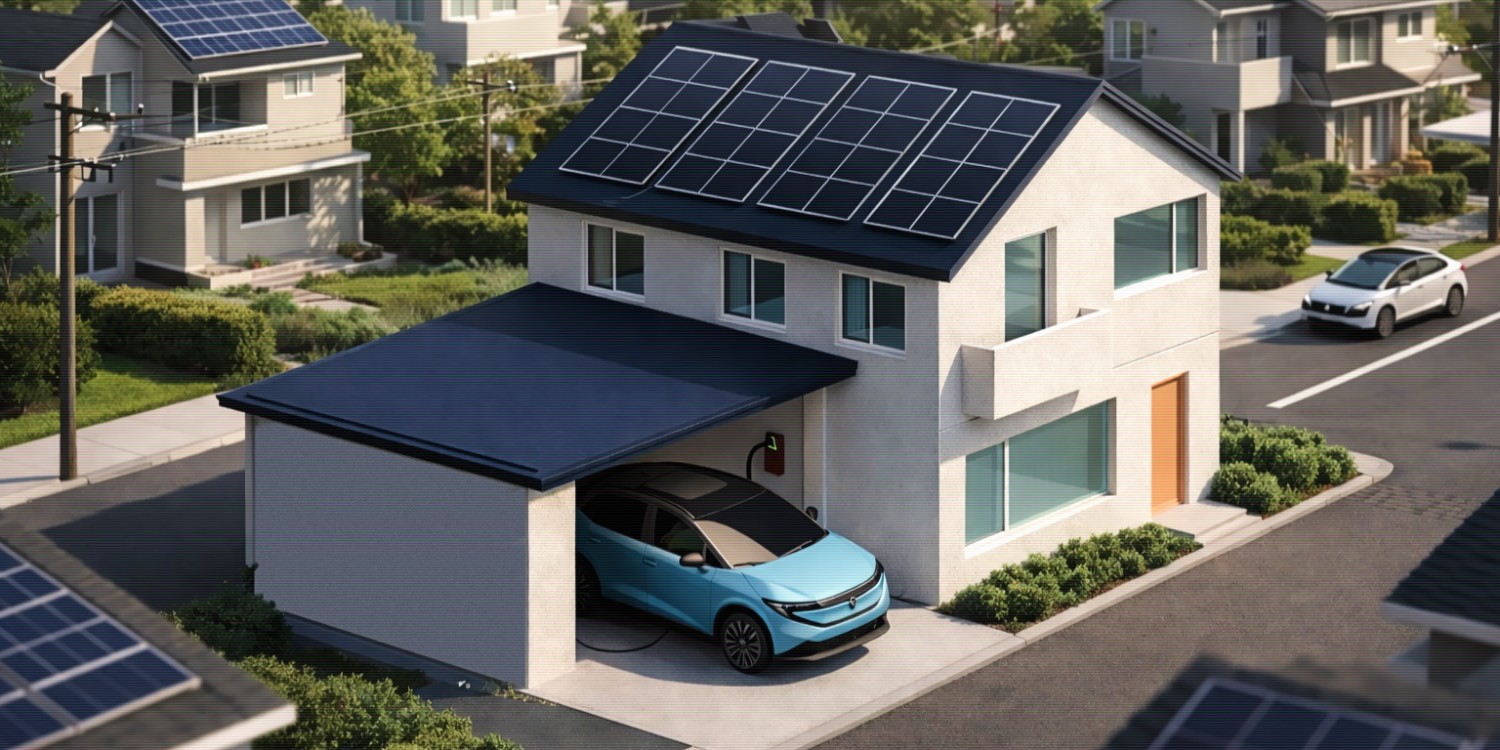
California could turn parked EVs into one of its largest sources of energy storage – but utilities need to make it a lot easier for EV owners to participate.
A new report from GridLab, Kevala, and Energy and Environmental Economics estimates that enrolling just 10% of California’s projected EVs in vehicle-to-grid (V2G) programs by 2036 could supply around 9 gigawatts (GW) of power for 12 hours. That’s 108 gigawatt-hours (GWh) of storage, or more than one-third of the state’s long-duration energy storage target for that year, according to the report.
V2G technology allows a compatible EV to send power from its battery back to the grid when demand is high. Drivers can then recharge when electricity is cheaper and more plentiful, such as during periods of strong midday solar generation.
The report, “Unlocking California’s Flexible Load: A Durable Blueprint for Affordability and Reliability,” argues that EVs, home batteries, smart thermostats, water heaters, and commercial buildings could all help California manage electricity demand without relying entirely on new power plants, grid-scale batteries, and expensive grid upgrades.
The equipment is increasingly available. The bigger challenge is that California’s demand flexibility programs have different rules, payment structures, and enrollment requirements across utilities.
“The next generation of grid infrastructure is already sitting in our driveways, homes, and businesses,” said GridLab executive director Ric O’Connell. “The question isn’t whether California has the resources; it’s whether our programs are designed to unlock their full value.”
The report calls for standardized program designs across California, common technical requirements, and payments based on verified grid performance. In other words, customers would be paid for the measurable value their EVs or batteries provide – not simply for signing up.
This is an excellent point, as quantifying the financial impact of one’s participation will encourage others to join and keep customers engaged. I was paid a flat rate by National Grid here in Massachusetts for joining its smart thermostat program; I’d much rather be compensated for measurable value than just receive an email telling me about my “virtual” savings.
It also recommends paying participants less than the utility’s avoided cost. That would leave some of the savings for customers who don’t own an EV, battery, or other flexible device, rather than shifting more grid costs onto them.
That affordability guardrail is significant in California, where debates over rooftop solar compensation have focused heavily on whether incentives paid to participating customers raise everyone else’s bills. In Vermont, for example, Green Mountain Power’s virtual power plant program lowers prices for households with battery storage and for all customers.
The new roadmap builds on a 2024 study by GridLab and The Brattle Group. That analysis estimated that virtual power plants using technologies already on the market could meet more than 15% of California’s peak electricity demand and save utilities and customers $550 million annually.
Those figures are modeled potential, not savings California is already realizing. EVs must be plugged in and available when the grid needs them, and full V2G participation requires compatible vehicles, chargers, utility programs, and interconnection rules.
But even one-way smart charging can help. Instead of millions of EVs charging during the evening peak, utilities can encourage or automatically schedule charging during lower-cost hours. The California Energy Commission says automated load flexibility can reduce the need for more expensive grid infrastructure while helping match electricity use with renewable generation.
Top comment by PurpleTurtle
V2G is (often) particularly useful because it's distributed. It puts the electricity supply right next to where the demand is, so there's not as much call on the big long-haul distribution networks that bring power from the big plants off in the distance. (Yep, you still need that distribution during the recharge times, but in theory overall demand will be way lower then.)
California’s challenge isn’t a lack of batteries; it’s creating a statewide system that can actually use them.
Read more: Massachusetts wants to pay EV drivers for their battery power

If you’ve ever considered going solar, make it easy by finding a trusted, reliable solar installer near you that offers competitive pricing by checking out EnergySage. It has hundreds of pre-vetted solar installers competing for your business, ensuring you get high-quality solutions and save 20-30% compared to going it alone. Plus, it’s free to use, and you won’t get sales calls until you select an installer and share your phone number with them.
Your personalized solar quotes are easy to compare online, and you’ll get access to unbiased Energy Advisors to help you every step of the way. Get started here.


FTC: We use income earning auto affiliate links. More.



Comments