
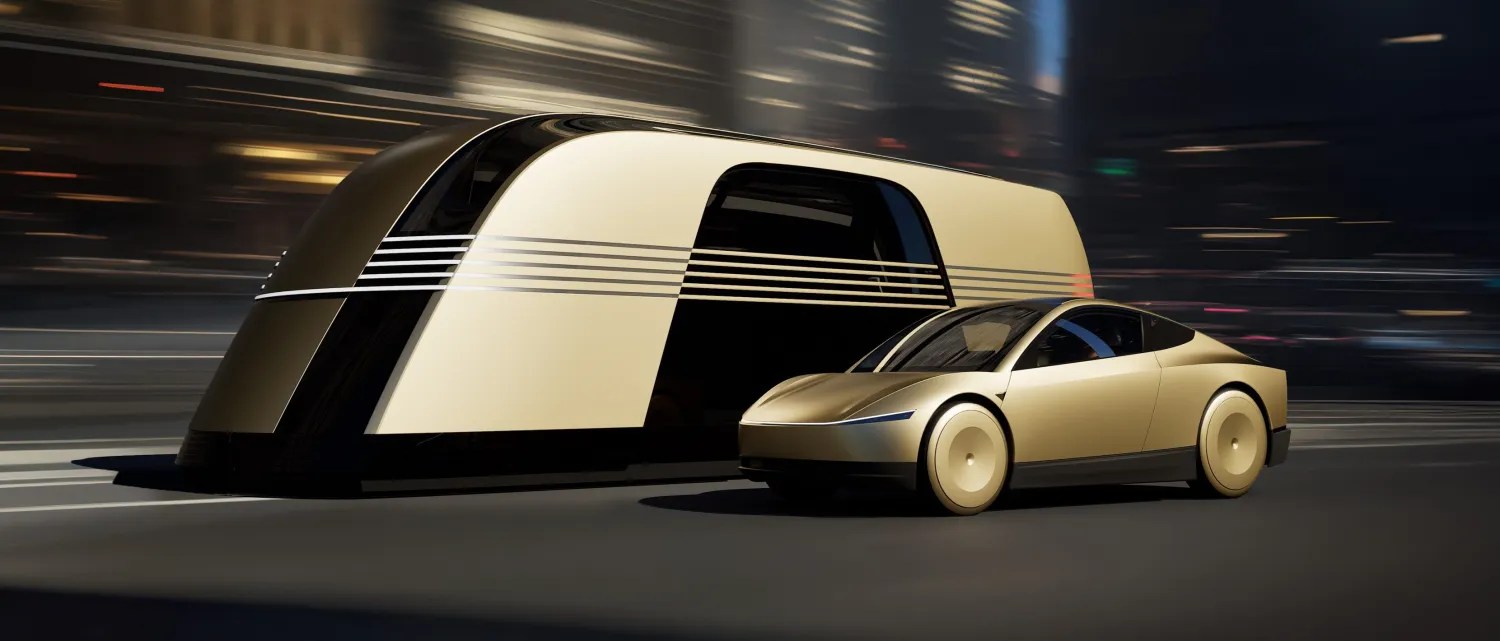
Tesla is building a purpose-built, wheelchair-accessible autonomous vehicle, a company policy advisor told lawmakers in Washington, DC, on Monday.
But Tesla gave no timeline, no vehicle, and no details, and it’s not clear the “active product” is anything more than the Robovan it unveiled nearly two years ago.
What Tesla told the DC City Council
The claim came during a Monday hearing before the DC City Council on a bill that could let robotaxi services operate in the District.
“We are in development for a purpose-built, wheelchair-accessible autonomous vehicle,” Tesla senior policy advisor India Herdman told council members, according to WIRED, which first reported the comments.
“We know that paratransit can be very difficult, and people who are confined to wheelchairs permanently should still be able to move around freely, so that is an active product being built by Tesla in Texas,” she said.
Tesla didn’t respond to WIRED’s request for comment, and Herdman gave no indication of when such a vehicle might arrive. Tesla routinely takes years to bring an announced product to market, when it delivers it at all.
None of Tesla’s current vehicles can do this
Tesla operates a small driverless fleet in Austin, Dallas, and Houston, and, as of this month, Miami. Those rides use the Model Y, a compact SUV that is not wheelchair accessible.
The company has also started building its purpose-built Cybercab, a two-seat vehicle with no steering wheel or pedals. Tesla highlighted the Cybercab’s accessibility features in an X post this month, including braille lettering on controls and wheelchair-height seating for easier transfers, but a two-seater a passenger has to climb into is not a wheelchair-accessible vehicle in any meaningful sense.
Tesla has hinted at accessible rides before. It added an accessibility tab to its Robotaxi app last fall that reads “We are working on accessible rides,” though it directs users to third-party wheelchair-accessible providers rather than to Tesla’s own service. When an X user posted about it, CEO Elon Musk replied, “Absolutely.”
The obvious candidate is the Robovan
Here’s the catch: Tesla already has a vehicle in its lineup that would make far more sense as a wheelchair-accessible platform than the two-seat Cybercab.
At its “We, Robot” event in October 2024, Tesla unveiled the Robovan, a bus-sized, steering-wheel-free autonomous vehicle Musk said could carry up to 20 people or haul cargo. A large, flat-floored van is exactly the kind of vehicle you would build a wheelchair ramp and securement system into, and it’s the platform every existing wheelchair-accessible taxi is based on.
Tesla never gave the Robovan a price or a launch date, and the trademarks suggest it may end up being called the “Robobus.” Herdman’s “active product being built in Texas” could describe a genuinely new vehicle, but it could just as easily be the Robovan wearing a new label for a friendly audience of lawmakers. Tesla didn’t specify, and its track record on unmentioned timelines is not encouraging.
Electrek’s Take
Top comment by betterbruce
"We are in development for a purpose-built, wheelchair-accessible autonomous vehicle"
Ok, once you have it built and ready to go, let's talk. What date should we schedule the next meeting for?
Context matters here. This wasn’t a product announcement, an engineering milestone, or even a Musk tweet. It was a policy advisor making a case to DC lawmakers who are actively worried that robotaxis will leave wheelchair users behind. “We are building it in Texas” is exactly what you say in that room, and it costs Tesla nothing to say it.
That’s why I am leaning toward the Robovan speculation. If Tesla were genuinely developing a dedicated wheelchair-accessible AV, the Robovan is the natural chassis, and yet nobody at Tesla has connected those dots publicly or given the Robovan so much as a timeline since 2024. Absent a specific vehicle, a spec, or a date, “an active product being built” is a claim, not a product.
It’s another product that is dependent on Tesla solving unsupervised autonomy at scale.
If you’re an EV owner, powering your car with home solar is one of the smartest ways to lock in low fuel costs for the long haul. With electricity rates climbing nearly 10% last year, home solar protects you against future rate increases. And with lease and PPA options, you can go solar with zero upfront cost and start saving immediately. If you want to find the best deal, check out EnergySage. It’s a free service with hundreds of pre-vetted installers competing for your business, so you save 20 to 30% compared to going it alone. No sales calls until you pick an installer. Get your free quotes here.


FTC: We use income earning auto affiliate links. More.




Comments