
California Governor Gavin Newsom signed SB 168 today, creating a new “MyFirstEV” program that gives first-time electric vehicle buyers a $3,500 instant rebate at the dealership starting later this summer.
The point-of-sale discount is backed by $135.5 million in state funding, matched dollar-for-dollar by participating automakers — and a California-headquarters rule makes Rivian and Lucid the biggest winners, while Tesla qualifies only on its cheapest models.
How the $3,500 instant rebate works
Unlike the old application-based Clean Vehicle Rebate Project, MyFirstEV is an instant point-of-sale discount. Eligible buyers walk into a participating dealership and drive out with the money already off the price — no paperwork, no waiting for a check.
Here are the core rules of the program:
- $3,500 off new EVs with an MSRP up to $50,000
- $1,750 off used EVs sold for up to $25,000
- First-time ZEV buyers only — confirmed by buyer attestation
- No income cap — eligibility is gated by vehicle price, not household income
- Curb weight limit of 8,500 pounds, restricting it to light-duty passenger vehicles
- California residents only
The $135.5 million in state money is matched by the automakers themselves, who must opt in and cover half of each rebate. That brings the combined pool to roughly $270 million in point-of-sale savings, according to the governor’s office. The California Air Resources Board (CARB) is still finalizing agreements with automakers and dealerships, and says full details will come next month, with the program launching in the coming weeks.
The no-income-cap structure is a notable shift. California’s previous rebate programs were increasingly means-tested, reserving the biggest incentives for lower-income buyers. MyFirstEV instead uses price caps as the gatekeeper — a simpler design, but one that hands an unusual advantage to two specific automakers.
The catch: a California-headquarters loophole
Here’s where it gets interesting. The $50,000 price cap is waived entirely for EVs built by California-headquartered, EV-only automakers — companies whose corporate management and staff are based in the state as of January 1, 2026.
That carve-out was written to protect California-based manufacturers and their workers. In practice, it benefits two companies: Rivian, its engineering headquarters in Irvine apparently counts, and Lucid, based in the San Francisco Bay Area. Their cheapest models, around $58,000 for Rivian and $71,000 for Lucid, sit well above the $50,000 cap that applies to everyone else, yet they still qualify for the full $3,500.
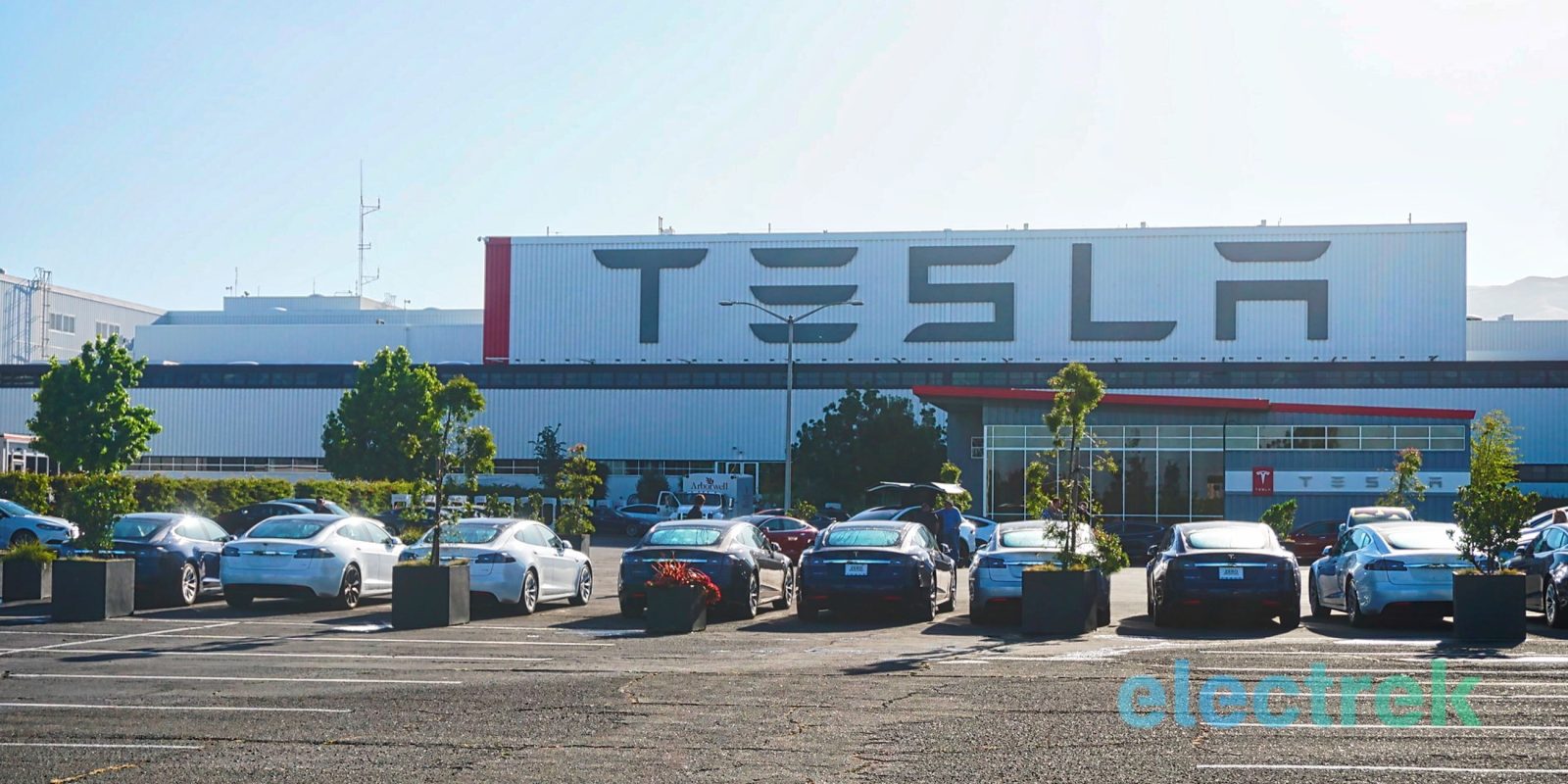
Tesla does not. The company moved its headquarters from California to Austin, Texas, in 2021, so it no longer counts as a California-based automaker under the new rules. That means the price-cap exemption doesn’t apply to Tesla, and only its sub-$50,000 configurations of the Model 3 and Model Y qualify. The Cybertruck is out.
The framing is hard to miss given the ongoing feud between Newsom and Tesla CEO Elon Musk. The exemption rewards where a company plants its headquarters flag, not where it builds its cars — and Tesla still assembles hundreds of thousands of vehicles a year at its Fremont, California, factory.
What qualifies — and the bigger $600 million package
Plenty of mainstream EVs land under the $50,000 cap. GM has three: the Chevy Blazer EV, Equinox EV, and the Bolt, which starts under $30,000. Toyota’s bZ and C-HR crossovers start under $40,000, Hyundai’s Ioniq 5 starts around $35,000, and Ford’s Mustang Mach-E starts around $38,000.
The instant rebate is the centerpiece of a broader $600 million zero-emission vehicle package in the 2026-27 state budget, funded through Cap-and-Invest revenue and smog-abatement fees. The rest includes $150 million for the Community Air Protection Program, $135.5 million for the Clean Truck and Bus Voucher Incentive Project (HVIP), $130 million to replace polluting heavy-duty engines through the Carl Moyer Program, $35 million for clean off-road equipment, and $19.8 million for lower-income buyers through Clean Cars 4 All.
California is moving because the market needs it. After Congress repealed the $7,500 federal EV tax credit, which ended last September, US EV sales are down at least 20% in the first half of 2026. California’s own EV market share fell from nearly a quarter of new car sales a year ago to just 15.7% in the first quarter, far below the state’s 35% target for this year. The state has been signaling a backstop like this since 2024, and it now joins a patchwork of state-level EV incentives filling the gap left by Washington.
Electrek’s Take
This is a smart, well-timed program with one genuinely questionable design choice.
Top comment by Nutmac
From what I can gather, this $135.5 million infusion requires the manufacturers to match it dollar-per-dollar, and once that money runs out, the program will likely end.
And any EVs under $50,000 will qualify (with an exemption for those HQ'd in CA), as long as the manufacturer (even Tesla) decides to participate.
Anyway, $270 million should cover between 77,428 and 154,857 vehicles (depending on new vs. used). To put that into perspective, over 400,000 EVs were sold in CA last year, about a quarter of which are new. So if this program launches within the next 2 months, expect the money to dry out by early next year.
Also, I am not sure why manufacturers would want to match the used EV sales, unless the sale can be limited to those purchased directly from the dealer or company.
The instant point-of-sale structure is exactly right. Study after study shows buyers respond far more to money off the sticker today than to a tax credit they claim next April, and California is copying the best feature of the now-dead federal credit. Making it first-time-buyer-only stretches a modest $135.5 million much further by targeting people who haven’t gone electric yet, and the automaker match effectively doubles the firepower. The used-EV rebate may quietly do the most good, given the flood of off-lease EVs hitting the market at prices where $1,750 is real money.
The California-headquarters loophole is harder to defend. Framing it as protecting in-state jobs is thin when Tesla builds more EVs in California than anyone, its Fremont plant employs thousands, while Rivian’s vehicles are assembled in Illinois and Lucid’s in Arizona. Rewarding the location of a corporate flag rather than actual California manufacturing turns an affordability program into a political statement, and it invites a legal challenge Tesla would have a decent shot at winning.
However, I can also understand California’s perspective. Without the state’s support for electric vehicles, Tesla would have almost certainly failed. Tesla only left because its CEO’s own political vendetta.
But two wrongs don’t make a right.
If you’re planning to buy an EV and want to cut your driving costs even further, pairing it with home solar is one of the smartest ways to lock in low fuel costs for years. With electricity rates climbing nearly 10% last year, home solar protects you against future rate increases. And with lease and PPA options, you can go solar with zero upfront cost and start saving immediately. If you want to find the best deal, check out EnergySage. It’s a free service with hundreds of pre-vetted installers competing for your business, so you save 20 to 30% compared to going it alone. No sales calls until you pick an installer. Get your free quotes here.


FTC: We use income earning auto affiliate links. More.


Comments