
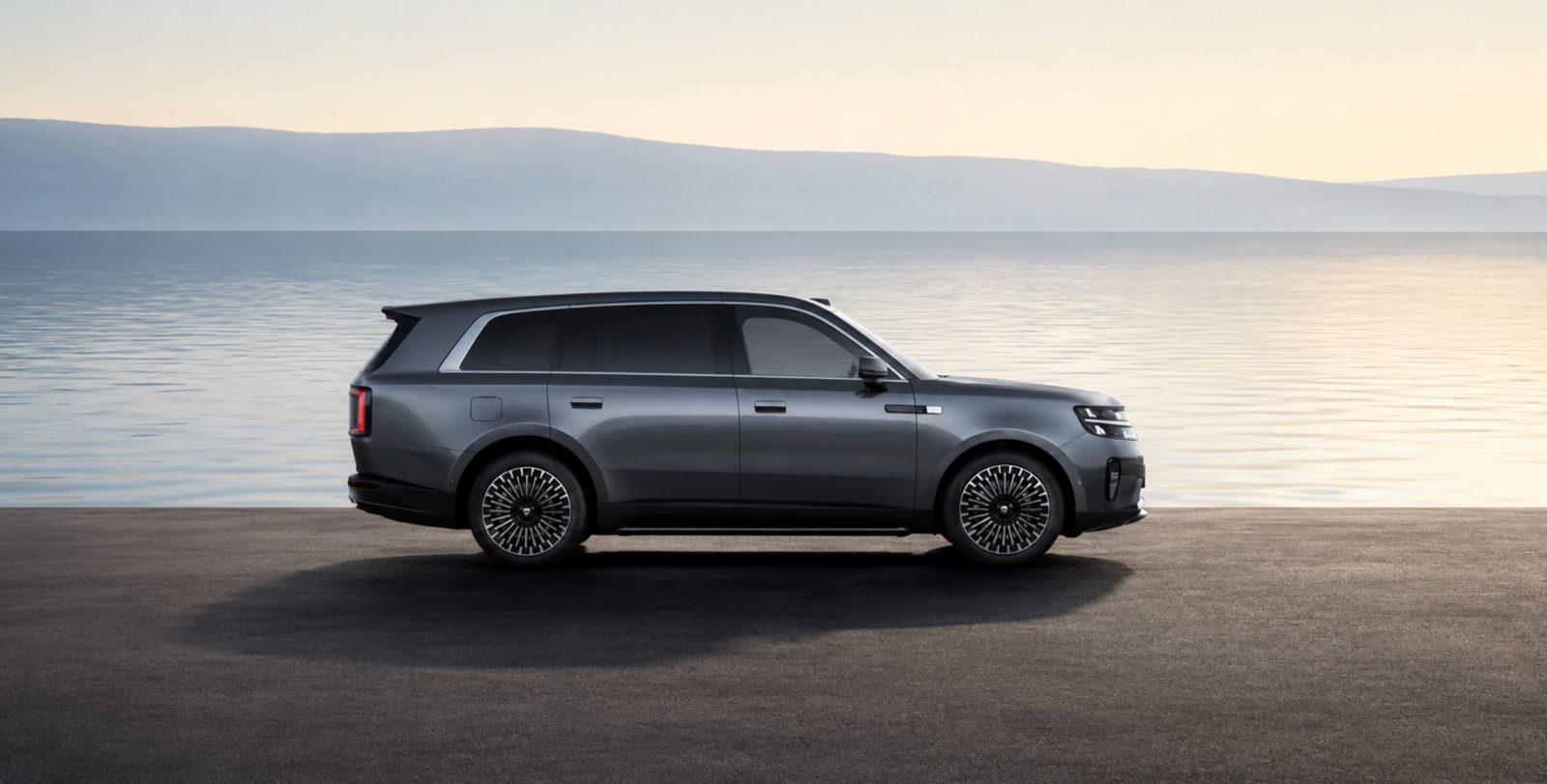
Xiaomi has answered the biggest open question about Sky Nomad: it’s a second product series under Xiaomi EV, not the standalone sub-brand that had been rumored for months.
The company also revealed the first clear look at the lineup’s debut model — a rugged, boxy extended-range SUV — in a set of official teaser posters.
Series, not a separate brand
When Xiaomi confirmed the Sky Nomad name on Wednesday, it pointedly did not say whether the effort was a new standalone brand or simply a new product series. Earlier reports had claimed the vehicles would drop the Xiaomi logo entirely.
On Thursday, Xiaomi EV settled it. “It is Sky Nomad (Xiaomi Pengcheng), a new series from Xiaomi EV,” the company wrote on its official Weibo account.
CEO Lei Jun framed the split by use case. The SU7/YU7 series is a “driver’s car,” he wrote, while Sky Nomad is an “intelligent, transformable large-space SUV” — “two different answers Xiaomi has delivered to different user needs over its more than five years of carmaking.”
That keeps the Xiaomi badge on the new SUV rather than spinning it off, and it lines Sky Nomad up as the company’s family-hauler answer to Li Auto and Huawei-backed Aito, which dominate China’s extended-range SUV market.
First look: boxy, rugged, and built as a “living space”
Xiaomi showed the SUV’s unobstructed side profile for the first time. Unlike the dynamic curves of the SU7 sedan and YU7 crossover, the new model has an especially rugged, boxy shape with an all-new front-end design.
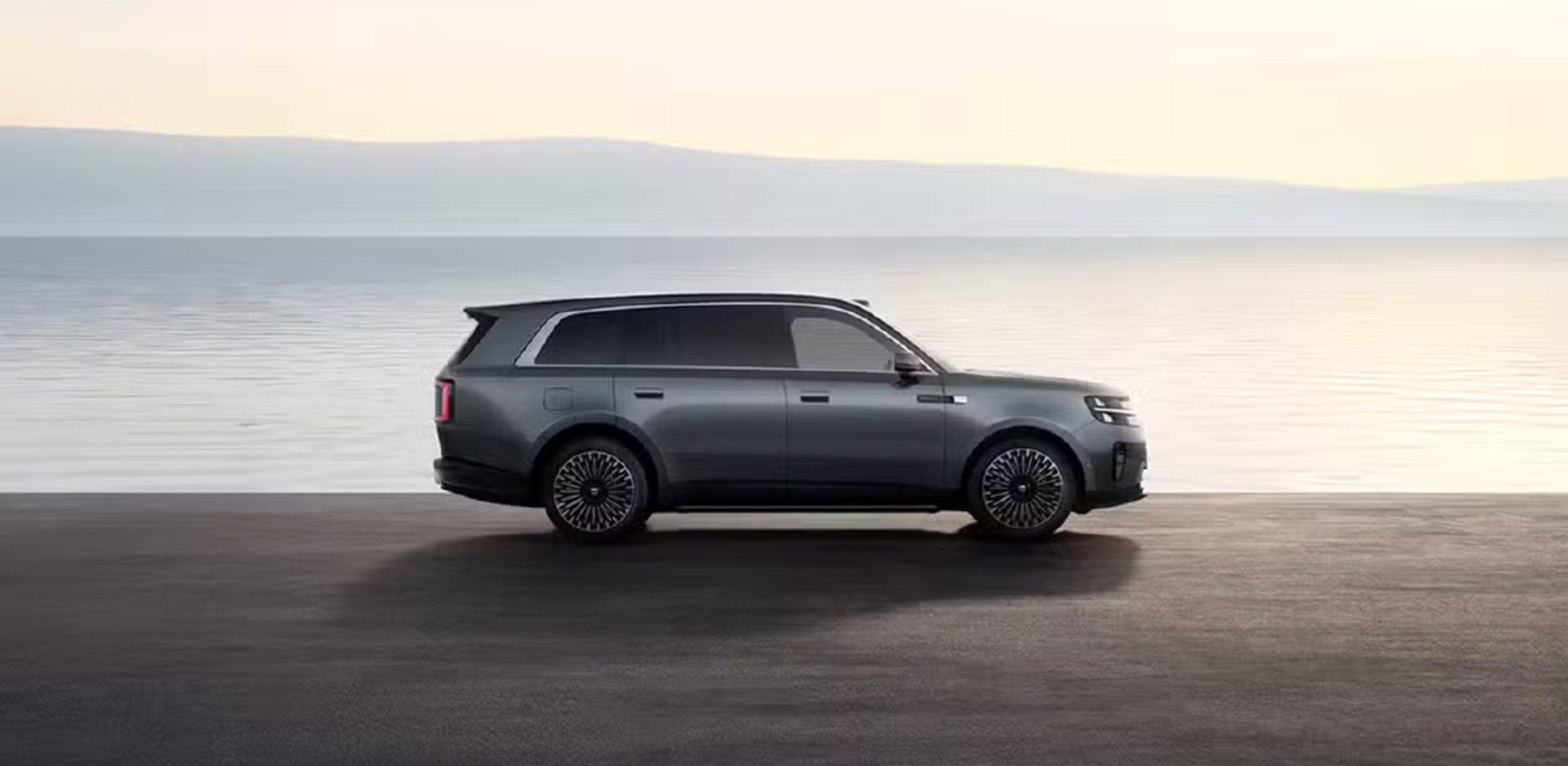
Lei said the lineup was honed over three and a half years with the goal of creating a “living space,” where the interior isn’t fixed but changes with the owner’s needs. When parked, he said, the SUV can become “a studio for one, a café for two, a reception room for three, or a playground for the whole family.”
To pull that off, Xiaomi built an all-new platform from the ground up starting in early 2023 — the Xiaomi Kunlun architecture. A completely flat floor and long-rail seating design let the interior reconfigure on the fly, according to Lei, who argued that doing it well requires “AI technology + a smart ecosystem + intelligent manufacturing capabilities” at once.
It’s a familiar pitch in China, where “a refrigerator, a color TV, and a big sofa” have become standard family-SUV talking points. Lei’s twist is positioning the car as a mobile “Nth space” rather than just a way to get around.
What we already know about the SUV
The hardware story hasn’t changed from what leaked ahead of the reveal. The first model, internally codenamed Kunlun N3 and expected to launch as the N90, is a full-size SUV measuring more than 5.3 meters (17.4 feet) long.
It’s Xiaomi’s first vehicle that won’t be a pure EV. A battery pack of more than 70 kWh delivers 400 to 500 km (249-311 miles) of electric-only range, with a gasoline engine acting purely as a generator to stretch total range past 1,500 km. For context, that battery is larger than the 62.5 kWh pack in the base Tesla Model Y sold in China.
Pricing is expected to start as low as 200,000 yuan (~$29,400), undercutting the Li Auto L9 and Aito M9, which both sit above 250,000 yuan. If the rumors are true, it would be quite a feat. The move follows China’s Ministry of Industry and Information Technology clearing Xiaomi to build extended-range vehicles at its Beijing plant on June 10.
The delivery math behind the push
Sky Nomad isn’t a side project — it’s central to Xiaomi’s 2026 volume target. The company wants to deliver 550,000 vehicles this year, up about 34% from roughly 410,000 in 2025.
It has work to do. Xiaomi EV delivered 185,055 vehicles in the first half of 2026, only about 34% of the annual goal. Hitting the target means averaging roughly 60,000 deliveries a month in the second half — double the 30,000-plus monthly pace it’s been running, even with the SU7 undercutting Tesla’s Model 3 and the YU7 undercutting the Model Y by $4,350. A launch is still expected in the second half of 2026, but Lei again declined to give a date.
If you’re weighing how far EV range can stretch, remember the cheapest miles are the ones you generate at home with solar. With electricity rates climbing nearly 10% last year, home solar protects you against future rate increases. And with lease and PPA options, you can go solar with zero upfront cost and start saving immediately. If you want to find the best deal, check out EnergySage. It’s a free service with hundreds of pre-vetted installers competing for your business, so you save 20 to 30% compared to going it alone. No sales calls until you pick an installer. Get your free quotes here.


FTC: We use income earning auto affiliate links. More.



Comments