
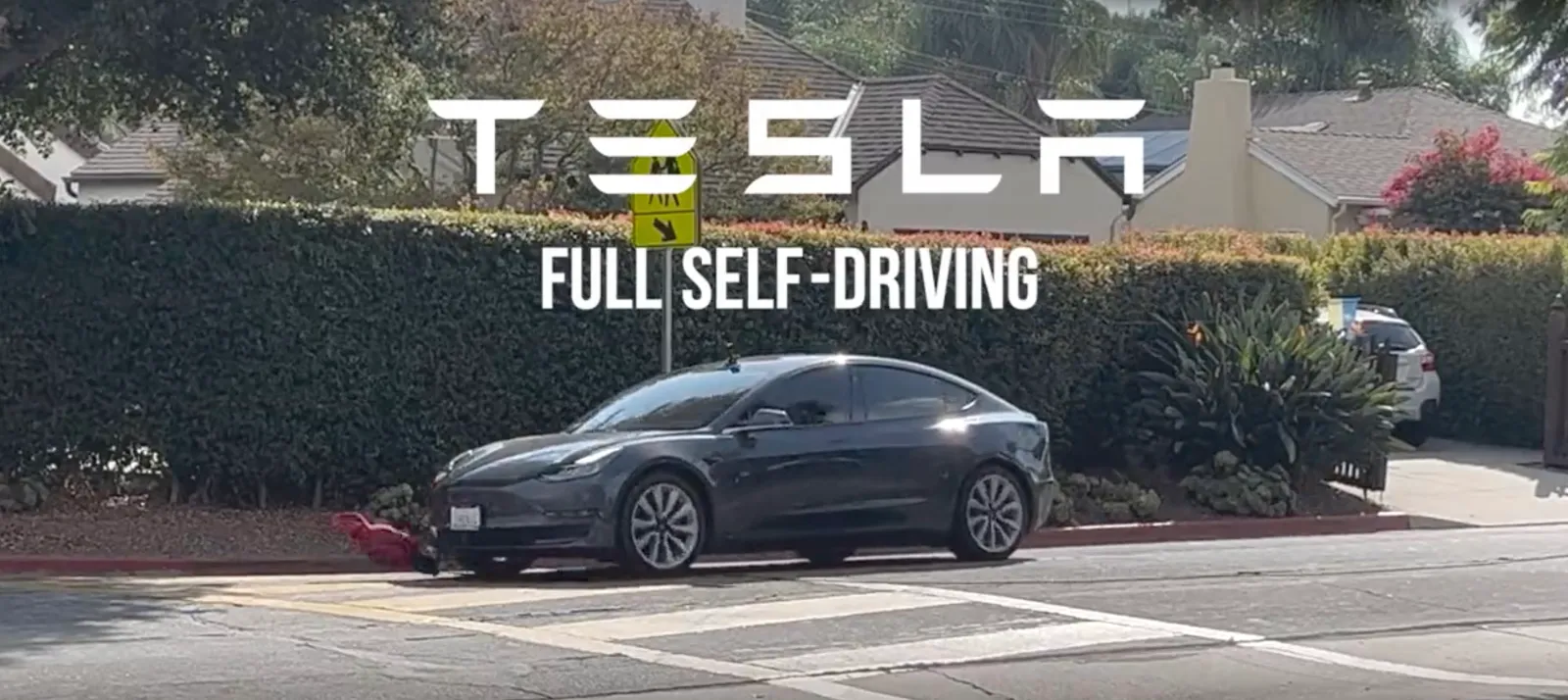
New Jersey lawmakers are advancing a bill that would require driverless commercial vehicles to carry cameras plus two additional sensor types — a mandate Tesla’s camera-only Robotaxi can’t meet.
The proposed law, S1677, would effectively lock Tesla out of the most densely populated US state unless it adds the radar and lidar hardware that Elon Musk has spent years insisting his cars don’t need.
What the bill actually requires
State Senator Andrew Zwicker, a physicist at the Princeton Plasma Physics Laboratory, sponsored the bill after riding in a Waymo in Phoenix. He says the legislation is about safety, not any single company.
“This is not anti-Tesla. I’m pro-New Jersey safety,” Zwicker told The Verge.
The bill sets up a three-year pilot program with hard requirements. Operators must equip fully driverless vehicles with cameras plus two other sensing technologies — in practice, radar and lidar. They must also complete at least 50,000 miles of supervised testing with a human safety driver in the state before removing the driver, report every crash to the state, and get official authorization before launching any commercial driverless network.
The framework mirrors recommendations from SAVE-US, a nonprofit pushing for tighter oversight of autonomous vehicles.
There’s a second problem for Tesla buried in the details. The bill favors keeping traditional controls like a steering wheel and pedals, which would exclude the Tesla Cybercab — a vehicle Tesla is already mass-producing with no steering wheel or pedals at all. And neighboring New York is considering a nearly identical hardware mandate.
The sensor fight Tesla keeps losing on the data
The whole bill comes down to how a car sees the road. Waymo, Zoox, and nearly every other serious operator run cameras, radar, and lidar together, building overlapping layers of data so that when one sensor fails, another covers it. Cameras read signs and lane lines but get blinded by glare and heavy rain. Radar cuts through fog. Lidar builds a precise 3D map regardless of what’s painted on a wall.
Musk rejects all of it, claiming that adding sensors introduces conflicting data and reduces safety, and that since humans drive with vision alone, software eventually should too. Stripping out radar and lidar also cuts cost — which is central to Tesla’s plan to build a cheap Cybercab at scale.
The problem is the data doesn’t back the claim. We’ve covered how a camera-only system drove straight into a fake wall that a lidar-equipped car easily detected. Carnegie Mellon engineering professor Philip Koopman argues camera-only tech simply isn’t ready for around-the-clock public-road use in tough climates, and that running a small test fleet hides engineering flaws that surface as the fleet scales from 100 vehicles to 10,000.
The gap in the real numbers is stark. Waymo operates more than 3,500 driverless vehicles across 11 US metro areas. Tesla, by contrast, still has only a handful of unsupervised test vehicles on public roads, mainly in Texas — despite Musk promising hundreds of thousands of autonomous Teslas on the road by the end of 2026.
Tesla’s lobbying backfired into a headline
Tesla fought the bill with direct-to-owner lobbying, messaging New Jersey Tesla owners to warn that the legislation would ban Tesla from the state. Owners flooded Zwicker’s office with roughly 4,000 protest emails in a single day, many fearing the state would disable their existing driver-assist features.
That fear was misplaced. Zwicker clarified the bill only targets fully driverless commercial fleets — it doesn’t touch consumer features like Autopilot or Full Self-Driving, which still require a licensed driver to monitor the car.
The episode highlights the regulatory vacuum autonomous vehicles operate in. Congress has debated national self-driving rules for years without producing a framework, leaving states to build a patchwork. California demands detailed safety reports and testing permits; Texas, Arizona, and Georgia let companies self-certify with minimal oversight. New Jersey’s approach is new because it regulates the hardware companies build into the car, not just how the car behaves on the road.
Electrek’s Take
Tesla scared their FSD owners into thinking the states would take away their FSD, and the state basically responded: don’t worry, Tesla would actually need to deliver on its promised unsupervised self-driving for you to be affected.
Top comment by BCGeiger
Musk rejects all of it, claiming that adding sensors introduces conflicting data and reduces safety,
We have known how to deal with conflicting data in computers since the 1970s. Actually the Space Shuttle and a lot of other aerospace hardware use multiple levels of sensors, and multiple computer systems to arbitrate and resolve any conflicts and to reduce errors. Dealing with this is well understood. That Musk is maintaining that the conflicting data would be a problem, it just shows that computer engineering and programming is ANOTHER field in which he claims expertise that he actually does not have.
It’s pretty funny.
Maybe deliver the capacity before worrying about the regulators.
For the thousandth time, Tesla’s bottleneck is safety, not regulation. Elon Musk himself has admitted it. In Texas, regulators are not a problem at all, and Tesla is still not operating at scale. That tells you everything.
If you’re a Tesla owner, powering your EV with home solar is one of the smartest ways to lock in low fuel costs. With electricity rates climbing nearly 10% last year, home solar protects you against future rate increases. And with lease and PPA options, you can go solar with zero upfront cost and start saving immediately. If you want to find the best deal, check out EnergySage. It’s a free service with hundreds of pre-vetted installers competing for your business, so you save 20 to 30% compared to going it alone. No sales calls until you pick an installer. Get your free quotes here.


FTC: We use income earning auto affiliate links. More.


Comments