
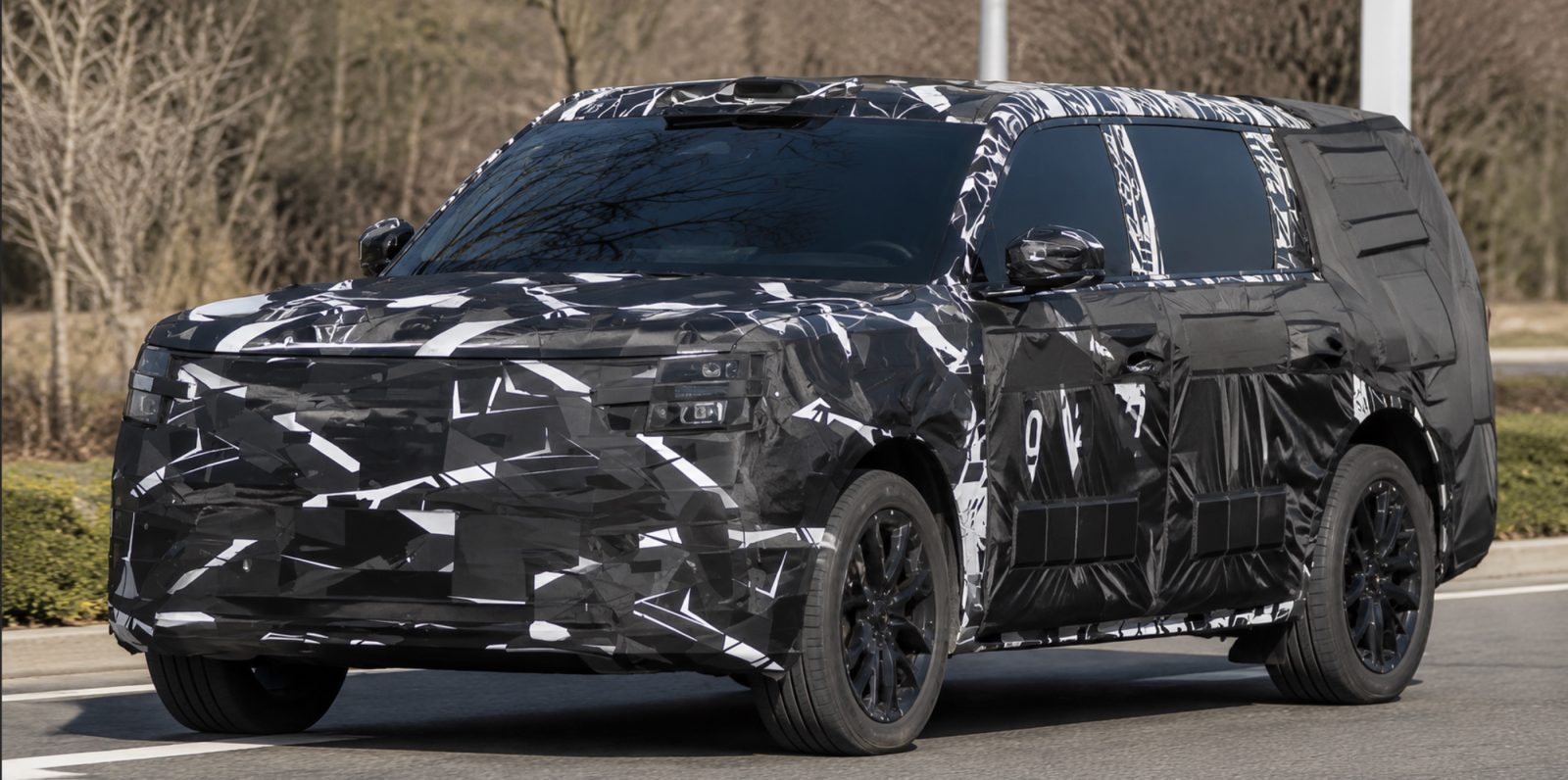
Xiaomi officially confirmed “Sky Nomad,” the name of its new extended-range electric vehicle (EREV) effort, after months of rumors. The first model is a full-size SUV expected to deliver over 1,500 km (932 miles) of combined range.
The announcement puts China’s hottest EV newcomer on a collision course with Li Auto and Huawei-backed Aito, which dominate the country’s lucrative family SUV segment.
“SkyNomad. Sky, nomad. A new name about space and life, saying hello to everyone first,” Xiaomi EV announced on its official Weibo account on Wednesday, alongside a teaser poster. Xiaomi CEO Lei Jun shared the poster and, when asked about launch timing, told followers it’s “coming soon,” according to Sina.
In China, the brand will reportedly go by Xiaomi Pengcheng (小米澎程) — Xiaomi has already registered accounts under that name on WeChat, Bilibili, and other platforms, and it has been filing “SkyNomad” trademarks since August 2025, according to CnEVPost.
One thing Xiaomi didn’t clarify: whether Sky Nomad is a standalone sub-brand or simply a new product series. Earlier reports claimed the vehicles would drop the Xiaomi logo entirely, while more recent ones point to a series positioned alongside the SU7 and YU7.
The Sky Nomad N90: a 5.3-meter SUV with a built-in tent
The first Sky Nomad model, internally codenamed Kunlun N3 and expected to launch as the N90, is a full-size SUV measuring over 5.3 meters (17.4 feet) long with a 3.1-meter wheelbase, according to CarNewsChina.
Unlike every Xiaomi vehicle to date, it won’t be a pure battery-electric vehicle. The N90 uses a 1.5-liter turbocharged engine purely as a generator — it never drives the wheels — paired with a battery pack of more than 70 kWh, good for 400 to 500 km (249-311 miles) of electric-only range and over 1,500 km combined.
That’s a bigger battery than many BEVs on sale today. For context, the base Tesla Model Y in China carries a 62.5 kWh pack.
Sunwoda and CALB will supply the batteries, splitting the quota 60/40, according to Chinese outlet 21jingji. Spy shots show a boxy, rugged design with a roof-mounted LiDAR, electrically deployed door steps, and — in the seven-seat version — a built-in rooftop tent aimed squarely at China’s booming outdoor camping trend. Five- and seven-seat layouts are expected.
Pricing is expected to start as low as 200,000 yuan (~$29,400), per 21jingji — undercutting the Li Auto L9 and Aito M9, which both sit above 250,000 yuan. Among the top 10 best-selling extended-range SUVs in China last year, seven came from those two brands.
Xiaomi needs this to hit 550,000 deliveries
The move has been telegraphed for months. As we reported in June, China’s Ministry of Industry and Information Technology approved Xiaomi to build extended-range vehicles at its Beijing plant on June 10, clearing the last regulatory hurdle.
The N90 is central to Xiaomi’s plan to deliver 550,000 vehicles in 2026 — up roughly 34% from about 410,000 last year. The company has now delivered over 30,000 vehicles for three consecutive months, and its lineup is firing: the next-gen SU7 launched in March with 902 km of range while still undercutting Tesla’s Model 3, and the YU7 undercuts the Model Y by $4,350 with more range.
A launch is expected in the second half of 2026.
Electrek’s Take
There’s some irony in China’s most successful new BEV maker adding a gasoline engine to its lineup, but this is a rational move. EREVs are where the money is in China’s family SUV market — Li Auto built a profitable business on them years before most BEV startups stopped burning cash.
The interesting part is the execution. With a 70+ kWh pack and 400-500 km of electric range, the N90 is really a big BEV with a gas generator for road trips. Most owners will rarely burn fuel in daily driving. That’s the modern EREV formula, and it’s the same one Scout is betting on for the US market, which is far behind China on EREV.
The brand question matters more than it seems. If Sky Nomad is truly a separate brand without the Xiaomi logo, that suggests Xiaomi wants to protect its main brand’s pure-EV, tech-forward image while chasing family-hauler money under another name. If it’s just a series, this is a straightforward lineup expansion. Xiaomi’s vague Weibo post reads like a company keeping its options open.
I favor the new standalone brand, especially considering the vastly different segments and the fact that Xiaomi’s current EVs are super driver-focused – something I don’t expect from the newer vehicles.
If you’re thinking about how far EV range can stretch, remember that the cheapest miles are the ones you generate at home with solar. With electricity rates climbing nearly 10% last year, home solar protects you against future rate increases. And with lease and PPA options, you can go solar with zero upfront cost and start saving immediately. If you want to find the best deal, check out EnergySage. It’s a free service with hundreds of pre-vetted installers competing for your business, so you save 20 to 30% compared to going it alone. No sales calls until you pick an installer. Get your free quotes here.


FTC: We use income earning auto affiliate links. More.



Comments