
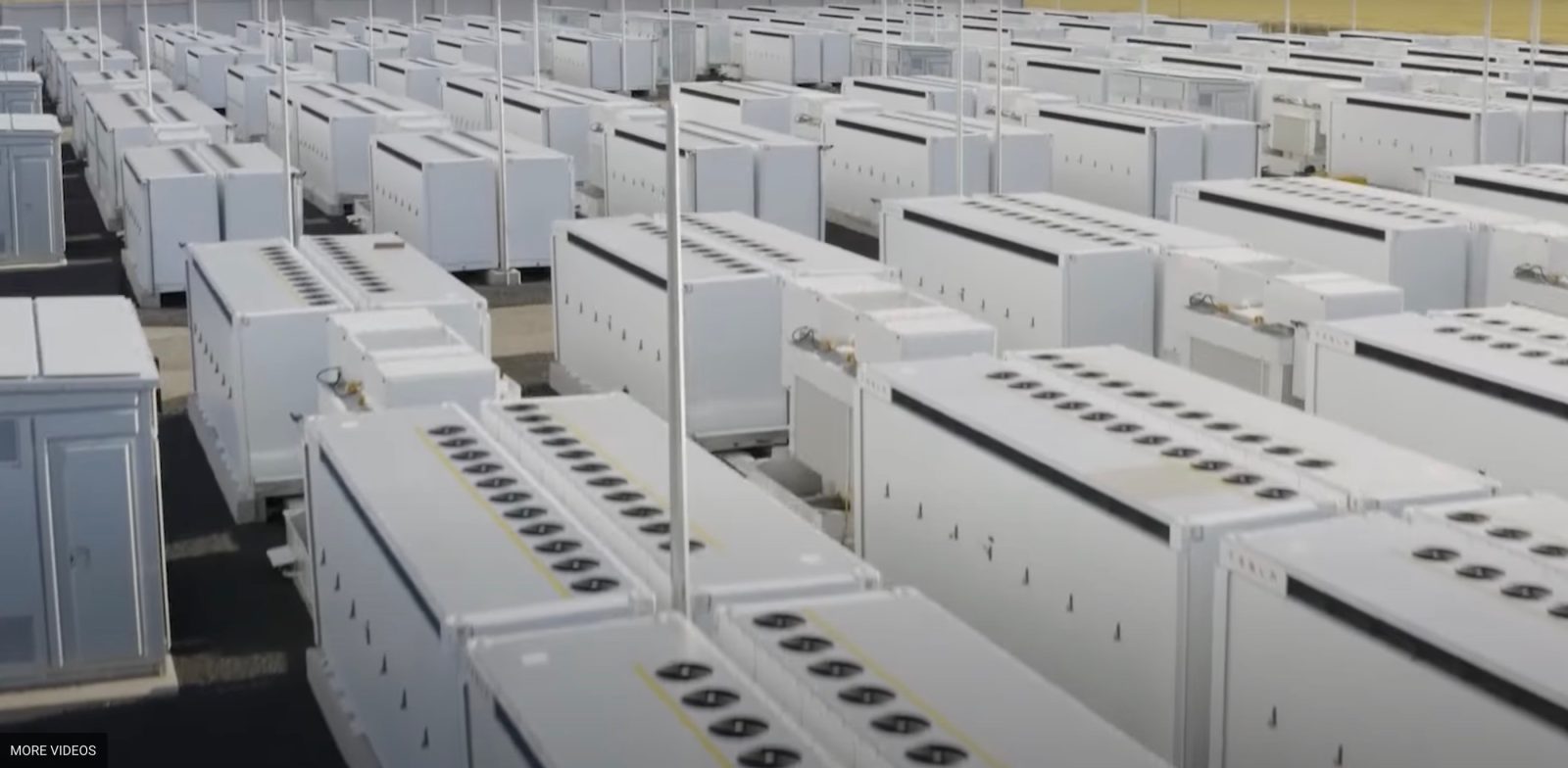
Tesla and independent energy firm NatPower have reached a deal to build 25 gigawatt-hours of battery storage in Italy and Britain, the first phase of a program worth up to $5 billion.
Under the multiyear agreement, NatPower will deploy Tesla’s Megapack systems and use Tesla’s trading software to decide when to buy and sell electricity — extending Tesla’s reach deeper into Europe’s fast-growing grid storage market.
A $5 billion program aiming past 100 GWh
The companies announced the deal Tuesday through Reuters. The first phase covers five initial projects totaling 25 GWh across the two countries, with a construction cost of $4 billion to $5 billion.
That’s only the start. NatPower says the broader program ultimately aims to exceed 100 GWh of storage capacity, with revenue that could top $15 billion over 20 years.
The agreement pairs Tesla’s hardware with its software stack. Beyond supplying Megapacks, Tesla is providing the trading technology that manages charging and discharging to capture price swings on the grid — the same kind of energy-arbitrage and market-participation tooling that turns a battery site into a revenue-generating asset rather than just backup capacity.
“The sector has access to technology and capital but still struggles to deliver infrastructure consistently and within the required timelines,” said NatPower CEO Fabrizio Zago. “What we have built with Tesla is an ecosystem that enables alignment between capital and execution, and that can be replicated across multiple markets.”
Why Europe is buying batteries
The timing isn’t a coincidence. Countries across Europe are ramping up battery storage to balance the rollout of intermittent wind and solar, which produce power when the weather cooperates rather than when the grid needs it. Italy and the UK have both leaned heavily on storage to firm up renewables and avoid curtailment.
The deal fits a pattern Tesla has been building for years. In 2024, the company secured an absurdly large multi-billion-dollar Megapack contract — proof that utility-scale storage had become its fastest-growing line of business. NatPower extends that into a multi-market European framework.
The one Tesla business that’s actually growing
While Tesla’s automotive business has stalled, its energy storage division has been the company’s standout performer. Tesla deployed a record 46.7 GWh of energy storage in 2025, up roughly 48% year-over-year, and analysts pegged Q1 2026 deployments at a record ~14.4 GWh.
The product roadmap is also moving fast. Last September, Tesla unveiled the Megablock and Megapack 3, pre-integrated systems designed to cut installation time and deploy more energy faster — exactly the “delivery within required timelines” problem Zago pointed to.
Investors didn’t reward the news, though. TSLA was down about 3.3% in pre-market trading Tuesday, weighed down by separate reports of a ransomware group leaking confidential documents tied to Tesla and Apple.
Electrek’s Take
Top comment by Marcus R
The smart part is the software.
The features you described is standard here in every batteryinstallation since years and years back.
Reading 15 minute prices at the day ahead market thats operates by a NEMO is easy, that can anything from a heatpump to a car charger already do. The interesting part is how the optimsiationalgoritm works.
Besides the simple parts of day ahead markets software here also can act on FR (Frequency Regulation) markets as a BSP (Balance Service Provider). There is a wide range of products for FR that our TSO's procure from BRP's (Balance Responsible Party)
Effect optimisation thats used in residential BMS is for obvious reasons slightly different, and it will depend on how the grid connection is structured.
Then there is a market for AS (ancillery Services) such as voltage control by regulating reactive power and so on.
This is what would be interesting to know. Placing bids on the dayahead or intraday market is just a prerequisite and doesn't really add any value.
This is a meaningful win, and it lands in the one part of Tesla’s business that keeps quietly delivering. The 25 GWh phase-one figure is genuinely large — for context, it’s more than half of everything Tesla deployed globally in all of 2025 — and the program’s stated ceiling north of 100 GWh would make NatPower one of Tesla’s most significant storage customers anywhere.
The smart part is the software. Tesla isn’t just shipping steel boxes full of cells here; it’s embedding its trading and dispatch platform into the projects, which is stickier and higher-margin than hardware alone. That’s the moat people underrate when they only look at Tesla’s car numbers.
The usual caveat applies: these are headline figures for a multiyear buildout, and “up to $5 billion” with revenue “potentially” exceeding $15 billion over 20 years is the kind of framing that depends entirely on execution, permitting, and grid connections actually materializing. Europe’s interconnection queues are notoriously slow. Still, if Tesla’s energy arm can keep converting announcements like this into deployed gigawatt-hours, it increasingly looks like the business that justifies the company — not the cars. The question now is how fast these five projects actually break ground.
If you’re powering an EV or a home with rising grid electricity, home solar is one of the smartest ways to lock in low energy costs. With electricity rates climbing nearly 10% last year, home solar protects you against future rate increases. And with lease and PPA options, you can go solar with zero upfront cost and start saving immediately. If you want to find the best deal, check out EnergySage. It’s a free service with hundreds of pre-vetted installers competing for your business, so you save 20 to 30% compared to going it alone. No sales calls until you pick an installer. Get your free quotes here.


FTC: We use income earning auto affiliate links. More.




Comments