
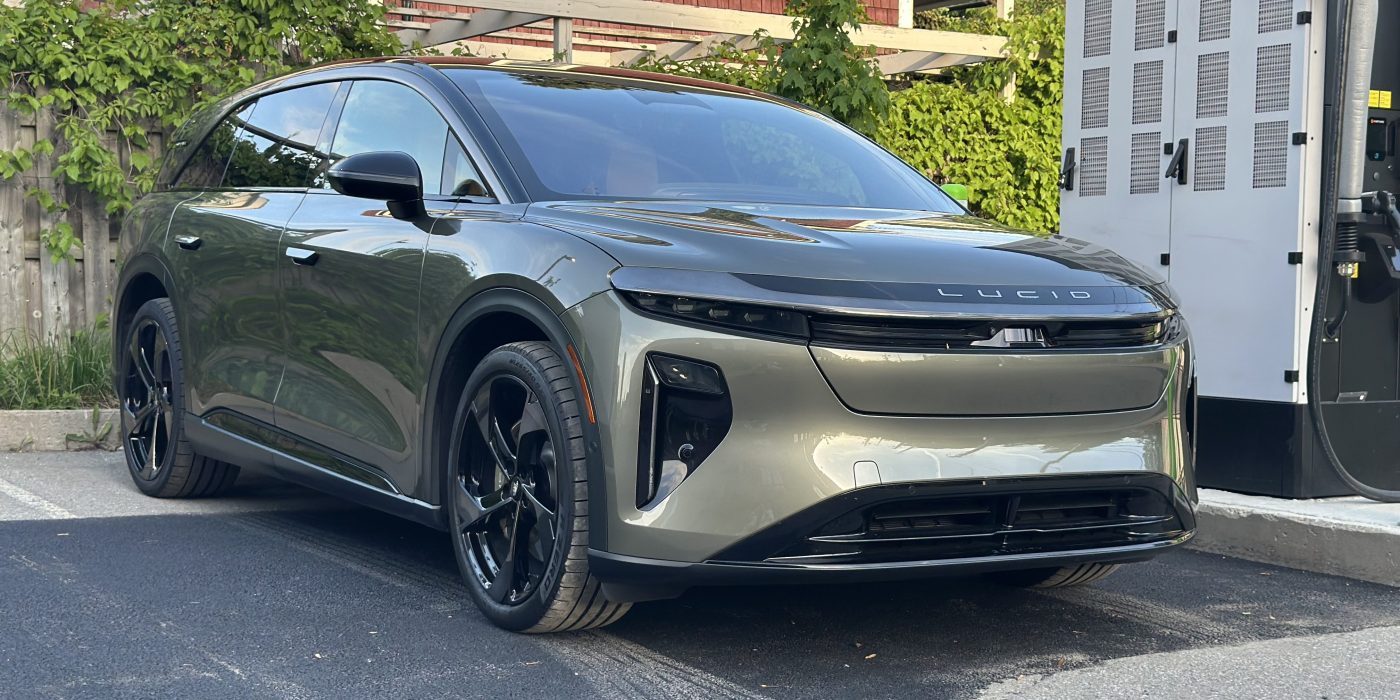
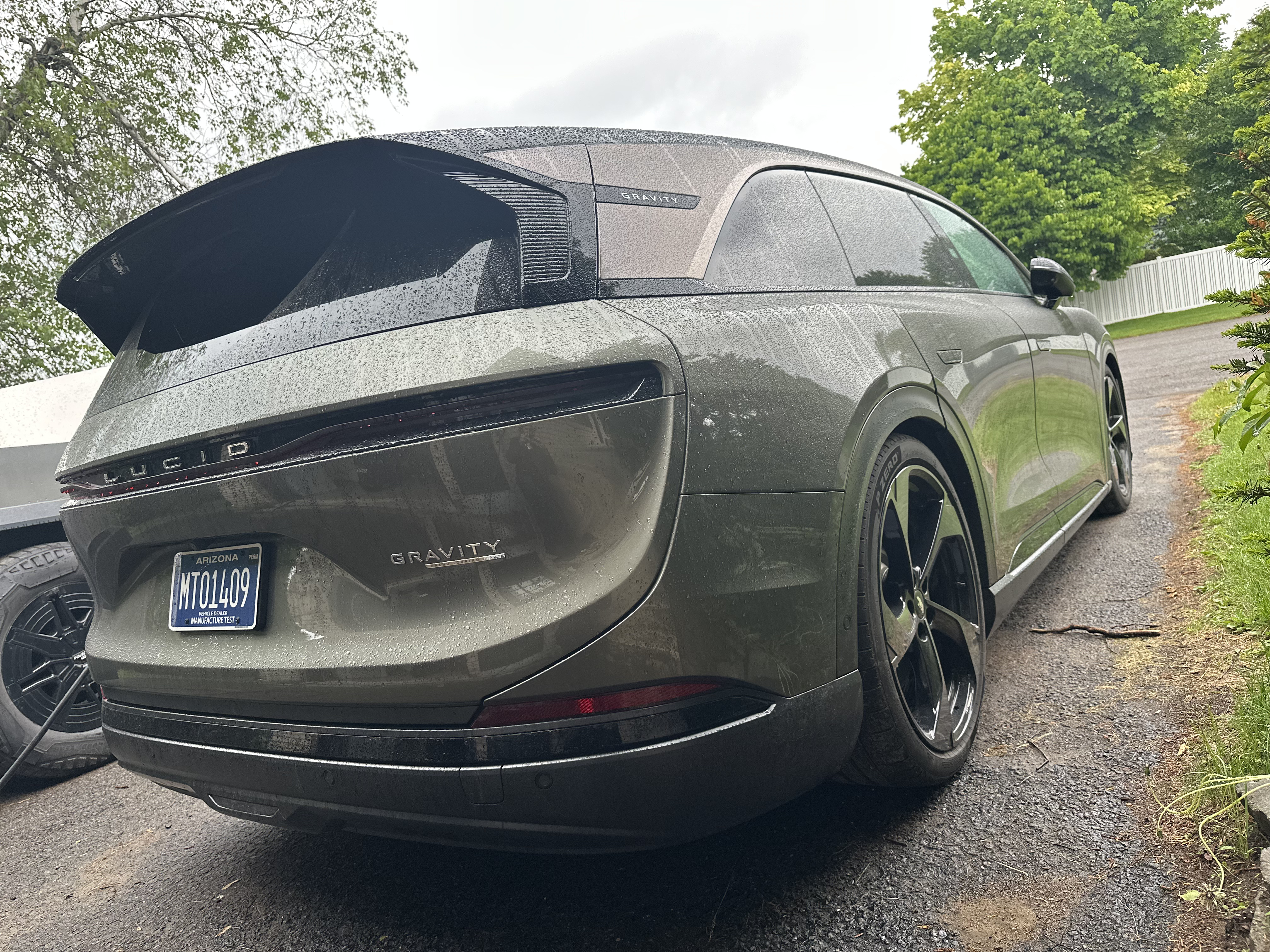
I drove the Lucid Gravity GT for more than 547 miles (881 km) across a mix of highway, backroads, and city driving, and I enjoyed nearly everything this vehicle has to offer. For anyone shopping for a luxury electric family vehicle that refuses to compromise on dynamics, the Gravity is clearly a contender, but it is plagued with some software issues that they will hopefully fix soon.
Here is the full review:
Abstract
The Lucid Gravity Grand Touring offers a 924 V architecture and class-leading chassis and powertrain tuning, as well as range and charging performance for the segment; this SUV feels more like a grand touring sedan than a three-row hauler. Efficiency is the best I have tested in a three-row SUV so far, and fast charging from 0 to 80% can take just 25 minutes on a capable station, which can equal up to 360 miles (580km), quite a lot of range for just 24 min!
The cabin is spacious and well-appointed, with genuine third-row comfort, a flat cargo floor, and useful touches such as second-row tray tables and three 120 V outlets. The driving experience is exceptional: responsive handling, no body roll, and a steering feel that inspires confidence on every type of road.
A few software bugs and an ADAS system that has yet to reach its potential keep the Gravity from a higher score. Hands-free driving was not available during my test; however, Lucid has since released it via an OTA update. The software needs another round of optimization, but none of the issues I encountered were safety-critical.
Starting at $79,900 for the Touring and $98,900 for the Grand Touring, the Gravity offers genuine luxury SUV capability at a competitive price point. If Lucid continues to improve its software quickly, buyers today will not regret their purchase.
Scores by category
- Engineering: 9.6 / 10
- Electric Performance & Charging: 19 / 20
- Ergonomics, Cabin & Storage: 16.1 / 20
- Driving Experience: 14 / 15
- Driver Assistance Systems: 6.9 / 10
- Extra: 2.5 / 5
- Value: 8.7 / 10
- Fitness for Purpose: 5 / 5
- Safety: 4.5 / 5
Total score: 86.3 / 100
Engineering (9.6 / 10)
The Gravity powertrain is built around Lucid’s in-rotor differential motors, allowing what Lucid claims to be the best power-to-weight ratio in the EV industry, and a 924 V battery pack with 121 kWh of usable capacity for the Grand Touring, or a 672 V pack with 89 kWh for the Touring. Cells used are wire-bonded 2170, like for the Air, using a Nickel-rich cathode. It’s worth noting that some of the technologies in the Lucid Gravity powertrain are directly from Lucid’s experience in Formula E.
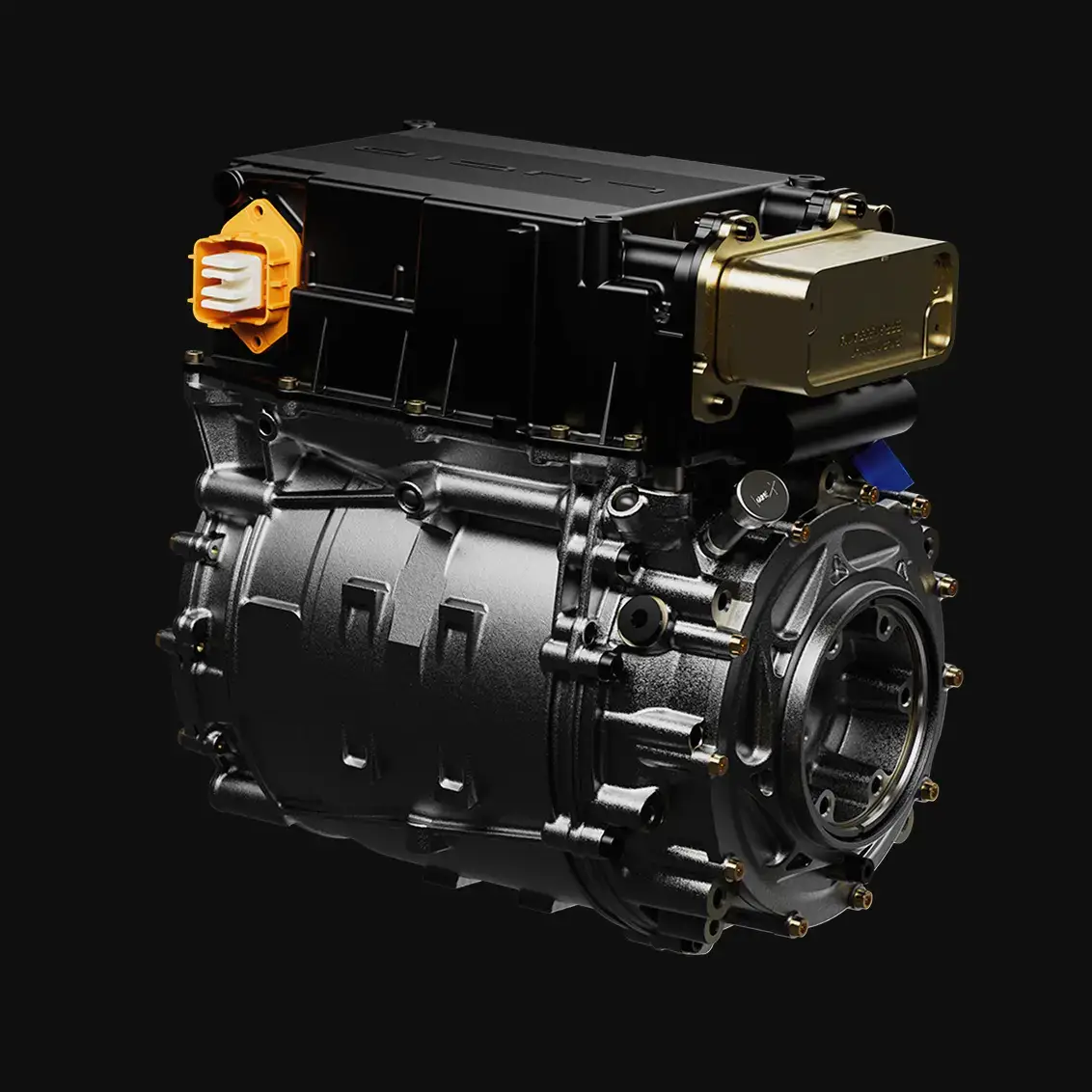
Both trims are dual-motor AWD, producing 828 HP for the Grand Touring and 560 HP for the Touring. Grand Touring uses a 600HP rear motor and 228HP front motor, with reports of a Dream version using two of those rear motors for a potential of 1200HP! The Grand Touring uses an asymmetric drivetrain ratio between the front and rear axle, enabling the best of both worlds with quick acceleration and impressive efficiency at higher speeds.
Lucid’s Wunderbox allows charging at 400 V fast charging stations without significant limitations; the vehicle can pull up to 220 kW at a 400 V Supercharger, from 0 to 45%, before reaching the same charging power as with a 924 V capable charging station and power decreasing as the state of charge rises.
Vehicle-to-everything (V2X) is functional with third-party systems, and three 1.8 kW, 120 V outlets are available in the vehicle. Using my V2X charging station at home I was able to discharge 22kWh from the battery pack to power my house during a typical day, without any complaints from the vehicle. The integrated outlets work well for portable cooking tops, small air compressors, laptops, and coffee makers, but cannot handle loads with high inrush current, such as large compressors or grinders, and an EV charger will trip a ground fault.
Like the Air, the Gravity support vehicle-to-vehicle charging, what they call “RangeXchange”. With the right accessory, you can use your Lucid Gravity to charge another EV in needs, a nice touch !
Braking hardware is serious: six-piston calipers at the front and four-piston at the rear.
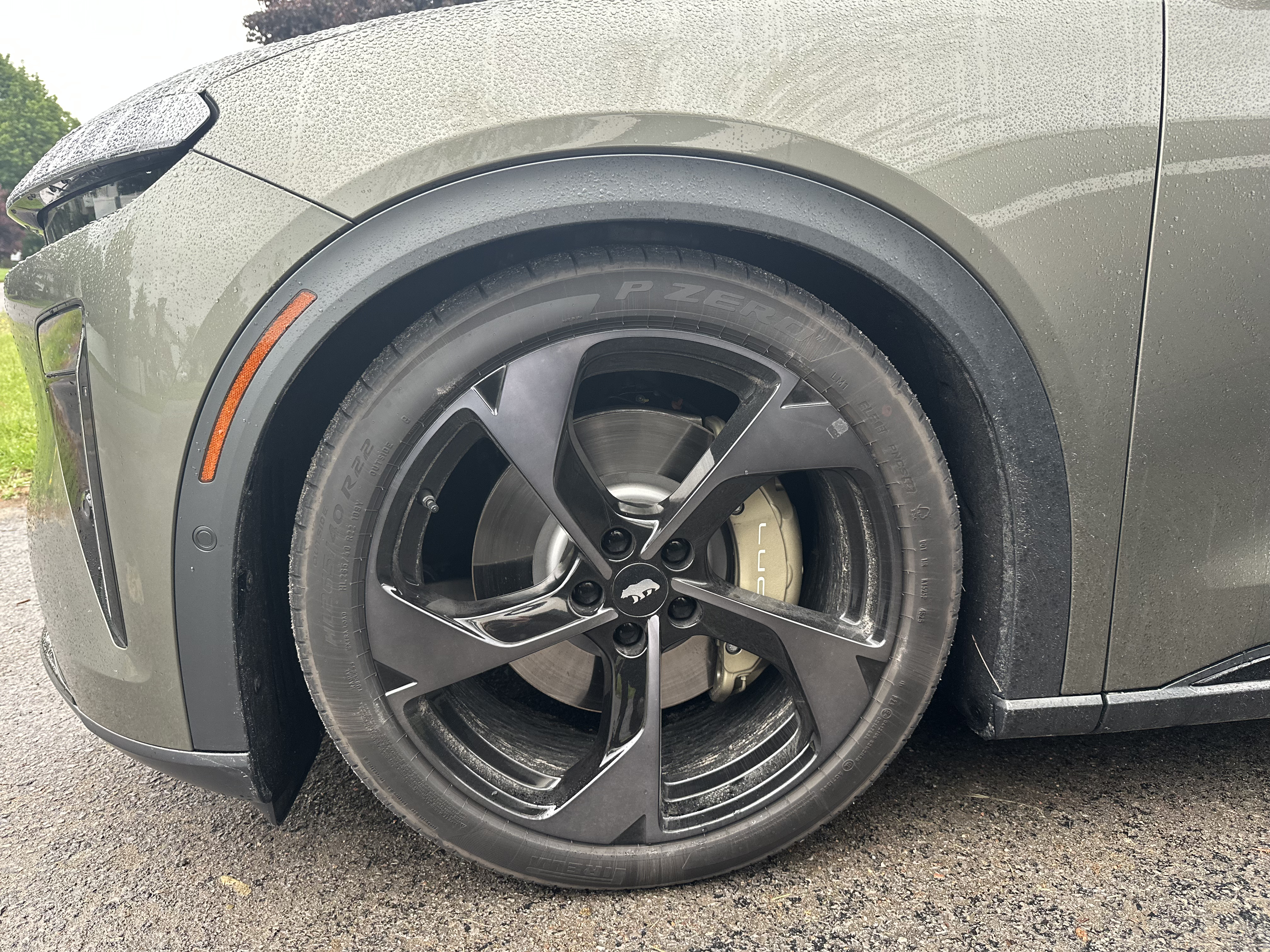
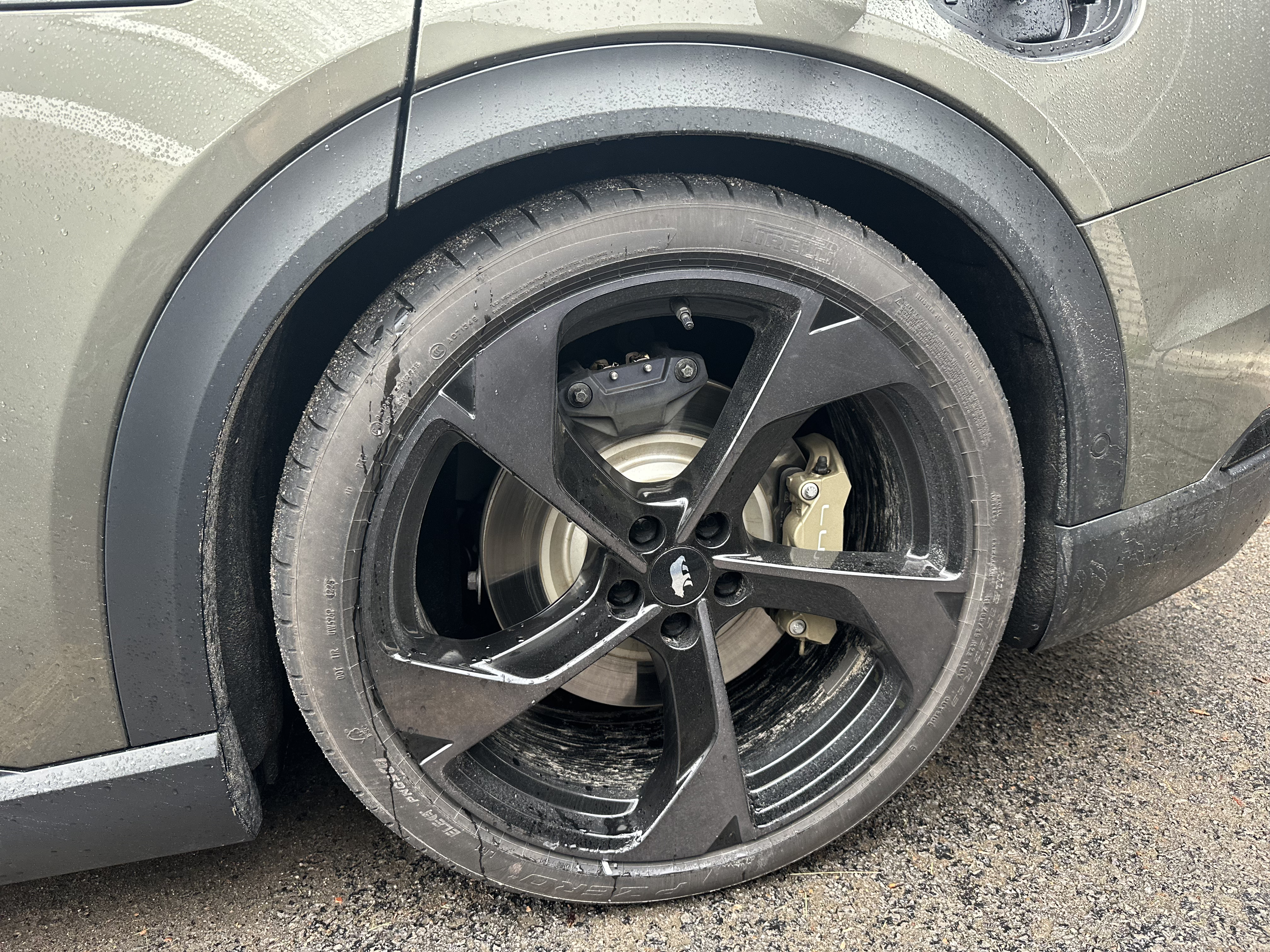
Curb weight comes in at 5,560 lbs for the Touring and 5,917 lbs for the Grand Touring, not surprising given the large battery pack and the complete package this vehicle offers.
Electric Performance & Charging (19 / 20)
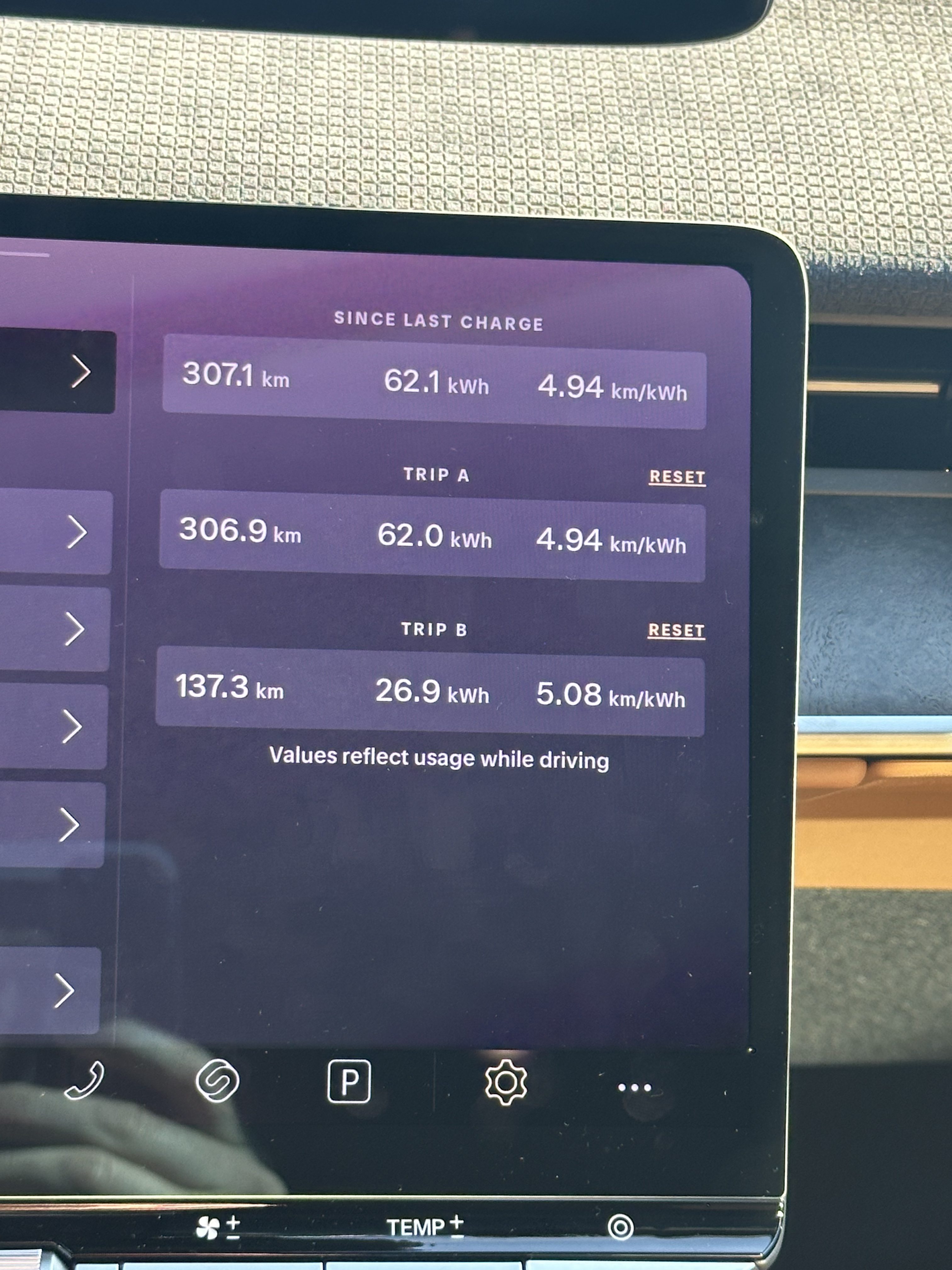
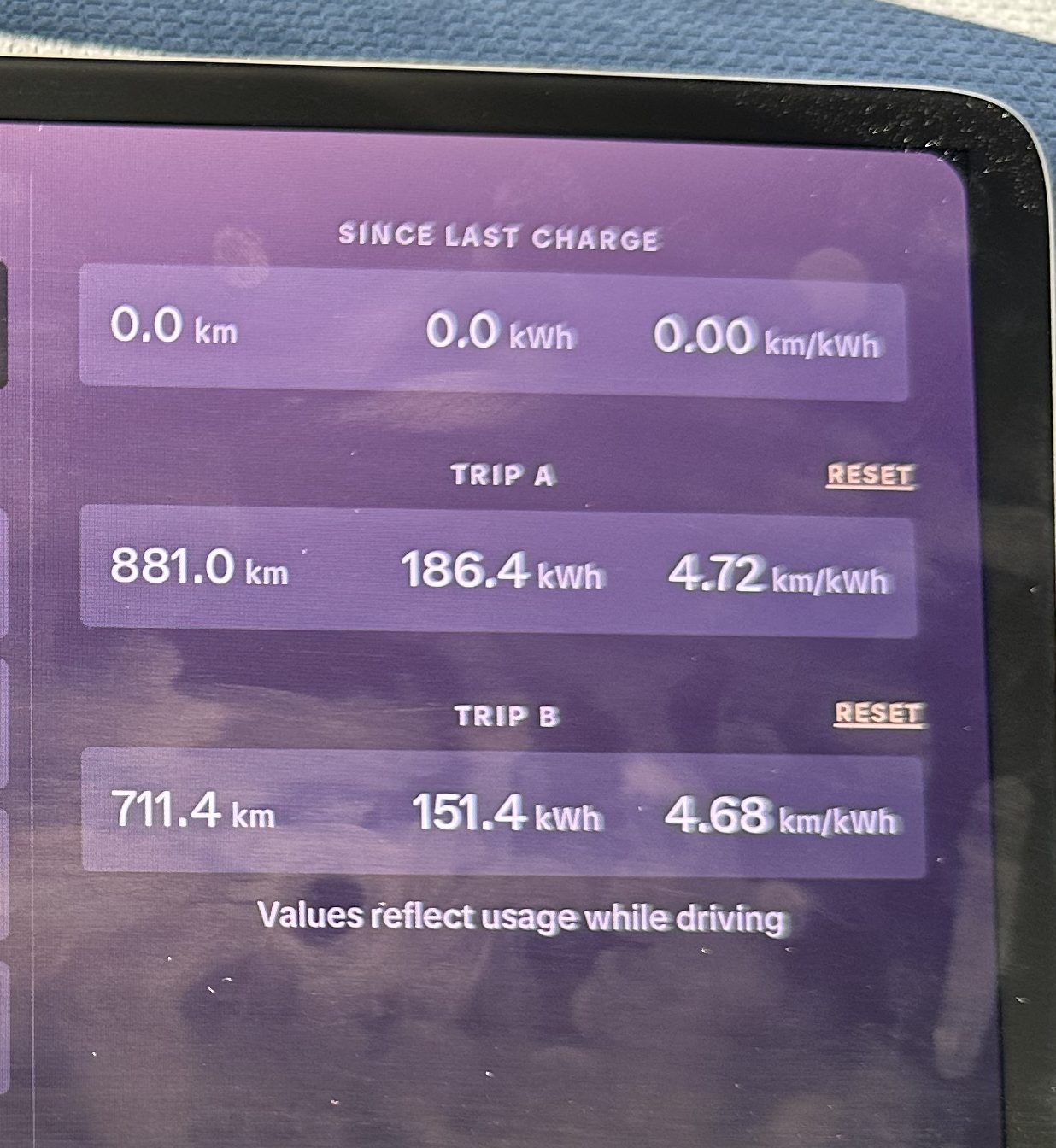
The Gravity is, by far, the most efficient three-row SUV I have tested, and the most efficient SUV based on its EPA rating, even though I did not quite reach the official rating in nearly perfect conditions, which is a disappointment for me. Though I used the available power quite generously in the second half of my test drive, this brought the efficiency down.
Range varies by trim and wheel choice. The Touring is rated at 337 miles (542 km), and the Grand Touring can reach as high as 450 miles (724 km) with the right wheels and tires.
The version I drove, a Grand Touring with Stealth 22″ front and 23″ rear wheels, is rated for 407 miles (655 km). Over the 547 miles (881 km) I covered, I achieved 2.93 mi/kWh (4.72 km/kWh), that’s 341Wh/mi (212Wh/km), which is less efficient than the official rating of 3.36 mi/kWh (5.41 km/kWh), that’s 297Wh/mi (185Wh/km), translating to an achieved range of 354 miles (570 km). However, during the first half of my driving, a mix of highway, backroads, and city, and using less power for accelerations, I averaged 3.12 mi/kWh (5.02 km/kWh), that’s 320Wh/mi (199Wh/km), for a range of 377 miles (607 km), closer to the official figure. Clearly, this vehicle can be quite efficient when driven correctly, without sacrificing speed or cabin comfort.
Both trims come with dual motors: 560 HP for the Touring and 828 HP for the Grand Touring, for 0-60mph in 4.0s and 3.4s respectively.
Onboard AC charging tops out at 19.2 kW when plugged into an 80 A EVSE.
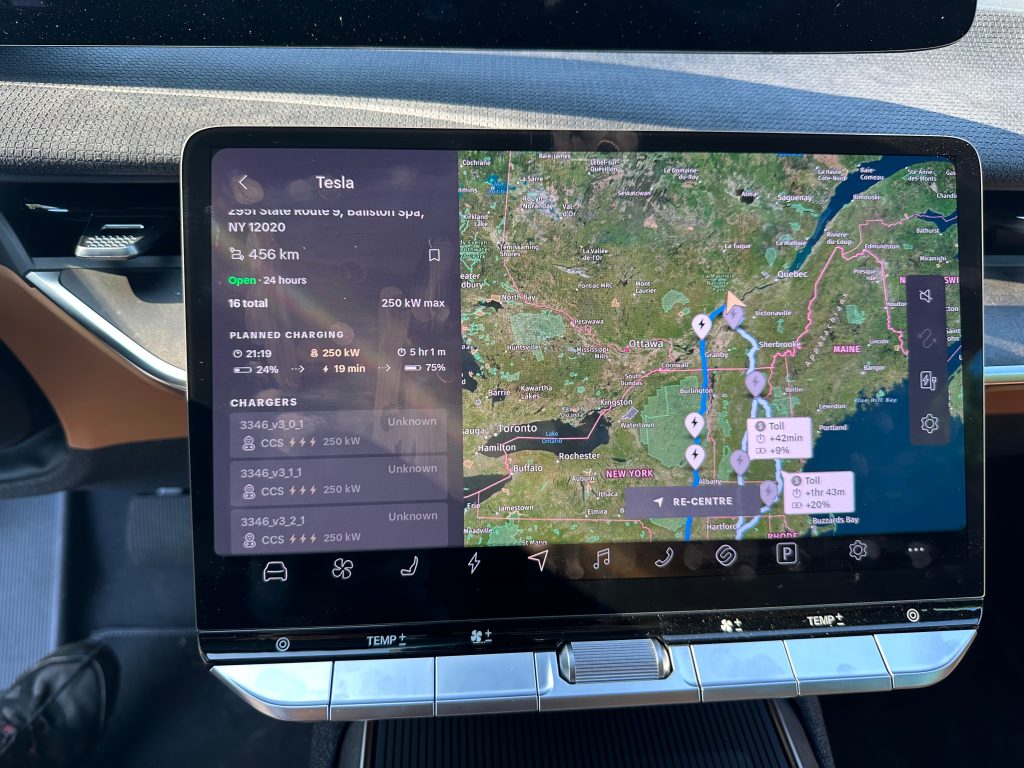
DC fast charging is where the Gravity’s 924 V architecture and battery design truly shine. Like most new EVs in North America, it uses the NACS connector for charging, with plug-and-charge support, one step further toward standardizing the charging experience.
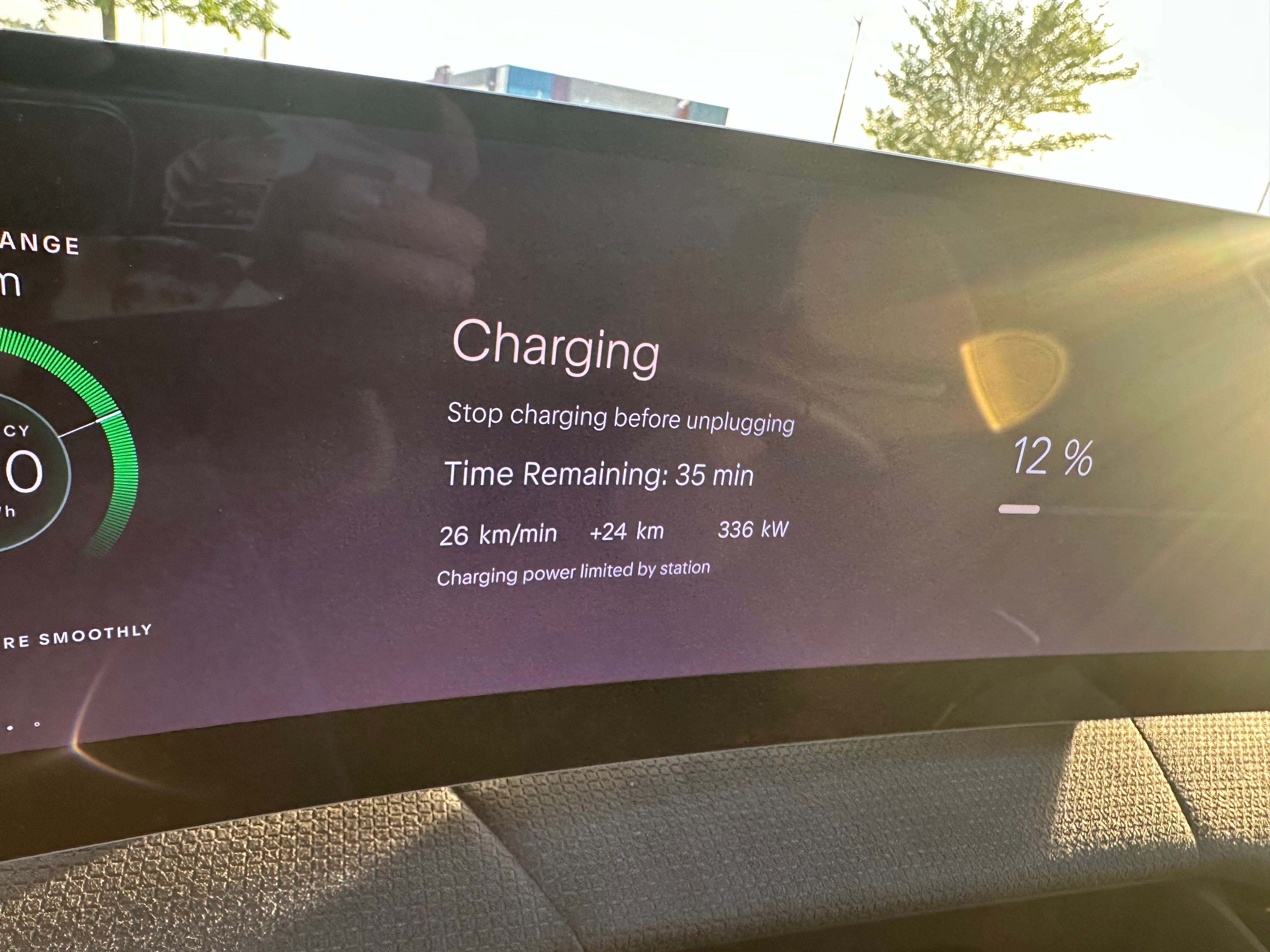
Peak charging power is 400 kW, or 3.3C, with an average of approximately 240 kW (2C) from 0 to 80%. I achieved 7-80% in 24 minutes, with a peak of 342 kW at the charging station I used; the power was limited by the station.
The Touring trim, with its smaller battery, will not match the same peak power figures. Lucid advertises 250 kW, though proportionally it should be around 290 kW. However, it should still achieve the same 7-80% time of 24 minutes on a capable station. Regardless of trim, reaching optimal charging power requires a 1000 V station capable of delivering a minimum of 430 Amps.
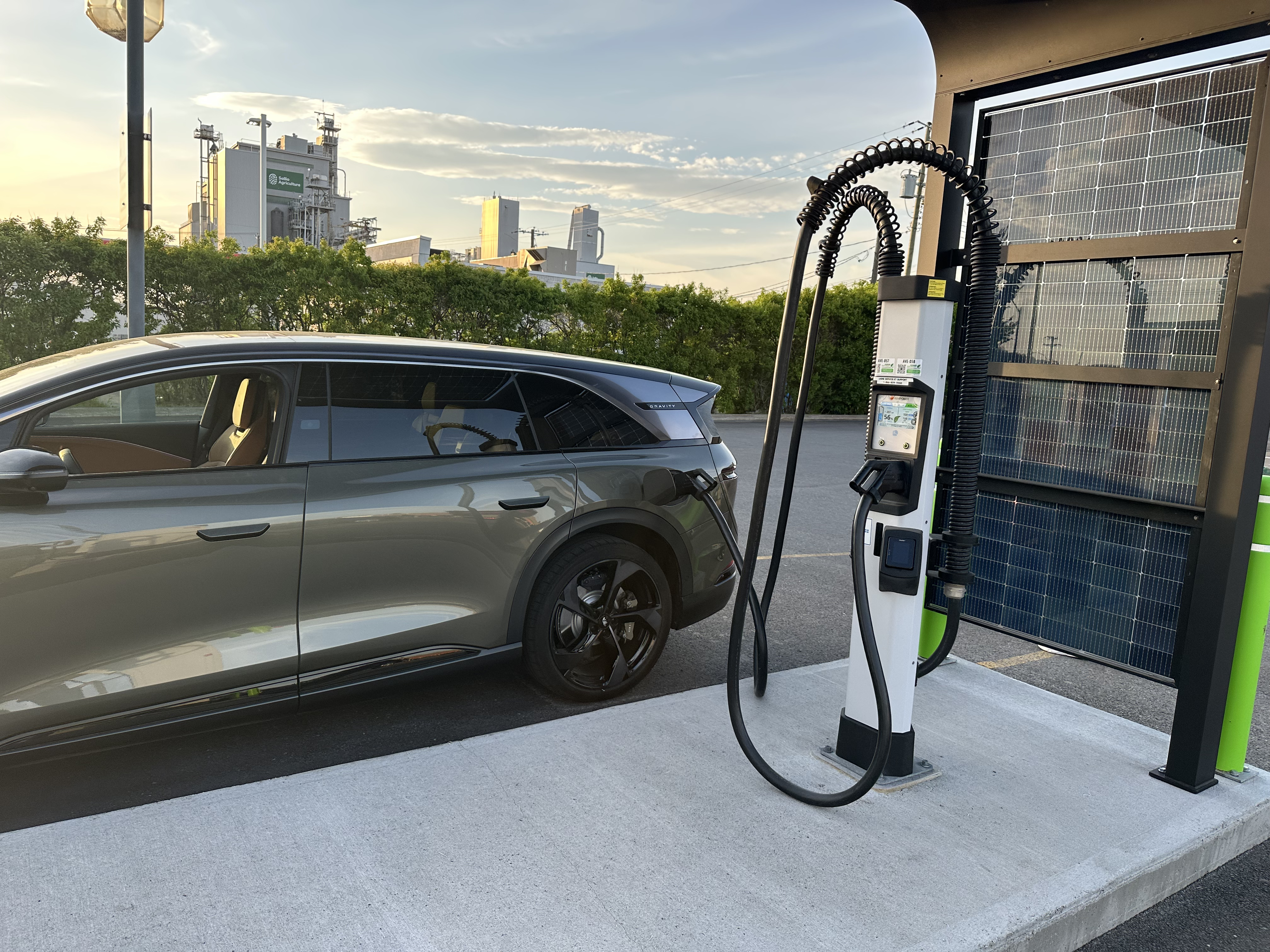
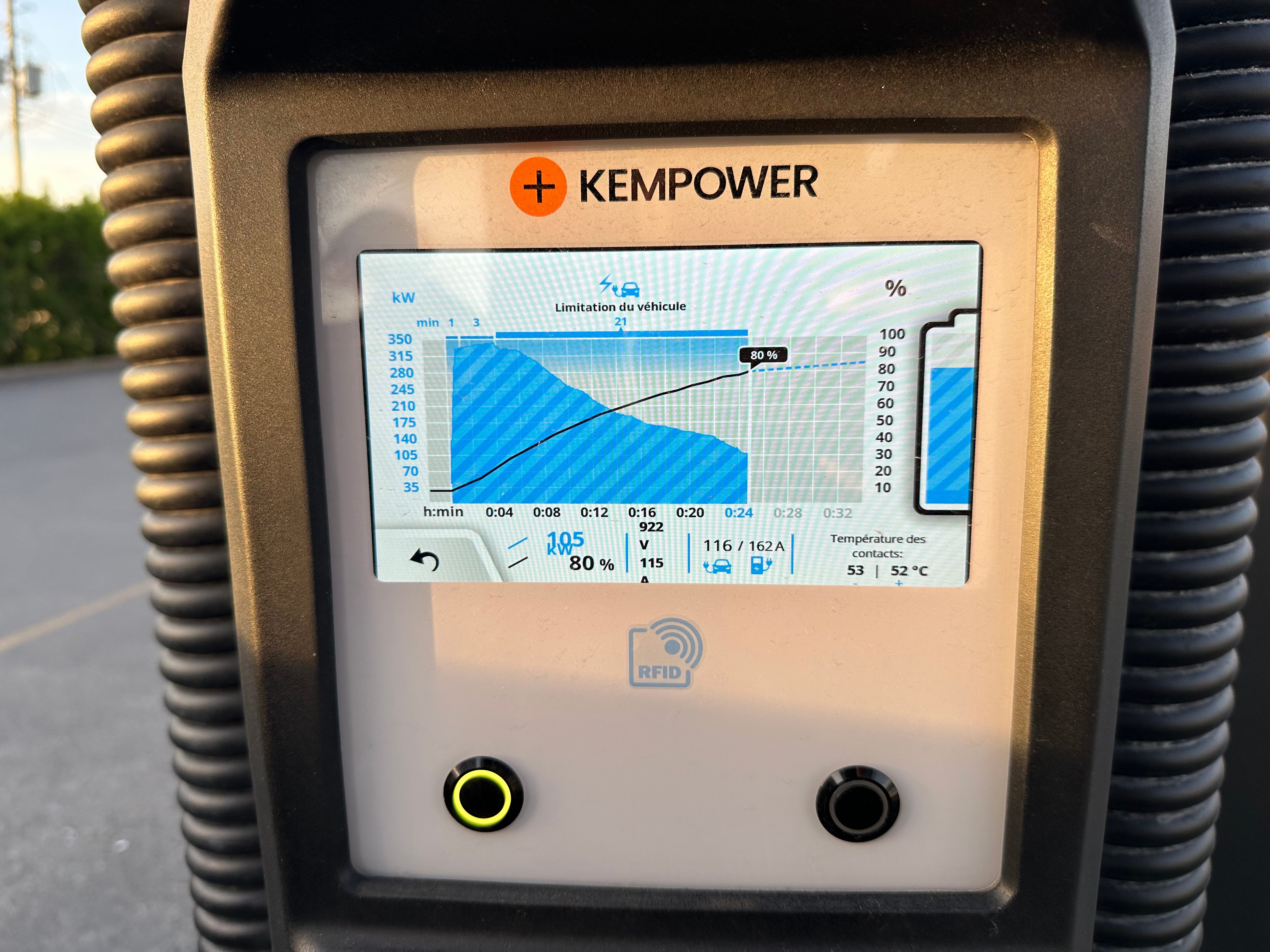
The Grand Touring has a meaningful advantage at current-limited charging stations because its battery pack voltage is higher. For example, on a 180 kW, 1000 V, 200 A station, the Grand Touring will charge at the full 180 kW (922 V × 195 A), while the Touring will be limited to approximately 134 kW (672 V × 200 A). Keep in mind, though, since the Touring’s battery is smaller, the C rate at roughly 1.5C ends up being equivalent to the Grand Touring’s, meaning the time to charge from any given state of charge to another will be the same, albeit with less range recovered per session.
Ergonomics, Cabin & Storage (16.1 / 20)
The cabin is spacious. There is plenty of room in every direction, and even tall occupants will feel comfortable. At 6’2″, I was able to sit comfortably even in the third row, though I was nearly touching the glass ceiling.
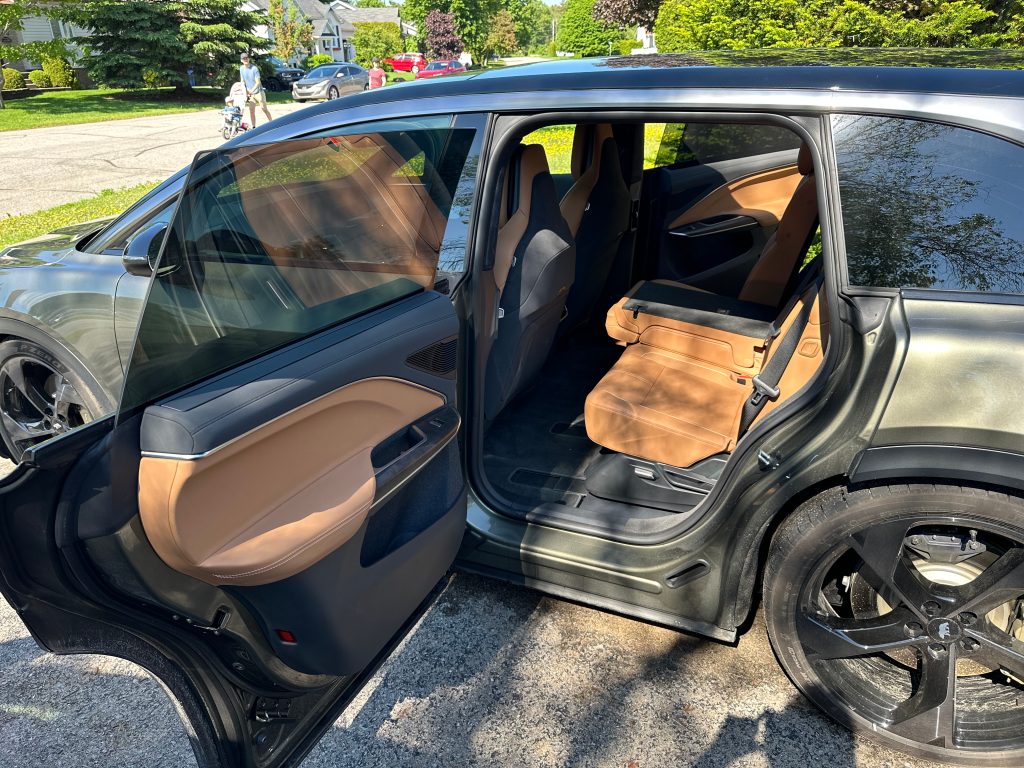
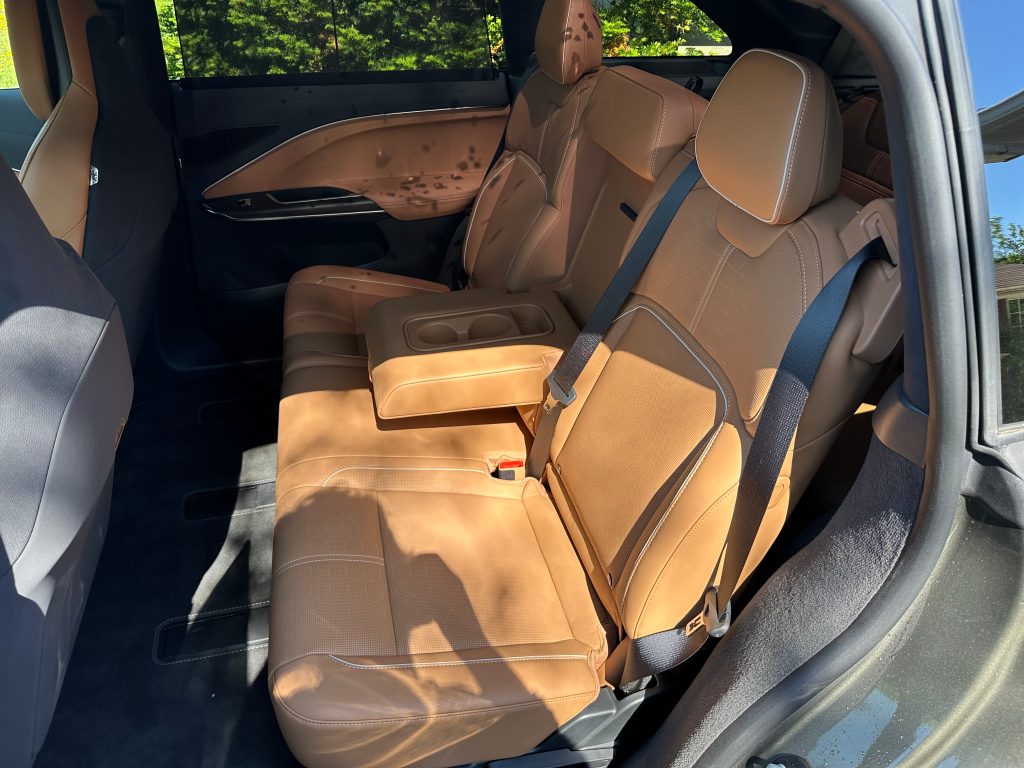
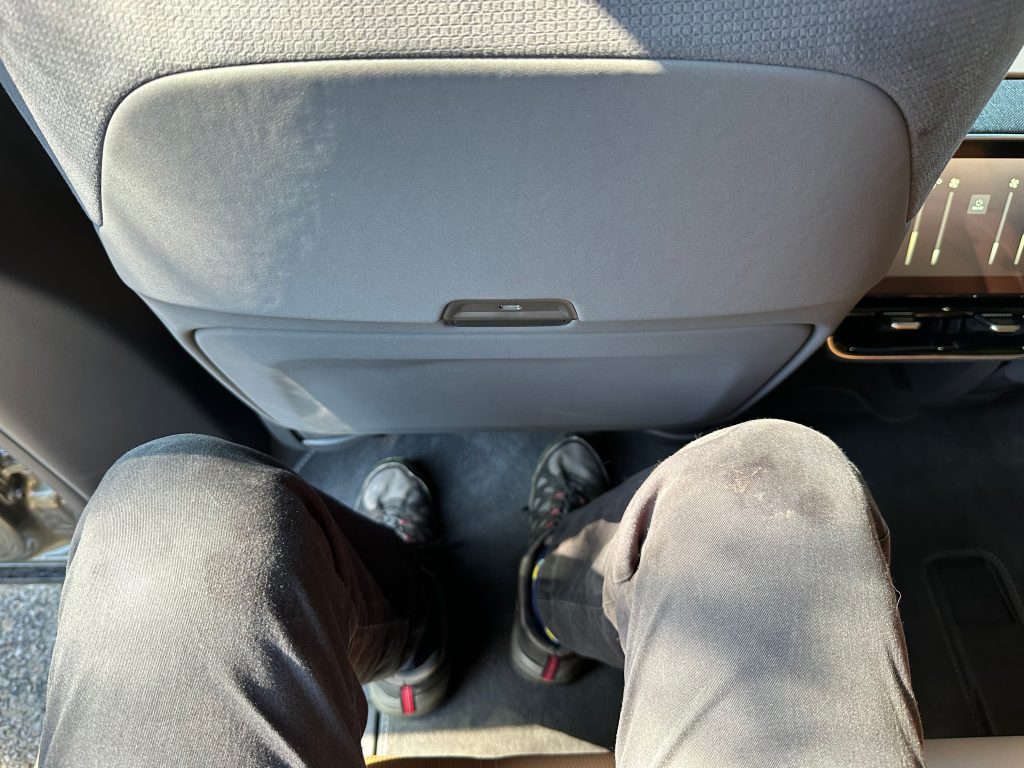
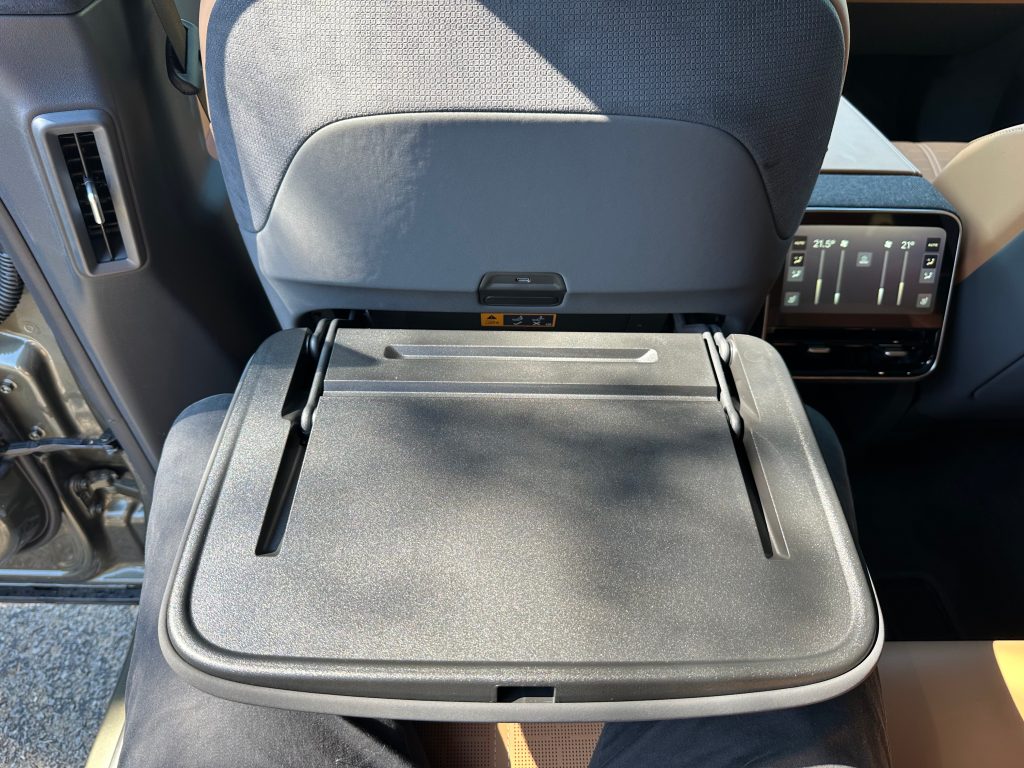
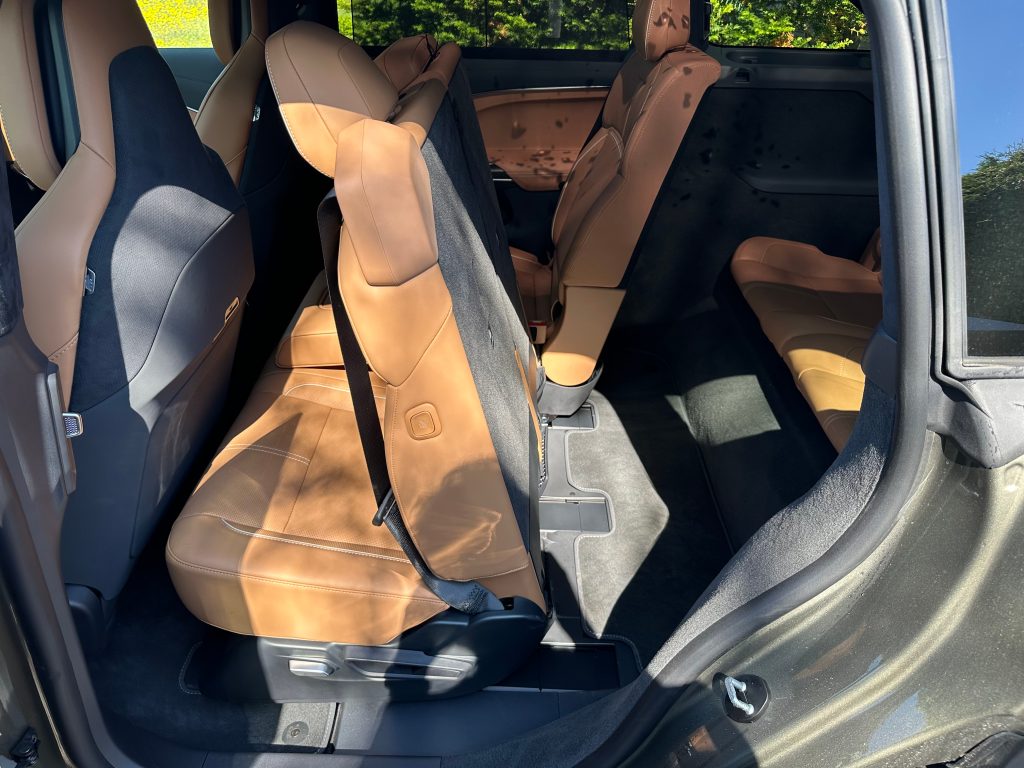
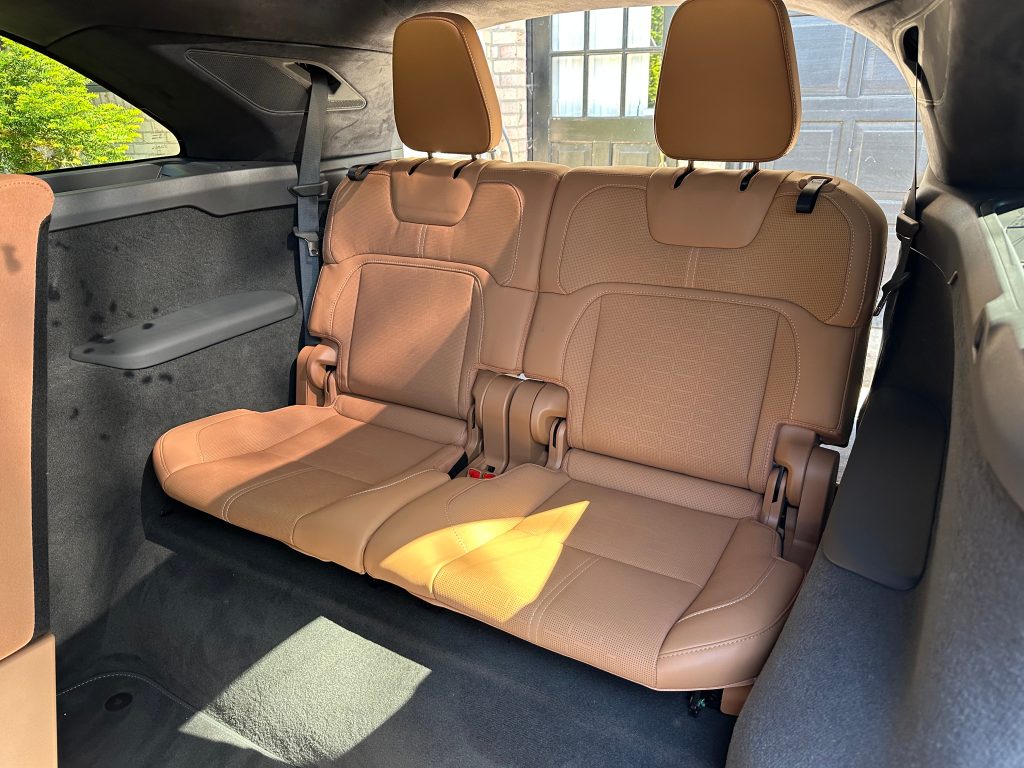

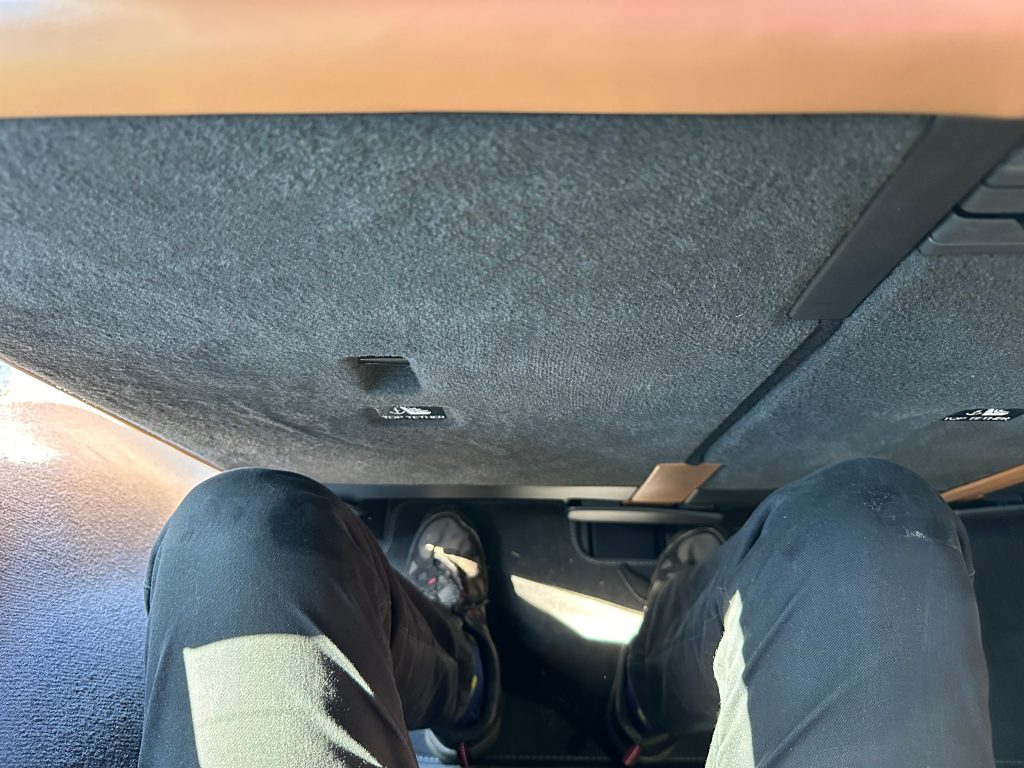
The trunk remains usable even with the third row in place, thanks to a generous in-floor storage cavity, and when all seats are folded, the cargo space is completely flat. The frunk is surprisingly roomy considering the dimensions of the vehicle.
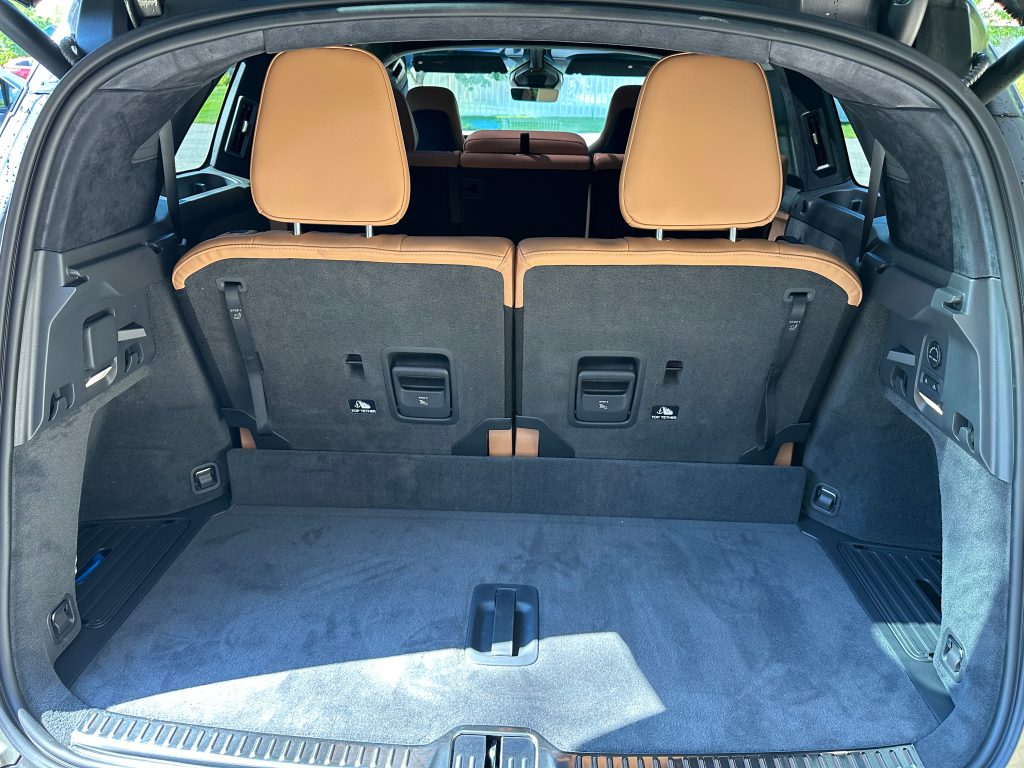
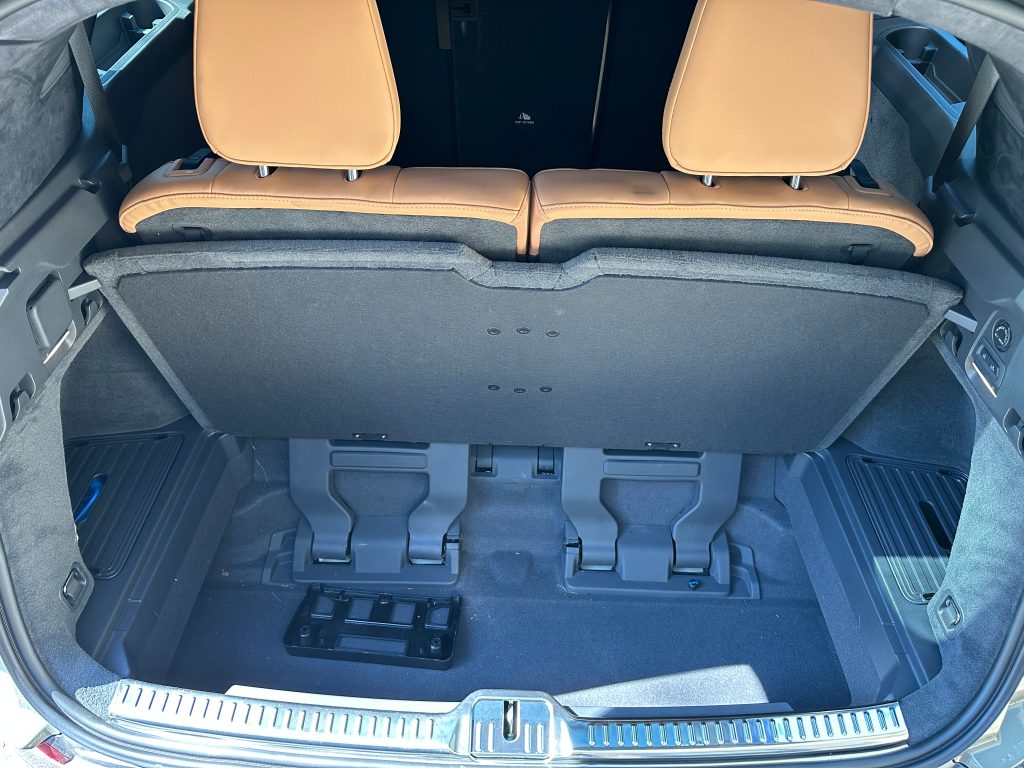
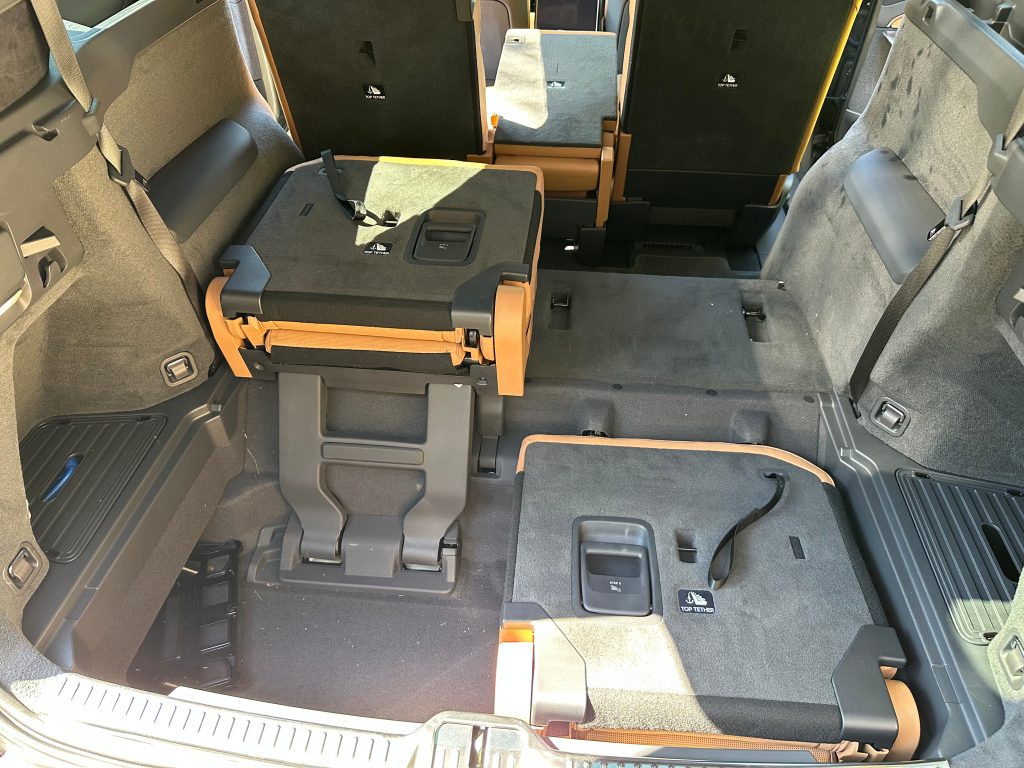
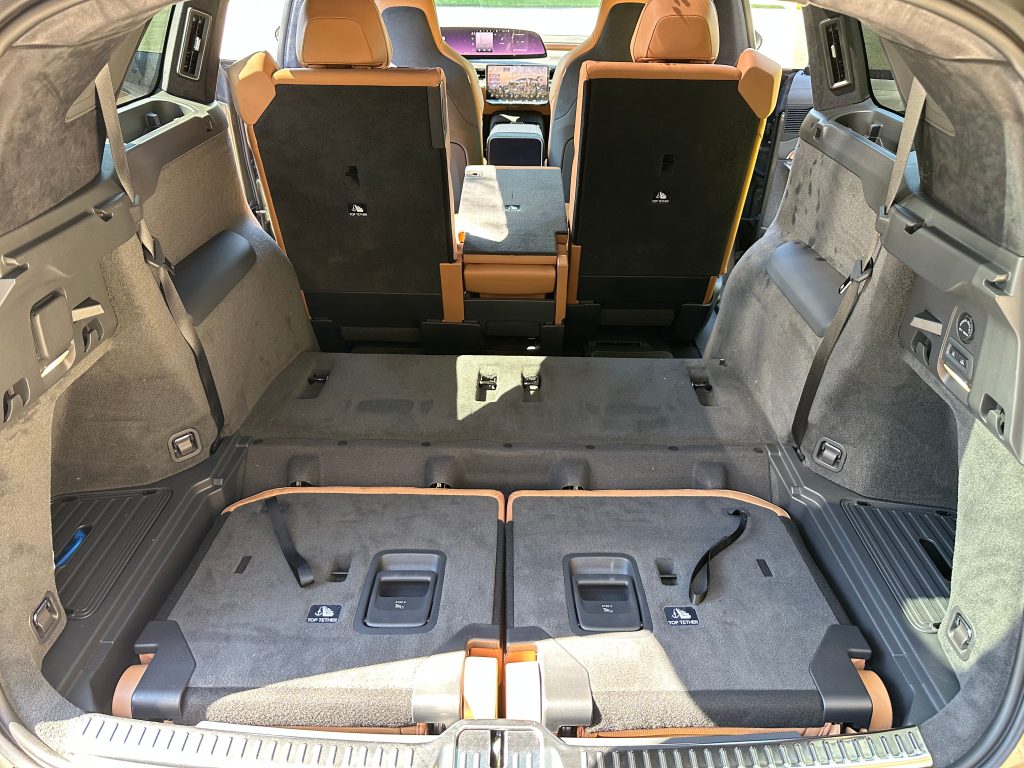
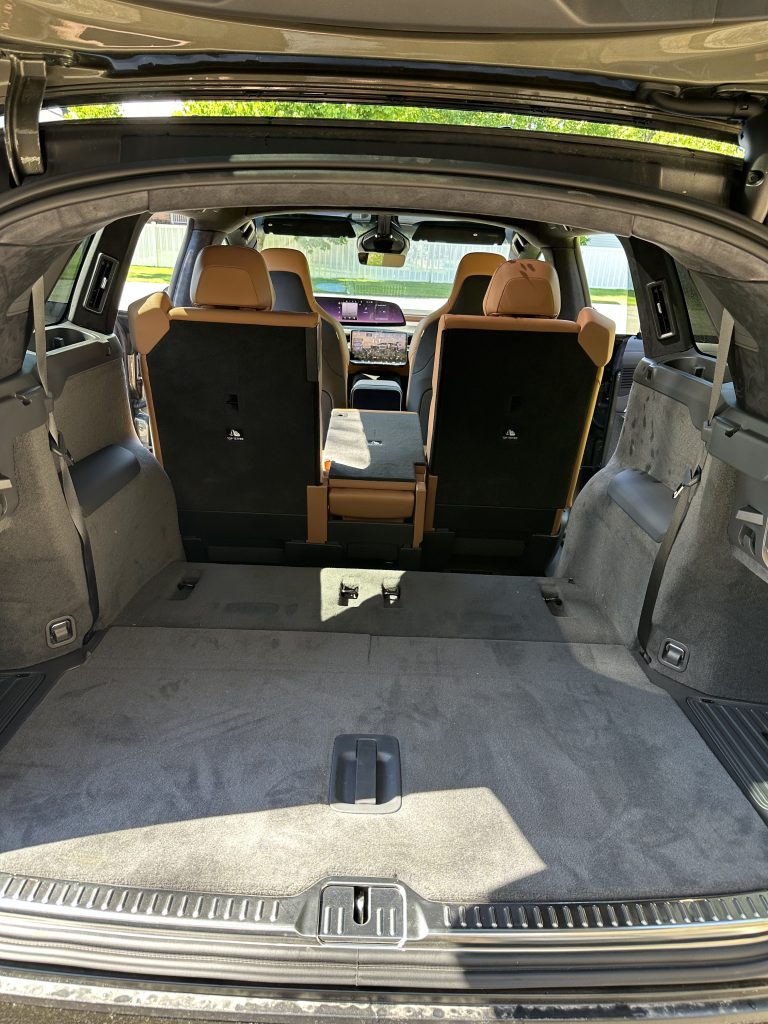
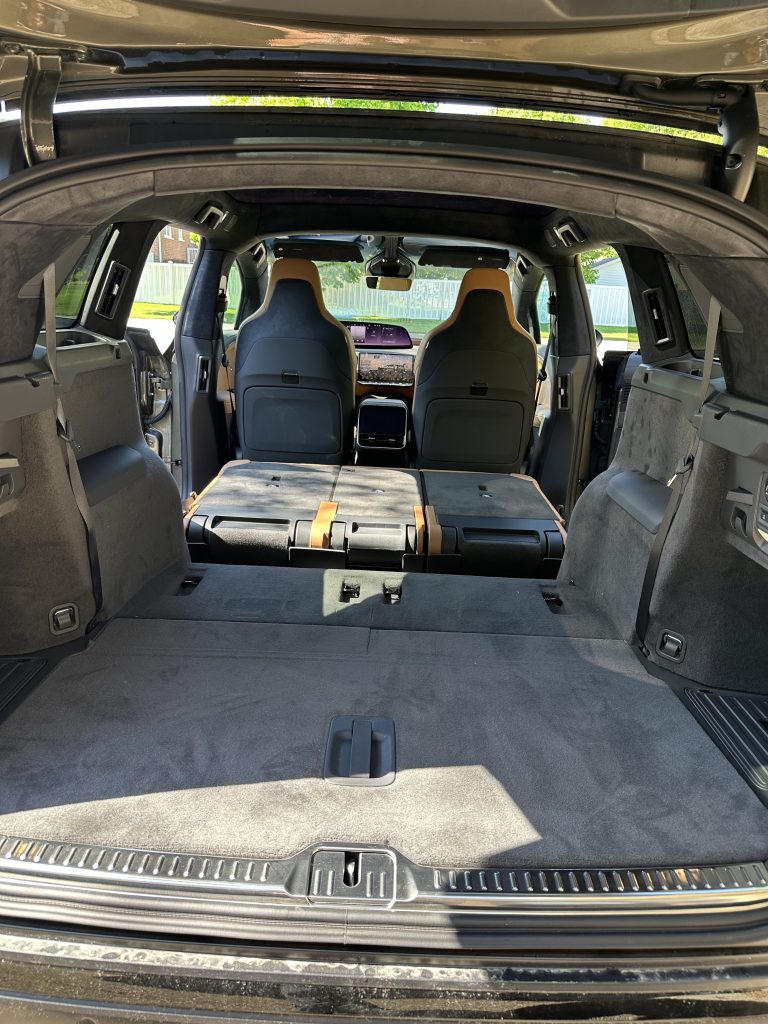
The cockpit view is excellent. The A-pillar is a little wide and takes some getting used to, but the windshield extends all the way back behind the front seats, à la Model X, creating a remarkable sense of space. The screens are well-positioned, thanks to a small steering wheel and a high-mounted instrument cluster that requires very little eye movement to check.
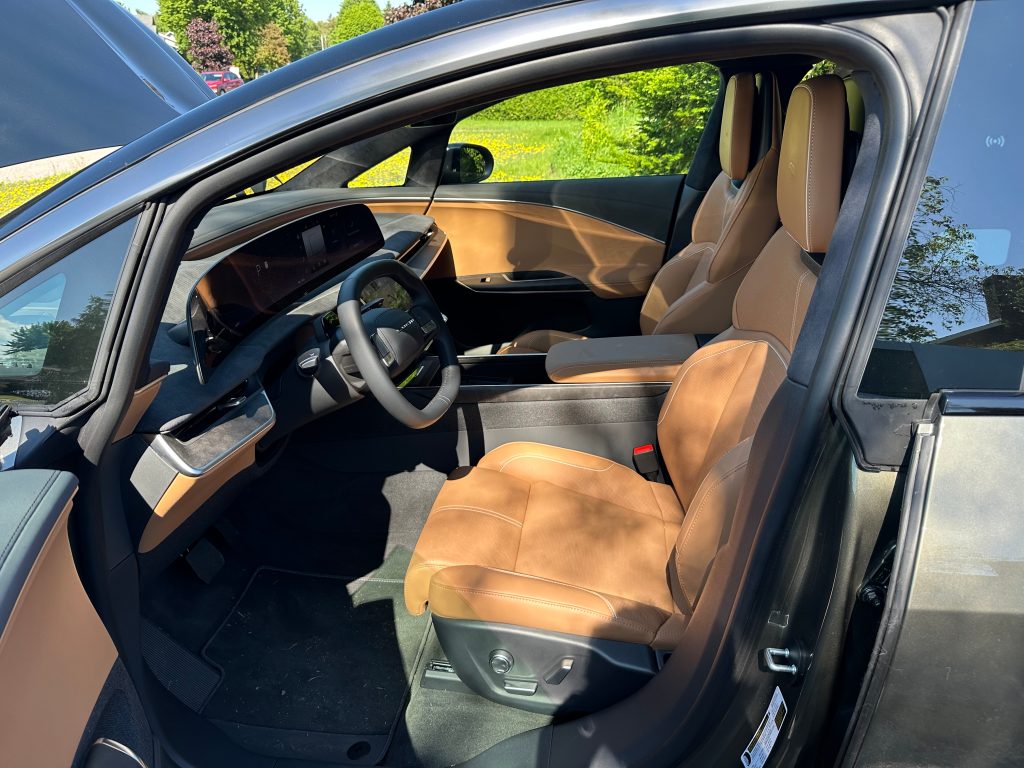
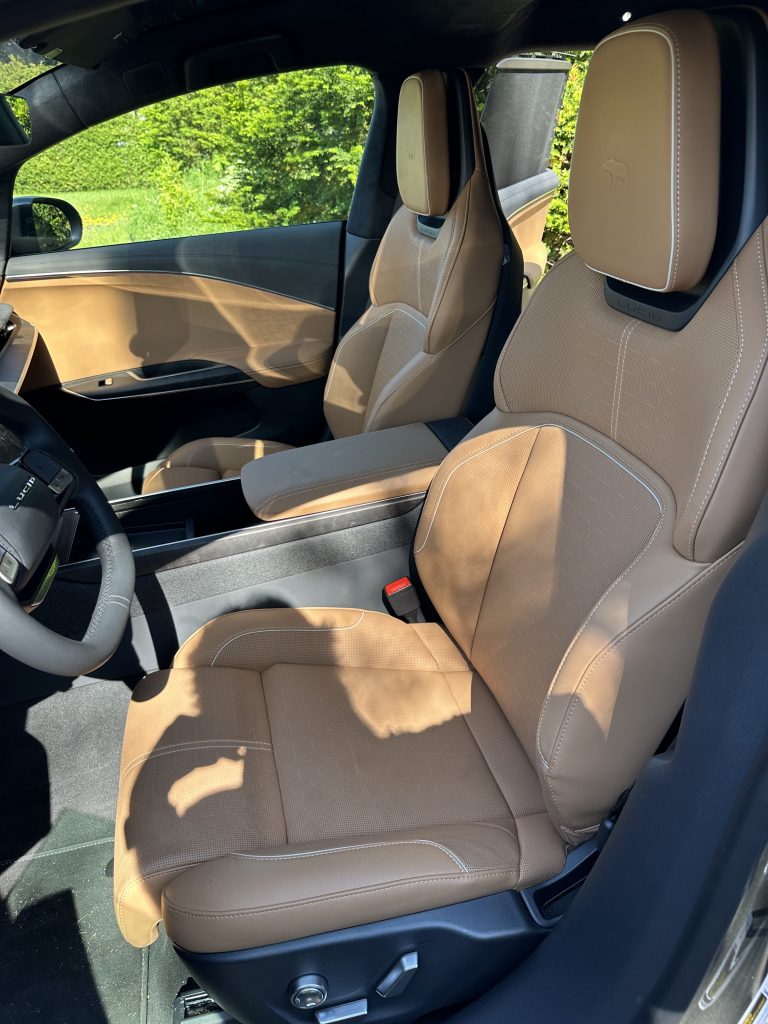
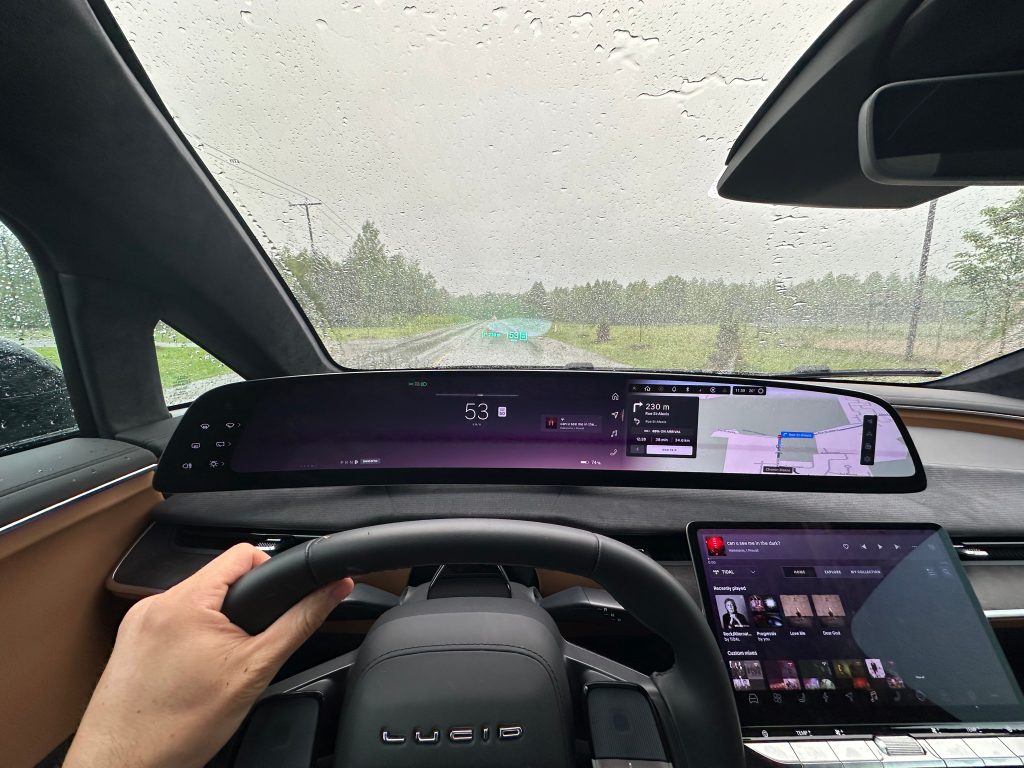
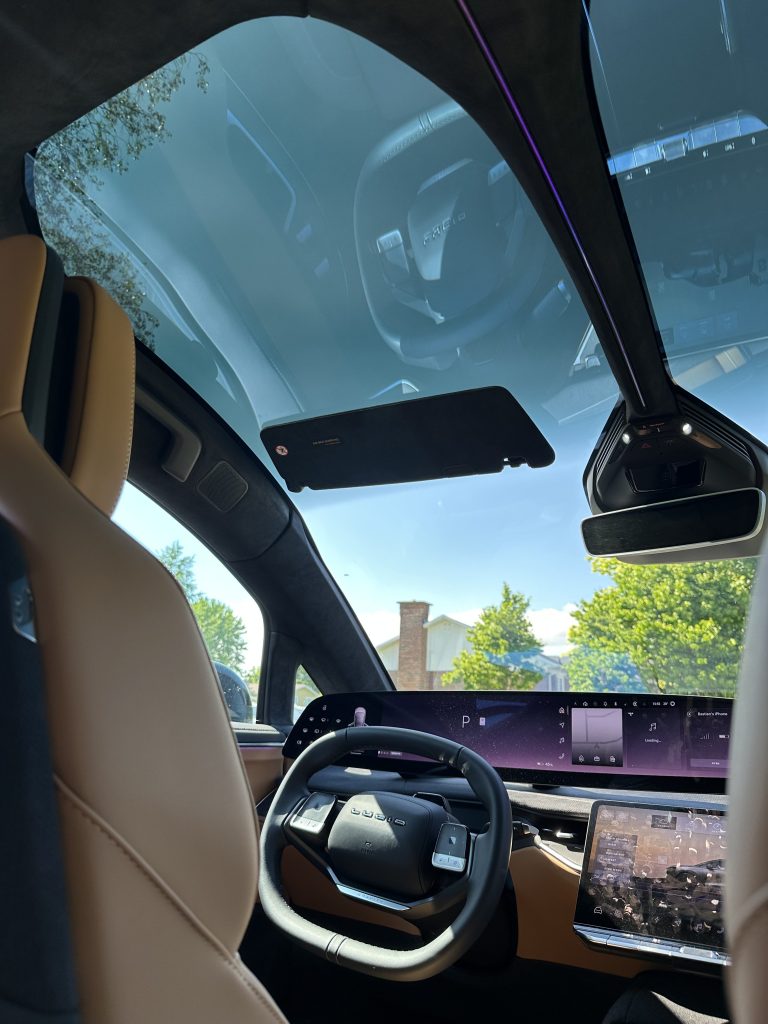
Cabin noise is excellent at only about 66db and no wind whistling coming from the windows. What you would expect from a luxury vehicle. Oh, and the wipers are working very well on auto mode.
The seats offer massage, adjustable thigh and side support, heating, and cooling. They are comfortable enough, even if I expected them to be better for this type of vehicle. A multi-position central storage console and ambient lighting round out the interior touches nicely.
The central console can be configured multiple ways, thanks to a sliding tray, and integrates the wireless phone charger
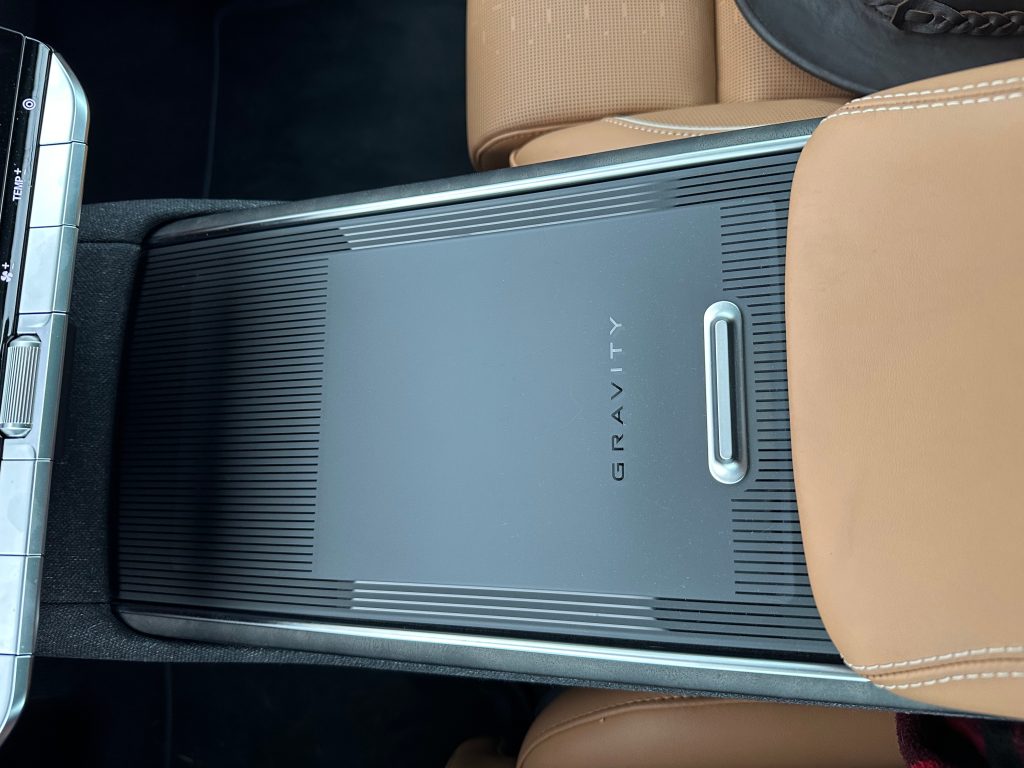
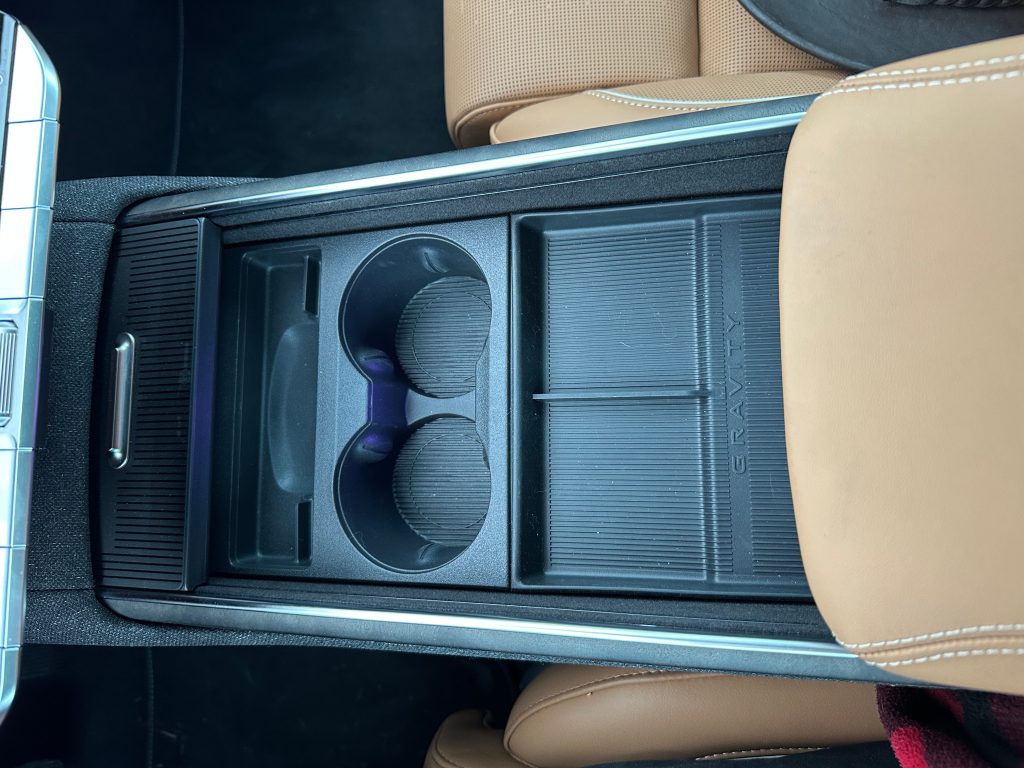
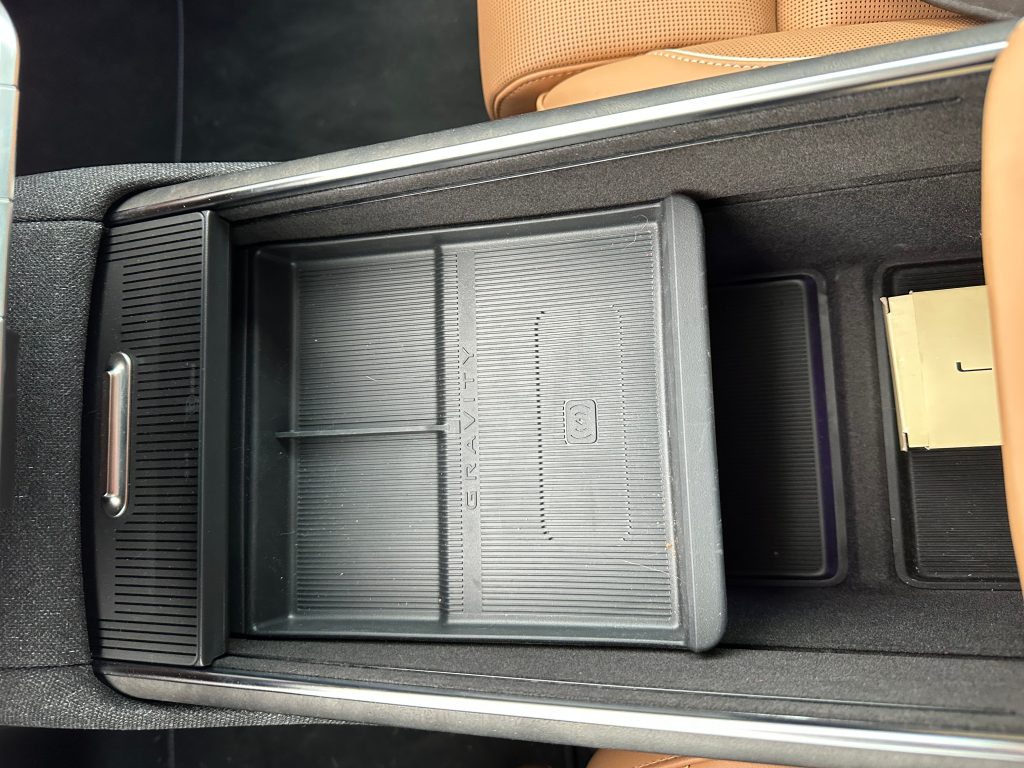
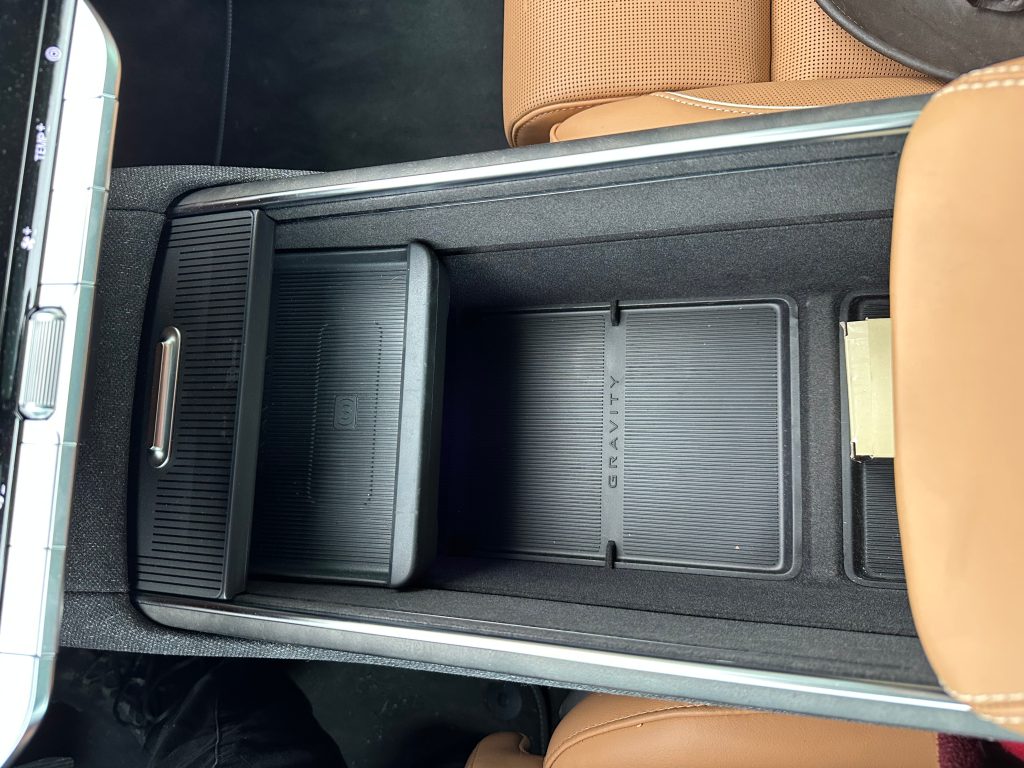
With the In-cabin 120V 1.8kw outlet located at the back of the center console, USB-C ports are available for each passenger: 100 W at the front and 45 W for the second and third rows. I use the in-cabin 120V outlet quite often in my car, so I’m pleased when it is present.
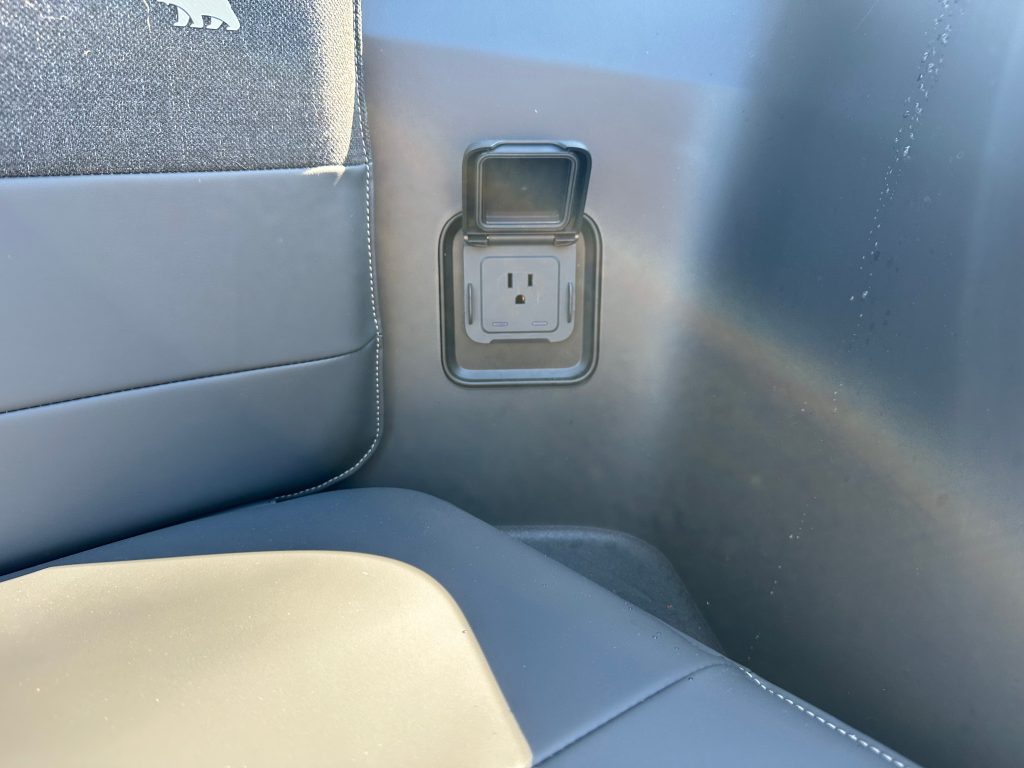
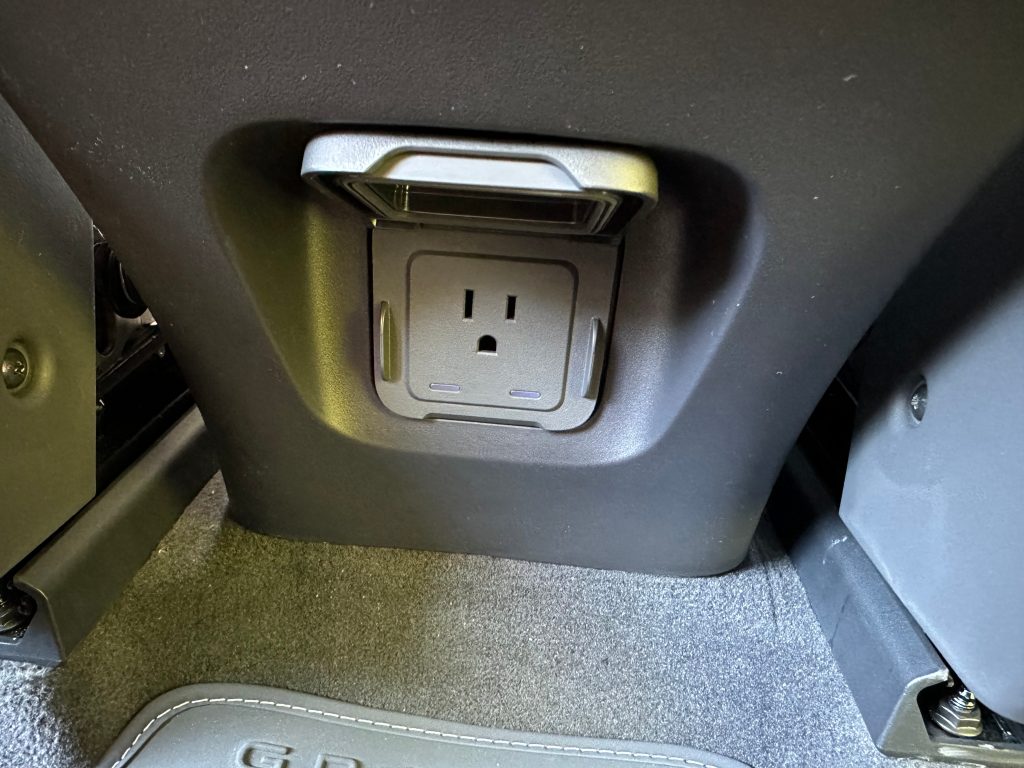

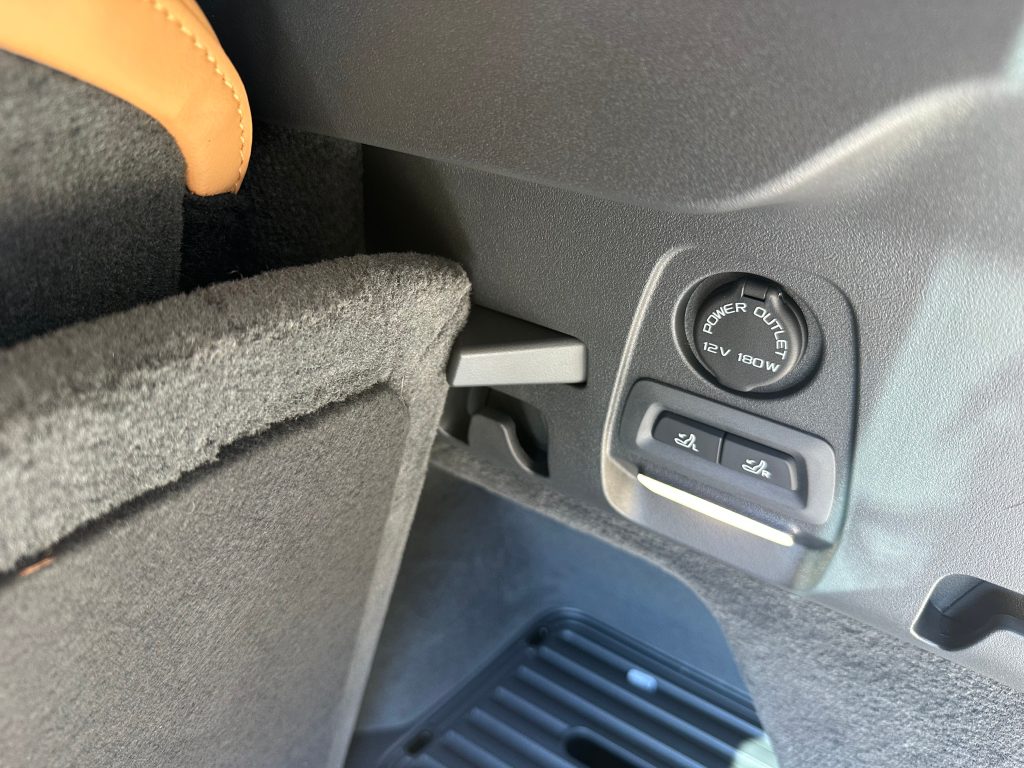
Second-row passengers are treated with a tray table, useful when you want to work on your laptop while being driven around. You might think of rich people having a chauffeur when reading this line, but for me, this kind of feature would be nice during our family vacation, as I can’t really unplug for work and end up working sporadically on my laptop while my wife’s driving. I did exactly that during my latest road trip, which was to cross the country, and that’s where in-cabin 120V outlets are most useful for me, plugging my power-hungry laptop and a Starlink mini router. I’m sure there are many other use cases for those tray tables, though.
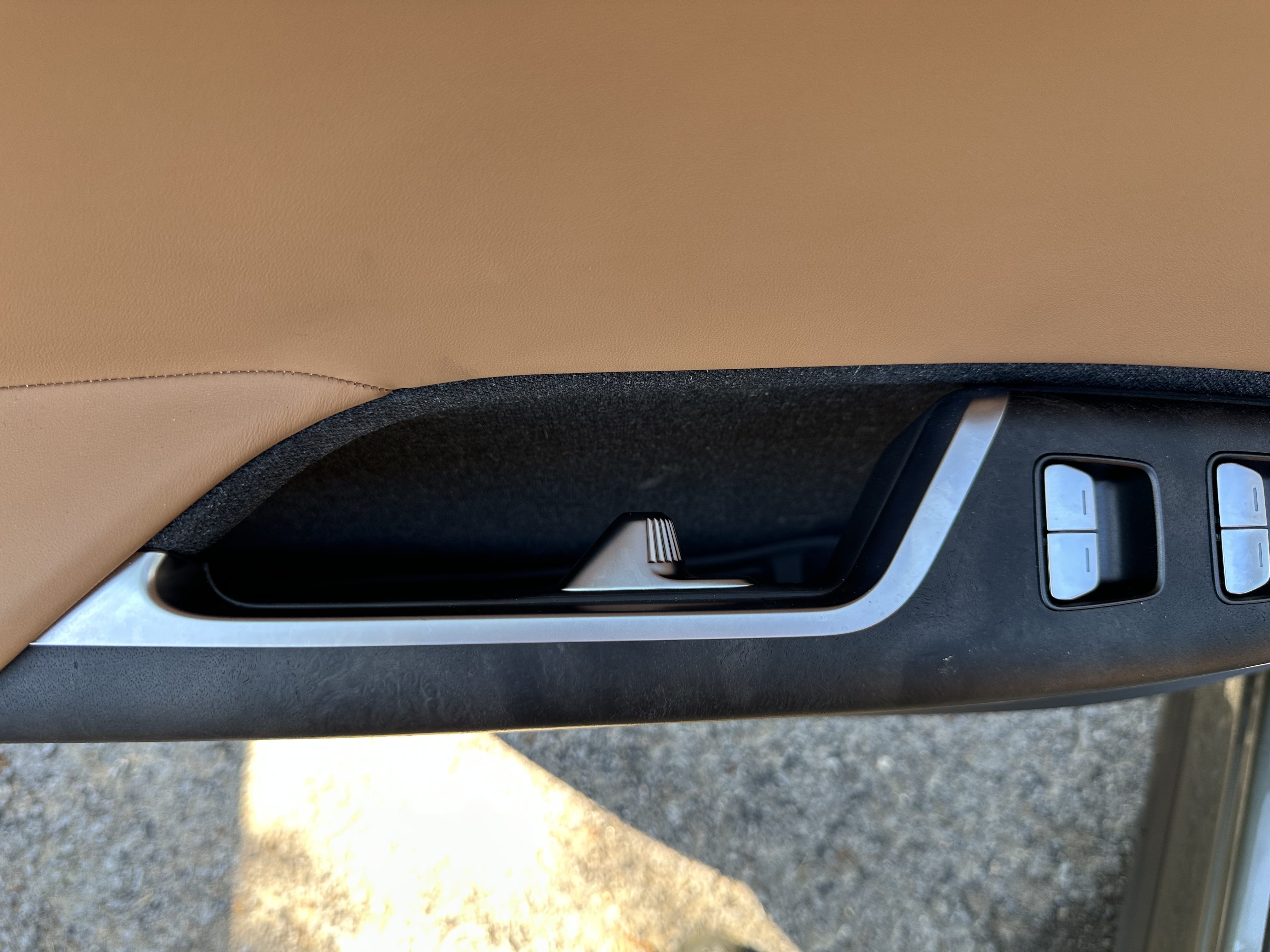
Another thing worth mentioning, even if it’s kind of weird to have to speak about it nowadays, the door opening from inside the cabin, front and rear, is done through a lever with 2 functions. Pulling a short stroke on it will engage the electronic opening of the door, and pulling all the way will engage the mechanical opening of the door. It’s clever, as in a possible emergency situation, when panic happens, the movement to open the door will be natural, no need to look for a hidden pulling tab.
Software & User Interface:
The feature set is solid. Apple CarPlay and Android Auto are supported, though I did not use them much, since the vehicle’s own system offers good navigation and streaming integration with Tidal, Spotify, and SiriusXM. This is how a vehicle should be set in my opinion and relying on the user’s phone to offer infotainment features is only suitable for low-cost vehicles. Moreover, I still did not experience the implementation of CarPlay battery preheating on the navigation feature in any CarPlay-enabled vehicle, needing to rely on the vehicle’s internal navigation system for road trips anyway.
On the Gravity, only my phone contacts were handled through CarPlay, and it felt seamless.
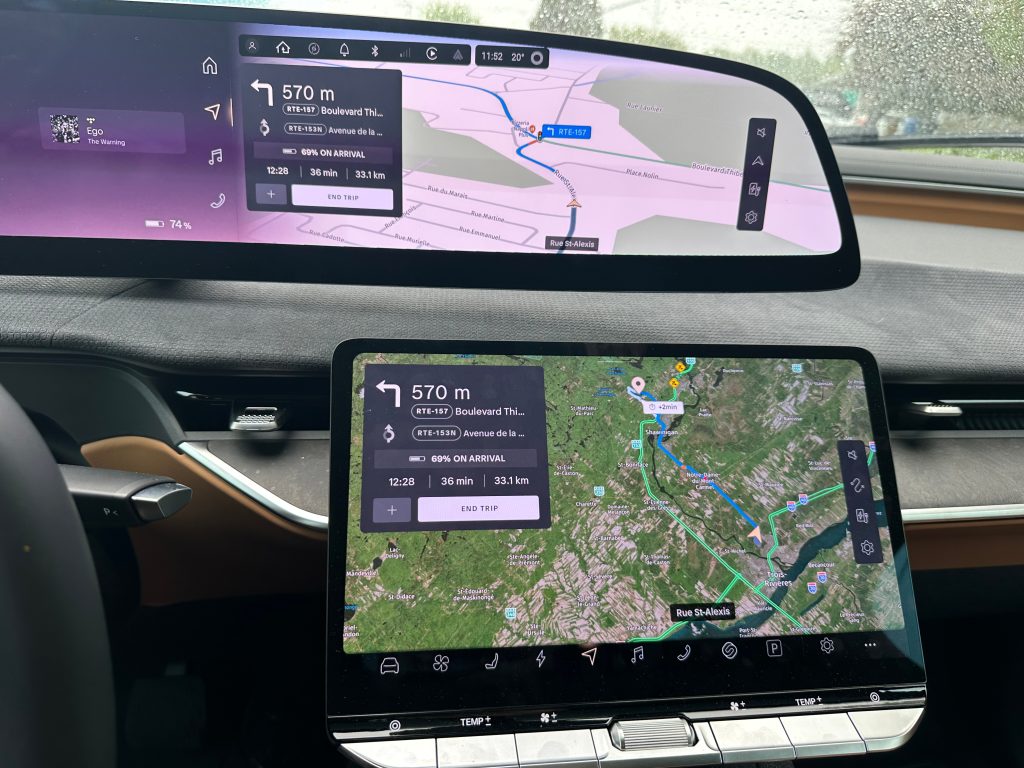
Navigation available on both screens 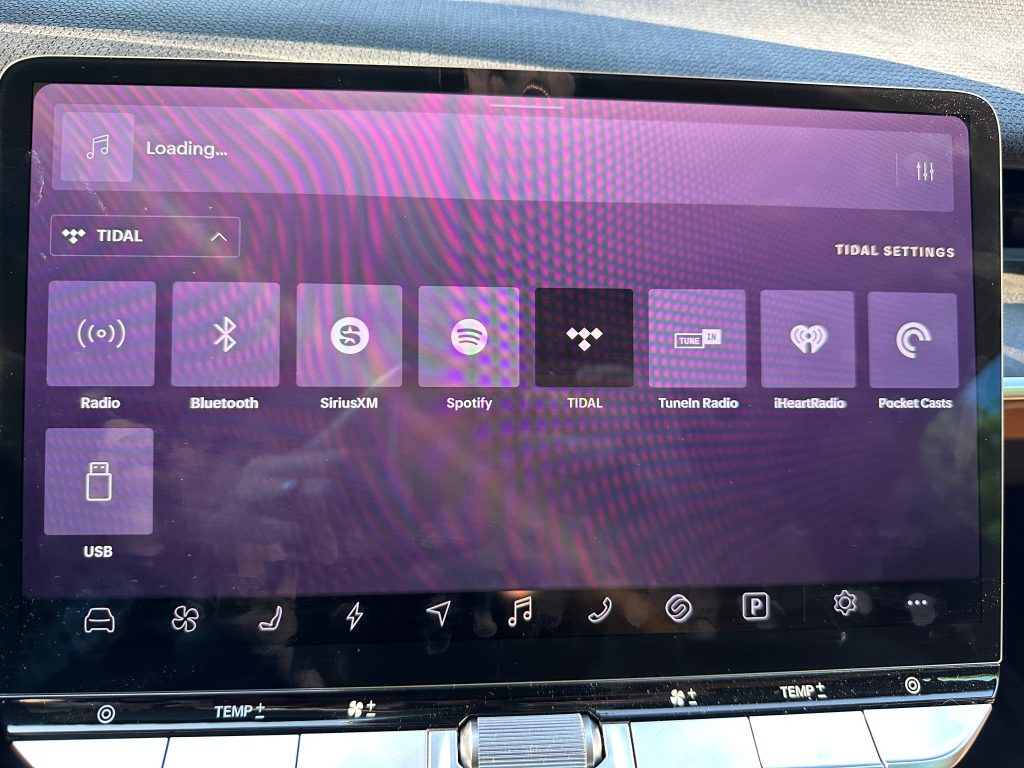
Media application availables 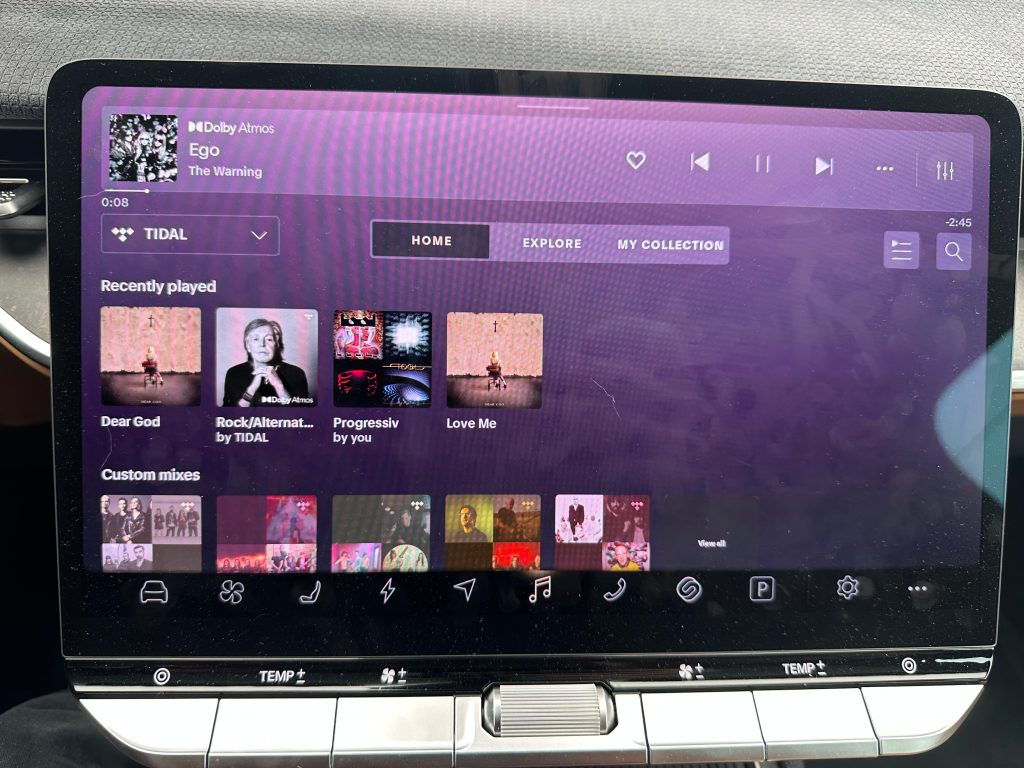
Tidal with Dolby Atmos 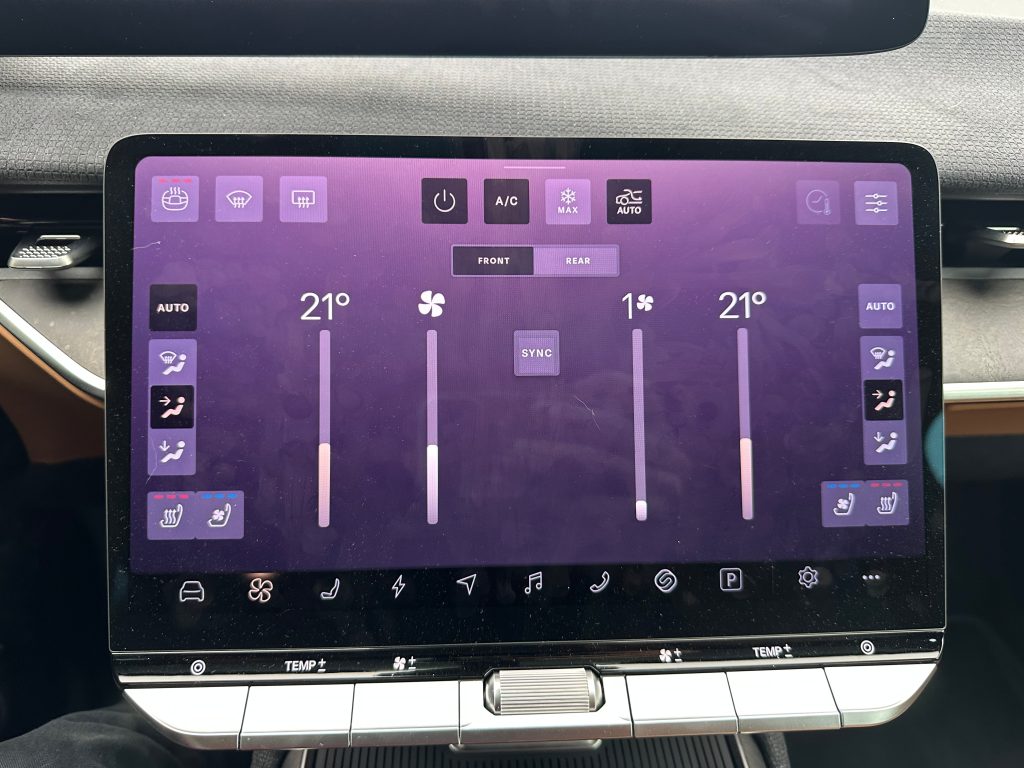
HVAC application 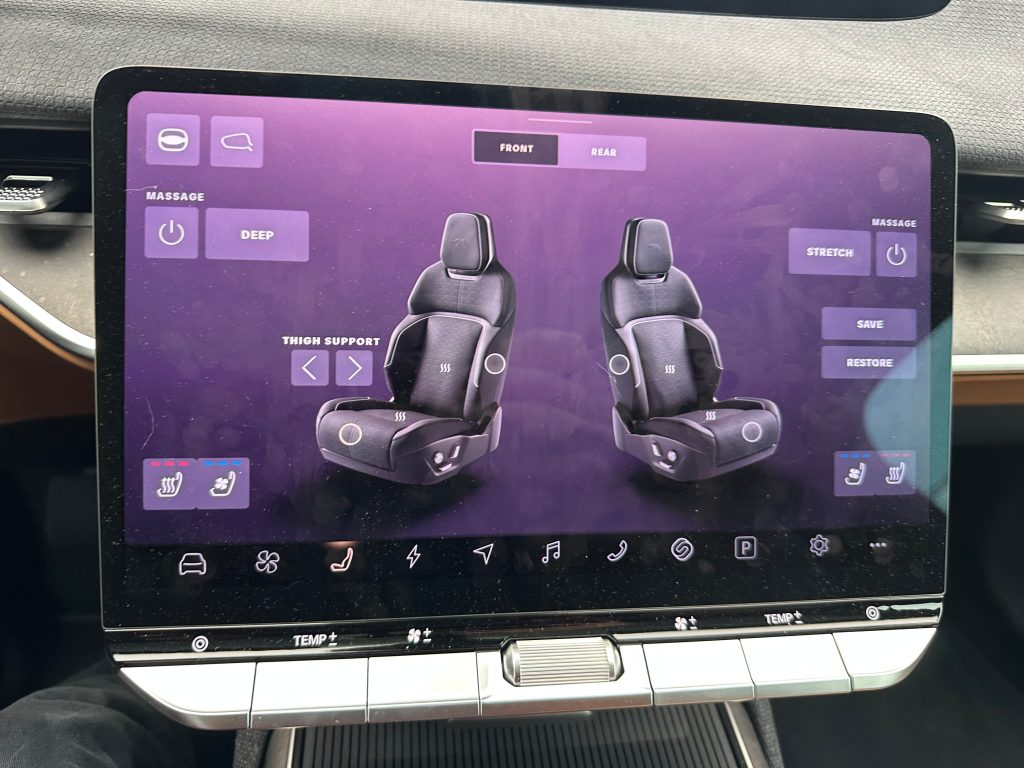
Seats application with position, heating/cooling and massaging 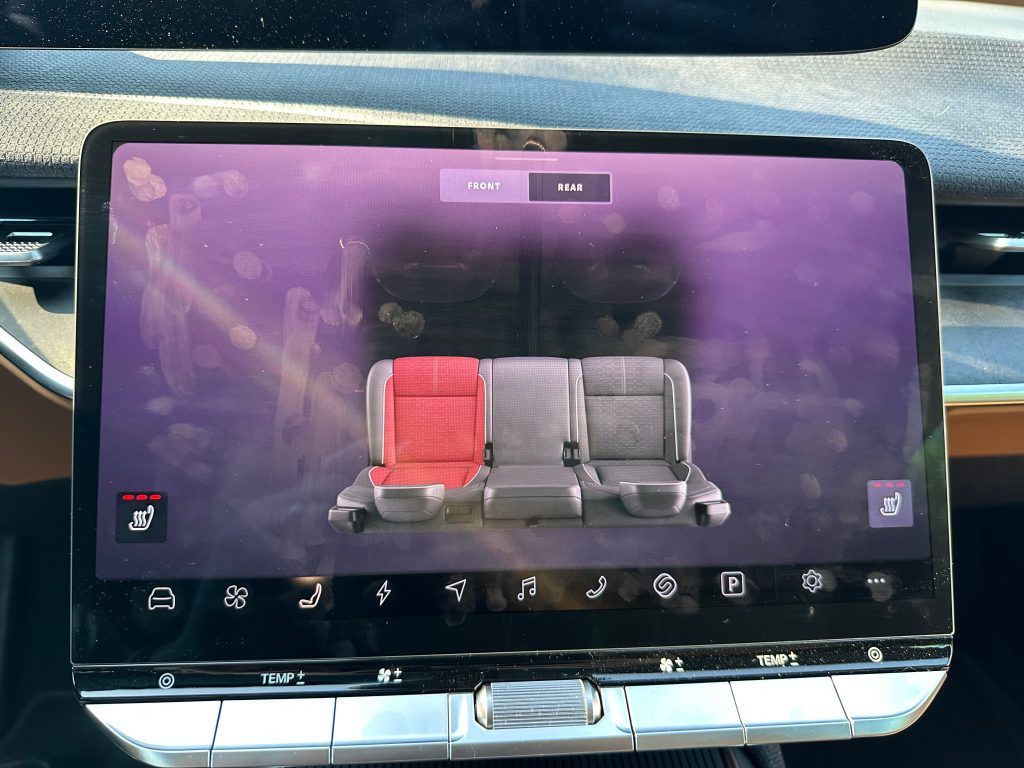
Rear Seats heating control 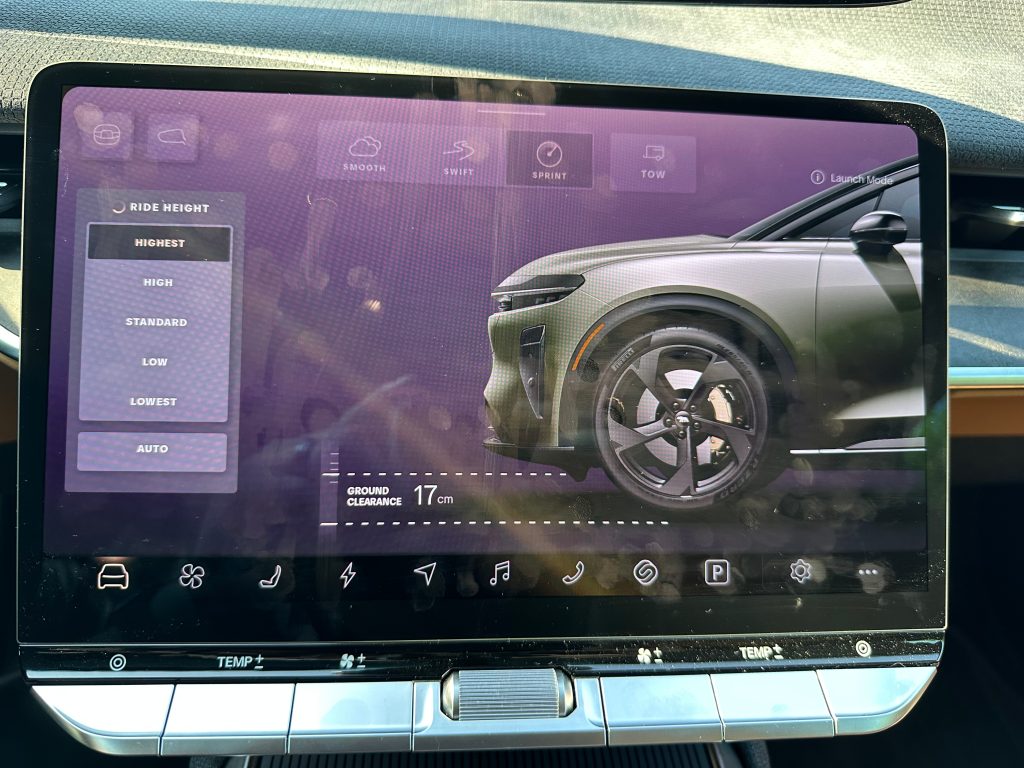
Driving height control at max height 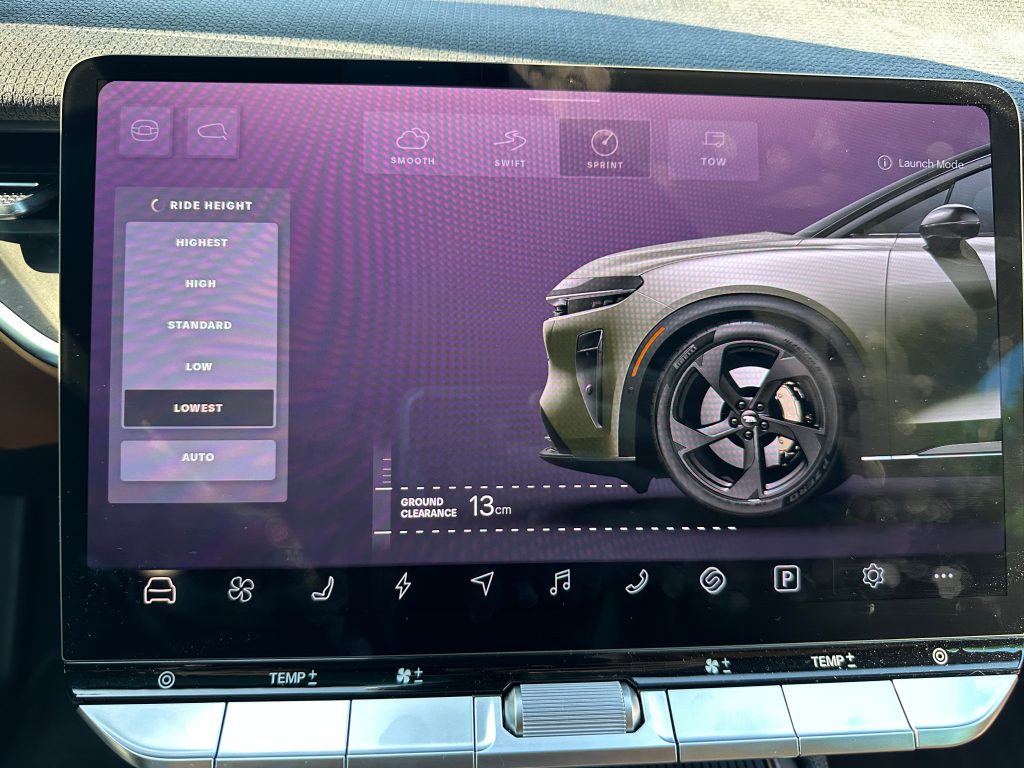
Driving height control at lowest height 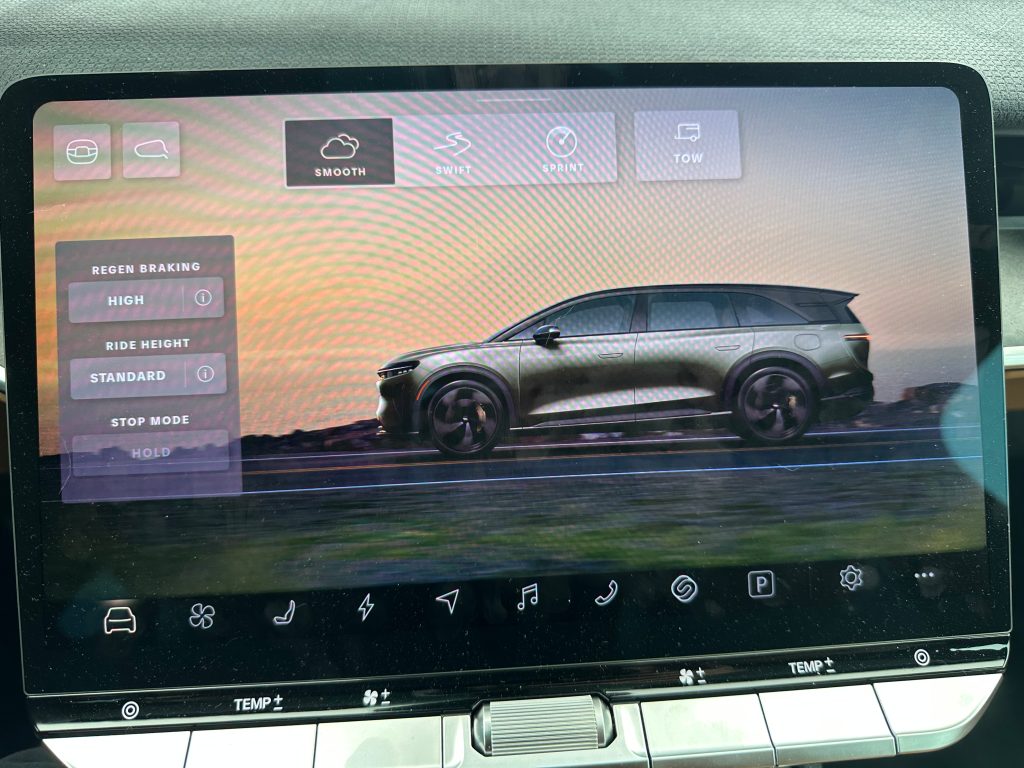
Driver mode selection 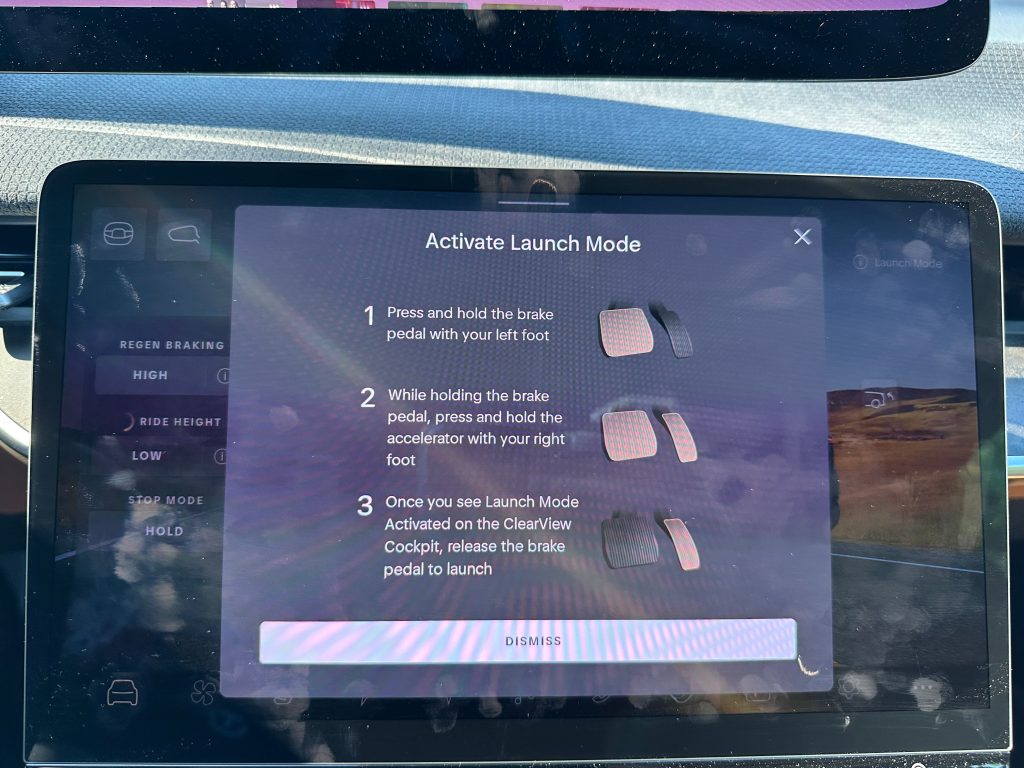
Launch mode available (GT) 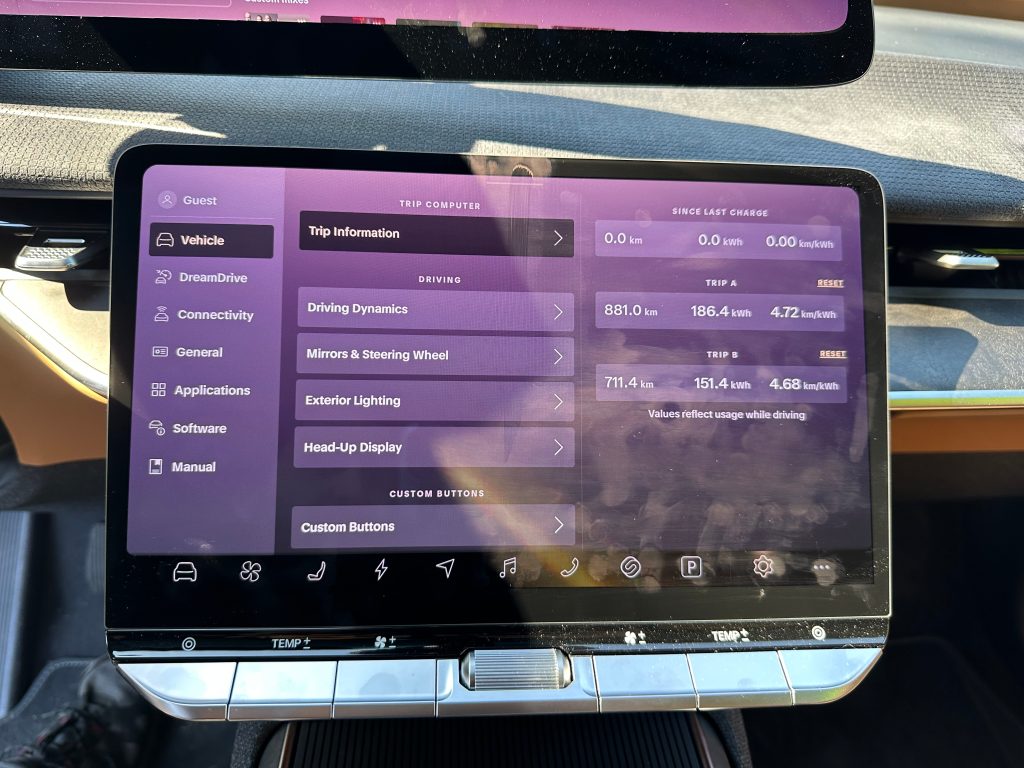
Settings app showing the efficiency 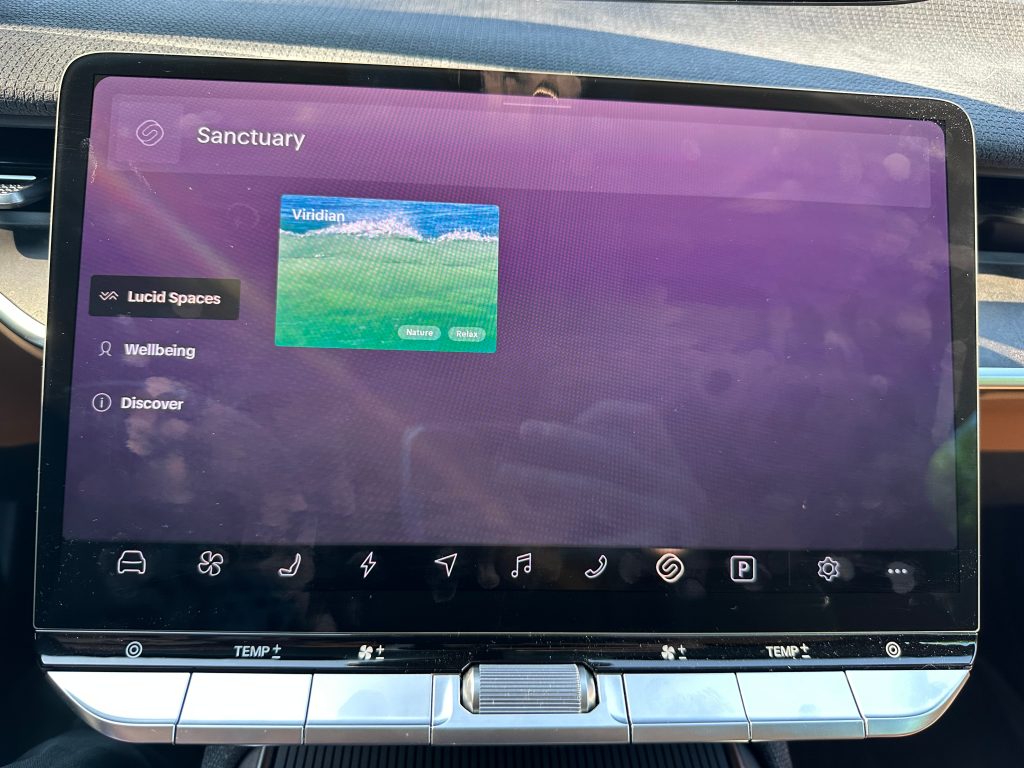
Sanctuary App (To be more populated in the future?) 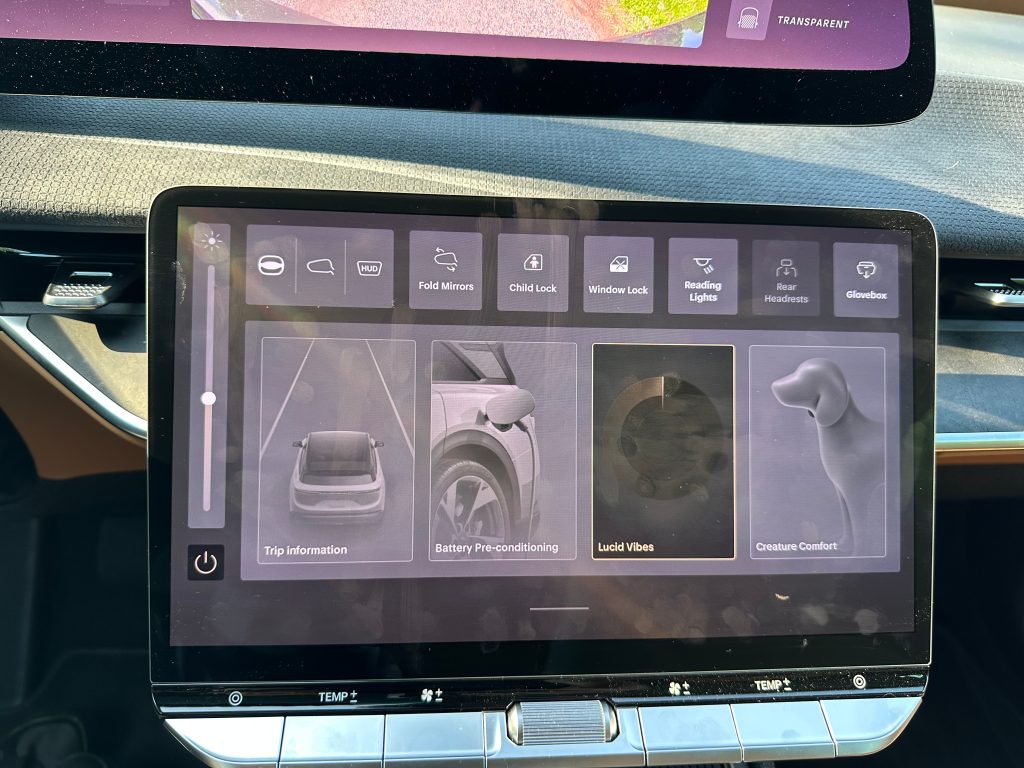
Quick access panel on the Pilot Panel 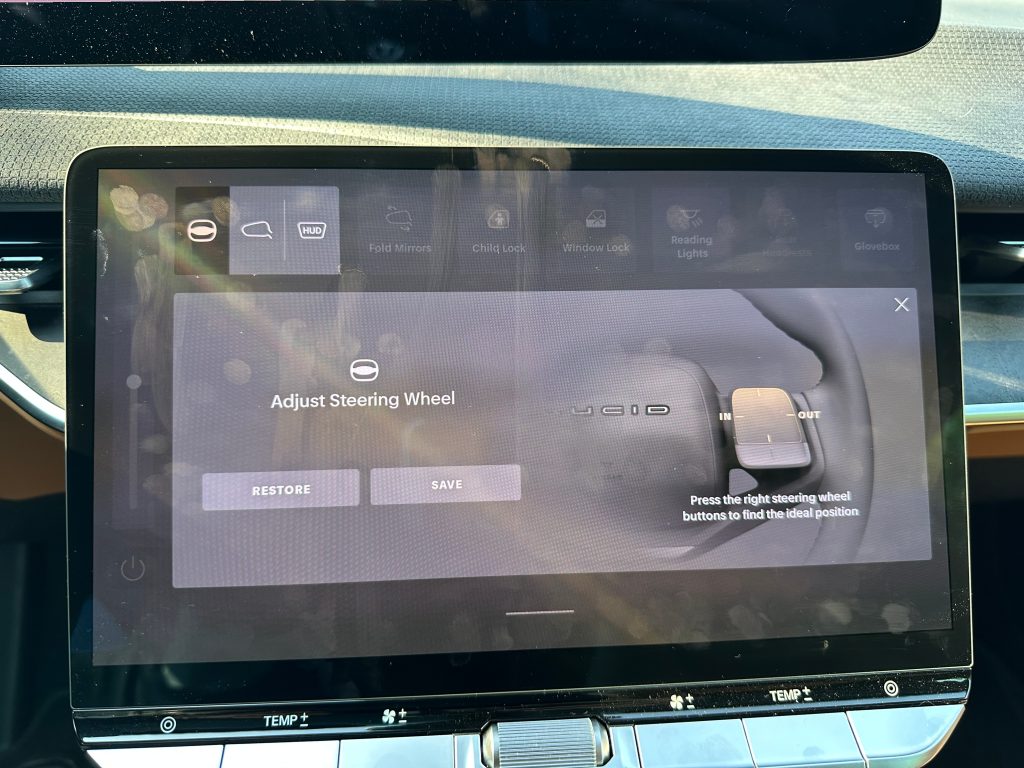
Quick access panel on the Pilot Panel (Steering adjustment) 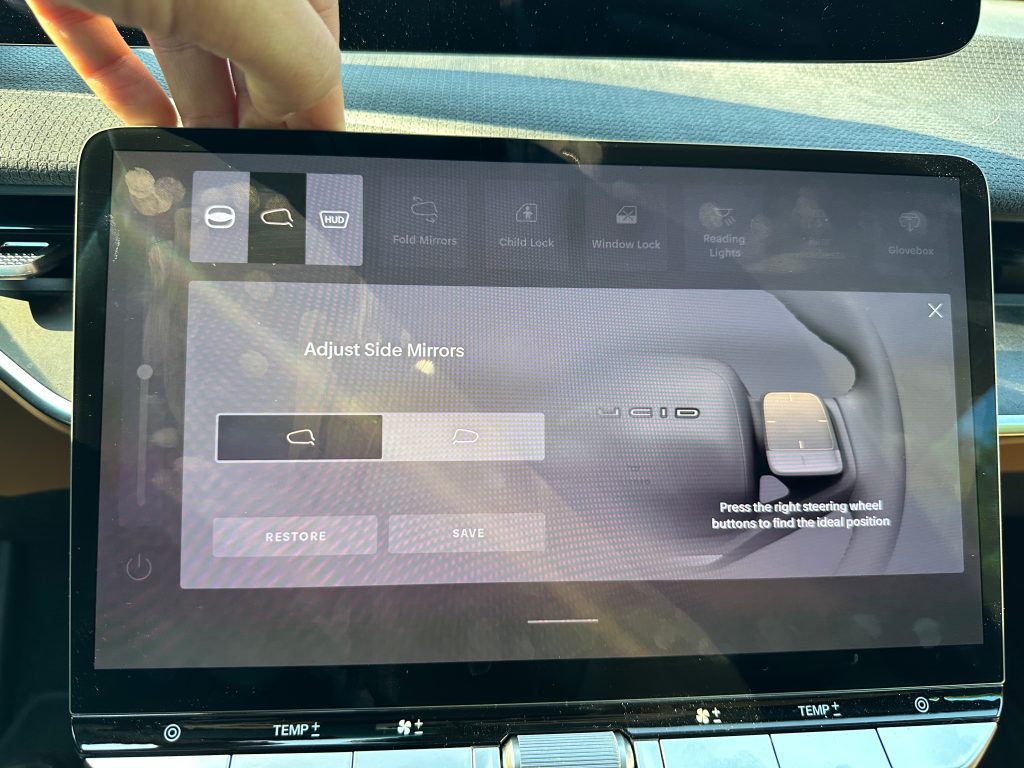
Quick access panel on the Pilot Panel (Mirrors adjustment) 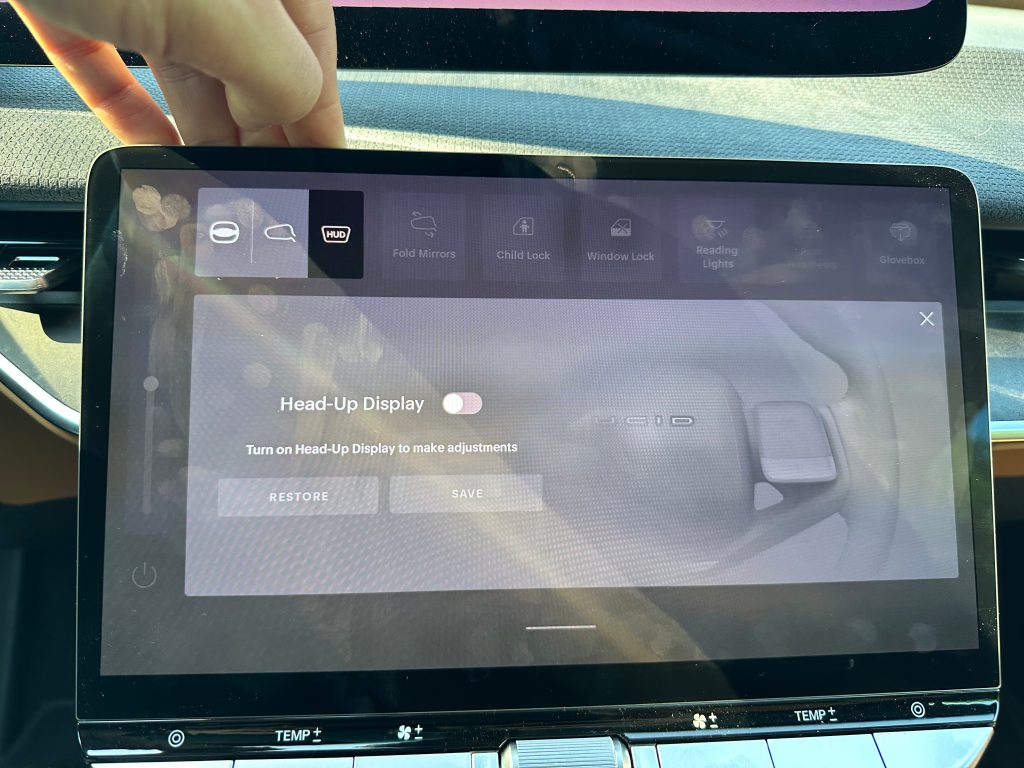
Quick access panel on the Pilot Panel (HUD) 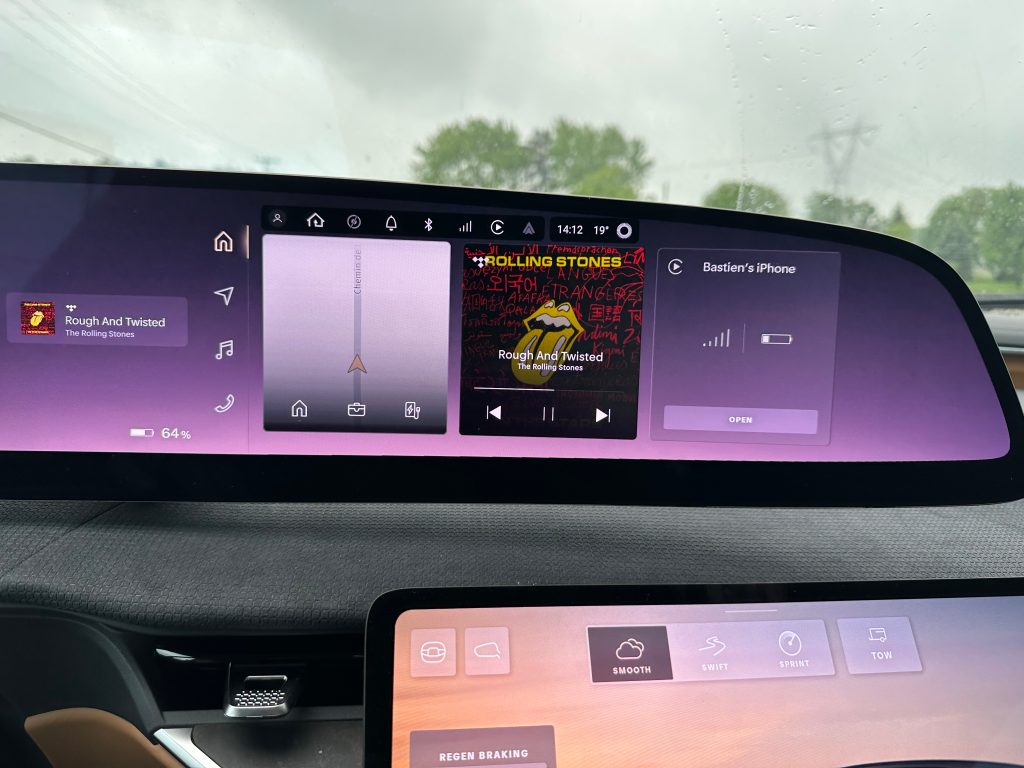
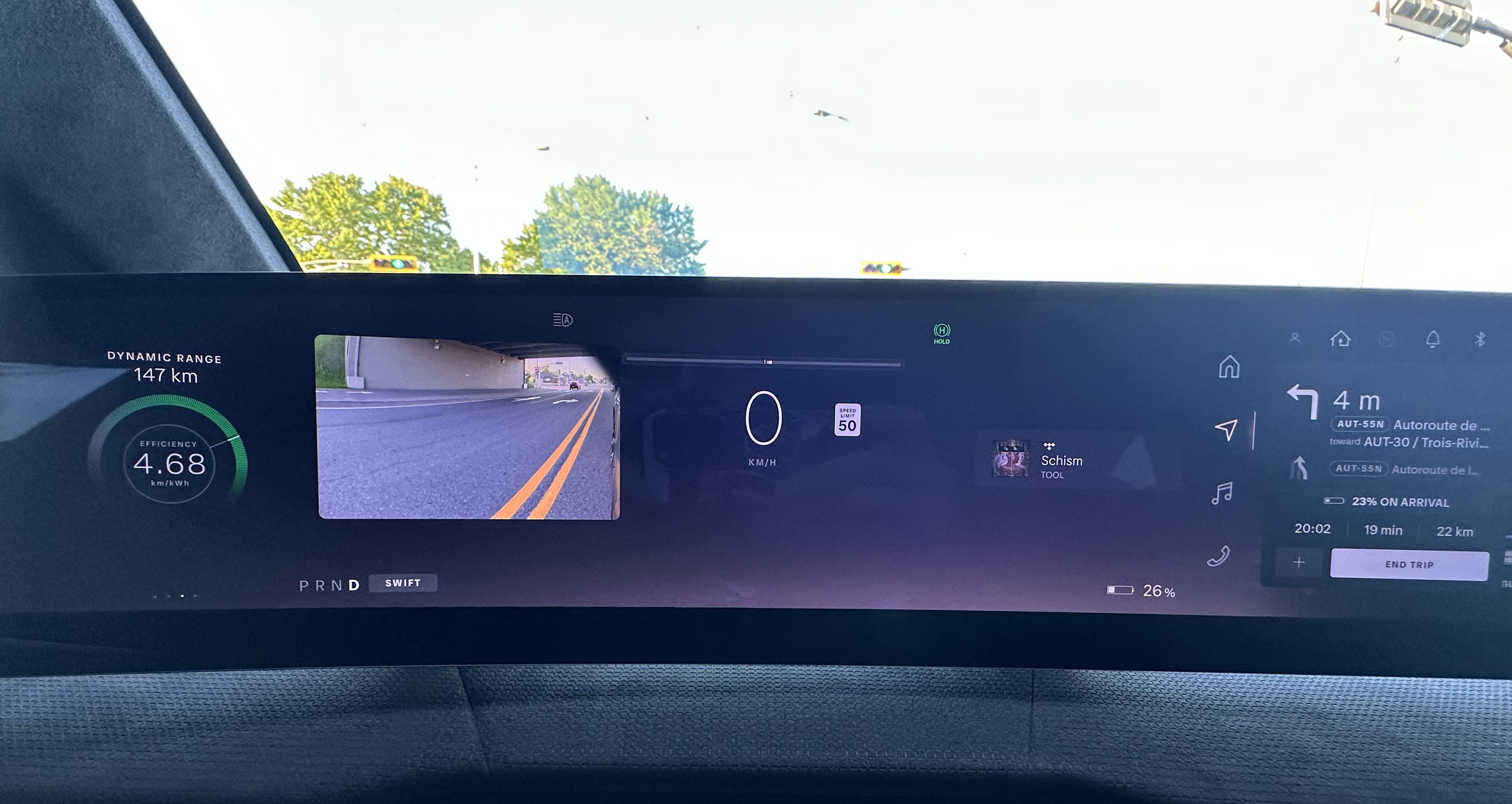
Clear View Cockpit displaying 3 differents app 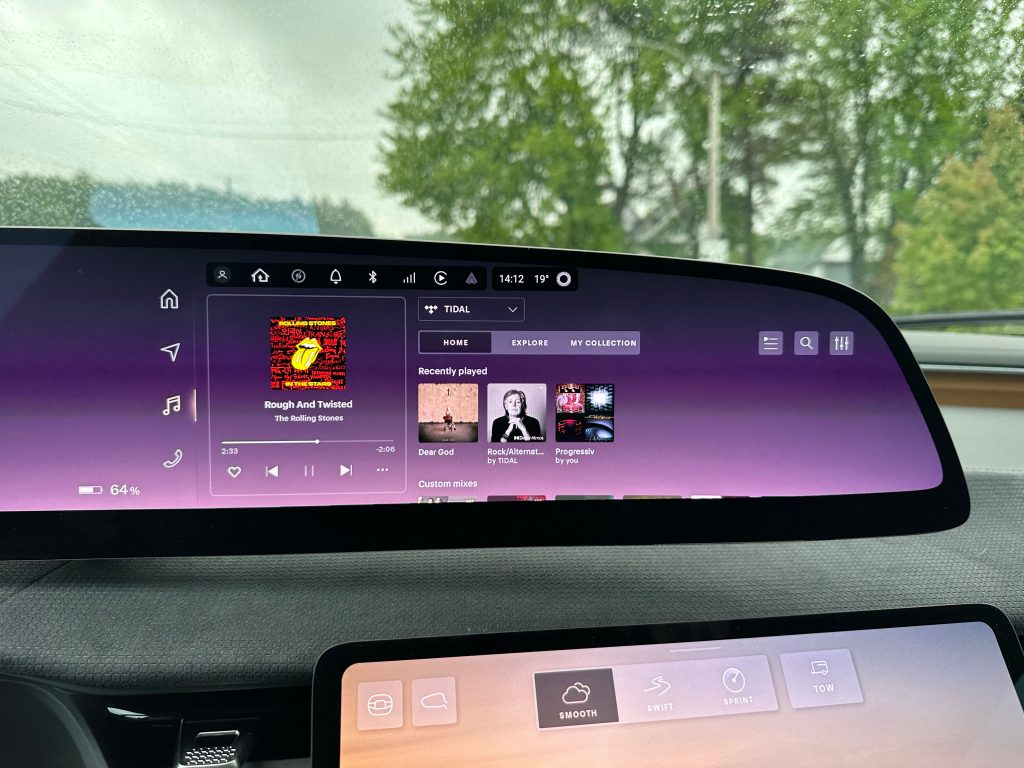
Clear View Cockpit displaying the music 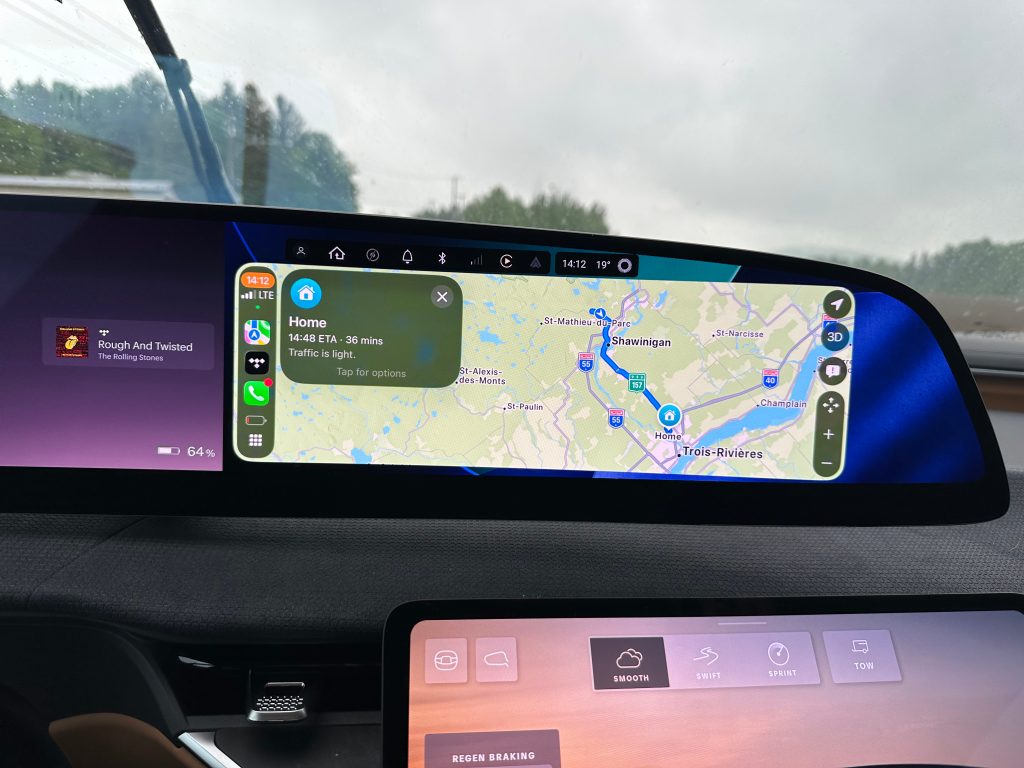
Clear View Cockpit displaying Apple CarPlay 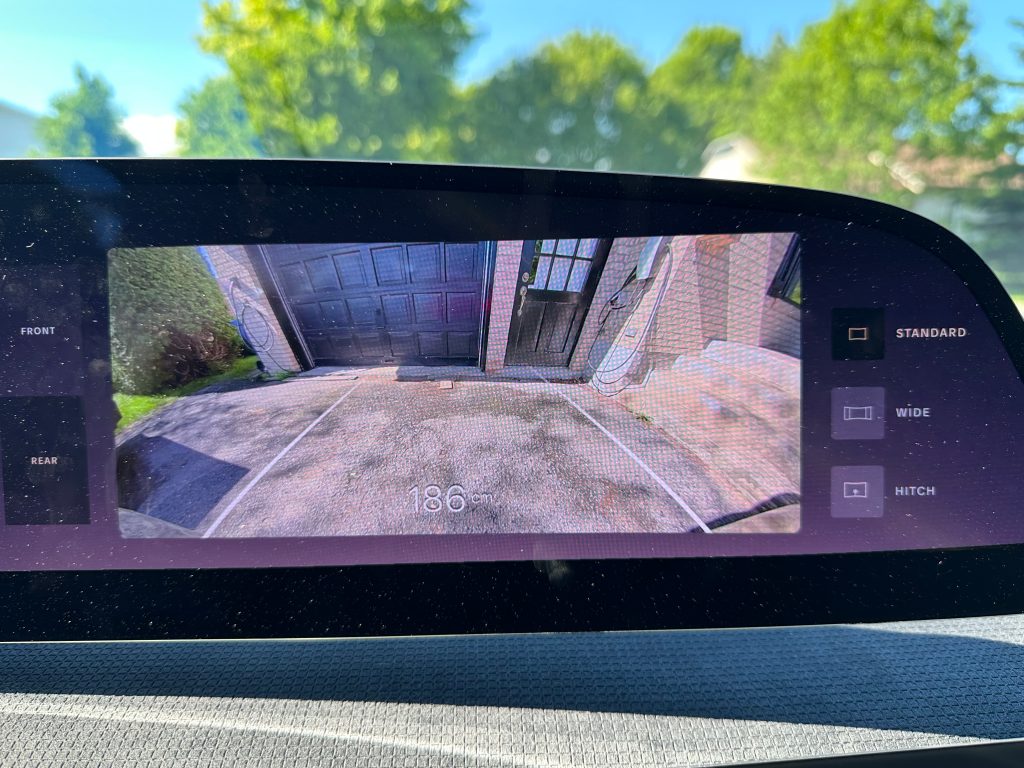
Rear view camera on the Clear View Cockpit 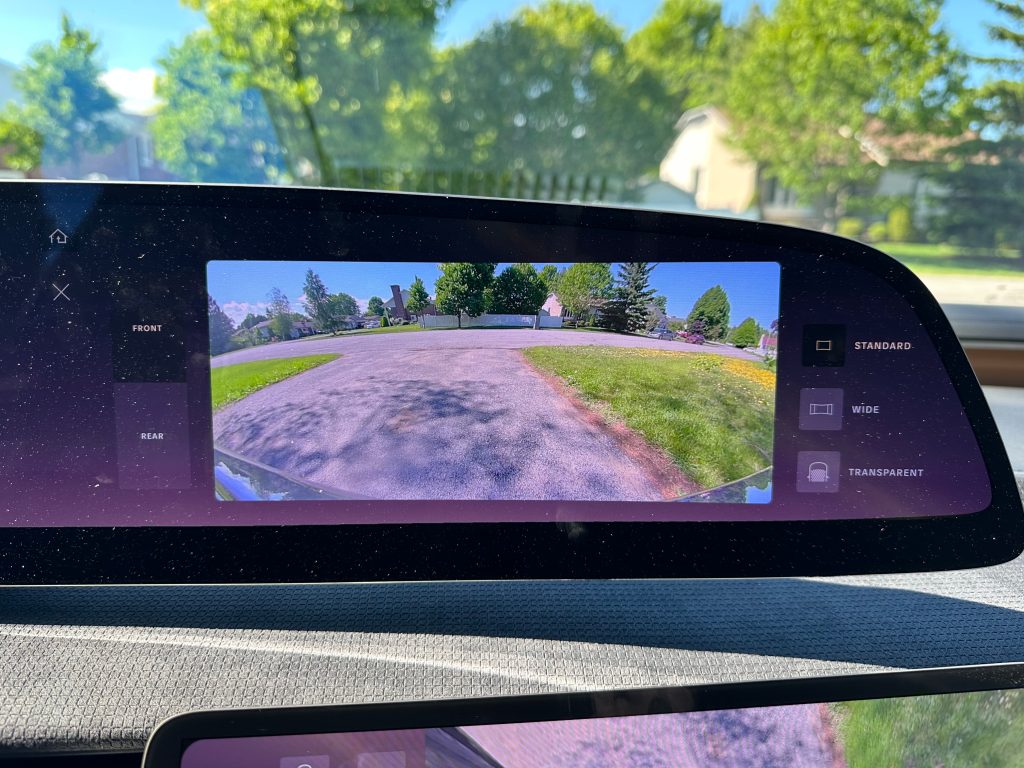
Rear view camera wide angle 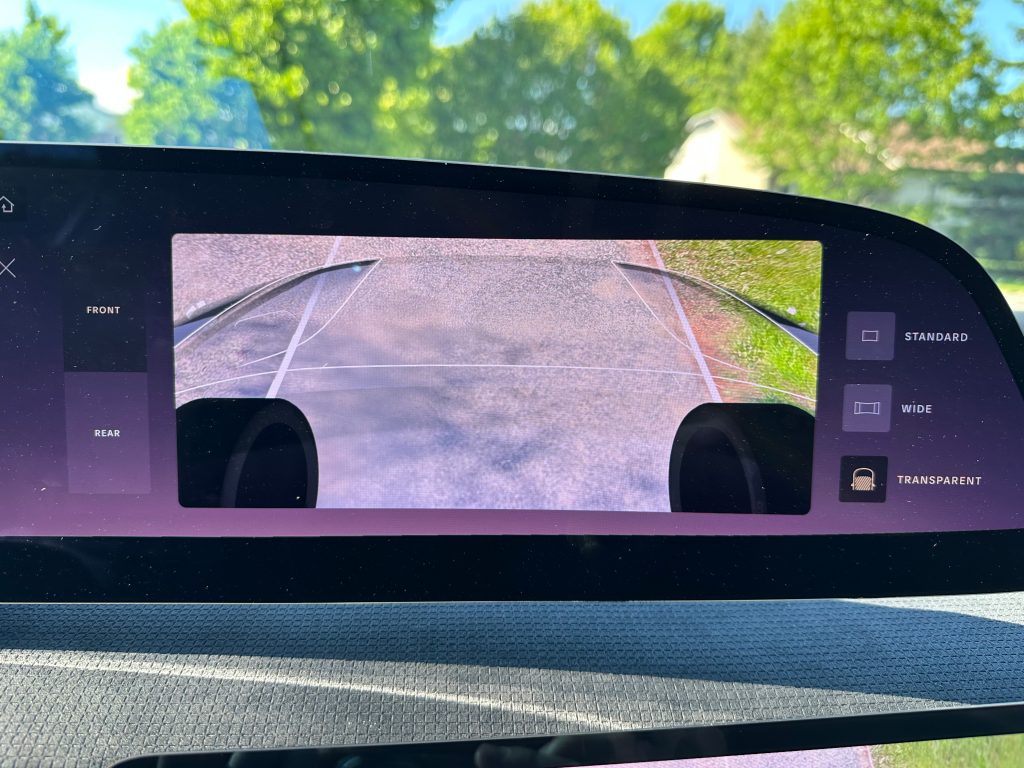
Rear view camera for a trailer tongue 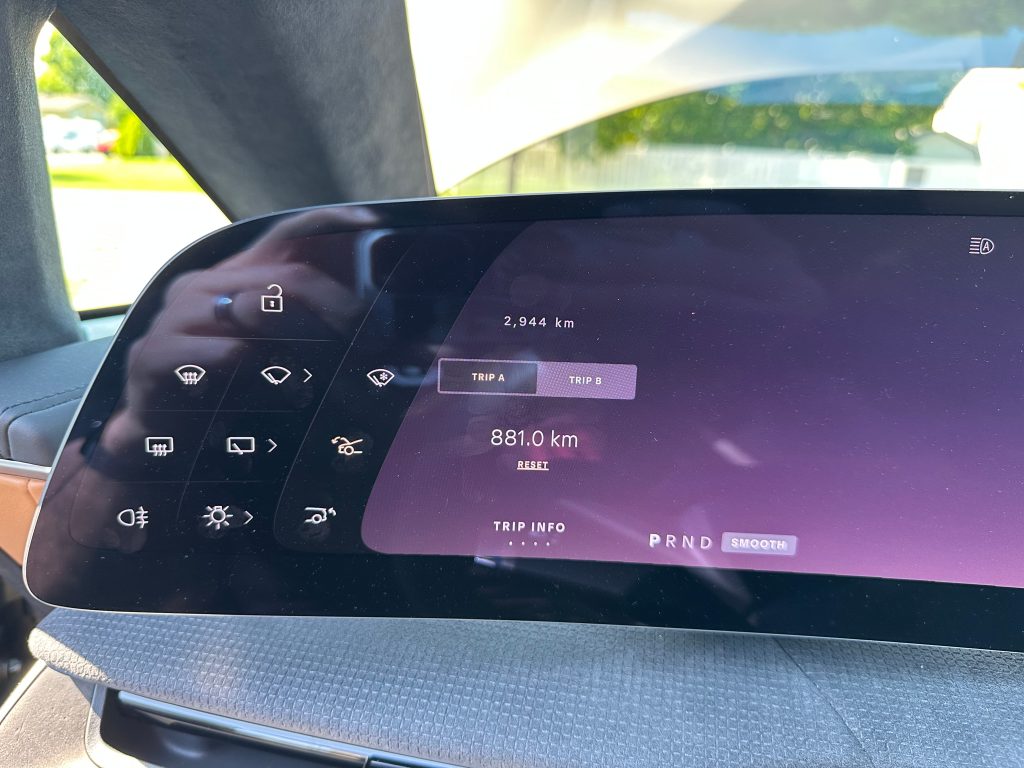
Clear View Cockpit left panel
The system offers many configurations for the displayed information: navigation can appear on three different displays simultaneously, including the HUD. You can browse the map looking for a pit stop on one screen while keeping a clear view of your current route on the other. A mix of media, navigation, phone, and vehicle features can be shown at any time. Once you get used to it, it is a rewarding experience.
I would like Lucid to include a revised Energy app showing more data like instant energy efficiency and efficiency over multiple distances against the official efficiency rating, as it allows the driver to adjust their driving, at least that’s what I do sometimes.
The main downside: quite a few bugs remain in the software. There was an update available right when I gave the vehicle back to Lucid, so some of these may have been fixed by the time of writing.
Bugs I encountered included the seats app freezing until a software reset, commands that needed to be entered twice, navigation opening and closing nearly instantly, the seat heater starting instead of the seat ventilation, the rear seat heater activating on its own, and the vehicle losing detection of the key after I left the keys inside and stepped out for a few minutes. None of these prevented me from driving safely, but the overall impression was that the CPU was constantly running at maximum load due to unnecessary background processes. It can be quite annoying, and Lucid needs to fix those bugs. And another round of optimisation would be welcome as panning the map isn’t fluid enough for my liking, but not the worst I experienced.
Driving Experience (14 / 15)
I have to start with the handling of this vehicle, as it is outstanding. The Gravity feels like a sedan to drive, not a three-row SUV. It is very responsive and tight, with no body roll. Even in comfort mode, it feels more planted on the road than a Model 3 – an impressive feat. Combined with the ludicrous amount of power available instantly, that feels like it will never stop pulling, and powerful braking capabilities thanks to 6-piston calipers at the front and 4-piston ones at the rear, the vehicle feels lighter than it is and inspires strong confidence.
Road-tripping is one of this vehicle’s clear strengths. It offers long range, fast charging, and a navigation system capable of routing from point A to point B without manually searching for charging stops. With up to 360 miles (580 km) of range recharged in just 25 minutes, access to thousands of fast chargers thanks to NACS and the Supercharger network, and an ADAS that reduces driving fatigue on the highway, crossing the country in the Lucid Gravity is effortless.
The steering is set at 2.3 turns lock-to-lock, which allows tight handling and provides precise road feedback. You feel in control, and you are. The only thing that could make it better would be steer-by-wire for even tighter control and easier maneuvering at low speeds.
Rear-wheel steering is available as an option, which my review vehicle was fitted with: “The Dynamic Handling Package”. It also brings improved suspension and rear-wheel steering, and I would recommend this option for anyone wanting the best possible driving experience. I really think it’s worth it.
One-pedal driving is available and can be configured accordingly, or to mimic the behavior of an ICE vehicle with an automatic transmission. I strongly recommend going with the One-Pedal driving, it is well-tuned and allows the driver to never touch the brakes, except in an emergency, for maximum driving efficiency.
The view of the road and surroundings is excellent. The blind-spot camera is very useful and comes with the DreamDrive premium package, which is the standard package for the Gravity at the moment.
The HUD is available, but I did not use it, as the instrument cluster is so well-positioned that it requires very little eye movement to check, and the HUD isn’t visible when using polarized glasses, which I do. When the HUD display on the dash is off, it can reflect on the windshield and block or reduce the view of certain areas, so it’s a double-edged feature. I do not recommend this option, or at least try it before, as it’s quite unsettling at first.
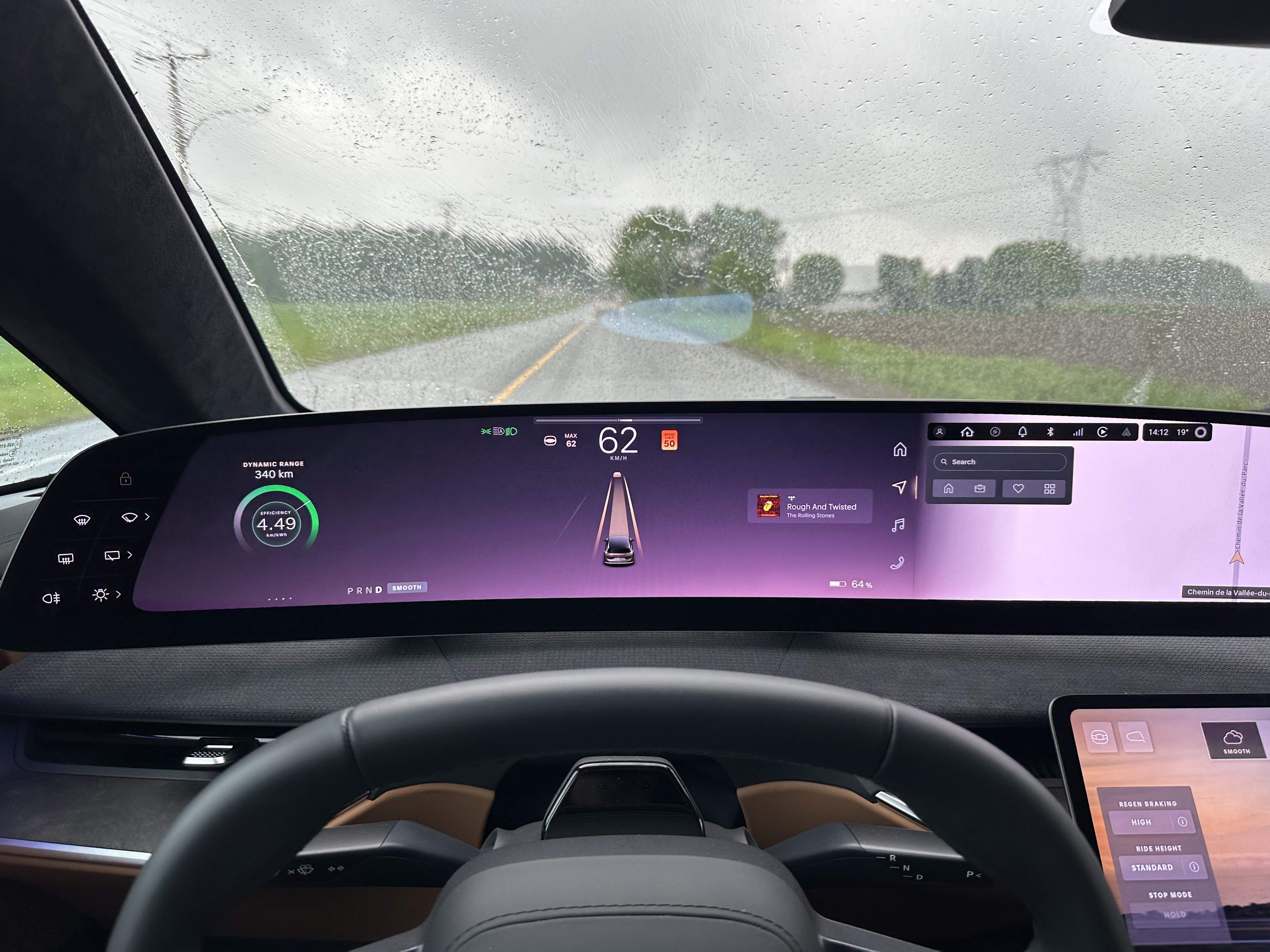
The audio system, with the Surreal Sound Pro, is impressive. Sound is powerful and clear, and only lacks a little punch in the lows if I’m being nitpicky. Dolby Atmos is included and, with supported streaming platforms such as Tidal, allows the listener to be surrounded by the music. In the Gravity, its implementation is more subtle than what I experienced in the Vistiq, and I feel the Atmos implementation needs a bit of tuning to play with each individual sound and make the music really pop in a dynamic way. It is nonetheless a nice addition for people who enjoy rich sound quality and music immersion, and I recommend selecting this optional feature.
Driver Assistance Systems (6.9 / 10)
The ADAS is adequate; it follows lane markings well and adjusts speed based on the vehicle ahead or speed-limit signs. Annoyingly, on the highway at night, it constantly read the minimum speed of 60 km/h as the limit, since our signs show both the minimum and maximum allowed. This feature can fortunately be disabled.
Lane changes are available by activating the turn signal, which can be configured to execute based on an instant or permanent turn signal activation. When lane markings are not clear, the driver must take the wheel; the car will not know where to go. Hands-free driving was not possible during my test; I had to watch the road and keep my hands on the steering wheel, or the system would beep at me annoyingly.
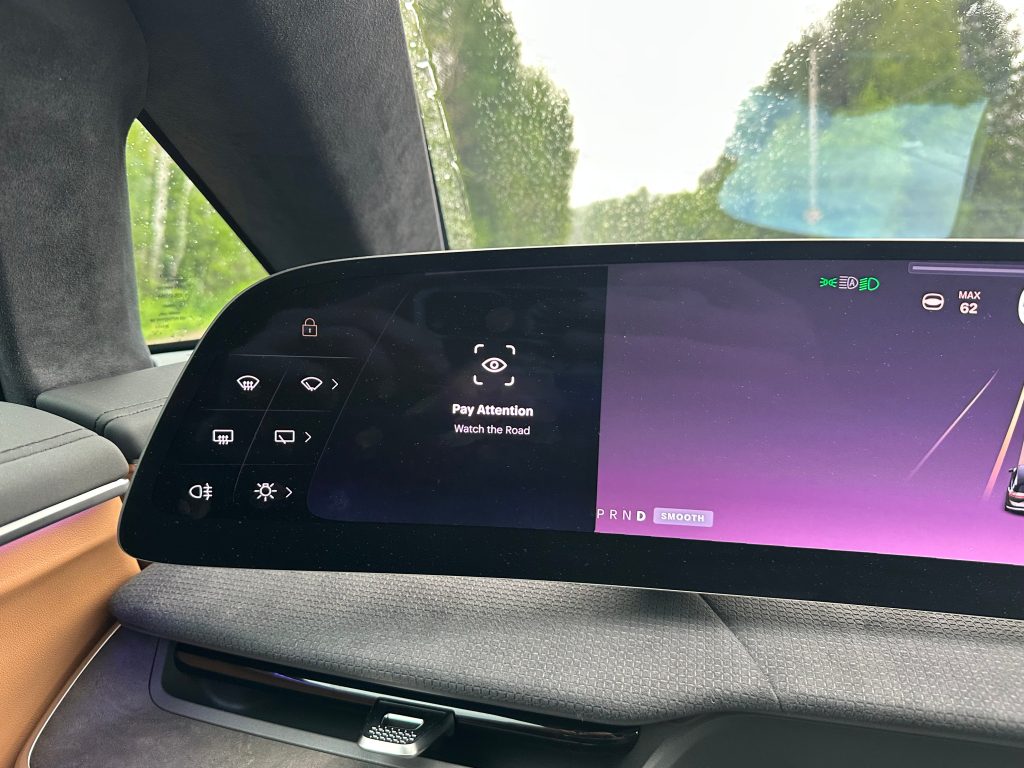
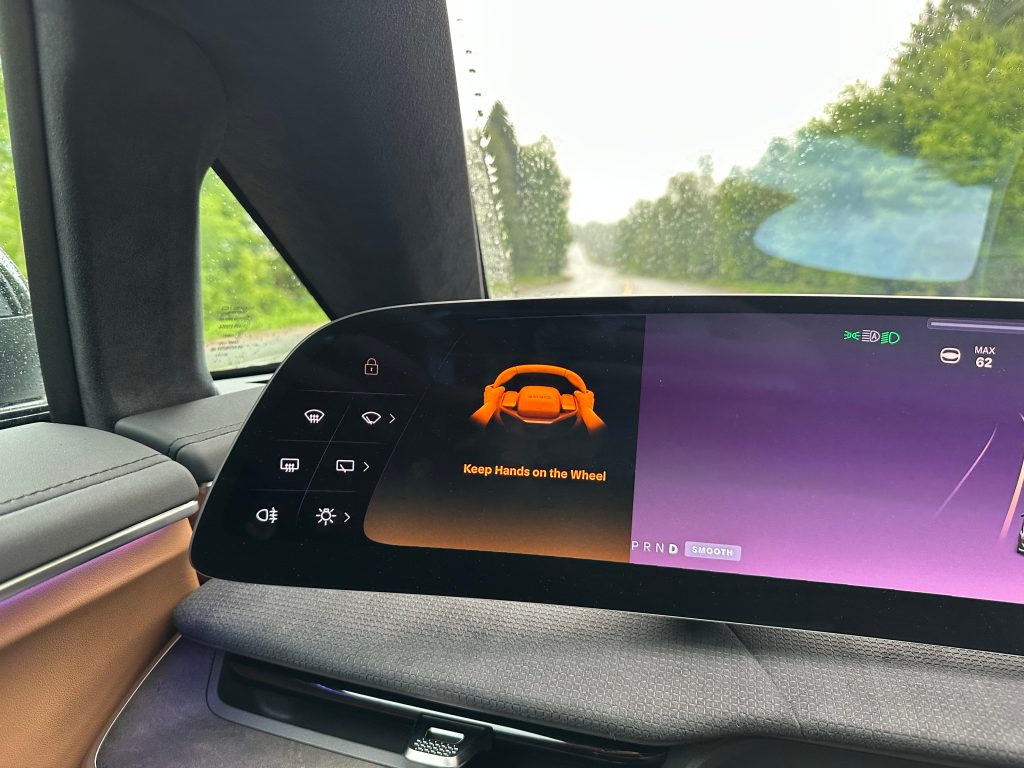
Overall, it is a functional ADAS for highways and back roads outside cities and villages, but it felt underwhelming for a luxury tech vehicle. It will improve, but at the moment, it is on par with Tesla’s Autopilot from 2016.
However, there was an update available when I returned the vehicle, and the release notes specifically mentioned the introduction of hands-free driving for the Gravity. So it is now possible, but I was not able to test it.
In terms of sensors, the Gravity is well equipped :
1. Long-Range Radar
2. Surround View Monitoring Cameras
3. Front Multifunction Camera
4. Short-Range Radar
5. Ultrasonic Sensors
6. LiDAR
7. Driver Monitoring Camera
8. Front Narrow Angle Camera
9. Front Wide Angle Camera – Center
10. Front Wide Angle Camera – Left
11. Front Wide Angle Camera – Right
12. Rear Narrow Angle Camera – Center
13. Rear Narrow Angle Camera – Left
14. Rear Narrow Angle Camera – Right
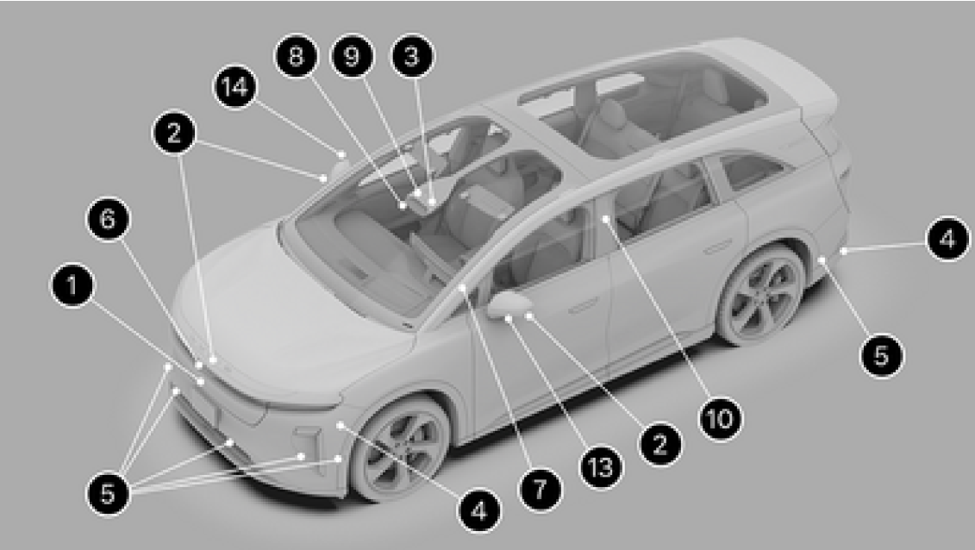
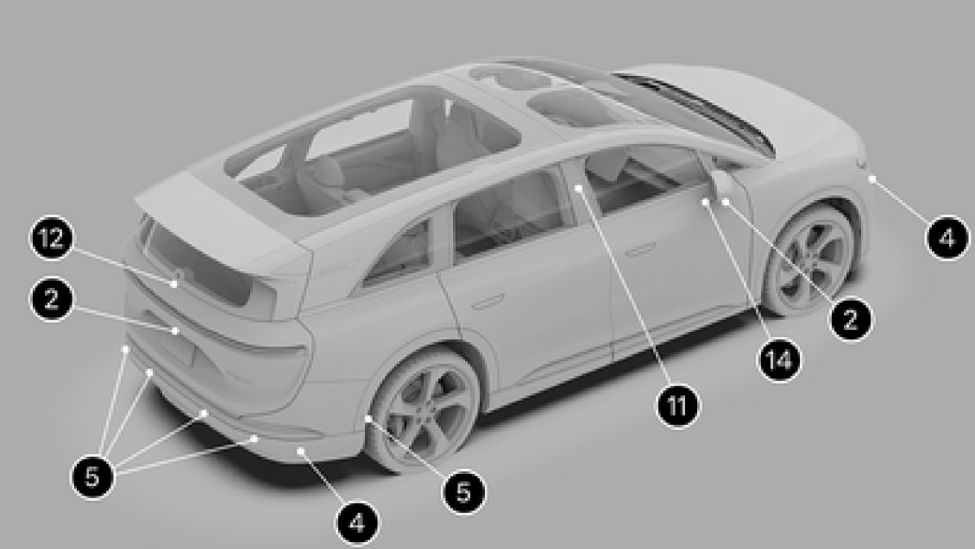
The hardware foundation is impressive. Now the software needs to catch up and take full advantage of all those sensors.
Extra (2.5 / 5)
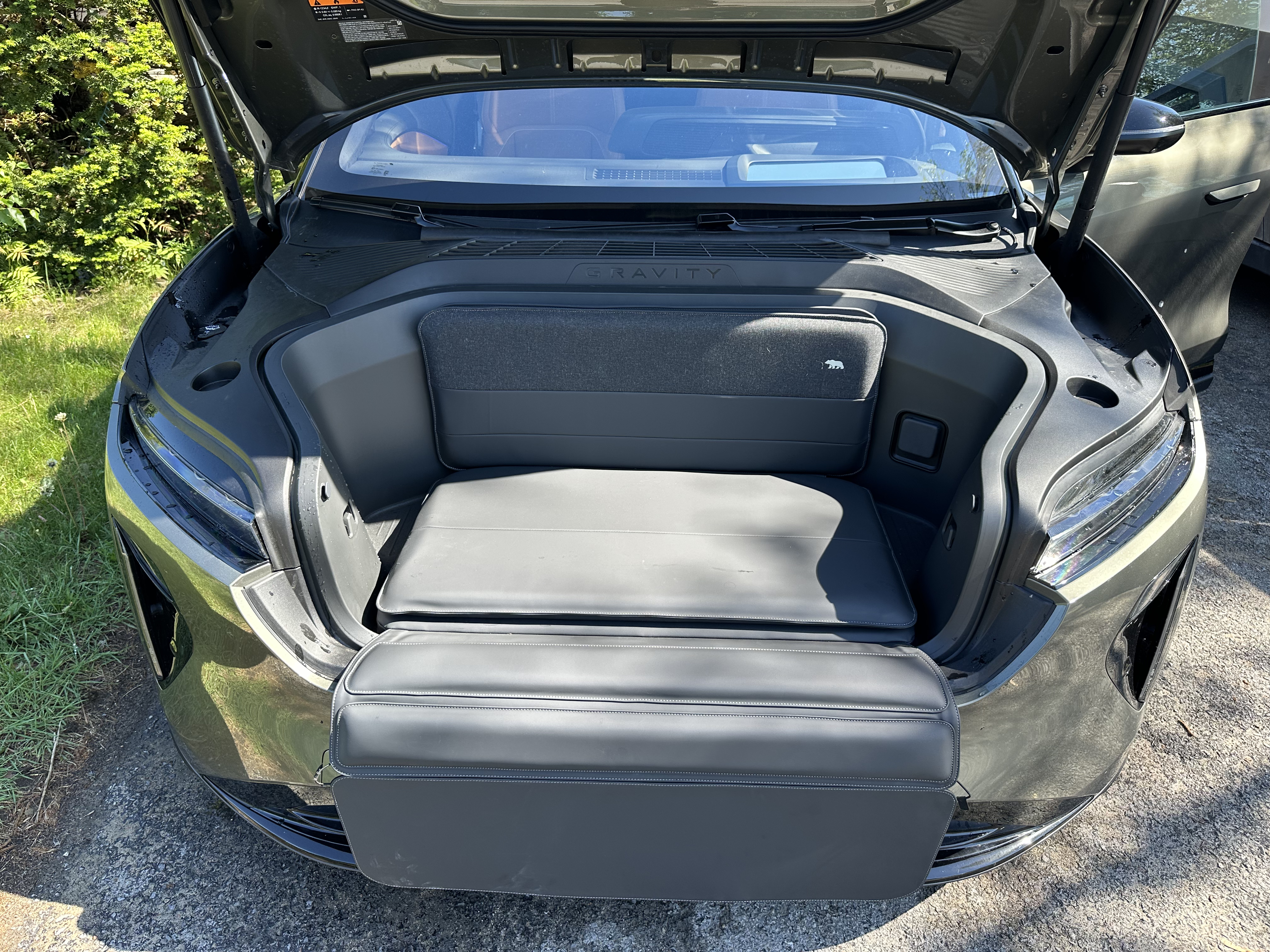
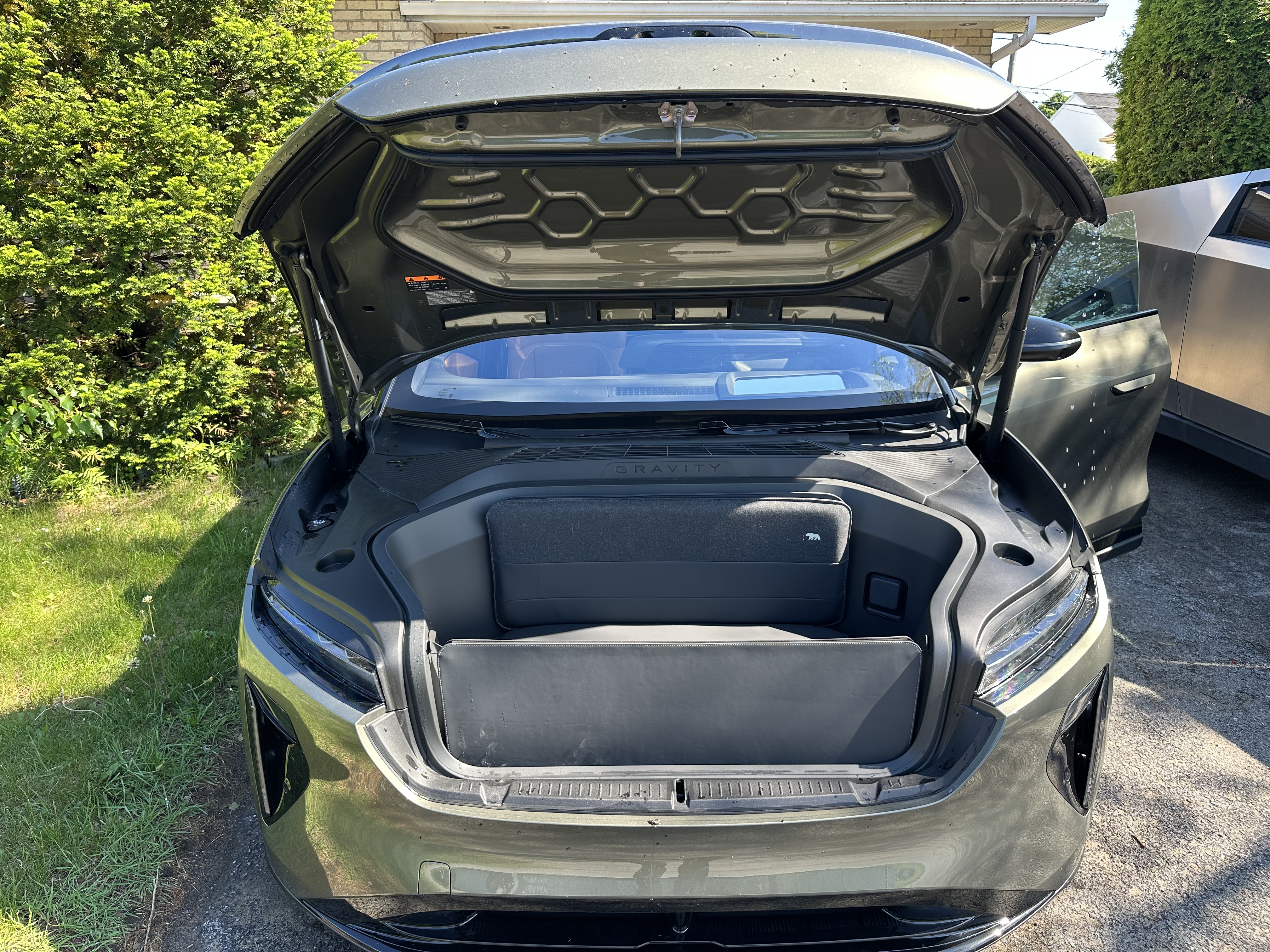
There was one thing I considered truly “extra,” and it made me smile. When you open the frunk, you find an inviting leather deployable cushion that transforms it into a comfortable bench, and when seated, you have access to a cup holder on each side.
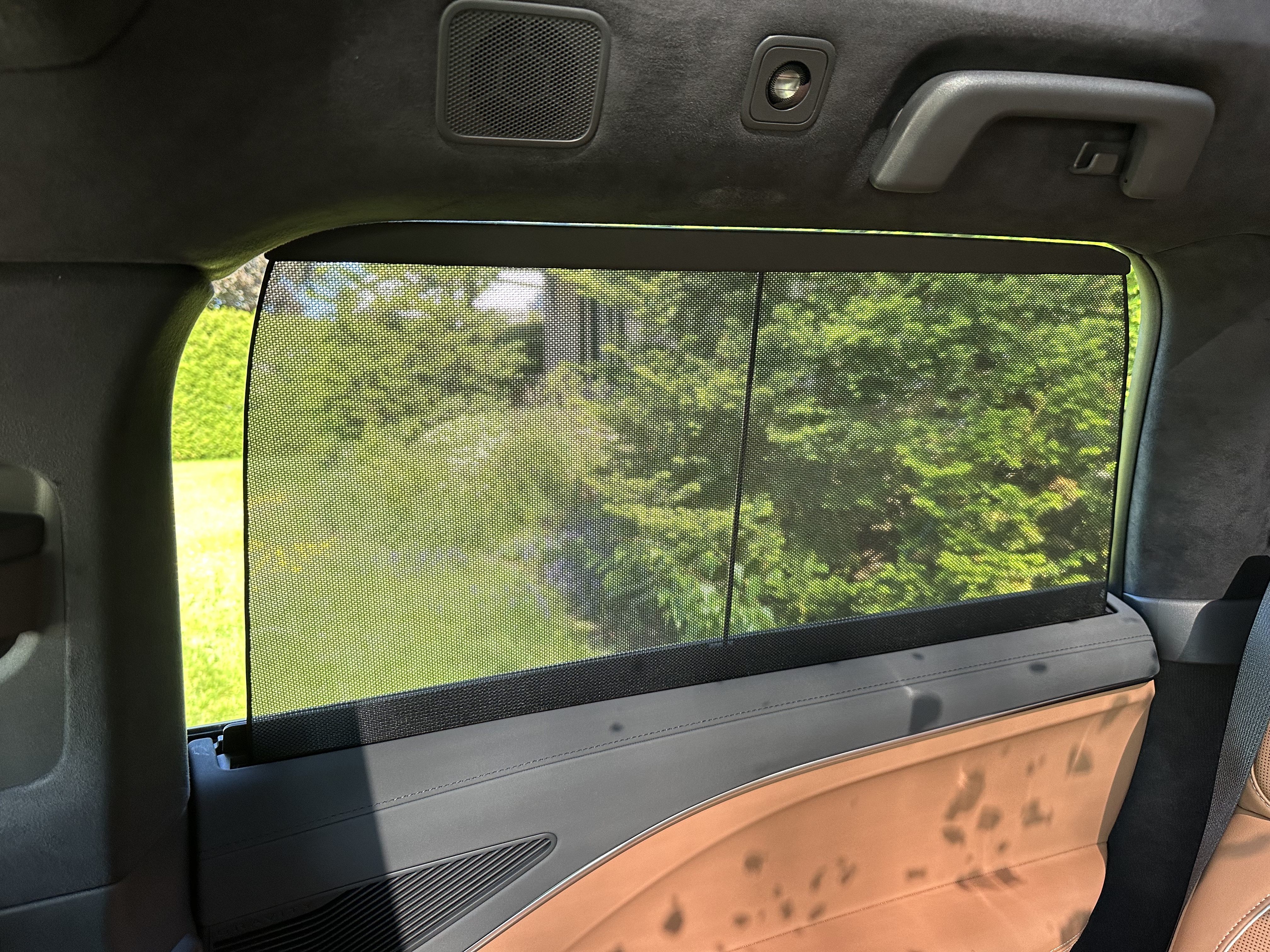
There are also automated sunshades for the rear door windows that the driver can control directly. As with the Ioniq 9, my wife was pleased with them, as they are handy when young kids are sleeping in their child seats.
Value (8.7 / 10)
The Touring starts at $79,900 ($113,500CAD) and the Grand Touring at $98,900 ($139,500CAD). My test unit was fitted with the following options, all available for either trim:
- 7 seats is a $2,900 ($4,000CAD) option for both trims
- Dynamic Handling Package Upgrade : $3,900 ($5,200CAD)
- DreamDrive 2 Pro : $6,750 ($9,300CAD)
- Surreal Sound Pro : $3,900 ($5,200CAD)
- Technology Package Upgrade : $3,200 ($4,900CAD)
- Comfort & Convenience Package Upgrade : $2,900 (included in Canada)
- Towing package Upgrade : $950 ($1,500CAD) (3500lbs for Touring and 6000lbs for Grand Touring)
Including the 22-23″ Stealth wheels and the Tahoe Leather interior, the test unit I drove came to $129,200 ($181,800CAD).
I do not like the way prices are structured for the ADAS system, and I would recommend that any potential buyer not pay for the DreamDrive 2 Pro package. It amounts to buying “to be released” features, similar to what we have seen with Tesla’s FSD. That is not a good sales model, and it will bring disappointment and likely lawsuits down the road, as Tesla is experiencing now. The included package is adequate and is essentially what I was able to test, since most features included with the paid tier are not available at the moment. Hands-free driving is now available for the Pro Package through a software update, but I do not think that alone is worth $6,750.
The Technology Package is a bit expensive for what it adds, which is only the HUD and ambient lighting. The road and instrument cluster visibility are so good that I did not use the HUD during my week with the vehicle. I actually found the HUD to be distracting and to cause an unwanted glare on the windshield under certain lighting conditions. For my configuration, I would save those $3,200 and go with the more affordable Power Package instead.
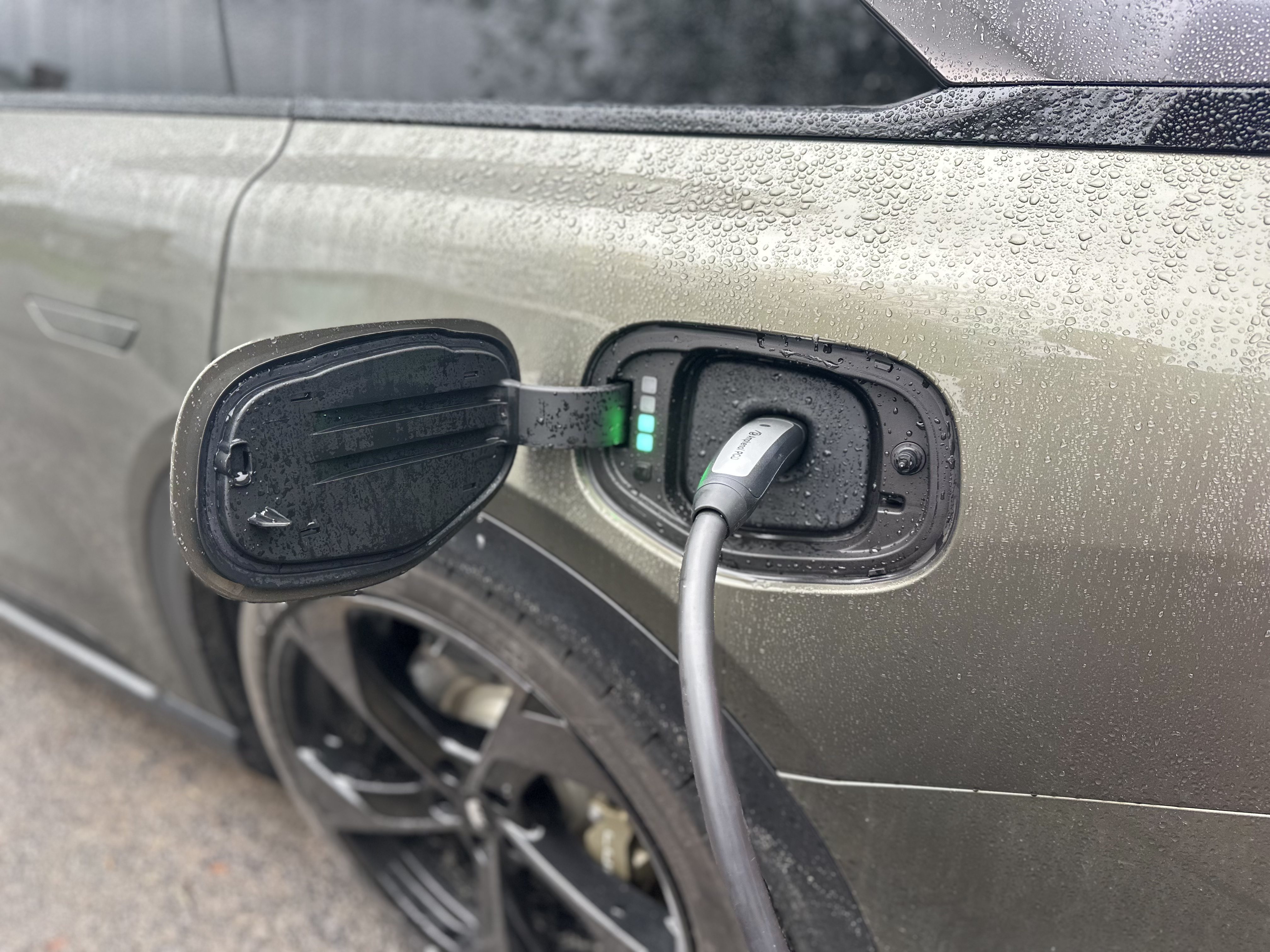
At this price, I think the charge port door should be automated at the press of the NACS handle button, as on every Tesla, and close automatically.
For me to give this vehicle the top mark in this category, Lucid needs to improve the ADAS, fix the software bugs, and offer more applications, such as video streaming services, all within one beautifully integrated software platform. All this can be added via future software updates, which would bring the value of the vehicle up.
It is not a mass-market vehicle; however, if you have the budget for it, you will be pleased with your purchase. What this vehicle offers is in line with its price point, luxury doesn’t come cheap.
Fitness for Purpose (5 / 5)
The Gravity earns a perfect score here because it genuinely delivers on every promise a luxury three-row SUV should make, and it does so without asking you to compromise.
Start with the family-hauler fundamentals. Seven adults fit comfortably, and at 6’2″, I was able to sit in the third row easily. The trunk remains usable even with all three rows in place, thanks to a generous in-floor storage cavity, and the cargo floor sits completely flat when the seats are folded. The frunk adds a welcome bonus for items you want to keep separated from the cabin, such as wet gear or groceries.
Road-trip capability is where the Gravity truly sets itself apart. With up to 450 miles (724 km) of range on the Grand Touring, fast charging from 7 to 80% in 24 minutes, and three 120 V outlets for passengers to power laptops or a Starlink router, long-distance travel is genuinely effortless. Add second-row tray tables and USB-C ports at every seat, so rear passengers can work or entertain themselves for the entire drive.
Towing capacity reaches 6,000 lbs on the Grand Touring, which covers most recreational trailers and mid-size boats. The sedan-like driving dynamics mean the daily commute remains engaging rather than a chore.
Overall, this is one of the few vehicles that do not ask you to choose among family practicality, driving engagement, and luxury. It delivers all three, and that is exactly what a perfect fitness-for-purpose score should represent.
Safety (4.5 / 5)
The Lucid Gravity has been crash tested by both the NHTSA and Euro NCAP, with both agencies awarding the full five-star rating. However, Euro NCAP did not award the Gravity its “Best in Class” distinction, and we will have to wait for the IIHS and its more nuanced rating system for a proper comparison with other vehicles in the segment.
The active safety features use the ADAS sensors, which allow the Gravity to be granted a rating of 85% on the active safety features. For comparison, the Best In Class vehicle had been awarded a 92% score on the active safety features category.
It is nonetheless a strong result, achieved through clever engineering of the chassis and a full suite of sensors designed to prevent crashes.
Electrek’s take
The Gravity’s strongest suits are its driving experience and EV technology. An exceptional battery coupled with a superb powertrain and a remarkable chassis give the driver the feedback and connection necessary to become one with the vehicle. It is a perfect mix of human and machine interaction, and this vehicle should be celebrated for that.
Top comment by AdamK
I think leasing this car makes the most sense vs buying. It gives the most incentives and protects against the downside of a liquidation.
I'm currently driving one on a long distance trip to Northern Michigan where the charging infrastructure is pretty sparse. The range is amazing and the charging speed is great. Still it's tough with many Tesla v2 supercharging stations not open to other car manufacturers. Electrify America leaves a lot to me desired with really patchy performance. One hyper charger only gave me 60kw while the neighboring hyper charger gave me 150 kw. Really frustrating
Its weakest points are the UX and ADAS, for now. As with all startups in the automotive industry, OTA updates are something manufacturers rely heavily on. That approach has its pros and cons; in my experience, it has been far more pros than cons, so I do not mind it. I just hope Lucid will be able to deliver the experience its customers deserve. When I returned the vehicle, a new update was available that fixed some bugs, added the Matrix Headlights, and enabled hands-free driving for the DreamDrive Pro. I am pleased to see work being done on those weak points, as it gives me confidence that buyers today will not miss out on the improvements coming in the next few months and years.
I also wish Lucid would bring media players such as YouTube, Netflix, and others to its UI platform, as they could be very useful for kids on the rear display.
Overall, this is a vehicle I would not mind having in my driveway, and I am not a fan of SUVs or three-row vehicles. It is so enjoyable to drive and so easy to use that it feels like driving a big sedan. My configuration would be the Grand Touring, with the Dynamic Handling Package Upgrade, the Surreal Sound Pro, and the stock wheels and tires for the best efficiency.
Now I want one more thing: the opportunity to test it on a racetrack and push its powertrain to the limits, or more likely, reach mine. Lucid, can you invite me to your next track days?


FTC: We use income earning auto affiliate links. More.

Comments