

San Diego, California-based electric bicycle maker Ride1Up has just carved out a place for itself in the history books, announcing today the world’s first electric bicycle with a semi-solid state battery, the Ride1Up Revv1 EVO. It could be one of the most important technological shifts we’ve seen in e-bikes in years.
The new battery touts many major advantages, from safety to longevity with a 10-year lifespan. And unlike some other major solid state battery news that is increasingly starting to look more like fluff than substance, Ride1Up is actually positioned to deliver.
The news follows an announcement by Giant last month that it would launch what it then claimed to be the world’s first semi-solid state battery electric bicycle, but it looks like Ride1Up’s quicker launch will beat Giant to the punch, scooping the title for itself.
At a glance, the Revv1 EVO looks familiar. It’s still very much a moped-style e-bike, complete with a 750W motor (capable of higher peak output), fat 20×4-inch tires, and a rugged frame designed for both commuting and light off-road riding. Suspension comes in at 160 mm up front in the fork and 90 mm in the rear shock. The bike also includes 4-piston hydraulic brakes, integrated lighting, and a high-capacity frame rated for up to 400 lb (181 kg) – a higher figure than most full-suspension e-bikes.
But the real story here isn’t just the new bike, but rather what’s inside it.
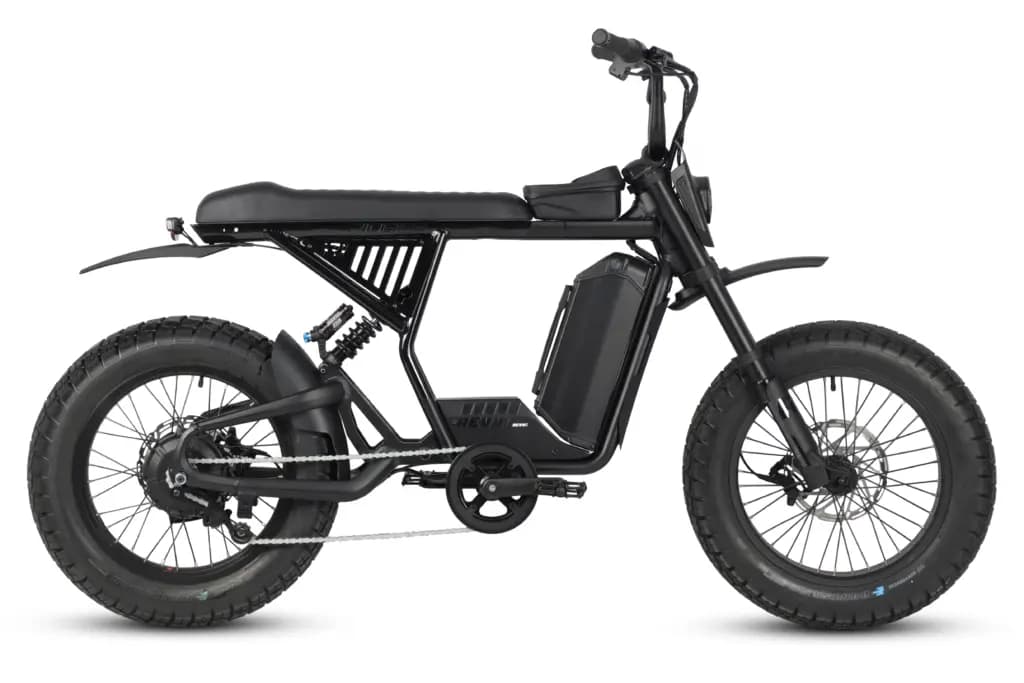
A battery that actually changes the equation
The Revv1 EVO uses a 52V 20Ah battery (roughly 1 kWh), which is rather large but not necessarily an outlier in the electric moped-style e-bike industry. But the chemistry – that is anything but standard.
Instead of the traditional lithium-ion cells found in nearly every e-bike today, Ride1Up is using a semi-solid state battery. That means replacing most of the typical liquid electrolyte with a gel-like material that offers improved stability, longevity, and thermal performance.
The benefits aren’t just theoretical… they’re the kind of things riders have been requesting for years.
For starters, lifespan is dramatically improved. The Revv1 EVO’s battery is rated for over 1,200 charge cycles before dropping to 80% capacity. That’s more than double what you’d expect from a typical e-bike battery, which often lasts around 500 cycles. In real-world terms, that could mean 8 to 10 years of regular riding before noticeable degradation, assuming fully recharging around three times a week.
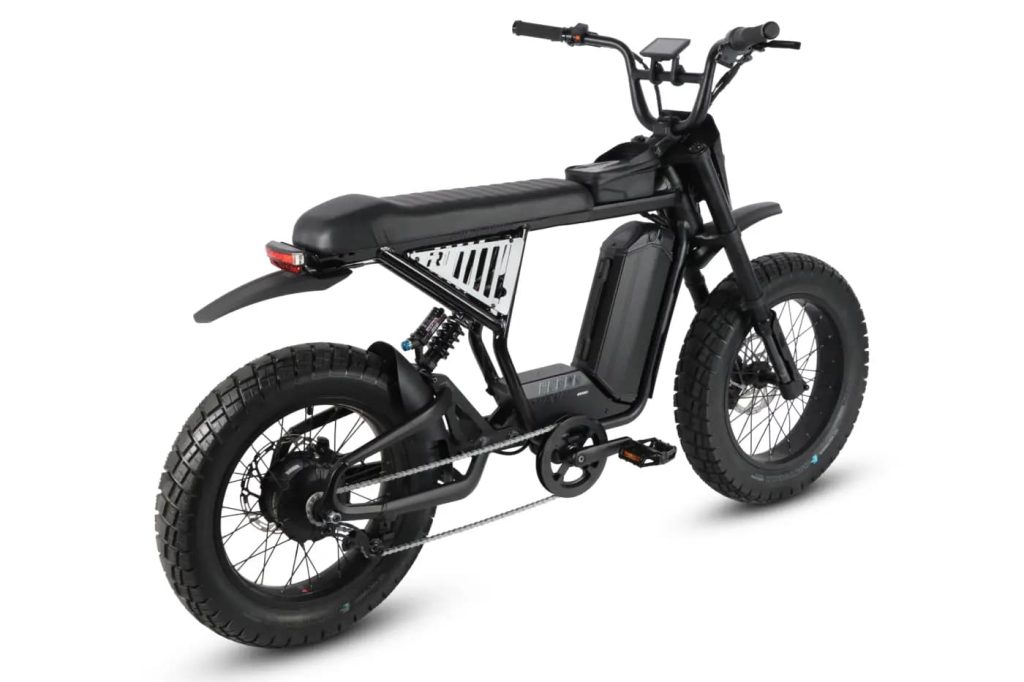
Charging is another big leap forward. The battery can fully recharge in around two hours, thanks to its chemistry AND Ride1Up’s inclusion of a high-power 9A charger, compared to the typical 2-3A charger typically paired with most e-bikes. And crucially, it can handle that fast recharge rate without the usual trade-off in lifespan.
Fast charging has historically been hard on lithium-ion batteries due to heat buildup, but the semi-solid design appears to mitigate that issue.
Then there’s temperature performance.
Anyone who has ridden an e-bike in winter knows the pain of watching range drop off a cliff. Standard lithium-ion batteries can lose 40–50% of their effective capacity in cold weather. Ride1Up claims the EVO retains around 70% capacity even at -20°C (-4°F), which could be a game-changer for riders in colder climates. I’m not sure I want to be out riding in temperatures that low, but it’s nice to know the bike can still handle it, just in case.
And perhaps most importantly, there’s safety. Traditional lithium-ion batteries use flammable liquid electrolytes. Semi-solid state batteries significantly reduce that risk, offering improved thermal stability and lower fire potential. Many semi-solid state battery cells already pass the puncture test, in which a nail driven through the cell won’t cause a fire or explosion. Try that with a typical e-bike cell, and, well… you’d better do it in an open and safe area.
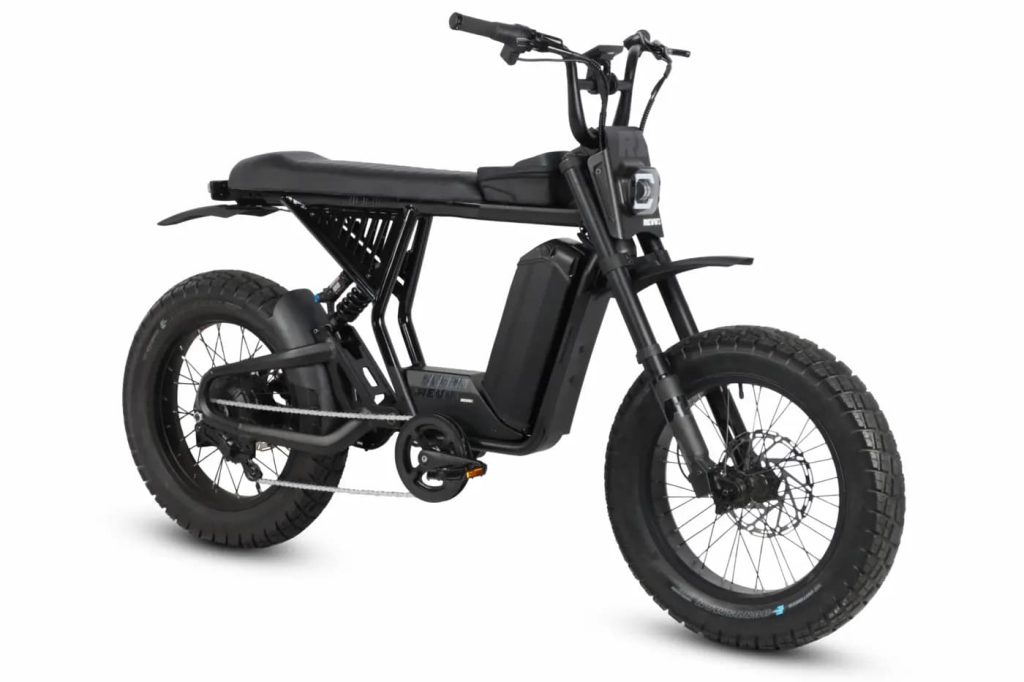
Not quite solid-state… but close enough to matter
It’s worth clarifying that this isn’t the same solid-state battery tech you’ve probably heard about in the context of future electric cars. Fully solid-state batteries are still largely in development and remain expensive and difficult to scale. They exist, but pretty much just in the laboratory.
Semi-solid state is more of a bridge technology. It delivers many of the same benefits – longer lifespan, improved safety, better temperature performance – without the same manufacturing hurdles. And importantly, it’s available now at a consumer-friendly price point.
Sure, it’s still more expensive than traditional lithium-ion cells found in most e-bikes today. But it’s reasonable enough that bikes can still remain affordable, as evidenced by the US $2,395 Ride1Up Revv1 EVO launched today.
Yes, that’s still a premium thanks to the more expensive battery technology. If you compare it to the previous full-suspension Revv1, which was usually on sale for US $1,995, then that’s around a $400 increase to get the new technology. But if the battery really does last 2-3x as long, then it pays for itself already, not to mention the other impressive safety and performance benefits. Plus, the redesign appears to feature improved suspension, a lower center of gravity, and better handling.
Pre-orders now open
If there’s one bummer about the launch, it’s that shipping isn’t immediate. The old adage that “good things come to those who wait” has never been more true than in the e-bike industry, where pre-orders and 2-3 month shipping timelines are the norm, not the exception.
In this case, pre-orders for the Revv1 EVO have opened today at $2,395, with shipping expected to begin in August.
The good news is that, unlike some fly-by-night companies, Ride1Up has spent nearly a decade developing a solid reputation in the e-bike industry, and so their word is well-trusted at this point.
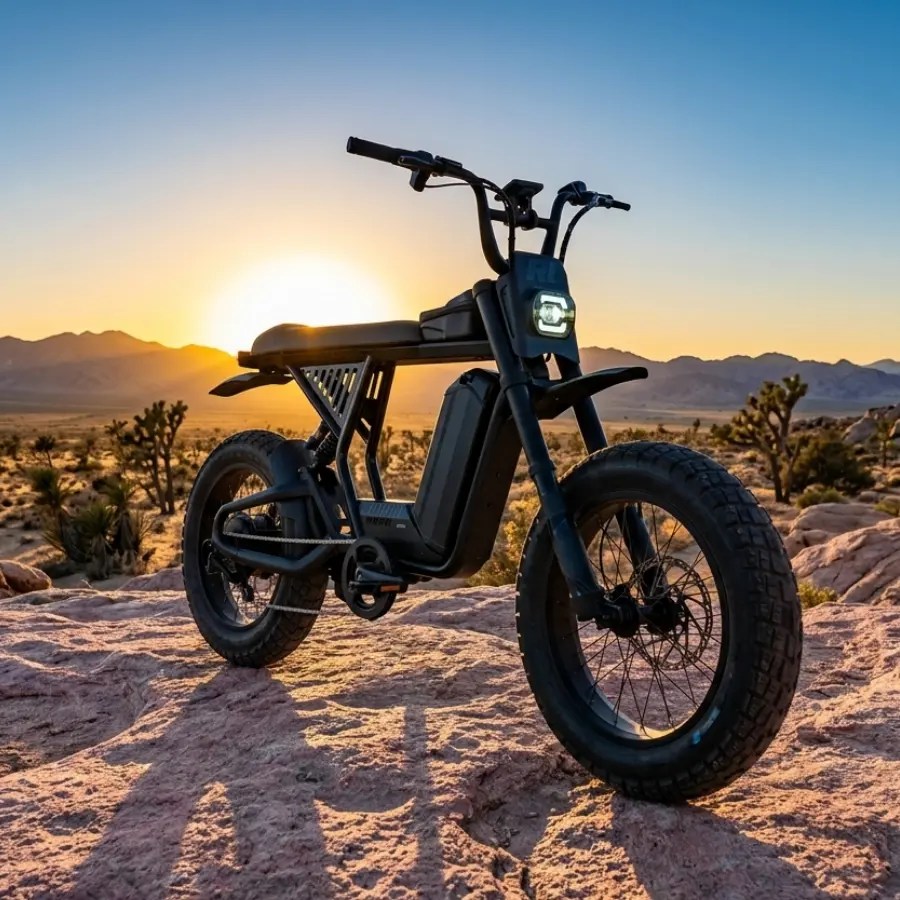
What this means for the e-bike industry
For years, e-bike innovation has largely focused on incremental improvements: slightly better motors, marginally larger batteries, or refined software with better connected features. Prices have come down and made bikes more affordable, but we haven’t seen any major paradigm shifts in technology. And critically, when it comes to e-bike batteries, the underlying chemistry has remained largely unchanged.
Ride1Up is taking a different approach by targeting what has arguably been the weakest link in the entire ecosystem.
If this technology proves reliable at scale, it could shift expectations across the industry. Riders may start demanding longer-lasting batteries, faster charging, and better cold-weather performance as standard features rather than premium upgrades.
And that could force other manufacturers to follow suit.
There’s also a broader implication for ownership costs. One of the hidden downsides of e-bikes has always been battery replacement after a few years. The bike may last much longer, but will replacement batteries be available in another 3-4 years? It’s a constant concern among many new e-bike buyers.
But a battery that lasts nearly a decade fundamentally changes that equation, making e-bikes more economical over the long term and removing the weak link in terms of early replacement parts.

Electrek’s Take
Top comment by AlanTheFrank
Another comparison is to the Bosch 800wh battery. At 4kg using a lighter casing and 21700 cells the Ride1up battery has only a small advantage.
Similar cycles but slower charging. Being Bosch, very high cost.
I’m super excited by this news, and I’d say it is one of those rare moments where a spec sheet actually points to something bigger. This goes beyond just a new bike launch with a new battery, and actually signals that we are on the cusp of major changes to the e-bike industry.
The battery is the single most important (and usually single most expensive) component of an e-bike, and changes there affect nearly every aspect of e-bike ownership. By making the battery safer, perform better, and last longer, this new technology is the definition of a game-changer.
On the surface, the Revv1 EVO looks like another solid entry in the growing moped-style e-bike category. But the semi-solid state battery underneath it could represent a genuine inflection point for the industry. If Ride1Up can deliver on the promises here, including the longer lifespan, safer chemistry, and real-world performance gains, then this won’t stay a one-off for long.
We’ve been waiting for battery tech to catch up with everything else in e-bikes. This might be the first real sign that it finally is.


FTC: We use income earning auto affiliate links. More.


Comments