
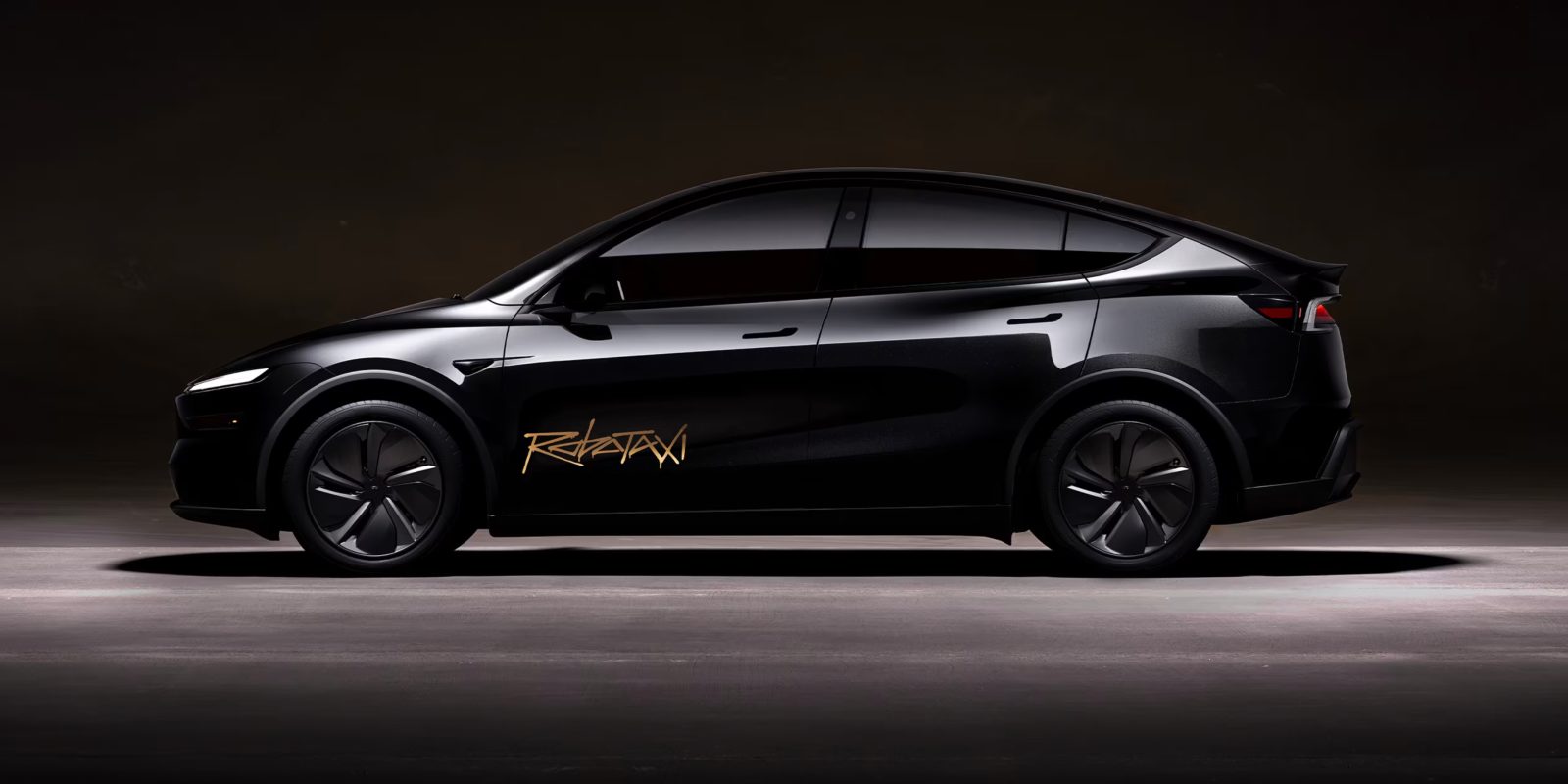
Tesla has released quarterly earnings, and the announcement was accompanied by what seems to be a backpedaling on availability of Robotaxis in 5 of the 8 cities Tesla has announced availability in.
Tesla has long promised a rollout of autonomous taxis around the US (and later, the world).
The company first started selling a system it calls “Full Self-Driving” (FSD) all the way back in 2016, though at the time – and still – it doesn’t actually enable cars to drive themselves.
Tesla also started talking about something called “Tesla Network” around the same time. This would be an autonomous ride-hailing service, where owners of FSD-equipped cars could send them out to run as taxis and make passive income. (Which hasn’t happened)
Tesla CEO Elon Musk said this would make cars into “appreciating assets” and said that Tesla would stop selling cars when it solves autonomy because the cars would simply be too profitable to let out of the company’s hands.
Since then, Musk has repeatedly stated that autonomous vehicle operation would come by the end of the following year, and it has repeatedly not arrived on the promised timeline.
More recently, Musk claimed that Robotaxis would cover half of the US population by the end of 2025, which did not happen, as the company only operated in part of one relatively small US city (Austin) at the time. Tesla claims it has Robotaxis in San Francisco as well, but it does not, and legally cannot, and is actually simply operating a normal human-driven taxi service there.
We did a status check on Tesla’s Robotaxi promises in February, and almost all of the company’s promises are missing.
That hasn’t stopped the company from claiming that autonomous vehicles are here, though.
Tesla rolled out level 2 Robotaxis, with an operator inside the vehicle, in Austin in June of last year. Since then, it has offered vanishingly few rides that it claims are “unsupervised,” but are often just being supervised from outside the car. In the last few days, Tesla announced something similar for Dallas and Houston, but those also look more like a stock pump for earnings rather than actual consumer availability.
The rollout of Robotaxis to Dallas and Houston is delivery of a promise Tesla made three months ago in its earnings report, where it said that Robotaxis would come to 7 US cities by the end of the first half of 2026, including Dallas and Houston. That list also included Phoenix, Miami, Orlando, Tampa, and Las Vegas.

Tesla has started preparations in the remaining areas, having submitted plans for the first Robotaxi-only Supercharger stations in Arizona (it previously planned something similar in San Francisco, but dropped that plan in February), and has been spotted testing in Orlando.
But it seems unlikely that the previous timeline of “1H 2026” will be met, as indicated by changes in the graphic from today’s investor letter:

As you can see here, the remaining five announced cities have changed to the uncertain “preparations underway,” rather than the specific “1H 2026” timeline. Given that only two months remain in the first half of 2026, we imagine that this means Tesla is kicking the can down the road on these locations.
The graphic also includes a superscript note next to California’s entry, indicating that the operations in the Bay Area are not in fact robotaxis, but human-driven taxis. The note says “(3) Pursuant to CA TCP permit # TCP0046782 – A,” which is the California designation for a taxi company (“Transportation Charter Permit”). Given that Tesla has still not even filed for the permit to run autonomous taxis in California, this is unlikely to change anytime soon.
But Tesla changed one other part of the graphic – instead of “Planned Robotaxi Coverage” it now says “Announced Near-Term Planned Robotaxi Coverage.” This is to indicate that this is not the limit of Tesla’s ambitions, and that the company does intend to open Robotaxi services in other cities, it just has not yet announced those cities.
Top comment by Pilar Ackerman
I loved the last analyst question on the status of the "photon counter" cameras that solved the sun blinding issue. There seemed to be two parts to the answer. First, newer cars have new cameras. Older cars get FSD turned off when blinded. I guess "photon counting" wasn't the solution they were looking for.
The list remains smaller than Tesla’s main US competitor in the robotaxi space, Waymo. Waymo keeps adding city coverage, and is now available in 11 cities, with another 20 more announced (including two outside of the US). Waymo’s vehicle also operate exclusively as level 4 driverless robotaxis, and are never human-driven or directly supervised by a human, unlike Tesla’s Robotaxi.
Update: In Tesla’s earnings call, Musk stated that Robotaxi would reach a dozen states by the end of this year. Given today’s seeming pushback in the 3 announced states, and the history of missed promises on FSD, we are skeptical.
(Ed. Note: Generally, when speaking about autonomous vehicles, I will distinguish between “robotaxi,” uncapitalized, to refer to actual autonomous taxis, and “Robotaxi,” capitalized, to refer to Tesla’s branded taxi effort, which may or may not be autonomously-driven, depending on where and when you ride it)
Charge your electric vehicle at home using rooftop solar panels. Find a reliable and competitively priced solar installer near you on EnergySage, for free. They have pre-vetted installers competing for your business, ensuring high-quality solutions and 20-30% savings. It’s free, with no sales calls until you choose an installer. Compare personalized solar quotes online and receive guidance from unbiased Energy Advisers. Get started here. – ad*


FTC: We use income earning auto affiliate links. More.



Comments